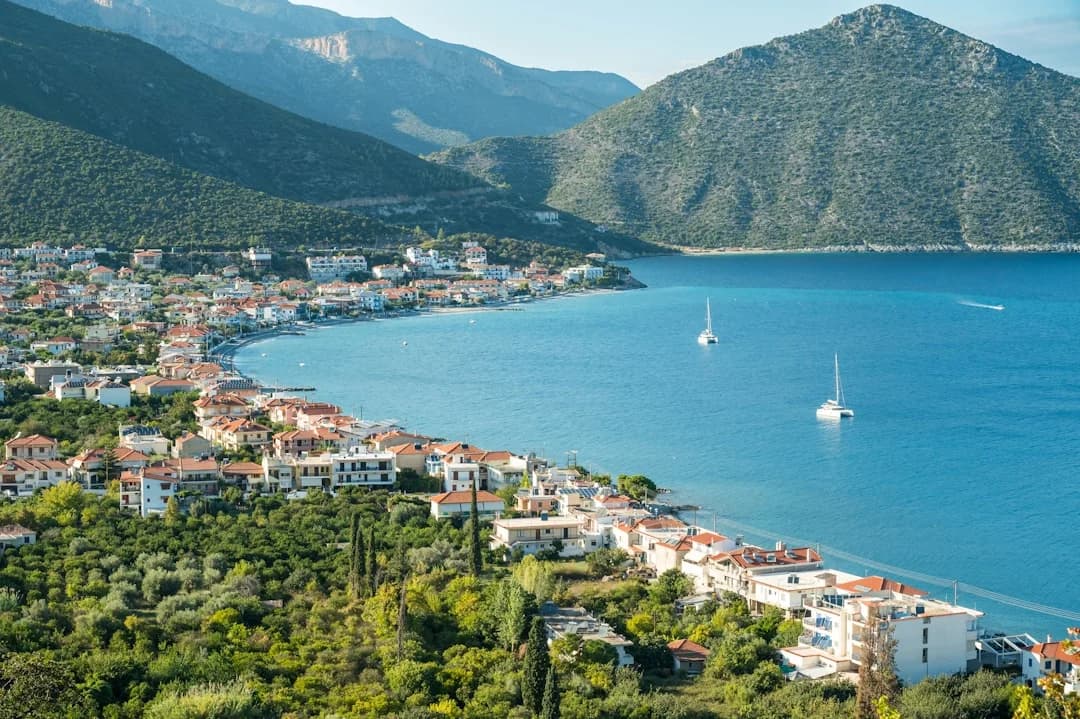
Greece has over 6,000 islands, roughly 200 of them inhabited, and the sailing between them is some of the best on the planet. Steady summer winds, sheltered anchorages every few miles, water so clear you can read your anchor chain at 30 feet, and a taverna waiting at almost every stop. The question isn't whether to sail Greece — it's which islands to sail.
The answer depends on what you want. The Cyclades are iconic but windy. The Ionian is calm and green. The Dodecanese are uncrowded and culturally rich. The Saronic Gulf is perfect for beginners. Here's the honest breakdown — island by island, with distances, wind conditions, and what each area is actually like under sail.
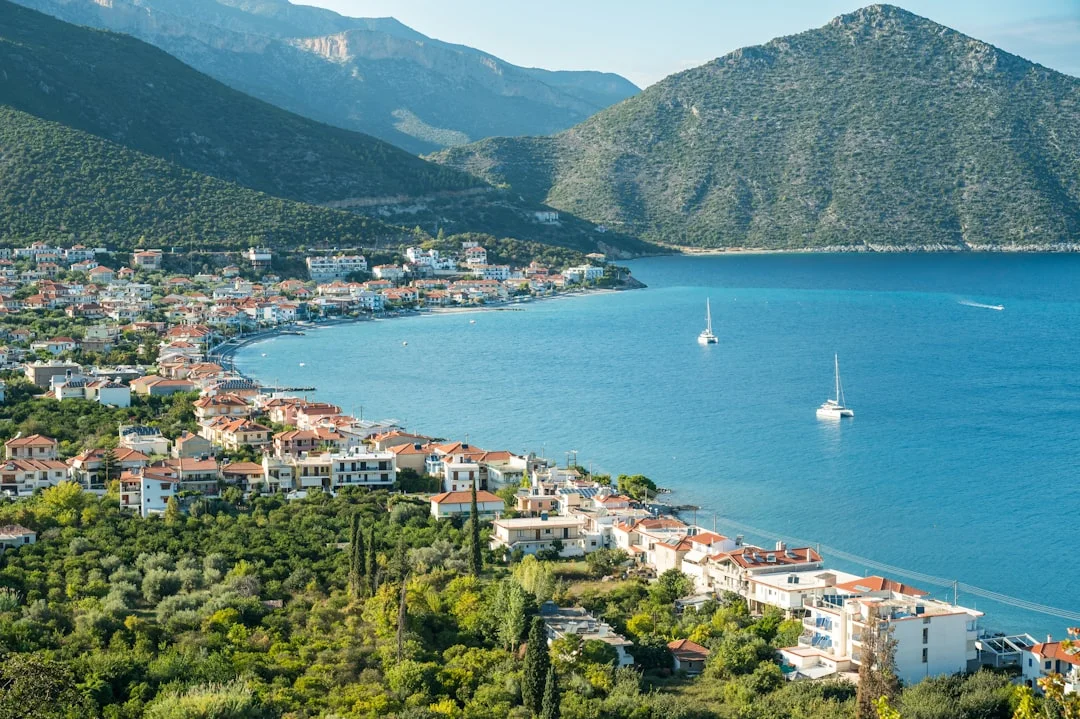
Photo by Ruben Aster on Unsplash
Saronic Gulf — Best for First-Time Greece Sailors
The Saronic Gulf is the entry-level Greek sailing experience, and that's not an insult. It's sheltered, the distances are short, the ports are well-equipped, and Athens is right there if anything goes wrong. Most bareboat charter companies base their "learn to sail in Greece" holidays here.
| Island | Distance from Athens (Alimos) | Character |
|---|---|---|
| Aegina | 17 nm | Pistachio groves, Temple of Aphaia, busy waterfront |
| Poros | 30 nm | Lush green hills, narrow strait anchorage, romantic |
| Hydra | 36 nm | No cars, no motorbikes — donkeys only. Stone mansions, art galleries |
| Spetses | 42 nm | Pine forests, pebble beaches, old-money Greek charm |
Wind: light and predictable. Summer sea breezes of 8–15 knots from the southwest, building in the afternoon and dying at sunset. You'll rarely see over 20 knots in the Saronic.
Typical itinerary (7 days): Athens → Aegina → Poros → Hydra → Spetses → Ermioni → Epidaurus → Athens. That's roughly 120 nm total — check the exact distances between stops. Daily hops average 15–20 nm, leaving plenty of time for swimming and exploring.
Hydra is the standout. No vehicles of any kind — just donkeys, walking paths, and a harbor full of cats and fishing boats. The town feels like 1950s Greece preserved in amber. Anchor in the harbor or take a mooring line to the quay, then walk to a rooftop bar and watch the sunset turn the stone buildings gold.
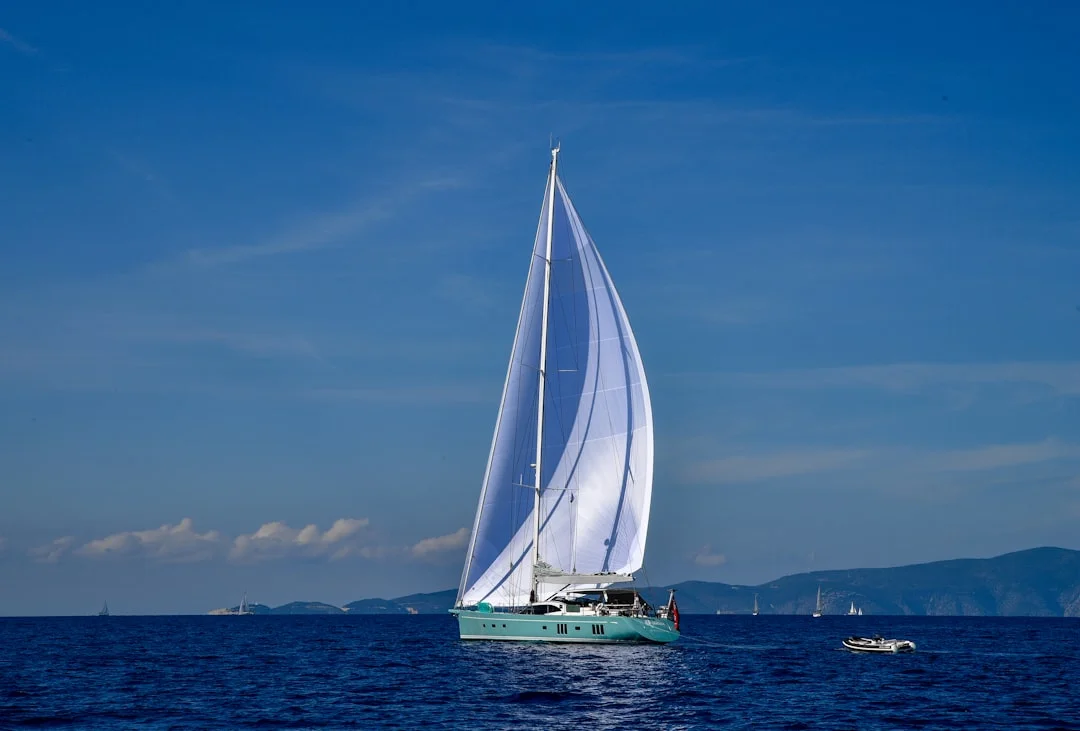
Photo by Margo Evardson on Unsplash
Cyclades — Iconic but Demanding
The Cyclades are what most people picture when they think "Greek islands" — whitewashed villages cascading down cliffs, blue-domed churches, dramatic volcanic landscapes. Santorini, Mykonos, Paros, Naxos — these are the headliners. The sailing is spectacular, but the wind demands respect.
The Meltemi Factor
The Meltemi is the defining weather feature of Cycladic sailing. This northerly wind blows from June through September, typically 15–25 knots but gusting to 30–40 knots during peak episodes in July and August. It's not a storm — it's a seasonal thermal wind. The sky stays blue, the sun keeps shining, and the wind blows your hat off.
In moderate Meltemi (15–20 knots), the sailing is exhilarating — fast reaches between islands with flat water in the lee of each landmass. In strong Meltemi (25+ knots), you reef down and plan carefully, because the channels between islands can be rough with wind-against-current conditions.
The golden rule: always have a plan B anchorage on the lee side of an island. If the Meltemi pipes up, you don't want to be anchored on the north side.
The Must-Visit Islands
| Island | Distance from Athens | Why Sailors Love It |
|---|---|---|
| Paros | 85 nm | Perfect base — central, sheltered harbor, excellent provisioning |
| Naxos | 95 nm | Biggest Cycladic island, long sandy beaches, green interior |
| Santorini | 130 nm | Volcanic caldera anchorage — dramatic but rolly |
| Mykonos | 85 nm | Famous nightlife, windmills, but crowded and expensive |
| Milos | 87 nm | Volcanic coastline, Kleftiko sea caves, less touristy |
| Koufonisia | 105 nm | Tiny, car-free, pristine beaches — the insider's favorite |
| Ios | 110 nm | Stunning Mylopotas beach, hilltop chora, younger crowd |
Best Cyclades itinerary (10–14 days): Athens → Kythnos → Serifos → Sifnos → Milos → Santorini → Ios → Paros → Naxos → Mykonos → Athens. That's roughly 300 nm — use Breezada's sea distance calculator to plan your daily legs.
Koufonisia deserves special mention. This pair of tiny islands between Naxos and Amorgos is what the Cyclades looked like 30 years ago — no cars, three tavernas, beaches with water that belongs in a swimming pool brochure. Anchor in the small bay and dinghy ashore. You'll want to stay for days.
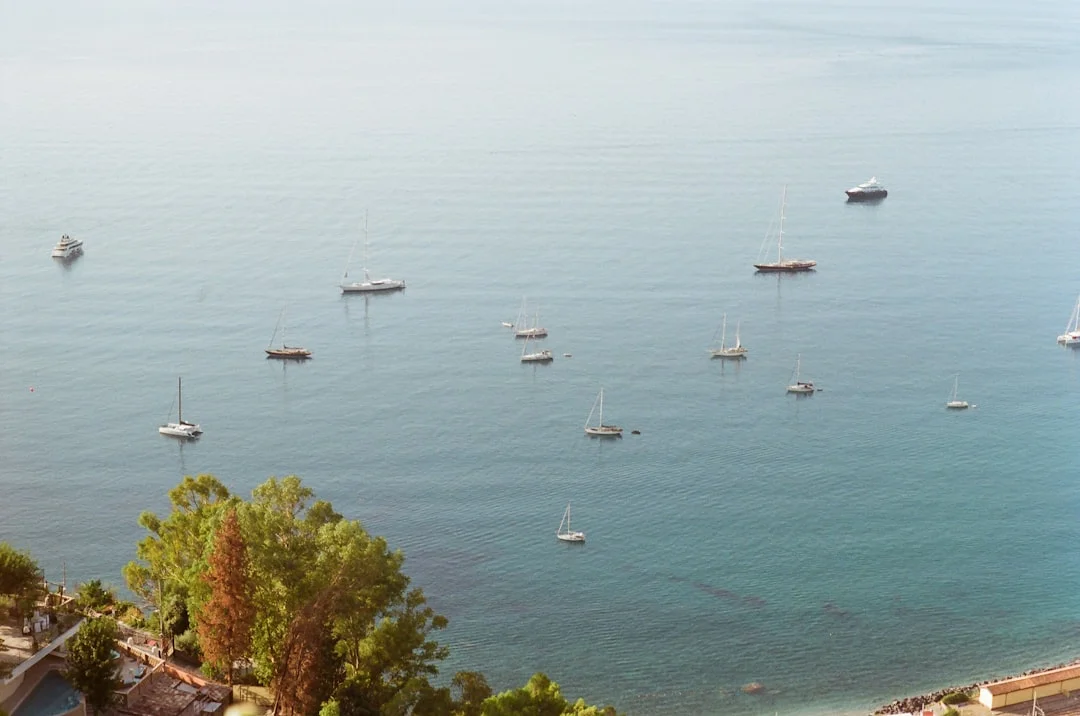
Photo by Jade Bezzina on Unsplash
Ionian Islands — Easiest Sailing, Greenest Scenery
The Ionian Sea on Greece's west coast is the polar opposite of the Cyclades. Where the Cyclades are arid and windswept, the Ionians are lush, green, and sheltered. The wind is gentler, the seas are calmer, and the islands look more like Italy than the stereotypical Greek postcard.
| Island | Character | Sailing Note |
|---|---|---|
| Corfu | Venetian old town (UNESCO), cosmopolitan | Northern Ionian base, lush and green |
| Paxos / Antipaxos | Tiny, unspoiled, turquoise bays | Best swimming water in the Ionian |
| Lefkada | Connected to mainland by bridge, dramatic west coast | Popular charter base (Nidri) |
| Kefalonia | Largest Ionian, dramatic mountains, Myrtos beach | Captain Corelli's island |
| Ithaca | Odysseus's homeland, peaceful and authentic | Great anchorages, almost no tourists |
| Zakynthos | Navagio Beach (the Shipwreck), sea turtles | Busy with day-trippers |
Wind: gentle summer breezes of 5–15 knots, often from the northwest. The Ionian rarely sees the Meltemi that hammers the Aegean. Morning calms are common — you might motor for an hour before the thermal breeze fills in around noon.
Typical itinerary (7 days from Lefkada): Lefkada → Meganisi → Ithaca (Vathi) → Kefalonia (Fiskardo) → Paxos → Antipaxos → Lefkada. About 100 nm total, with daily hops of 10–20 nm.
Fiskardo on Kefalonia is the jewel of the Ionian — a pastel-colored fishing village with excellent restaurants, a tiny harbor, and crystal-clear swimming off the rocks. It's one of the few places in Kefalonia that survived the 1953 earthquake intact. Get there early for a quay spot or anchor in the bay.
Dodecanese — Uncrowded and Exotic
The Dodecanese chain sits in the southeastern Aegean, closer to Turkey than to mainland Greece. These islands are less sailed than the Cyclades, which means emptier anchorages, cheaper marinas, and a more authentic Greek experience.
| Island | Distance from Rhodes | Why Go |
|---|---|---|
| Rhodes | Base | Medieval old town (UNESCO), major provisioning |
| Symi | 23 nm | Pastel neoclassical harbor, possibly the prettiest port in Greece |
| Kos | 55 nm | Long sandy beaches, Hippocrates' plane tree, Turkish influence |
| Kalymnos | 65 nm | Sponge-diving capital, world-class rock climbing |
| Leros | 75 nm | Italian art deco architecture, quiet anchorages |
| Patmos | 90 nm | Monastery of St. John, spiritual atmosphere, stunning |
Wind: the Meltemi reaches here but is weaker than in the Cyclades — typically 10–20 knots from the north/northwest in summer. The channels between islands are less exposed, and the proximity to the Turkish coast provides some shelter.
The highlight: Symi. The harbor at Gialos is lined with neoclassical mansions painted in ochre, terracotta, and sea blue, rising steeply from the water's edge. It might be the most photogenic port in Greece. Arrive by sea in the late afternoon when the light is golden and the day-trippers from Rhodes have gone home.
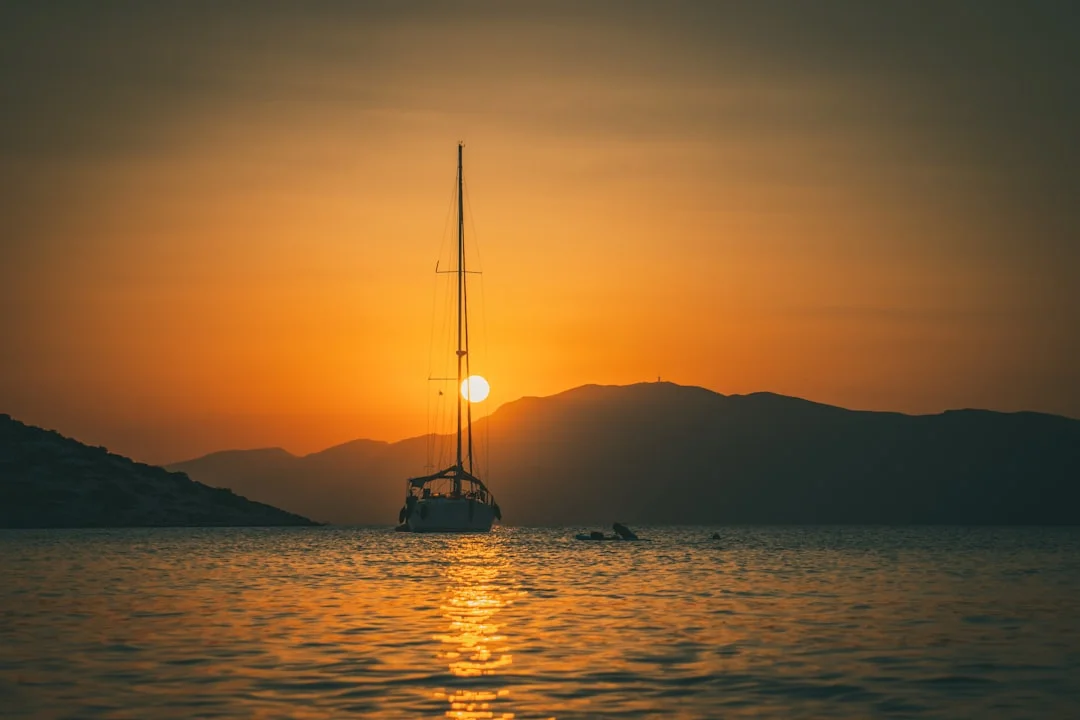
Photo by Raimond Klavins on Unsplash
Sporades — Lush, Sheltered, and Off the Beaten Track
North of Evia, the Sporades are some of the greenest islands in Greece — dense pine forests running down to turquoise bays. Skiathos has an international airport, making the Sporades accessible but not overrun.
| Island | Character |
|---|---|
| Skiathos | 60+ beaches, Koukounaries (often ranked Greece's best beach), lively nightlife |
| Skopelos | Mamma Mia filming location, hilltop churches, quieter than Skiathos |
| Alonnisos | National Marine Park, monk seals, pristine diving |
Wind: 5–12 knots typical, with occasional Meltemi spillover bringing 15–20. The Sporades are well-sheltered and perfect for a relaxed family sail.
Distances are short — Skiathos to Skopelos is just 10 nm, Skopelos to Alonnisos another 8 nm. You can visit all three in a long weekend. Calculate your route from the mainland bases at Volos or Skiathos.
When to Sail Greece
| Month | Conditions | Crowds | Our Take |
|---|---|---|---|
| April–May | 15–22°C, light winds, some rain | Very low | Great for Saronic/Ionian. Cyclades still cool. |
| June | 22–28°C, Meltemi starting | Moderate | Best overall month. Warm, manageable wind, not crowded. |
| July | 28–33°C, Meltemi strong | High | Excellent sailing if you handle wind. Hot ashore. |
| August | 30–35°C, Meltemi peak | Very high | Greek vacation month. Everything is full and expensive. |
| September | 25–30°C, Meltemi fading | Moderate | Second-best month. Still warm, calmer, fewer boats. |
| October | 20–25°C, variable winds | Low | Water still warm. Some rain. Great value. |
June and September are the sweet spot. Warm water for swimming (23–26°C), enough wind for good sailing without Meltemi battles, reasonable crowds, and charter prices 30–40% below July/August peak.
Practical Tips
Anchoring vs. Marinas
Greek marinas charge $30–$80/night for a 40-foot boat. Most sailors anchor out 80% of the time — Greece has hundreds of free anchorages in well-protected bays. Carry a good anchor (CQR or Mantus, 20kg+ for a 40-footer), 50+ meters of chain Brush up on anchoring techniques before your trip — you'll anchor almost every night., and a long shore line for Med-mooring.
Provisioning
Major islands (Paros, Naxos, Rhodes, Corfu, Lefkada) have supermarkets with good selection. Smaller islands have mini-markets with basics. Buy fresh produce and meat on the big islands; stock up on staples before leaving the charter base. Greek tomatoes, feta, and bread from a village bakery are among the best meals you'll have aboard.
Greek Sailing Licenses
You need a sailing license to bareboat charter in Greece. Accepted qualifications:
- ICC (International Certificate of Competence) — most commonly used
- RYA Day Skipper or above If you're new to sailing, our beginner's guide covers the fundamentals before you charter.
- ASA 104 or above (some companies accept, others want ICC)
A VHF radio license (Short Range Certificate) is technically required but inconsistently enforced. Get one anyway — it takes a day. For a full comparison of ASA, RYA, and ICC certifications, see our sailing certifications guide.
Frequently Asked Questions
Which Greek island group is best for beginners?
The Saronic Gulf, hands down. Short distances (15–20 nm/day), sheltered waters, light winds, and Athens nearby as a safety net. The Ionian is a close second — equally easy sailing with more dramatic scenery but farther from Athens.
How much does it cost to sail the Greek islands?
A 38-foot monohull bareboat in the Cyclades costs $2,500–$4,000/week in shoulder season, $4,000–$6,000 in July/August. A 42-foot catamaran runs $4,000–$6,500 (shoulder) to $7,000–$10,000 (peak). Add 30–40% for provisioning, fuel, and marina fees.
Can I island-hop without a boat?
Yes — Greece has an extensive ferry network. But sailing gives you access to anchorages, hidden bays, and tiny islands that ferries don't serve. You set your own schedule, eat aboard or ashore, and wake up in a different paradise every morning. It's a fundamentally different experience.
Is the Meltemi dangerous?
Not inherently — it's a predictable wind system, not a storm. But 25–30 knots in open Cycladic channels can produce serious seas, especially between Mykonos and Tinos or in the Kafireas Strait. Inexperienced crews should avoid the central Cyclades in July/August and stick to the Saronic, Ionian, or Dodecanese.
What's the best island nobody talks about?
Koufonisia in the Small Cyclades. Two tiny islands with empty beaches, three tavernas, zero traffic, and water that makes the Caribbean jealous. Astypalaia in the Dodecanese is another hidden gem — a butterfly-shaped island with a Venetian castle and almost no charter boats.
About the Author
Related Articles
Amalfi Coast vs French Riviera Sailing Guide (Costs & Routes)
Compare Amalfi Coast vs French Riviera sailing—costs, crowds, mooring rules, best months, and 7-day routes. Choose your coast and plan now.
By Breezada Team
Puget Sound Cruising Guide to Gulf Islands Routes
Plan routes, anchorages, and weather windows with this Puget Sound cruising guide for the Gulf Islands & San Juans. Read now and start plotting.
By Breezada Team
Sailing Amalfi Coast Guide: Ports, Anchorages & Rules
Sailing Amalfi Coast guide to Capri, Positano & Amalfi: best ports, anchorages, fees, VHF and rules. Plan your route—read now.
By Breezada Team
Dry Tortugas Sailing: Routes, Anchoring & Permits
Plan Dry Tortugas sailing from Key West with routes, weather windows, anchoring/moorings, and permits. Read the guide and plan your trip.
By Breezada Team