Best Stove for a Sailboat: Propane, Diesel, Induction
Choosing the best stove for a sailboat isn’t about declaring one fuel “safe” and the others “sketchy.” It’s about engineering risk down and matching the system to your boat’s space, electrical capacity, and the way you actually cruise. I’ve seen immaculate propane installs that are safer than a sloppy diesel conversion, and I’ve also seen induction setups that were one loose lug away from a very expensive smoke test.
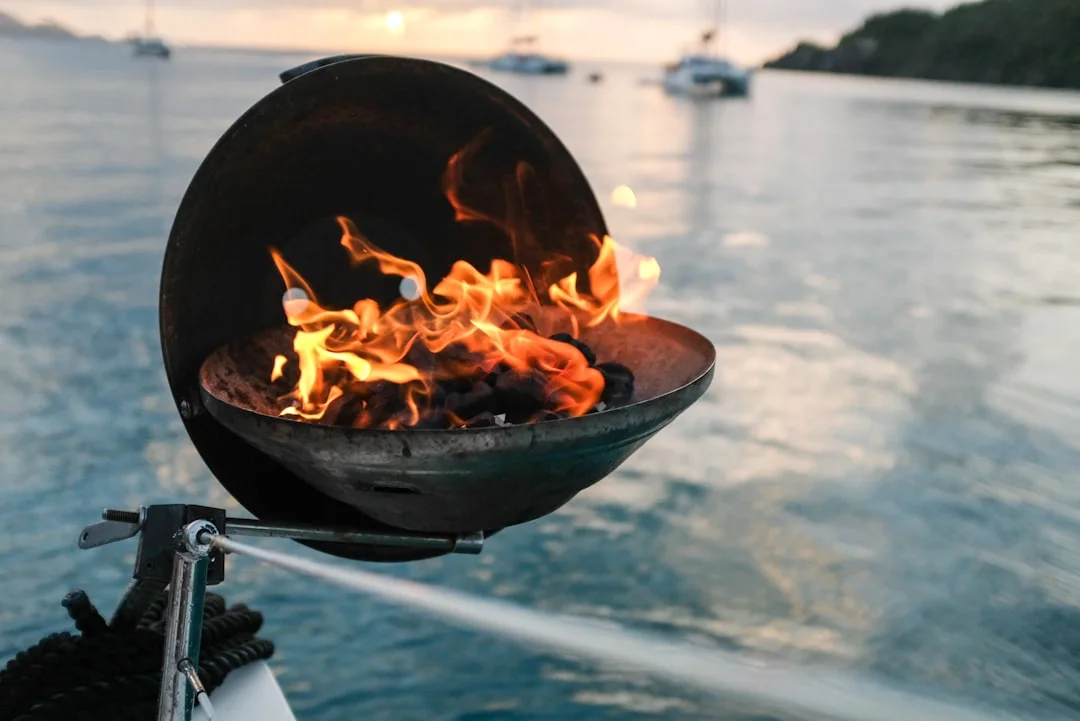
Photo by Devin Carter on Unsplash
Safety and risk profile: propane vs diesel vs induction
Failure modes that actually sink boats (and how to prevent them)
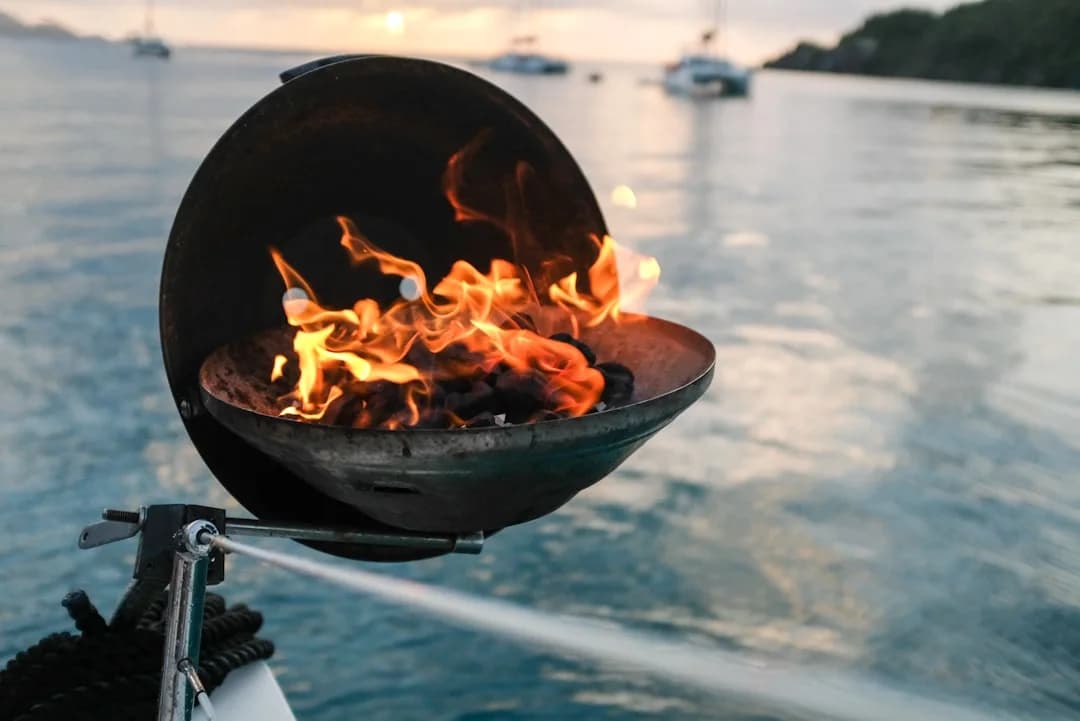
The big propane risk isn’t the flame—it’s the leak. LPG vapor is ~1.5× heavier than air, so it settles into bilges and low lockers, where one spark can turn your cabin into a pressure vessel. Prevention is straightforward: a vapor-tight locker, a drain from the lowest point overboard, and a solenoid shutoff at the cylinder, plus a detector placed low where the gas will actually go.
Diesel’s reputation is earned, but it’s not magic. Diesel’s flash point is ~52°C (126°F) versus gasoline at ~−43°C (−45°F), which is why diesel is less volatile in normal cabin temperatures. The real diesel failure modes are exhaust heat, soot, leaking joints, and carbon monoxide (CO)—the kind of problem that doesn’t smell dramatic until you feel weird at 0200.
Induction replaces fuel vapor with high DC current and hot cookware. Run a 1,800 W induction hob through an inverter and you can pull roughly 160–180 A on a 12 V system once losses and voltage sag show up. If the cabling, fusing, and terminations aren’t built like a proper DC power plant, you’re betting your boat on crimp quality.
How ABYC/ISO guidance changes the safety conversation
Standards don’t make a system perfect, but they make it predictable. For LPG, ABYC A-1 and ISO 10239 push you toward containment: locker integrity, overboard drain, protected hose runs, and tested shutoffs. For induction/inverters, ABYC E-11 is your yardstick for conductor sizing, overcurrent protection, and safe routing—because “it works” isn’t the same as “it won’t cook itself.”
USCG rules and guidance generally align with ABYC best practices in practice, even when not explicitly mandated for every recreational sailboat. If you want “safe enough” without guessing, build to the standard and document it like you plan to sell the boat to a skeptical surveyor.
What “safe enough” means for offshore cruising
Offshore, safety is mostly fatigue management and routine. Your “safe enough” system is the one you can operate correctly when you’re cold, tired, and braced at 20–30° of heel. That means reliable shutoffs, alarms you trust, and procedures you repeat—every single time.
Decision factors that matter later: underway cooking at heel, fuel logistics (propane refills vs diesel from the main tank), cabin heat/condensation, electrical capacity, and total installed cost. You can plan the itinerary side using a tool to calculate the distance between ports—because your stove choice gets real when you’re counting miles between fuel docks and shore-power stops.
Practical tip: The safest system is the one that’s installed to standard and backed by habits: shutoff discipline, regular leak/soot checks, and alarms that are tested monthly—not annually when you remember.
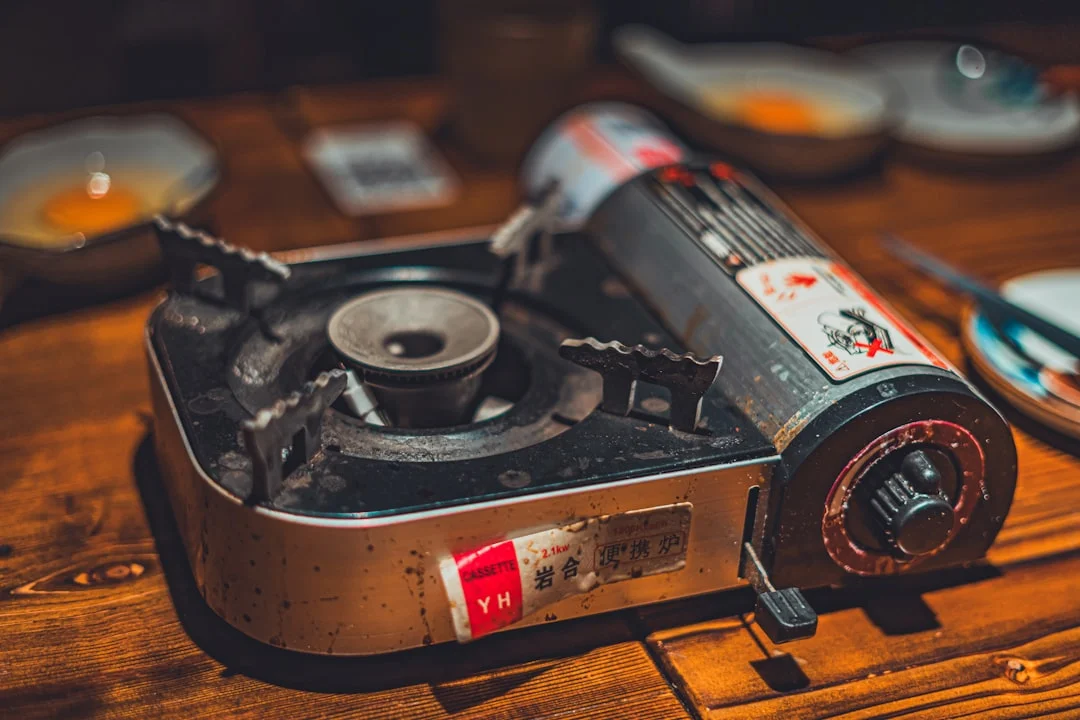
Photo by Coralt Zou on Unsplash
Propane (LPG) cruising stoves: performance + ABYC A-1 setup
How propane performs underway (burner output, gimbals, oven use)
Propane remains the default on cruising sailboats because it cooks like a proper stove. Typical marine burners run ~7,000–10,000 BTU/hr each, so a 2-burner gimbaled range commonly delivers ~14,000–20,000 BTU/hr plus an oven. That’s enough to boil water briskly, simmer without drama, and bake when the weather’s too foul for cockpit heroics.
Underway, gimbals matter more than raw heat. A gimbaled marine stove with solid pot restraints will keep a kettle from launching when you’re bouncing at 25° heel and the autopilot is having a personal crisis. Most crews underestimate that scalds are the galley’s most common “serious” injury—until they earn one.
ABYC A-1 essentials: locker, drain, solenoid, hose, test points
An ABYC A-1-aligned propane system is basically a controlled leak container. The locker must be dedicated and vapor-tight to the interior, with a drain from the lowest point directly overboard, never into the bilge. The cylinder gets an electric solenoid shutoff mounted at the tank/locker, plus the manual cylinder valve you can reach without contorting like a deckhand in a hatch.
From there: marine-approved regulator and hose, supported runs, chafe protection, and careful routing away from hot engine spaces and sharp edges. Labeling and leak testing aren’t paperwork theater—if you can’t explain your propane system in two minutes, you can’t troubleshoot it in two seconds when something smells wrong.
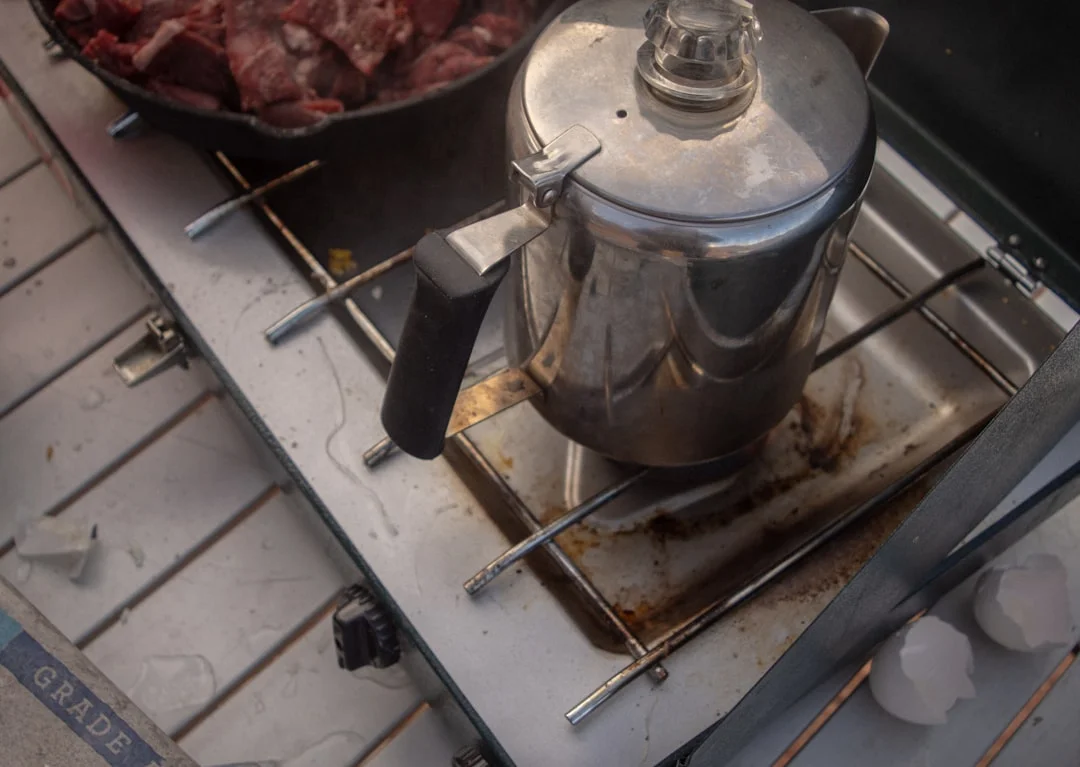
Photo by Alex Moliski on Unsplash
Detectors, shutoff habits, and troubleshooting leaks
A good LPG detector is cheap compared to fiberglass work. Units from marine categories like Xintex/Fireboy-style detectors belong low—near bilge areas or the lowest likely collection points—because gas doesn’t rise to meet your detector halfway. Put the solenoid control where you’ll actually use it: galley or nav station, not buried behind the cereal.
Human factors make or break safety. My standard routine: open locker, sniff, open cylinder, solenoid on, light immediately, then shut solenoid off when cooking ends and let the line burn down. If you suspect a leak, don’t “check with a lighter” unless you want to audition for the insurance adjuster’s slideshow; use soapy water and a calm sequence.
Cylinder planning and refill reality
Propane logistics get weird once you leave your home region. A 10 lb cylinder holds about 2.36 US gal of propane, and a 20 lb holds about 4.7 gal (density ~4.24 lb/gal @ 60°F). Knowing gallons helps when a dock attendant can fill by volume but has never heard of your cylinder’s “pounds.”
Carry adapters if you cruise internationally, but don’t build your plan on miracles. In exchange-only markets, you may need to swap to a local cylinder and adapt at the regulator, not the other way around. Before a long run, use a sea-distance tool to check the nautical miles between refills to map legs between likely refill points and add buffer for weather delays.
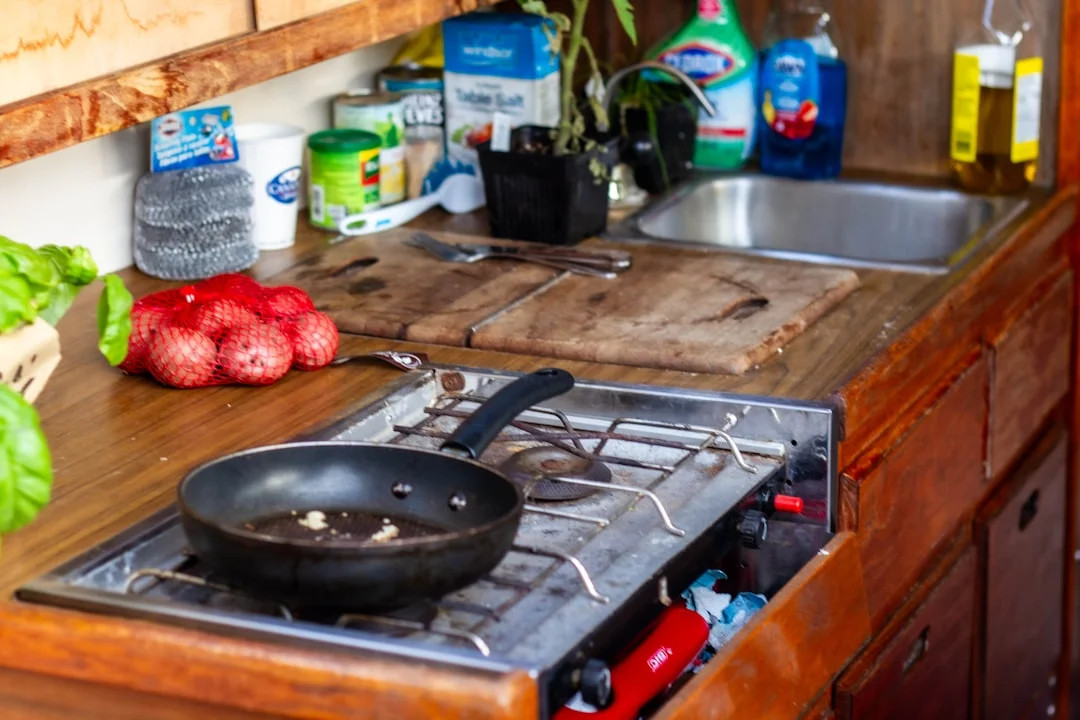
Photo by Cord Allman on Unsplash
Diesel cooktops: safety advantages, installs, and real cooking
Why diesel is popular offshore (single-fuel logic and volatility)
Diesel cooking appeals to offshore crews for one boring reason: it’s practical. Diesel is widely available, and drawing from a main tank simplifies logistics compared with chasing the correct propane fitting on a remote island. The higher flash point—again, ~52°C (126°F)+—reduces the “invisible vapor bomb” risk that makes LPG locker design so unforgiving.
That said, diesel appliances are not “install and forget.” They’re combustion devices that need clean fuel, good airflow, and an exhaust path that won’t roast your joinery. Think of diesel as lower volatility with higher system complexity.
Installation realities: fuel metering, day tanks, exhaust routing
Diesel stoves typically use a metering pump, filtration, and a tidy fuel supply with no air leaks. Some installs add a day tank to reduce contamination and priming headaches; budget $150–$800 for tank, fittings, filters, and the little pieces that always cost more than you expect. It’s not glamorous, but it’s the difference between a reliable stove and one that sulks whenever the boat slams.
Exhaust routing is the safety-critical part. You need proper heat shielding, sensible clearances, and joints that won’t loosen over time. A diesel cooktop/heater combo often costs $2,500–$6,500, and you’ll earn every dollar back the first time you can dry wet gear and cook without opening lockers full of propane hardware.
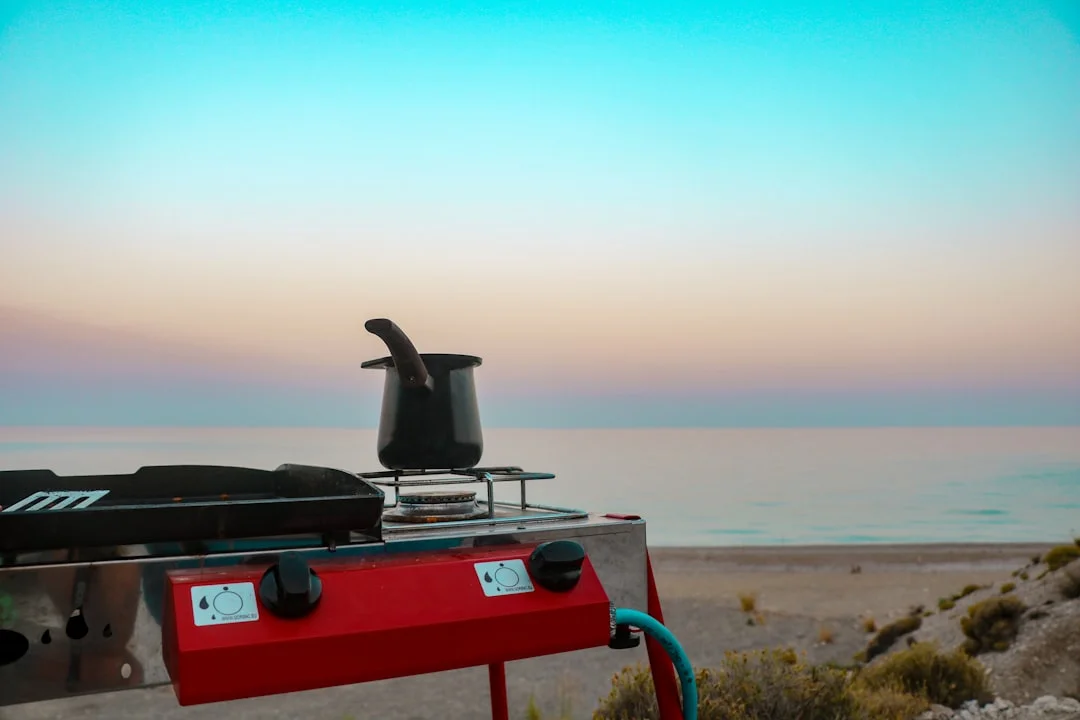
Photo by dole777 on Unsplash
CO, soot, and cabin heat: ventilation and monitoring
CO is the diesel elephant in the cabin. “No open flame” doesn’t mean “no CO,” especially if soot builds up, the exhaust joint weeps, or a backdraft happens in certain wind angles. Use CO alarms in sleeping spaces and test them regularly; treat alarms as consumables, not heirlooms.
Ventilation matters, too. ABYC’s ventilation principles (including ABYC H-32 for diesel ventilation concepts) point you toward adequate combustion air and avoiding stagnant cabin conditions. Diesel appliances can add welcome heat in cold climates, but they can also make a boat feel like a damp locker if you don’t manage airflow and keep the burner tuned.
Electrical draw is usually modest once running—often ~0.5–2.5 A at 12 V—but startup can spike higher with glow plugs. That’s rarely a deal-breaker, but it’s worth knowing when your batteries are already tired after a long night on instruments.
Induction with an inverter: watts-to-amps and ABYC E-11 wiring
Power math: what 1,800 W really means on a 12 V boat
Induction is wonderful at the pan and ruthless to your DC system. A typical burner draws 1,200–1,800 W (about 10–15 A at 120 VAC), and it heats efficiently—often ~80–90% into the cookware with the right pot. The trouble starts when you ask a 12 V battery bank to pretend it’s shore power.
Assume inverter efficiency ~85–92% under heavy load. To produce 1,800 W AC, you may need ~1,950–2,120 W from the batteries. On 12.0 V at 90% efficiency, that’s 1,800 / (12.0 × 0.9) ≈ 167 A; at 11.5 V, it’s easy to see ~170–180 A.
Inverter sizing: continuous vs surge, pure sine wave, voltage sag
For induction, a pure sine wave inverter isn’t snobbery—it prevents nuisance faults and reduces weird behavior from cooktops that expect clean power. A practical minimum for one burner is 2,000–3,000 W continuous, because real boats have voltage sag, warm inverter compartments, and batteries that aren’t always at 13.2 V. Surge rating matters less for induction than for motor loads, but you still want headroom.
If your plan includes cooking and charging simultaneously, you must think in system terms. A 2–3 kW inverter can demand near 200 A DC at times, which is within reach of good lithium and charging setups, but it will humble a typical coastal cruiser’s wiring in short order.
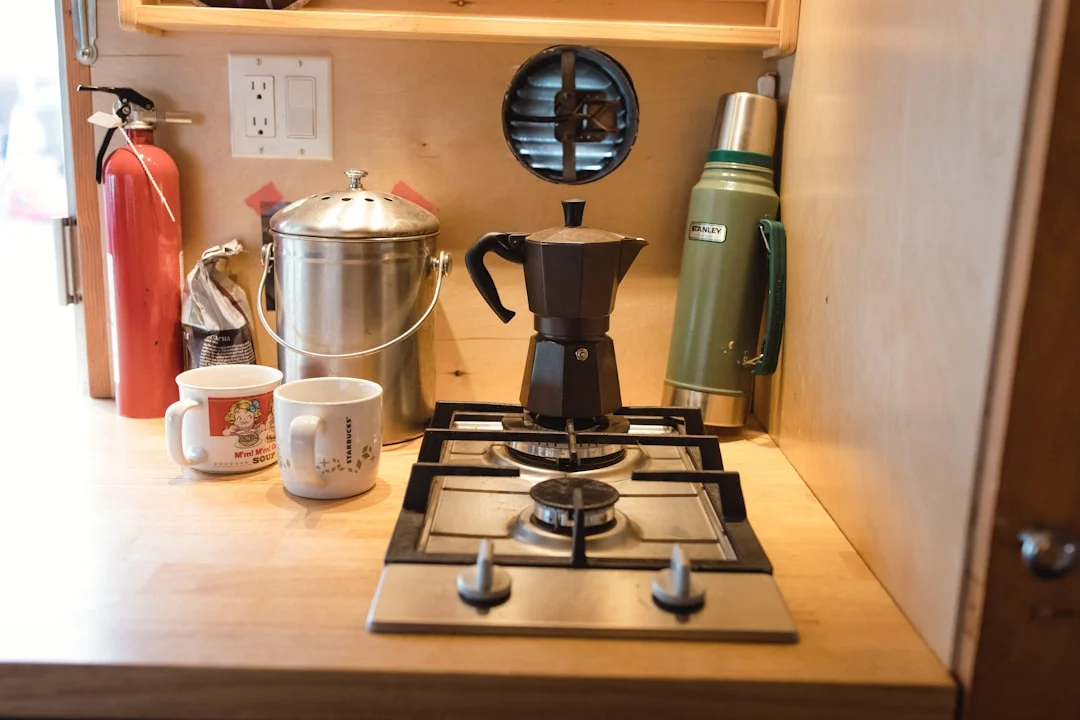
Photo by Jason Leung on Unsplash
Cabling, fusing, and heat management (E-11 mindset)
This is where ABYC E-11 thinking saves boats. High-current inverter circuits need short runs, proper termination, and overcurrent protection sized to protect the conductors. In the 200–400 A world, it’s common to see 2/0 to 4/0 AWG depending on run length and acceptable voltage drop, paired with Class T fusing, rated disconnects, and solid bus bars.
Heat is your enemy, and it hides. A slightly loose lug at 180 A becomes a heater you didn’t ask for, usually behind a panel you can’t see while cooking. Mount the inverter where it has airflow, keep DC cables supported, and torque lugs to spec—then re-check after a few thermal cycles.
Underway is the other limitation. Most induction units aren’t gimbaled, and if a pan slides and loses coupling, many units cut power or cycle. You can make induction workable at sea with strong fiddles, non-slip pads, and pot restraints, but you’ll never make it as forgiving as a gimbaled propane range in sloppy seas.
Total cost and energy cost per meal (installed, not wishlist)
Sticker price is the trap. A $120 induction hob is real, but it’s not the system; it’s the part you can see. Installed costs include lockers, exhaust work, DC cabling, overcurrent protection, battery upgrades, and the labor hours you don’t want to count because it’s your weekend.
Here’s the practical comparison—equipment plus the usual “oh right, that too” list—using current price anchors.
| System | Typical equipment cost | Typical installation add-ons | Typical ongoing energy cost scenarios | Maintenance items | Hidden costs sailors forget |
|---|---|---|---|---|---|
| Propane (LPG) | Range/oven $1,400–$3,500 or cooktop $350–$1,200 | Locker $150–$900, solenoid $80–$250, detector $80–$220, regulator $60–$200 | Fuel priced by region; propane energy ~21,600 BTU/lb helps estimate burn vs meals | Regulator/solenoid aging, hose inspections, detector replacement | Global cylinder fittings/adapters; locker space; disciplined shutoff habits |
| Diesel | Stove/cooktop/heater $2,500–$6,500 | Day tank + fittings $150–$800, exhaust/flue work, shielding, service access | Diesel ~128,000–130,000 BTU/gal; usually easy to source | Burner cleaning, soot management, pump/filter service | CO alarm strategy; exhaust heat damage risk; parts availability by region |
| Induction | Portable $60–$200; built-in $700–$2,500 | Inverter $500–$1,800, cabling/fusing $250–$1,200, lithium $2,500–$9,000, alternator $900–$3,500, genset $8,000–$20,000+ | Cheap on shore power; expensive on alternator hours; efficient ~80–90% at the pan | Inverter fans, battery lifecycle, connection inspections | DC fire risk if undersized; charging upgrades; non-gimbaled underway limitations |
If you marina-hop with shore power, induction can be absurdly cheap to run and pleasant to live with. If you make electricity with diesel, the economics depend on engine hours, alternator output, and how much you value quiet nights at anchor.
Cooking underway: heel angles, gimbals, pot restraint, burn control
Gimbaled propane vs fixed diesel/induction: what changes at sea
Underway cooking is where theory meets bruises. A gimbaled marine stove keeps the pot more level as the boat rolls, and that directly reduces scald risk and galley fires. That’s why propane ranges remain popular with passagemakers despite the locker requirements.
Diesel cooktops and most induction setups are typically fixed. You can cook on them at sea, but the “easy” window narrows as heel angles climb past 15–20°, and you’ll feel it in your shoulders from bracing. If your offshore plan includes hot meals in real weather, gimbals are not nostalgia.
Spill and scald prevention: rails, clamps, and pan coupling
Pot restraints aren’t optional offshore—they’re PPE. Use proper fiddles/sea rails, pot clamps, and lids that can’t skate away when the boat slams. Most galley incidents are hot liquid problems, not open flames, and the first line of defense is keeping the pot where you put it.
Induction adds one more wrinkle: pan coupling. If the pan base shifts off-center, some units reduce power or shut off, which sounds safe until you’re trying to manage a half-cooked meal while braced and annoyed. Larger, flat ferromagnetic bases are better for both efficiency and stability; do the magnet test before you commit to a cookware set.
Ventilation, moisture, and heat management in real cabins
Propane combustion adds moisture, full stop. That extra water vapor contributes to condensation, mildew, and that signature “boat closet” smell unless you ventilate aggressively. Diesel appliances vary, but many add noticeable cabin heat—great in high latitudes, less charming in the tropics.
Induction adds minimal moisture and less ambient heat, which liveaboards love. The tradeoff is that you’ve shifted the burden to your electrical system, so your “ventilation plan” becomes a “charging plan.” If your route includes long calm spells, alternator charging for cooking loads may force engine hours you didn’t want.
Practical tip: Offshore, cook when the motion is tolerable—often right after a sail change when the boat is balanced—and avoid big pots of boiling water when you’re tired. “One-pot meals” aren’t trendy; they’re injury prevention.
Route planning and fuel logistics: refills, range, and shore-power stops
Your itinerary quietly decides your stove. Remote archipelagos punish propane logistics, high latitudes reward diesel heat, and marina-hopping makes induction feel like cheating. Before you spend thousands, map your likely cruising grounds and count how often you’ll realistically see shore power.
Propane friction is mostly about cylinders: standards, adapters, and exchange-only markets. If you carry 10 lb (2.36 gal) or 20 lb (4.7 gal) cylinders, you can estimate range, but you can’t guarantee refills will match your fittings. Locker size becomes cruising range, and cruising range becomes route constraint.
Diesel is the easy button for fuel availability, but not always for service. Parts and technician familiarity vary by region and brand category, so bring the spares that strand people: filters, glow plug parts if applicable, and the little exhaust clamps that are never in stock where you need them.
Induction works best when route planning includes regular shore power or substantial charge windows from solar/alternator. A lightweight planning workflow: use a voyage distance tool to estimate your cooking fuel needs to estimate NM between provisioning or shore-power points, then translate your habits into fuel or amp-hours. If you cook two hot meals a day, add a weather/layday buffer and assume you’ll be too tired to optimize every watt on day five.
Decision matrix: safest and best setup for your cruising style
Recommended configurations (minimum viable specs) for each option
There are good reasons crews end up with hybrids: diesel heat plus propane cooking, or induction at the dock with a single-burner backup offshore. Redundancy matters, because the ocean is excellent at revealing single points of failure right after chandleries close.
Use this matrix as a reality check. It’s not about brand loyalty; it’s about whether your boat can support the system without heroic workarounds.
| Option | Safety-by-design requirements | Underway usability | Install complexity | Global logistics | Electrical impact | Heat/moisture | Best-fit cruising profiles |
|---|---|---|---|---|---|---|---|
| Propane (LPG) | Non-negotiables: vapor-tight locker, dedicated propane locker drain overboard (not bilge), solenoid shutoff valve, low-mounted LPG detector; ABYC A-1 / ISO 10239 mindset | Excellent with gimbaled marine stove + pot restraints; best for cooking underway at heel | Moderate; locker and hose routing must be right | Mixed; cylinder fittings can be painful abroad | Low DC load (detector/solenoid) | Adds moisture; manageable with ventilation | Offshore passagemaking, cooking-focused crews, boats with modest electrical systems |
| Diesel | Correct exhaust/flue routing, heat shielding, combustion air, CO alarm strategy; ventilation principles per ABYC H-32 | Good to fair; many units fixed, less friendly at 20°+ heel | High; fuel metering + exhaust work must be clean | Excellent fuel availability; parts/service varies | Low running draw; higher startup | Adds heat; moisture depends on appliance/venting | High-latitude cruising, single-fuel simplicity, liveaboards wanting heat + cooking |
| Induction | Minimum: pure sine 2,000–3,000 W inverter for one burner, short DC runs, Class T fuse, 2/0–4/0 AWG cabling per ABYC E-11 practices | Fair at best; usually non-gimbaled, needs fiddles and restraint | High; often triggers battery/charging upgrades | Great if you have shore power; weak if truly off-grid | Very high DC current (160–180 A for 1,800 W) | Minimal cabin moisture/heat | Marina-hopping, liveaboards with strong lithium/solar, boats already built around big electrical systems |
Who should choose propane, diesel, or induction (and why)
If you routinely cook underway and want the least drama at heel, propane still wins—provided you commit to an ABYC A-1-style locker, drain, solenoid, and detector. If your boat already has a modest electrical system and you don’t want to rebuild it, propane is usually the most rational path.
If you’re headed cold and remote, diesel earns its keep. A diesel cooktop/heater combo can simplify fuel logistics and add cabin heat, but only if the exhaust and CO monitoring are treated as primary systems, not accessories. This is not where you “good enough” a clamp.
If you live on shore power half the time or you’ve already invested in lithium, alternator output, and solar, induction is hard to beat for comfort. Just remember: induction is fundamentally an electrical project, and boats are very good at punishing electrical shortcuts with melted insulation and sadness.
Frequently Asked Questions
For ABYC A-1 compliance, what are the acceptable LPG locker drain characteristics (location at lowest point, overboard termination), and why can’t it terminate in the bilge?
An ABYC A-1-aligned locker drain should originate at the lowest point of the propane locker and terminate directly overboard, so any leaked LPG (heavier than air at ~1.5× air density) exits the boat immediately. It cannot drain to the bilge because propane will pool low, linger, and potentially find an ignition source, turning a minor leak into an explosion hazard.
How do you size a pure sine inverter for a 1,800 W induction hob when DC voltage sag and 85–92% efficiency are included, and what continuous rating margin is practical onboard?
Start with the AC load (1,800 W) and account for inverter efficiency (0.85–0.92), so DC input can be ~1,950–2,120 W. Then account for voltage sag: at 12.0 V, current is about 167 A at 90% efficiency, and at 11.5 V it can exceed 170–180 A. A practical onboard margin is a 2,000–3,000 W pure sine inverter for one burner, because real-world heat, sag, and nuisance trips show up right when you want dinner.
On a 12 V system, what Class T fuse and DC cable gauge range (2/0–4/0 AWG) is typically appropriate for a 2–3 kW inverter installation under ABYC E-11 principles, assuming 200–400 A peak currents?
For a 2–3 kW inverter, design for 200–400 A potential DC currents depending on voltage, load, and surge behavior. Under ABYC E-11 principles, it’s common to see 2/0 to 4/0 AWG cabling (chosen by run length and voltage-drop limits) protected by a Class T fuse sized to protect the conductor and match inverter manufacturer guidance. The exact fuse rating is installation-specific, but the intent is consistent: protect wiring first, keep runs short, and use properly rated disconnects and bus bars.
What CO alarm placement strategy is recommended when installing a diesel cooktop/heater combo with an exhaust/flue, and what failure modes (soot, backdrafting, leaking joints) should routine inspections target?
Place CO alarms in sleeping spaces and near living areas where people spend long periods, following the alarm manufacturer’s height/location guidance. Routine inspections should target soot buildup (a sign of poor combustion), exhaust joint leaks, heat damage at penetrations, loose clamps, and conditions that promote backdrafting in certain wind angles. Treat exhaust integrity like rigging: it’s not optional just because it’s hidden.
If your house bank is 400 Ah lead-acid, how many minutes of 1,800 W induction cooking can you support while staying near a 50% depth-of-discharge limit, and what changes with 400 Ah LiFePO4?
At ~180 A DC draw, 30 minutes of induction cooking consumes about 90 Ah. On a 400 Ah lead-acid bank with a conservative 50% usable capacity (about 200 Ah usable), that 90 Ah is roughly 45% of usable capacity, so you’re looking at about 60–70 minutes total before you’re pushing past the comfort zone—less if voltage sag trips the inverter early. With 400 Ah LiFePO4, you can typically use a much larger fraction of capacity with less voltage sag, so the same cooking time is more practical, though you still must size cabling, fusing, and charging to match the high current.
About the Author
Related Articles
How to Choose an Anchorage: Scope & Swing Room Plans
Learn how to choose an anchorage with scope math, swing room and backup plans to avoid dragging. Read the guide and anchor with confidence.
By Breezada Team
How to Stop a Boat From Rocking at Anchor Overnight
Learn how to stop a boat from rocking at anchor overnight with scope, snubbers, riding sails, and better alarm settings—sleep better tonight.
By Breezada Team

Bahamian Moor Guide: Tandem Anchors & Snubbers
Learn bahamian moor setup, tandem anchoring, and proper snubbers for crowded anchorages. Get step-by-step tips—read and rig it right.
By Breezada Team
Best Radar Reflector for Sailboat: Active vs Passive
Compare active vs passive radar reflectors for sailboats, mounting tips, and real-world results. Choose the best radar reflector—read now.
By Breezada Team