Boat Courtesy Flags & Q Flag Etiquette for Yachts
Clearing into a new country should be boring. The paperwork will still find a way to be tedious, but your flag etiquette shouldn’t be what gets you noticed.
A boat courtesy flag is one of those small, visible details that tells customs, harbor staff, and the guy on the next mooring that you understand how visiting yachts are expected to behave. Pair that with proper Q flag meaning and timing, and you’ll look squared away before you ever say a word.
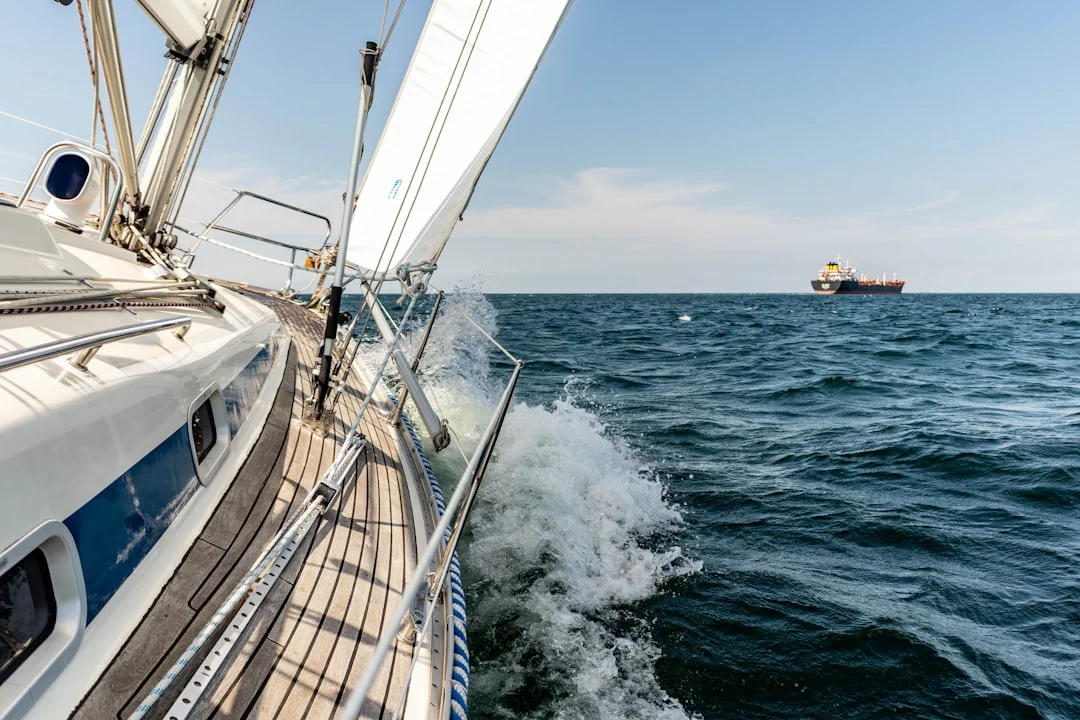
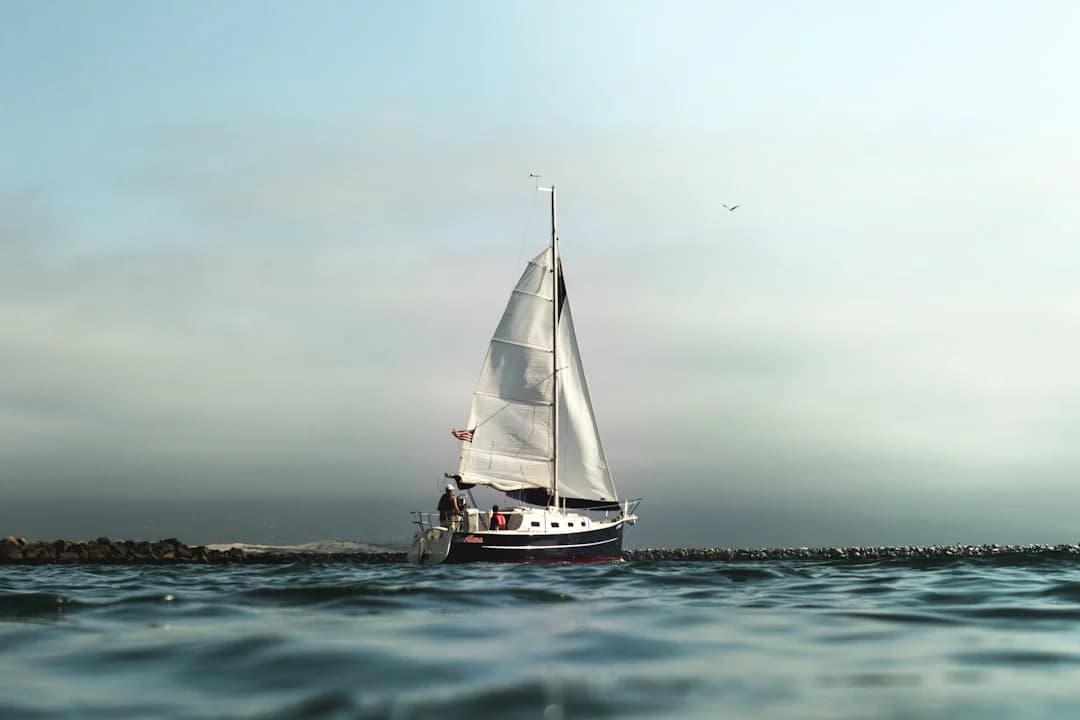
Photo by Michael Held on Unsplash
What a Boat Courtesy Flag Is (and What It Isn’t)
A boat courtesy flag is the host nation’s civil flag flown by a visiting yacht as a sign of respect. It is not a substitute for your own nationality, and it doesn’t magically “make you legal.” Think of it as good seamanship with diplomatic polish—cheap to do, and expensive to get wrong in front of the wrong person.
Courtesy Flag vs Ensign vs Burgee vs Signal Flags
Your national ensign (or civil ensign, depending on your country) is the primary identifier of your vessel’s nationality. Traditionally it flies aft at the stern, either on an ensign staff or an aft halyard if the boat’s layout makes a staff impractical. That stern position matters because it’s the clearest “this is who I am” statement your boat can make at a glance.
The courtesy flag is separate: it’s the host-country flag displayed while you’re a guest in their waters. When sailors argue about yacht ensign vs courtesy flag, the simple answer is that one identifies you (ensign) and the other respects them (courtesy). A yacht club burgee is purely private affiliation—nice tradition, but it never outranks national flags, and it shouldn’t crowd out official signaling.
Then there are International Code of Signals (ICS) flags, including the Q. These are communication tools, not national representation. They live in the world of port formalities and ship-to-ship meaning, not the “which country am I from” question.
When It’s Expected: Seamanship, Diplomacy, and Port-State Optics
In most places, courtesy flags are customary rather than strictly enforced law, but customs officers are human. In port state control environments, a sloppy, faded, or wrong flag can be read as a proxy for your overall compliance mindset—papers, safety gear, and whether you follow instructions. I’ve watched crews get extra questions over small details that suggested bigger carelessness.
A courtesy flag should be in good condition: not sun-bleached, not frayed into spaghetti, and not the wrong variant (common with similar tricolors). Costs are modest—expect $10–$25 for a 12×18 in printed nylon flag, or $20–$45 for a 16×24 in sewn version. That’s cheaper than one unnecessary taxi ride back to the boat because you forgot a document and irritated the wrong desk.
Local rules do vary, sometimes sharply, and “how it’s done in the islands” isn’t a standard. Best practice is to follow published port of entry flag requirements first—harbor master notices, customs websites, and current cruising guides—then apply tradition. And yes, plan your arrival so you’re not doing this at midnight: check the nautical miles for your planned route is handy for dialing in ETAs so you hit customs hours instead of hanging around under the wrong flags.

Photo by Karla Car on Unsplash
Q Flag Meaning: Free Pratique, Not “Modern Quarantine”
If you’ve heard the quarantine flag boating line a thousand times, you’re not alone. The word “quarantine” stuck in the cruising vocabulary, but the operational meaning for normal yacht arrivals is different and more practical.
ICS Definition and the Clearance Workflow
Under the International Code of Signals (ICS), the Q flag is solid yellow and means: “My vessel is healthy and I request free pratique.” In plain terms, you’re announcing you’ve arrived from abroad and you’re asking the authorities to clear you in. It’s not you confessing to plague, and it’s not a scarlet letter—just a standardized request.
A real-world clearance sequence is usually this: you arrive and anchor or berth where instructed, you hoist Q, and you keep the crew aboard while you handle formalities according to local procedure. In some places you’ll take paperwork ashore; in others, officials come to you; in agent-heavy ports you’ll do a mix of both. Either way, the Q flag is your “not cleared yet” visual marker.
It’s worth saying out loud: signal flags are not COLREGs. They don’t replace required navigation lights, shapes, or sound signals under the COLREGs / Navigation Rules. I’ve seen new cruisers treat a Q flag like it’s a legal navigational signal; it isn’t. It’s administrative communication.
When (and Where) the Q Flag Should Come Down
Best practice is simple: Q before clearance, courtesy after clearance; lower Q once pratique/clearance is granted. Once the officer stamps you in, or the system confirms you’re cleared, the Q flag has done its job. Then the courtesy flag becomes the ongoing sign of respect while you cruise that country.
Edge cases exist. Some destinations may allow or even prefer temporary dual display during formalities, especially if procedures are stretched over hours (or days) due to office timing. When a port specifically instructs you to “display Q until cleared,” do that—even if it means you’re flying it longer than you’d like. If written instructions also request a courtesy flag immediately, follow instructions over tradition, because arguing etiquette with an official is a poor hobby.
If you’re timing passages between ports of entry, again, planning matters. If you can avoid arriving at 1700 on a Friday before a holiday, do it. A quick run through plan your route using a sea distance calculator can keep you from flying Q overnight simply because you misjudged a 55 nm hop at 6 knots.

Photo by Markos Mant on Unsplash
Where to Fly Courtesy and Q Flags on Sail or Power
Placement is where most mistakes happen, and it’s usually not malice—just uncertainty. The old rules evolved for visibility and hierarchy, and they still work if you apply them with a modern rig in mind.
Sailboats: Spreader/Yardarm Conventions and the ‘Place of Honor’
Traditional etiquette puts the courtesy flag on the starboard spreader—starboard being the “place of honor.” When people search where to fly courtesy flag on a yacht, that’s the answer they’ll see repeated, and it’s correct in most cruising contexts. It should also be the highest flag flown on that starboard side, not buried under private pennants.
The national ensign remains aft at the stern, flown from an ensign staff or an aft halyard if necessary. If you move the ensign forward and stick the courtesy flag at the stern, you’ve inverted the whole meaning. The ensign identifies nationality; the courtesy flag is an extra layer of respect.
For the Q flag, many yachts also hoist it on the starboard side, typically from the same nautical flag halyard placement you’ll use for courtesy flags. If you have two hoists (one for Q and one for courtesy), keep the hierarchy clean: Q during clearance, then swap to courtesy.
Practical priorities matter on modern rigs. Keep the flag clear of running rigging and away from snag points like swept-back spreaders and upper shrouds, especially in 20–30 kt apparent when flags love to wrap and flog. A flag that’s constantly wrapped is not “flying,” it’s just decorating your rigging with frustration.
Powerboats: Radar Arches, Antenna Mounts, and Short Staff Solutions
On a powerboat, you may not have a mast or spreaders, so you replicate the “starboard yardarm” idea with what you’ve got. A starboard-side mount on a radar arch, hardtop support, or dedicated short staff works fine if it’s visible and doesn’t interfere with gear. I like solutions that keep the flag outboard enough to stream cleanly but not so high it tangles in antennas.
Watch for radar sweeps and lights. A courtesy or Q flag that brushes a VHF antenna every time the boat rolls will chafe itself to death fast, and it can also stress the antenna mount. Keep it clear of spreader lights, steaming lights, and anything you can’t afford to break at sea.
For stern mounting, removable flagstaffs in the 3–6 ft range with about 1 in OD are common on 25–45 ft boats. On some powerboats, that stern staff is the most practical “place of honor” for the ensign, while the courtesy/Q goes to a starboard arch mount to maintain hierarchy.

Photo by Daniel Stenholm on Unsplash
Courtesy Flag Size & Materials: Match LOA and Cruising UV
Sizing is one of those details that separates “I bought whatever was in the chandlery” from “this skipper pays attention.” The good news is you don’t need perfection; you need a sensible match to your boat’s LOA and your cruising sun exposure.
A common heuristic is ~1 inch of fly per 1 foot of LOA (using LOA as defined consistently—ISO 8666 is the standard definition reference). That doesn’t mean you must custom-order a 37-inch fly for a 37-footer; it means pick the closest stocked size that looks proportional and survives the wind without shredding itself.
Sizing by LOA: Practical Stock Sizes and the 1-in/ft Rule
| LOA band (ft) | Target fly (rule-of-thumb) | Recommended stocked courtesy-flag size(s) | Notes on look & handling |
|---|---|---|---|
| 20–30 ft | 20–30 in fly | 12×18 in, 16×24 in | 12×18 is common and tidy; 16×24 reads better at a distance. |
| 30–40 ft | 30–40 in fly | 16×24 in, 20×30 in | 20×30 often looks “right” on a 35–38 ft boat. |
| 40–50 ft | 40–50 in fly | 24×36 in, 30×48 in | Example: 40 ft → ~40 in fly; 30×48 is a common step-up match. |
| 50–65+ ft | 50–65+ in fly | 30×48 in (or larger custom) | Big flags flog harder; prioritize stout stitching and heavier cloth. |
Fabric Choices: 200D Nylon vs Spun Polyester Offshore
| Material | Typical spec | UV performance | Typical price impact | Best use case |
|---|---|---|---|---|
| Nylon (printed/sewn) | 200D–210D | Good, but fades and frays faster in tropics | $10–$60 depending on size/build | Temperate cruising, short stays, or “many countries” kits where cost matters. |
| Spun polyester | Often ~2–4 oz/yd² | Better UV stability and shape retention | $45–$120 in 20×30 to 24×36 | Tropical sun, long seasons, or flags flown daily on a spreader. |
If you’re doing a month of border-hopping, nylon is fine and practical. If you’re parking in high UV for a season, spun polyester pays for itself by not turning into a pale rag in six weeks. Sewn construction generally survives flogging better than cheap printed edges, especially once trade-wind conditions settle into their daily 18–25 kt routine.
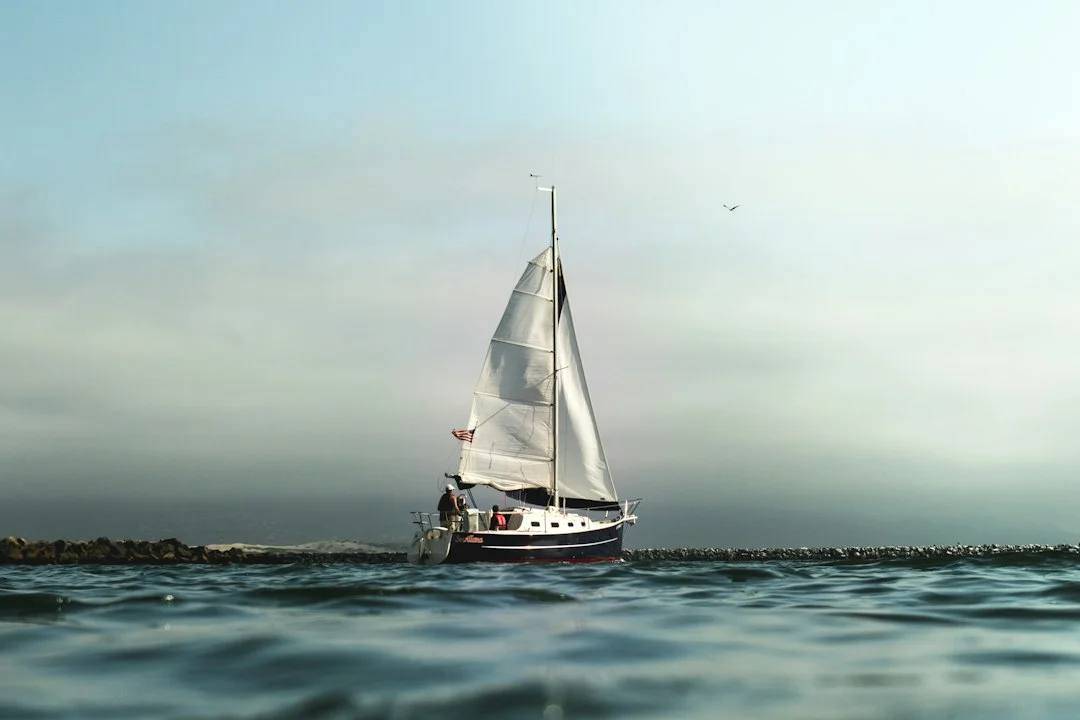
Photo by Jeremy Bishop on Unsplash
Rigging a Dedicated Courtesy-Flag Halyard (No Wrap, No Chafe)
Most articles stop at “fly it from the starboard spreader,” which is like telling someone to “anchor in good holding.” True, but not helpful. A dedicated courtesy-flag halyard is a small rigging project that saves you repeated annoyance and shredded flags.
Hardware and Line: What Works on a Cruising Rig
A clean setup uses a small block or low-friction ring near the spreader end, a fair lead that doesn’t saw across metal edges, and a belay point you can reach safely. For line, 3–5 mm (1/8–3/16 in) braided polyester is the sweet spot: enough strength, good UV resistance, and it doesn’t turn into a wire saw in your hands. Avoid stretchy cord; it encourages flogging and chafe.
For snaps, use 316 stainless if you can—saltwater is an unforgiving judge. Nickel-plated brass works, but it tends to look tired sooner and can pit if neglected. Spacing the snaps to match your flag’s grommets keeps the flag from “folding” and wrapping as easily.
Costs are sensible. A pair of decent snaps runs $8–$20, while a courtesy flag is usually $15–$60, so it’s backwards to cheap out on clips and then sacrifice flags. A basic spreader halyard kit—blocks, line, clips—typically lands around $30–$150, depending on how fancy you get.
Anti-Wrap and Chafe Control: Small Tweaks That Matter
Wrap prevention starts with hoist height. If the flag rides exactly level with an upper shroud, it will find that shroud in a breeze and start knitting itself around it. Hoist it either clearly above the shroud line or well below it, and keep the halyard lead fair so it doesn’t swing into rigging.
Chafe happens in predictable places: at grommets (metal-to-metal wear), where the halyard crosses a spreader edge, and where flags flog against stays. Add a short chafe sleeve where line touches metal, and inspect it every few weeks in heavy use. If you hear a sharp “ticking” at anchor in 20 kt, that’s often a snap or grommet tapping metal—fix it before it becomes a failure.
If you have spreader lights or wiring, keep halyards from rubbing those runs. This is one of the few times it’s worth nodding at ABYC E-11 thinking: avoid routing anything that can chafe electrical wiring, especially on rigs where light wires are tie-wrapped along spreaders.
Minimum viable kit: one small block, 50–80 ft of 3–4 mm polyester braid, and two 316 snaps. Pro kit: add a second hoist option (for Q vs courtesy), chafe sleeves, and spare snaps because they vanish into the sea with impressive efficiency.

Photo by Lazarescu Alexandra on Unsplash
Common Courtesy Flag & Q Flag Mistakes (and Their Consequences)
Most mistakes are easy to fix, but they tend to happen when you’re tired, sunburned, and juggling clearance paperwork. Unfortunately, that’s also when officials are most likely to notice your boat.
Timing Errors: Q Up Too Long, Courtesy Up Too Early
The classic one: flying the courtesy flag before you’re cleared. It signals “I’m already in-country and settled,” when your status may still be “awaiting clearance.” Best practice remains Q on arrival → lower after clearance → host courtesy while in waters, unless the port tells you otherwise.
The opposite error is leaving Q up for days after clearance. That can read as “still not cleared,” which can invite questions from marina staff or harbor patrol, especially in busy ports. If you clear in at 1000, Q should be down shortly after you’re officially stamped in, not at sunset because you forgot.
Arriving after hours complicates things. If you anchor late and cannot legally clear until morning, many cruisers hoist Q and keep crew aboard overnight, then clear as soon as offices open. This is where ETA planning helps—use a distance-and-fuel check before you depart so you don’t unnecessarily spend 10–12 hours advertising “not cleared” when a small speed change would have landed you at 0900.
Display Errors: Wrong Side, Wrong Country, Wrong Condition
Flying the courtesy flag on the port spreader is the most common error I see, and it’s entirely avoidable. Starboard is the place of honor; port is where the burgee often ends up depending on local custom. Wrong side doesn’t usually bring fines, but it can earn eye-rolls, and eye-rolls are the gateway emotion to “let’s inspect this yacht more closely.”
Wrong country happens during island-hopping, especially where flags look similar. Keep flags labeled and stored so you’re not guessing between similar designs in a rolling anchorage. Upside-down or incorrect variants (civil vs state flags) are also surprisingly common with cheap online flag packs.
Then there’s condition: faded, ragged, or torn flags. Replace them early. A fresh $20–$45 sewn nylon courtesy flag looks respectful; a shredded one looks like you don’t care—or worse, that you don’t notice details.
Multiple-flag clutter is another self-inflicted wound. A stern stacked with ensign, sports flags, yacht club burgee, event pennants, and random signal flags makes hierarchy unclear. Keep it simple: ensign aft, Q when applicable, courtesy on starboard, and private flags only when they don’t confuse the official story.
Country-Hopping: When to Change Flags + Route Planning Cues
Once you start moving through multiple countries, etiquette becomes workflow. Your goal is to be consistent, quick, and accurate—especially when you’re clearing in and out every few days.
EEZ vs Territorial Sea vs Port of Entry: What Changes Practically
In theory, maritime zones matter. In practice for yachts, the trigger point for flags is usually the port of entry and your clearance status, not the exact moment you cross an EEZ line. Most cruisers hoist Q when arriving from abroad and expecting to clear at the next port, then swap to the courtesy flag once cleared.
That said, some places care about procedure timing and location. If a country requires you to proceed directly to a designated port without stopping, your flags should reflect that “in transit to clearance” posture. Always treat published port of entry flag requirements as the controlling rule, even if it differs from what you did last week in another country.
Island-hopping workflow is repetitive by design: clear out, make passage, arrive, hoist Q, clear in, lower Q, hoist courtesy. If a destination tolerates temporary dual display during formalities, that’s fine—just keep hierarchy clear and don’t let it become permanent clutter.
Route planning affects etiquette more than people admit. A 35 nm hop at 7 knots is about 5 hours, but add adverse current and you might arrive after offices close. Do the math before you depart; Breezada’s sea distance calculator helps you estimate distance and tune departure time so you’re not stuck flying Q overnight simply because you left late.
Storage, UV Care, and Keeping a Multi-Flag Kit Organized
A regional kit is typically 3–10 flags, and budgeting $20–$40 each puts you around $60–$400 depending on size and quality. That’s a normal cruising expense, like spare filters—boring, necessary, and easy to underestimate until you need it today. If you standardize sizes across your kit (say, all 16×24 in or 20×30 in), your halyard setup becomes simpler and your spares are interchangeable.
Storage matters because UV and friction do most of the damage. I like a simple flag binder or wallet that holds 6–20 flags, costs about $15–$60, and keeps them dry and labeled. Roll or fold flags so dyes don’t transfer when damp, and keep them out of direct sunlight when not in use.
Onboard system: keep the next country’s courtesy flag and the Q flag in the same dedicated “arrival kit” bag with spare snaps. When you’re coming in tired, you should be able to rig flags in under 2 minutes without unpacking half a locker. If you need a calm cockpit to find your Q flag, you’ll inevitably find it right after you no longer need it.
Compliance vs Courtesy: What’s Law, What’s Tradition + Checklist
It’s tempting to treat all boat flags as etiquette. That’s a mistake. Some markings and rules are hard requirements, and confusing them with courtesy traditions can put you on the wrong side of an inspection.
Regulated Markings vs Etiquette Signals (USCG and Beyond)
Courtesy flags are usually customary. By contrast, some things are explicitly regulated, like registration display. In the U.S., 33 CFR 173 requires state registration numbers to be at least 3 inches high in block characters on most recreational boats, properly spaced and legible. That’s compliance, not style.
Likewise, the COLREGs / Navigation Rules govern lights, shapes, and sound signals—none of which are replaced by flying an ICS flag. ICS flags (including Q) are about standardized communication, and Q’s meaning comes from the ICS itself. When you keep those categories straight, you avoid the common “flag equals legal signal” confusion.
A useful mental model: courtesy flags help you look respectful; compliance markings keep you legal; proper clearance paperwork keeps you welcome. If you’re careful with one, you’re usually careful with the others, and officials notice that pattern.
Pre-Arrival Flag Checklist for Skippers
| Scenario | Flags to display | Preferred sequence | Placement (best practice) |
|---|---|---|---|
| Arriving from abroad, not yet cleared | National ensign + Q (solid yellow) | Ensign already up → Q up on arrival | Ensign aft at stern; Q on starboard hoist (spreader/yardarm equivalent). |
| Cleared in / free pratique granted | National ensign + host courtesy flag | Q down → courtesy up | Ensign aft; courtesy starboard spreader / starboard arch mount. |
| During formalities where port requests dual display | Ensign + Q + courtesy (if instructed) | Follow written/local instruction | Keep Q and courtesy on starboard hoists with clear hierarchy; avoid clutter elsewhere. |
| Departing a country after clearing out | National ensign (and any required outbound signals per local rule) | Courtesy down as you depart/clear out | Ensign aft; stow courtesy to avoid implying you’re still “visiting.” |
Practical tip: Before landfall, rig the Q flag and the next courtesy flag with the right snaps, untangled, and ready to hoist. Do it while you still have daylight and patience.
Decision tree is straightforward: arriving at a foreign port → fly Q → clear → fly courtesy. Departing → remove courtesy as you exit or after you’ve formally cleared out, depending on local procedure. Follow the published process first, and tradition second; tradition is helpful, but paperwork is undefeated.
Frequently Asked Questions
On a sloop with swept spreaders, how do you rig a starboard spreader flag halyard to prevent the courtesy flag from wrapping the upper shrouds in 20–30 kt apparent wind?
Hoist position is the biggest lever: don’t let the flag stream at the same height as the upper shroud intersection, because it will wrap in 20–30 kt apparent like it’s trying to learn macramé. Use a small spreader-end block or low-friction ring, then set the hoist so the flag flies clearly above or below the shroud line by at least several inches. Use 3–5 mm (1/8–3/16 in) braided polyester and two 316 stainless snaps spaced to the grommets so the flag can’t fold and twist as easily.
If a port instructs vessels to display Q until cleared, is it acceptable seamanship to also fly the host-nation courtesy flag simultaneously—where should each be placed in the hoist hierarchy?
If the port’s written or direct instruction requires Q until cleared, comply first; that’s seamanship and good sense. If they also request or tolerate the courtesy flag during formalities, it’s acceptable to fly both, but keep the hierarchy clean on the starboard side: Q communicates “not yet cleared,” and the courtesy flag communicates respect. Ideally you use separate starboard hoists, with Q clearly visible and not buried under private pennants.
What courtesy-flag size best matches a 35 ft vs 45 ft yacht using the ~1 in fly per 1 ft LOA heuristic, and which stocked sizes (16×24, 20×30, 24×36, 30×48) are the closest fits?
Using ~1 inch of fly per 1 foot LOA, a 35 ft yacht targets about 35 in of fly, making 20×30 in (30 in fly) the closest common stocked option, with 24×36 in (36 in fly) as the “reads better” upgrade. A 45 ft yacht targets about 45 in fly, making 30×48 in (48 in fly) the closest fit among those sizes, with 24×36 in looking slightly small but still workable in light-wind harbors.
Do 200D–210D nylon flags or spun polyester (~2–4 oz/yd²) flags last longer on a starboard spreader in tropical UV, and what failure modes (fraying, seam creep, dye fade) should you expect?
In tropical UV, spun polyester (often ~2–4 oz/yd²) generally lasts longer than 200D–210D nylon, especially for flags flown daily on a spreader. Nylon commonly fails by dye fade first, then fraying along the fly edge as it flogs; cheaper printed flags can also split at stitching earlier than you’d like. Spun polyester holds color and shape better, but you’ll still see seam wear at stress points and grommet wear if snaps are rough or corroded.
For powerboats without a mast, what mounting location best replicates the “starboard yardarm” convention while avoiding radar/antenna interference and maintaining 360° visibility?
A starboard-side mount on the radar arch or hardtop support is usually the best functional equivalent to the “starboard yardarm,” provided it’s clear of radar sweep and not slapping antennas. Keep the flag high enough to be seen but far enough from VHF/GPS whips that it won’t chafe; even a small flag will destroy itself quickly when it ticks an antenna in 15–20 kt wind. If you use a stern staff for the ensign, keep that aft and reserve the starboard arch mount for Q/courtesy to preserve hierarchy and clarity.
About the Author
Related Articles

French Canals Boat Trip Guide Beyond Canal du Midi
Plan a french canals boat trip beyond the Midi with routes, costs, licenses & lock tips. Compare regions and map your itinerary—start now.
By Breezada Team

Marine Toilet Smells: Eliminate Odors in Hoses & Vents
Stop marine toilet smells fast—diagnose hoses, vents, joker valves, and cleaning routines. Follow this guide and fix odors for good today.
By Breezada Team
Anchor Light Rules for Sailboats & Best LED Options
Learn anchor light rules (COLREGS/USCG) and choose the best LED anchor light. Avoid common mistakes—use our quick checklist today.
By Breezada Team
Composting Toilet Sailboat: Manual vs Electric vs Composting
Compare marine head options—manual, electric, composting—costs, rules, and odor control. Choose the right setup for your boat. Read now.
By Breezada Team