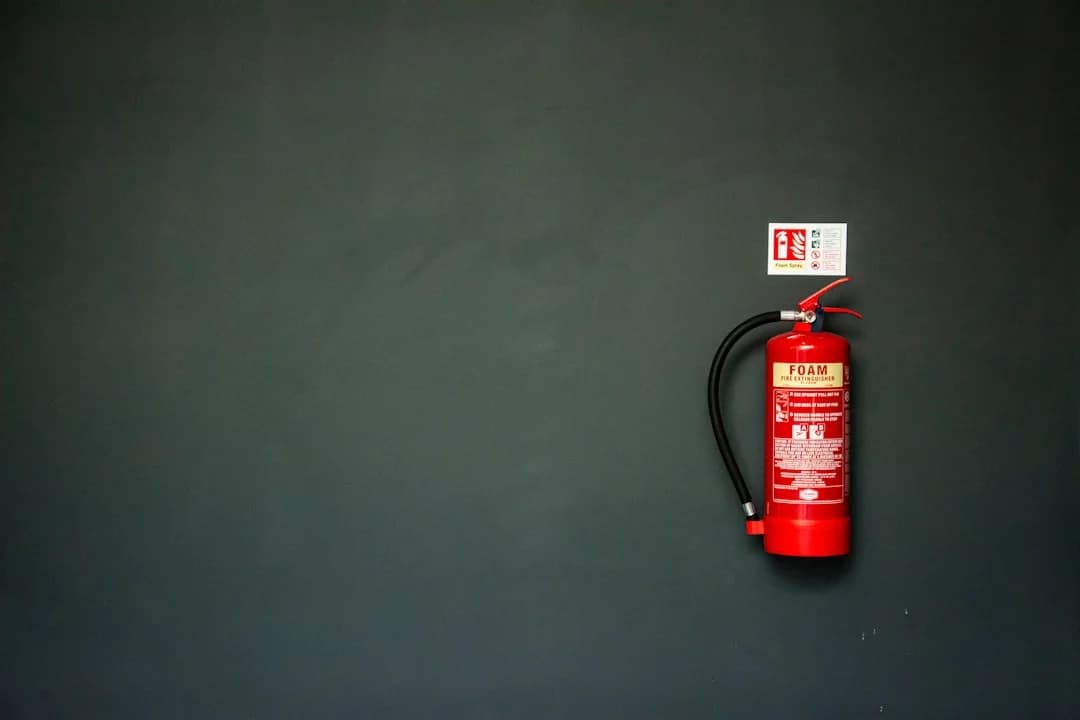
Marine Fire Extinguisher Requirements & Engine-Room Safety
A boat fire rarely starts with flames. It starts with heat you didn’t notice, a fuel smell you ignored, or a wire someone “temporarily” bypassed last season. The goal is twofold: meet marine fire extinguisher requirements (so you pass boardings, surveys, and insurance reviews) and build a setup that actually works when you’ve got 12 seconds of discharge time and a rising pulse.
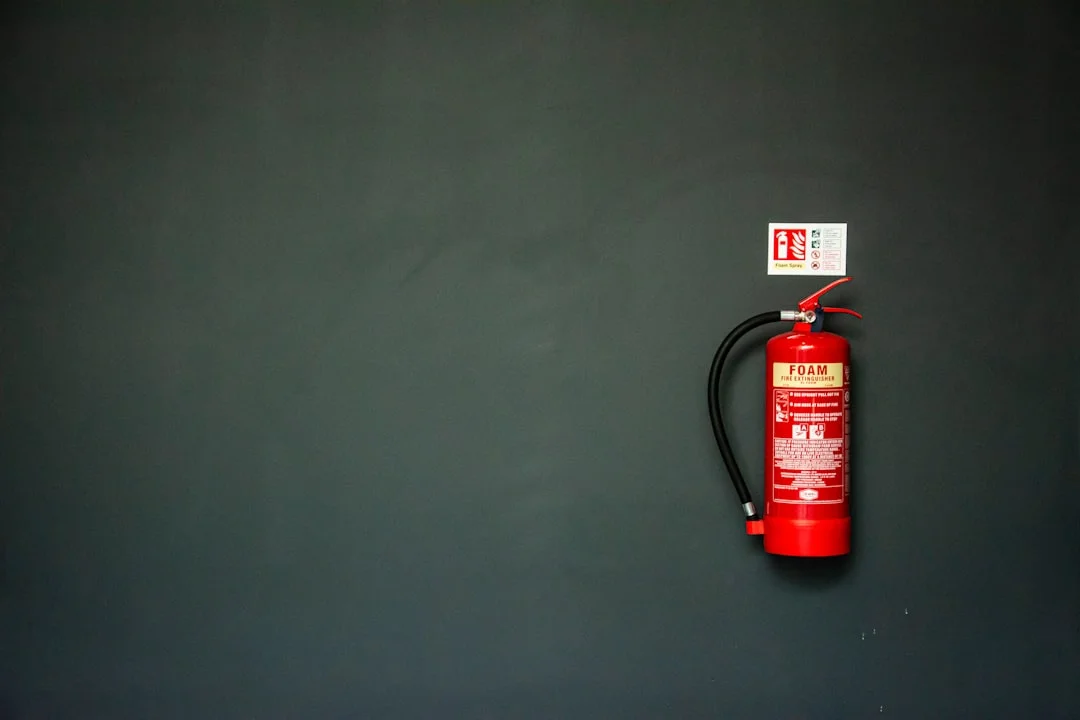
Photo by Tak Kei Wong on Unsplash
USCG Marine Fire Extinguisher Requirements (33 CFR 175.320)
B-I/B-II vs UL 5-B/10-B/20-B: what labels mean in practice
Under 33 CFR 175.320, the USCG allows extinguishers marked with the old B-I/B-II classification or the newer UL 711 Class B ratings 5‑B, 10‑B, 20‑B. In the real world, what matters is the label language: “USCG Approved” (or equivalent approval statement), plus a valid rating marking that matches what the CFR accepts. If the inspector can’t find that approval statement quickly, you’ll spend your boarding explaining why your “garage special” should count.
A very common passable unit is a 5‑B:C dry chemical extinguisher that’s USCG-approved (often marketed as marine-rated). It may be BC rather than ABC, and it still counts toward the USCG minimum because the requirement is driven primarily by the Class B rating and approval. Household extinguishers often fail on mounting hardware, corrosion resistance, and approval labeling—fine for a kitchen wall, not fine for a salt boat that vibrates.
How boat length drives minimum carriage (under 65 ft)
If you have no fixed suppression system installed, the USCG minimum portable carriage for vessels under 65 ft is straightforward and length-based. These are minimums, not a promise of survival.
| Boat length (recreational) | Minimum portable extinguishers (no fixed system) |
|---|---|
| < 26 ft | 1 B‑I (or UL equivalent) |
| 26–< 40 ft | 2 B‑I or 1 B‑II |
| 40–< 65 ft | 3 B‑I or 1 B‑I + 1 B‑II |
If you’re auditing what you already own, look for UL markings like 5‑B (roughly comparable to B‑I) and 20‑B (commonly comparable to B‑II), per the equivalency allowance in 33 CFR 175.320 using UL 711 ratings. Don’t overthink the paint color or the marketing copy—read the label like a surveyor does, because that’s who you’re trying to satisfy.
When a fixed system can reduce portable extinguishers
A properly installed engine-room fixed system can reduce the required number of portable extinguishers, but only when it meets the applicable conditions (approval, protection of the space, and installation/maintenance per guidance). The concept is simple: if the most dangerous enclosed fire risk has automatic total flooding, the USCG gives some credit on portable count. The fine print varies by configuration and is exactly why you keep the system documentation aboard.
Two common misunderstandings show up during inspections. First, owners assume “any automatic bottle” counts, even if it’s missing indicators, interlocks, or service records. Second, they think the fixed system replaces the need for accessible portables in living spaces; it doesn’t, because cabin and galley fires are still your problem.
Common compliance pitfalls are boring but frequent: expired or discharged units, missing or broken brackets, an extinguisher buried behind a toolbox, or a non-marine extinguisher with no USCG approval statement. If you want fewer headaches, mount it properly and keep the label readable—inspectors don’t enjoy scavenger hunts.
Selecting Portable Extinguishers: Size, Agent, and Placement
Dry chemical vs clean-agent vs CO₂: what each does onboard
Portable extinguishers are a compromise between knockdown power, cleanup, and what you can safely use in a confined space. Dry chemical (ABC or BC) is the usual workhorse because it’s effective on Class B fuel fires and available in USCG-approved models. The downside is corrosion and abrasive residue—on a humid salt boat, that powder can start eating electrical gear within days if you don’t clean aggressively.
Clean-agent portables (often Halotron/FE‑36-type categories) are popular for helms and cabins because they leave minimal residue and don’t turn your nav station into a corrosive sandbox. They’re often pricier per second of discharge, and you still must verify the unit is USCG-approved and appropriately rated. CO₂ is effective on energized electrical fires and leaves no residue, but it’s a poor choice in a breezy cockpit and a dangerous choice in a tiny closed cabin if you don’t understand the asphyxiation risk.
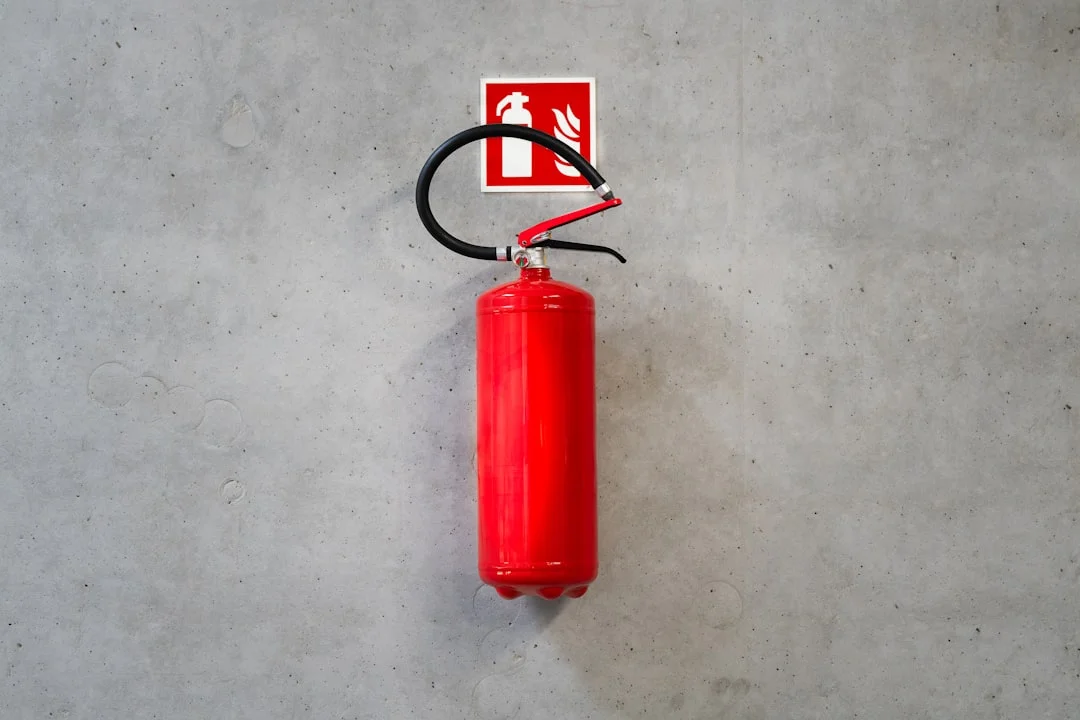
Photo by Jakub Żerdzicki on Unsplash
Why discharge time and re-flash risk change the “minimum practical”
The USCG minimum might be one small unit, but “minimum practical” is about time and re-flash. A typical 2.5 lb dry chemical extinguisher may give you roughly 8–12 seconds of discharge, and a 5 lb unit roughly 12–20 seconds, depending on model and how aggressively you squeeze the handle. That’s not a lot of time to find the base of the fire, aim, sweep, reassess, and still have something left when the fuel re-ignites.
For many gasoline boats, I consider at least one 5 lb ABC (often around 3‑A:40‑B:C) a sensible upgrade from the common 2.5 lb unit (often around 1‑A:10‑B:C). Liquid-fuel fires love to re-flash, especially if the source isn’t shut off, and the larger bottle buys you both agent mass and a slightly longer working time. I’d rather clean powder off my engine hatch than explain to the marina why I didn’t carry enough extinguisher to stop a flare-up early.
Mounting strategy: near exits, helm, and galley—never deep in the hazard
Placement is a human-factors decision, not a decoration choice. NFPA 10 uses a common benchmark of 50 ft (15.2 m) maximum travel distance to a Class B extinguisher in many occupancies; boats are smaller, but the concept holds: shorter travel distance means faster action and fewer bad decisions. The extinguisher should be reachable without entering the space most likely to be on fire.
Mount one near the primary cabin exit/companionway, one near the helm, and consider one near (not above) the galley if you cook aboard. Keep them above the bilge waterline, out of constant spray, and in a quick-release, vibration-resistant bracket—plan $15–$60 per bracket for marine-grade hardware. If it can rattle loose in a chop, it will, and it’ll do it right before you need it.
Practical tip: Stage extinguishers so you can fight a small fire while maintaining an escape route. If your only extinguisher lives inside the engine room, congratulations—you’ve invented a game show called “Open the Hatch and Guess.”
Preventing Electrical Fires (ABYC E-11): The Big Failure Modes
Overcurrent protection placement: the 7-inch rule and exceptions
Most boat electrical fires are heat problems created by bad design or worse “upgrades.” ABYC E‑11 pushes a simple idea: protect conductors close to the power source so a short doesn’t turn the wire into a heating element. The rule of thumb is overcurrent protection within 7 in (178 mm) of the source of power, with allowances up to 40 in (1,016 mm) when the conductor is in a sheath, conduit, or otherwise physically protected.
On real boats, the worst offenders are the “unfused” battery positive runs feeding add-on gear—stereos, inverters, windlass solenoids—tapped in with whatever wire was on sale. If that cable shorts against a bulkhead screw or a chafe point, it can glow red before a battery even notices it’s working hard. Your battery can dump hundreds of amps; your boat’s wiring is not a toaster element by design, even if it behaves like one in failure.
Photo by Piotr Chrobot on Unsplash
Wire sizing and voltage drop: why heat starts at connections
Voltage drop targets are not just about performance; they’re a proxy for conductor sizing and connection integrity. ABYC E‑11 commonly uses 3% voltage drop for critical circuits and 10% for noncritical loads. When conductors are undersized, loads run hotter, and the hottest points are often connections—loose lugs, corroded ring terminals, and poorly crimped joints.
High-duty loads are the usual culprits: bilge blowers, bilge pumps, windlasses, inverters, and high-output charging circuits. A single warm lug can smolder behind a panel for months before it finally arcs and lights up the loom wrap. If you’ve ever sniffed that sharp “hot electrical” smell at sea, you already know the next step is not “hope.”
Ignition protection, chafe control, and battery system architecture
On gasoline boats, ignition protection is its own world. Equipment in gasoline engine spaces—think starters, alternators, blowers, and sometimes switches—may need to be ignition protected so it won’t ignite fuel vapors. That matters because if a vapor cloud lights, no portable extinguisher is going to make you feel clever afterward.
Owner-mod errors are painfully consistent: stacked ring terminals on one stud, automotive primary wire instead of tinned marine cable, unfused electronics, bypassed breakers, and ANL/MRBF fuses sized for “it stopped blowing” rather than for conductor protection. Add chafe protection on hidden runs and consider modern protective devices where appropriate; arc faults and overcurrent events are not theoretical on boats that vibrate. You don’t need perfection—you need a system that fails predictably and not in flames.
Preventing Engine-Room & Fuel-System Fires: Ventilation and Habits
Gasoline vapor control: powered blowers and natural ventilation
Gasoline vapor is the invisible hazard that turns a minor seep into an explosive event. The compliance backbone is 33 CFR 183 Subpart K (Ventilation), with ABYC H‑2 offering more design detail on ducting and placement. Practical seamanship is even simpler: run your bilge blower and use your nose like it’s part of the instrument panel.
The long-standing guidance is to run the gasoline bilge blower at least 4 minutes before starting, then verify no fuel odor. That “4 minutes” is not superstition; it’s an easy habit that buys time for vapors to clear from low spots. A blower is cheap insurance at $30–$120 each, but only if it’s installed with correct duct routing and ignition-protected components where required.
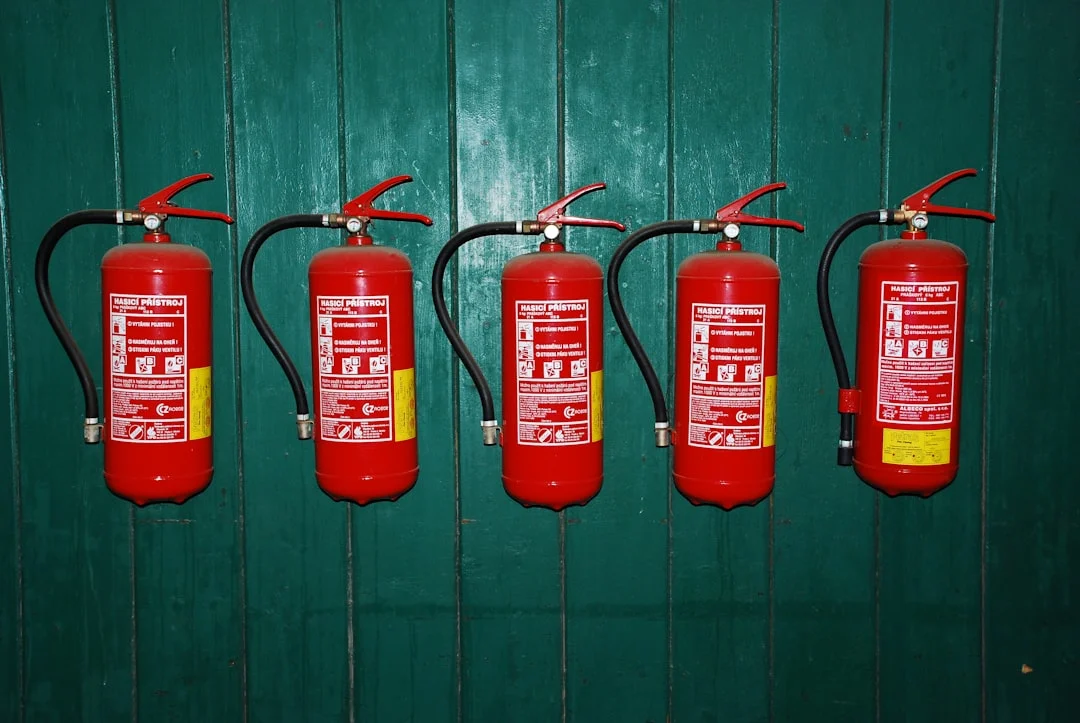
Photo by Jandira Sonnendeck on Unsplash
Fuel leak checks and hot-surface ignition points
Fuel systems are governed by 33 CFR 183 Subpart I (Fuel Systems), and the spirit of it is durability under vibration and heat. Your pre-start scan should include fuel hose condition, clamps, anti-siphon valves, carburetor/injector seepage, and the simple question: “Does it smell like fuel?” If it does, you don’t crank the starter and “see what happens.”
Hot surfaces finish what leaks start. Exhaust risers, turbo housings, manifolds, and even a slipping belt can provide ignition. Keep the space clean enough that you’ll notice new drips, and don’t store oily rags or solvent-soaked pads in the engine compartment unless you enjoy preventable problems.
Lithium battery thermal runaway: separating charge sources from fuel vapors
Modern boats increasingly carry lithium batteries and big charging gear, and that changes the risk profile. Thermal runaway is not a gasoline-vapor event, but it can provide ignition sources and intense heat in confined spaces. The common-sense move is separation: don’t locate high-power chargers, inverters, or questionable wiring in the same poorly ventilated corner where fuel vapors could accumulate.
Treat lithium installs as a system: containment, ventilation, correct fusing, and conservative charging settings. If you’re not confident the installation meets a recognized standard and manufacturer instructions, you’re not “saving money,” you’re moving risk into the engine space. Fires don’t care that the previous owner got a good deal online.
Engine-Room Fixed Fire Suppression: Sizing, Interlocks, and ABYC A-4
How to size a total-flooding system by compartment volume (ft³)
A fixed engine-room system is a different tool than a portable extinguisher. It’s designed for total flooding of an enclosed machinery space, knocking down fire without you opening the hatch and feeding it oxygen. The basic sizing workflow is simple math followed by strict obedience to the manufacturer’s coverage tables.
Start with volume: ft³ = L × W × H, using real internal dimensions, not brochure dimensions. Many systems cover roughly 100–600 ft³ per bottle depending on agent and design concentration, and that range is why accurate measurements matter. Some manufacturers require subtracting major displacement (engines, tanks) before selecting a cylinder; follow their listed method, because that’s what the installer and surveyor will reference.
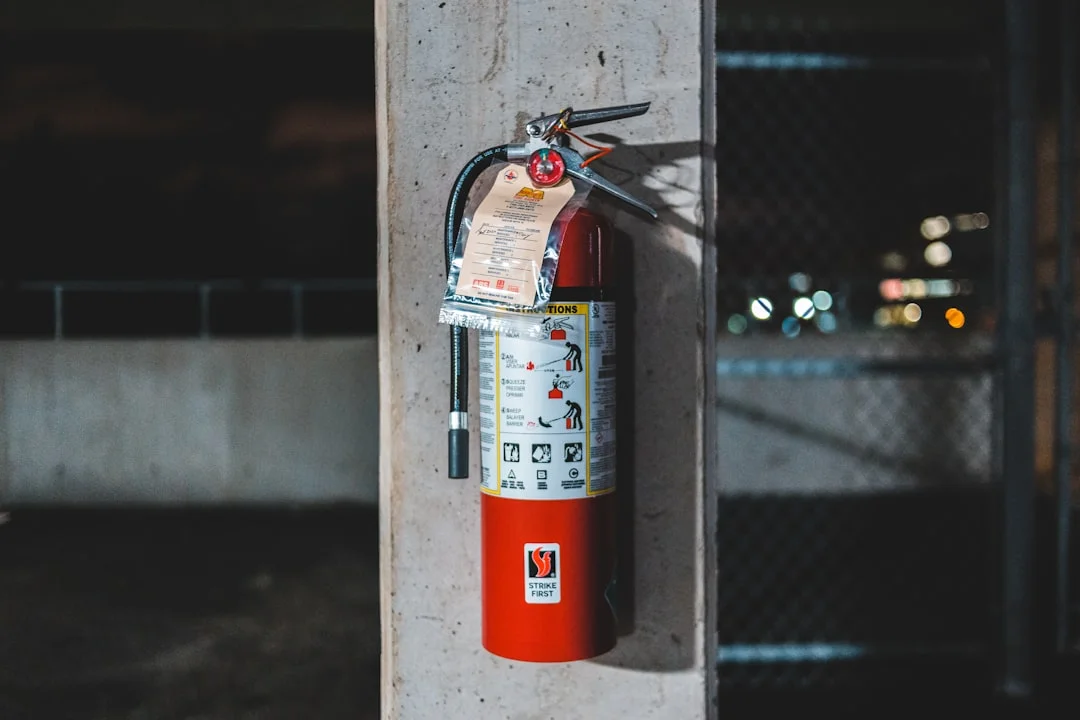
Photo by Erik Mclean on Unsplash
Automatic vs manual discharge, alarms, and shutdown interlocks
Per ABYC A‑4, you’re typically looking for an automatic discharge (thermal bulb or fusible link), a manual release, and the shutdown logic that keeps the agent inside long enough to work. On discharge, systems commonly shut down engines and powered ventilation, because blowing the agent overboard is an expensive way to stay on fire. A visual/audible alarm and an indicator panel prevent the classic mistake: opening the hatch right after discharge and giving the fire fresh air.
Interlocks should be tested, not admired. I like manual pulls routed where you can reach them without leaning over the engine hatch, and I like indicators mounted where the helm can see them. If you can’t confirm the system is armed and in-date, it’s not a safety system; it’s a cylinder-shaped conversation piece.
FM-200 vs Novec 1230: performance, concentration, and service realities
Clean agents are popular because they avoid the corrosive mess of dry chemical in machinery spaces. Typical design concentrations are often around 5–7% v/v for FK‑5‑1‑12 (Novec 1230) and 7–9% v/v for HFC‑227ea (FM‑200), but the manufacturer’s listed design tables control. In practice, higher required concentration can mean more agent mass for a given volume, which can affect cylinder size and mounting options.
Service reality matters as much as chemistry. Some cruising areas have more support for one agent than another, and refill costs after discharge commonly run $300–$1,200+ depending on size and agent. If your nearest service center is two days away, you might rethink what you install—or at least plan your spares and insurance expectations accordingly.
| Option | Typical design concentration (v/v) | Refill/service availability (real-world) | Cleanup impact | Regulatory/environment notes |
|---|---|---|---|---|
| FM‑200 (HFC‑227ea) fixed system | ~7–9% (listing governs) | Often available, but varies by region and shop certification | Clean, no residue | HFC with higher GWP; regulatory pressure in some markets |
| Novec 1230 (FK‑5‑1‑12) fixed system | ~5–7% (listing governs) | Increasingly common, still location-dependent | Clean, no residue | Lower atmospheric lifetime; still must follow listed systems |
| Halotron/clean-agent portable | Rated per UL label, not by room % | Easy to buy; service varies by model | Minimal residue | Great for electronics/helm; not a substitute for total-flooding fixed systems |
A fixed system can also affect your USCG fire extinguisher requirements for boats by reducing the number of portables required—when properly installed, approved, and maintained. That’s a legal benefit, but the real win is tactical: you can fight an engine-room fire without opening the compartment. Opening a burning engine hatch is a great way to turn a contained problem into a full-boat problem.
Maintenance, Inspection, and Documentation for Surveys/Insurance
Portable extinguisher lifecycle: replace vs recharge vs hydrotest
Extinguishers fail quietly on boats. Gauges stick, powder cakes, aluminum corrodes under stainless straps, and brackets loosen until the unit becomes a missile. For many disposable dry-chemical extinguishers, replacement around 12 years is commonly seen on manufacturer guidance labels; always verify the specific unit’s date and instructions.
Rechargeable extinguishers can make sense long-term, especially on boats that cruise hard, but only if you’ll actually service them. Hydrotest intervals vary by cylinder type and stamp; examples often seen are ~12-year hydro for many dry-chemical cylinders and ~5-year hydro for CO₂, but you must verify what your cylinder requires. If you can’t read the stamp or find the service info, that’s your sign to replace with something you can document.
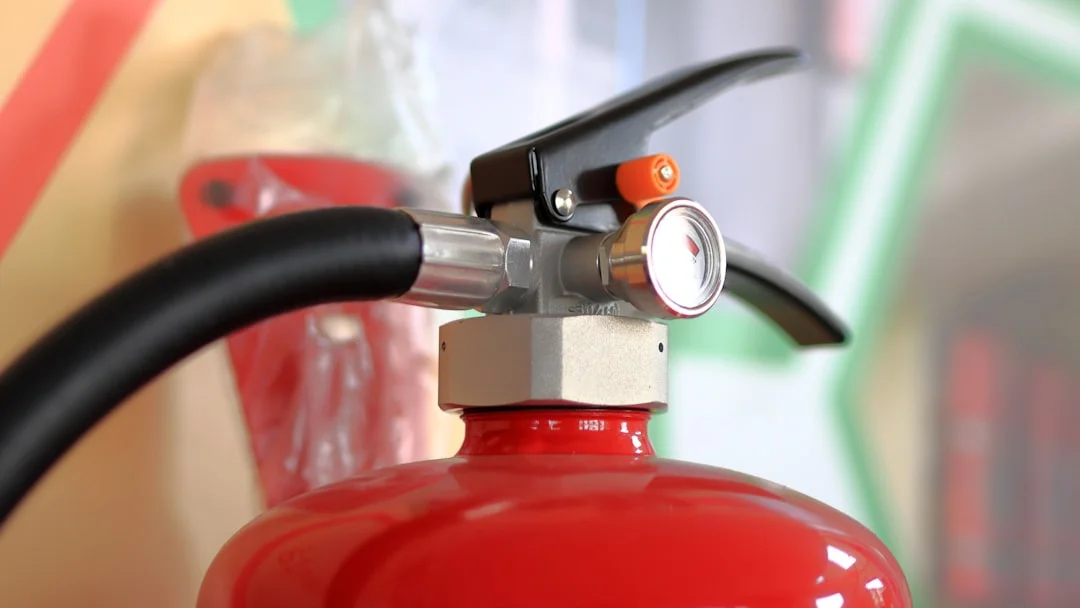
Photo by Gabriel Vasiliu on Unsplash
Fixed-system annual checks: gauge, weight, head, and pull-cable routing
Fixed clean-agent systems are not “install and forget.” A typical annual inspection runs $150–$400 and should include checking gauge/pressure (if applicable), verifying cylinder weight, inspecting the discharge head, and confirming the manual pull cable isn’t kinked or corroded. Indicator panels, alarms, and shutdown interlocks should be tested in a way that doesn’t create a new problem, which is why many owners use qualified technicians.
After any engine work, re-check nozzle direction and obstructions. Mechanics are paid to fix engines, not to preserve your discharge pattern, and I’ve seen nozzles blocked by “temporary” zip-tie bundles. If a system can’t discharge correctly, it’s just an expensive cylinder occupying premium engine-room real estate.
Recordkeeping: proving compliance after refits and before renewals
Surveys and insurance renewals are paperwork events, even when the boat is in perfect shape. Keep a simple record: what you installed, where it’s mounted, and when it was serviced. If you ever have an incident, your documentation becomes part of your story, and you want that story to be short and convincing.
A photo checklist works well because it’s hard to argue with clear images. Photograph the label showing USCG approval and UL rating, the mounting location, the service tag/date, and the fixed system indicator panel at the helm. Add your engine-room volume worksheet (L×W×H, with any displacement notes), and you’ve done more than most owners—and you’ll feel it during the survey.
Costed System Packages and a Boat Fire Safety Checklist
Budget vs best-practice: what owners actually buy and why
Costs are where good intentions go to die, so here are realistic numbers. Portable USCG-approved extinguishers typically run $25–$60 for a 2.5 lb unit and $60–$140 for a 5 lb, plus $15–$60 per proper bracket. A small automatic clean-agent engine-room system in the 100–250 ft³ class is commonly $450–$1,200 for hardware, while 250–600 ft³ can be $1,200–$2,800, before accessories and labor.
Add accessories—panel, alarm, cable, heat detector—often $150–$700, and installation labor commonly $600–$2,000+ depending on access and wiring complexity. Electrical fire-prevention upgrades are often cheaper than suppression: a battery switch might be $50–$250, while quality tinned cable for big conductors can run $8–$20/ft in sizes like 2/0–2 AWG. The money is real, but so is the cost of a fire that spreads past the engine hatch.
| Boat type | Min-legal baseline (typical) | Best-practice gear (practical) | Estimated total (USD) |
|---|---|---|---|
| 20–30 ft outboard (gas) | 1–2 USCG-approved portables (per length), basic brackets | Add at least one 5 lb ABC, helm-mounted clean agent, labeled battery fusing near source | $150–$500 |
| 30–40 ft gas inboard | 2× B‑I or 1× B‑II equivalent | Add fixed clean-agent 100–250 ft³ + panel/interlocks, plus two staged portables (helm + cabin exit) | $1,800–$4,500 |
| 40–60 ft diesel | 3× B‑I or 1× B‑I + 1× B‑II | Fixed clean-agent sized to volume (250–600 ft³), extra 5 lb units near egress, wiring audit for high-duty loads | $2,500–$6,500+ |
Checklist: pre-departure, underway, and post-refit fire controls
Here’s the checklist I actually use, broken into time horizons so it gets done. Before every start on gasoline inboards: run blower 4 minutes, then sniff test—no odor, no start. Before departure on any boat: confirm extinguishers are in brackets, gauges are green, and access isn’t blocked by “temporary” bags that will become permanent.
Monthly: tug-test the brackets, look for corrosion at the cylinder base, and check that the label is readable. Annually: service fixed systems ($150–$400 typical), review battery overcurrent protection placement (measure that 7 in rule), and redo a quick hand check on major lugs for warmth after running big loads. After any fuel or electrical refit, treat it like a new boat: re-inspect, re-label, and re-photograph your compliance points.
Practical tip: If you made a wiring change and didn’t add a fuse because “it’s just a short run,” you didn’t make a wiring change—you made a future fire report.
Route planning note: distance-to-help and extinguisher redundancy
Your fire plan should scale with how far you are from help. A harbor-hopper 2 miles from a marina can accept a different risk profile than a boat running a 60-mile offshore leg where you’re your own fire department. That’s where redundancy—extra portables, early detection, and a fixed system—stops looking like gear lust and starts looking like seamanship.
This is also where planning tools earn their keep. Use a tool to calculate the distance between ports to sanity-check your maximum distance from safe harbor, then treat that number as a “time-to-help” multiplier when deciding how many extinguishers and what suppression you carry. I’ll use the same calculator again when estimating fuel needs based on the voyage distance, because a longer diversion route often means you’re offshore longer with fewer options.
If you’re preparing a longer route, document it for your crew and your insurer: planned legs, alternates, and your safety upgrades. Check the nautical miles for each leg to dial in departure timing and prep, and it turns the conversation from “I want a new system” into “here’s why our risk increased.” People argue less with numbers than with vibes.
Frequently Asked Questions
How do I verify whether my extinguisher counts as USCG-approved under 33 CFR 175.320: what exact label text, UL 711 rating (5-B/10-B/20-B), and mounting/condition criteria are typically checked?
Look for a label that plainly indicates USCG approval (or equivalent approval wording) and a Class B rating accepted under 33 CFR 175.320, which may be B‑I/B‑II or UL 711 markings like 5‑B/10‑B/20‑B. Inspectors also check condition: charged (gauge in green if applicable), no corrosion, readable label, and proper marine mounting bracket with accessible placement. If it’s loose, buried, discharged, or a household unit with no approval statement, expect it to be rejected.
If my boat has a fixed clean-agent engine-room system with automatic discharge, under what conditions can it reduce required portable extinguishers, and what installation features (indicator, manual pull, shutdown interlocks) affect that determination?
A fixed system can reduce portable requirements when it’s an approved fixed installation protecting the machinery space and is installed/maintained in accordance with the applicable rules and manufacturer listing. Features that tend to matter in practice include an automatic discharge element, manual actuation, a visible status/indicator at the helm or accessible location, and shutdown interlocks for engines and powered ventilation to keep agent concentration effective per ABYC A‑4 intent. Missing documentation, unknown service status, or a system installed without the expected interlocks/indicators often leads surveyors to treat it as non-creditable.
For ABYC E-11 compliance, how do I measure the ‘within 7 inches’ overcurrent protection distance on a battery positive conductor, and when is the 40-inch allowance acceptable (sheath/conduit/physical protection)?
Measure from the source of power (typically the battery positive post or the point the conductor is considered energized) to the overcurrent protection device along the actual conductor path, not “as the crow flies.” ABYC E‑11 generally expects protection within 7 in (178 mm), with allowances up to 40 in (1,016 mm) when the conductor is in a sheath, conduit, or otherwise physically protected against chafe and damage. If the run is exposed, crosses machinery edges, or can be crushed, don’t lean on the 40-inch allowance.
When sizing an engine-room total-flooding system, how should volume be calculated for irregular compartments (stringers, partial bulkheads), and when do manufacturers require subtracting engine/tank displacement before selecting a cylinder?
Start with the best practical internal measurements and compute gross volume as L × W × H in ft³, then account for irregularities by using conservative average dimensions or subdividing into smaller boxes you can measure. Many manufacturers provide explicit instructions on whether to subtract “major displacement” (engines, tanks, large shelves) before selecting a bottle from the coverage table; follow those instructions exactly because listings and performance claims depend on that method. When in doubt, document your assumptions in a worksheet and confirm with the system manufacturer or an experienced installer.
For clean-agent comparisons, what do the listed design concentrations (Novec 1230 ~5–7% vs FM-200 ~7–9%) imply about cylinder size, nozzle placement sensitivity, and the need for ventilation shutdown to maintain hold time?
Higher required design concentration (often FM‑200 ~7–9% vs Novec 1230 ~5–7%, listing-dependent) can mean more agent mass for the same compartment volume, which can push you toward a larger cylinder or tighter installation constraints. Nozzle placement and unobstructed discharge paths matter because the system must distribute agent quickly and evenly to reach concentration throughout the space. Ventilation and engine shutdown interlocks are critical because losing agent through running blowers or intake airflow reduces concentration and hold time—exactly when you need it stable to prevent re-ignition.
About the Author
Related Articles

Sail Size Calculator Guide: Main, Jib & Genoa Fit
Use a sail size calculator to size mainsail, jib & genoa with P/E/I/J and LP. Avoid rating surprises—get the right fit. Read the guide now.
By Breezada Team
How to Dock in a Slip: Finger Piers, Wind & Current
Learn how to dock in a slip with finger piers—bow-in or stern-in—handling wind, current, and prop walk. Get the step-by-step plan now.
By Breezada Team

San Francisco Bay Sailing: Winds, Tides & Hazards Guide
Plan safer San Francisco Bay sailing with wind patterns, tides, currents, fog and key hazards. Use this guide to pick a route and go sail today.
By Breezada Team

Sailboat Engine Won't Start: Diagnostic Flowchart
Troubleshoot a sailboat engine that won't start with a step-by-step flowchart for batteries, starter, fuel, air, glow plugs & alarms. Fix it now.
By Breezada Team