Best Beginner Sailing Destinations for Easy Charters
A “beginner-friendly” sailing destination isn’t the one with the prettiest water in the brochure. It’s the one where your first week of bareboat charter is mostly decision-making you can handle: short hops, predictable winds, protected anchorages, and lots of places to bail out when the crew’s confidence evaporates at 1630.
The places below consistently rank among the best sailing destinations for beginners because they make the fundamentals easier: line-of-sight navigation, low tidal stress, and routing that works even when you’re still learning how long it takes to get four people off the dock without leaving something expensive behind.
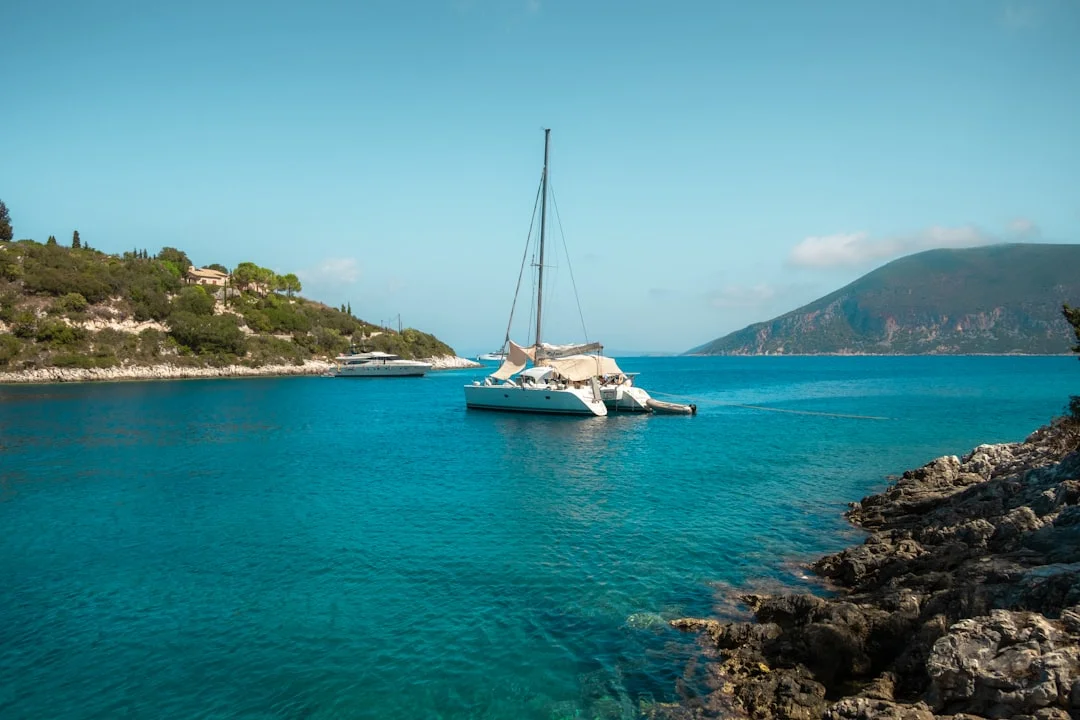
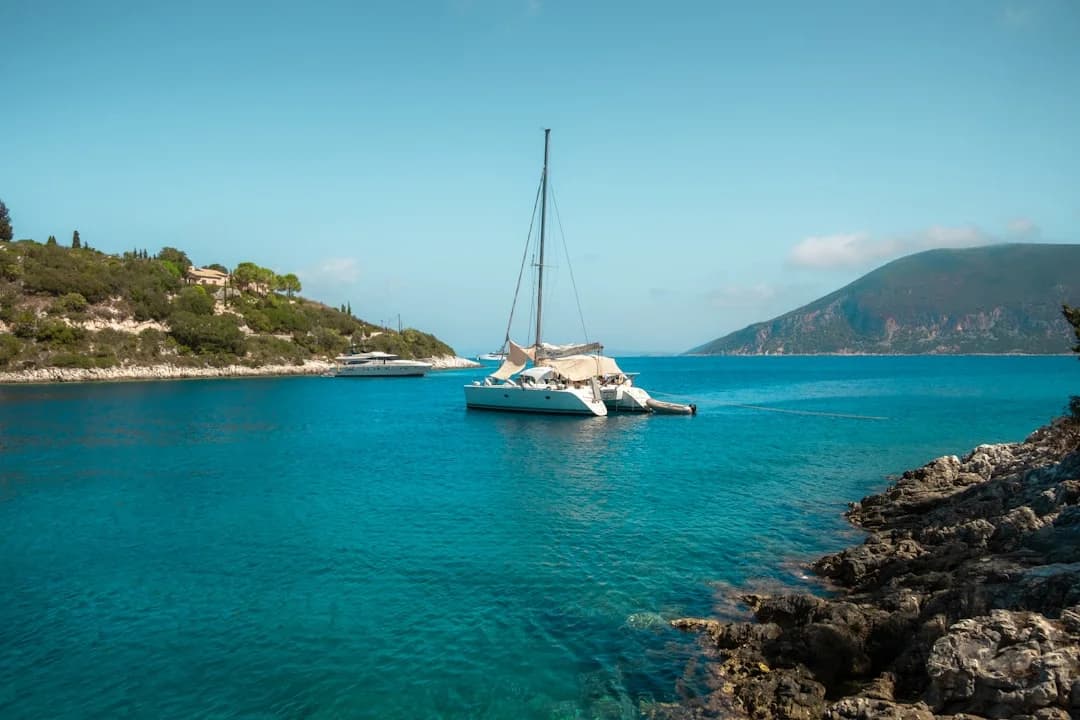
Photo by Christian Harb on Unsplash
What “Beginner-Friendly” Means (Numeric Thresholds)
Difficulty drivers: wind, swell, tides/currents, traffic
“Easy” isn’t a feeling; it’s a set of numbers you can plan around. For a first charter, I like 8–18 kn true wind as the working band, because most crews can reef calmly before it turns into a debate. Once forecasts show frequent 25–30+ kn events, the destination might still be beautiful, but your week becomes a weather-management exercise rather than a sailing holiday.
Sea state matters more than wind speed on paper. In protected-water sailing holidays, aim for typical wind-wave <0.5 m in your usual anchorages; you’ll sleep better and argue less. When short chop creeps past ~1.0 m, beginners burn energy fast, and docking turns into “creative problem-solving” at the exact wrong time.
Tides and currents are a quiet complexity multiplier. Much of the Med runs roughly 0.2–0.5 m tidal range, while high-range regions can see 6–10 m, which changes everything from fender height to when you can enter a harbor. Add strong currents to that and you’ve just given your crew an advanced class in close-quarters boat handling.
Navigation simplicity: line-of-sight + bail-out options
For beginner sailing charter destinations, prioritize line-of-sight routes where you can see the next island or headland, and you’ve got a “Plan B” every hour. In practical terms: design days so there’s an alternate harbor/anchorage every 5–10 nm in dense cruising grounds. That keeps mistakes small and recoverable, which is the whole game in week one.
Electronics help, but they don’t replace judgment. Expect a charter boat to have a 7–12 in chartplotter, depth sounder, autopilot, AIS (often receiver, increasingly transceiver), and a DSC-capable VHF. Your baseline is still COLREGs (proper lookout, right-of-way, speed), because ferries don’t care that you’re on holiday.
Short-hop planning: time-underway targets and arrival timing
For easy sailing routes for beginners, set a day-leg target of 10–25 nm, with 15–25 nm being the sweet spot. At 5–6 kn average speed, 15 nm ≈ 2.5–3.0 h and 25 nm ≈ 4.0–5.0 h, before you add time for departure, sail handling, and docking do-overs. That’s why the conservative benchmark is “secured by 1500–1600,” not because sailors love rules, but because marinas fill and brains tire.
Under-keel clearance is another numeric habit worth adopting early. If your monohull draws 1.6–2.2 m (cats often 1.1–1.4 m), plan with a +0.5–1.0 m margin and avoid anchoring by optimism. Groundings are common, and they’re rarely heroic.
Tip box (captain’s rule of thumb): If the forecast suggests 25+ kn, >1.0 m short chop, or visibility poor enough that you can’t keep a proper lookout in traffic, treat it as a no-go day. Beginners don’t need to “push through”; they need to finish the week liking sailing.
British Virgin Islands (BVI): Moorings and Short Passages
Why BVI is forgiving: the Drake Channel effect + mooring fields
The BVI earns its reputation as Caribbean sailing for beginners because geography does you favors. Most island-hopping happens in and around the Sir Francis Drake Channel where swell is often moderated and the next landmass is usually visible. You still get trade-wind days, but you’re rarely committed to a long, exposed run unless you choose it.
Mooring fields are the other big stress reducer. Picking up a buoy is a learned skill, but it beats anchoring in 12–18 m with 50 boats watching your technique. Most pendants are roughly 16–24 mm in diameter; approach at <1–2 kn, neutral early, and don’t “save” a bad approach with throttle unless you enjoy replacing deck hardware.
Charter boats here are often heavy enough that momentum matters. Typical displacement across common 35–45 ft monos and 38–45 ft cats is about 8–20 t, and it shows when you’re trying to stop in a tight mooring field. Treat every close-quarters moment like docking practice—because it is.
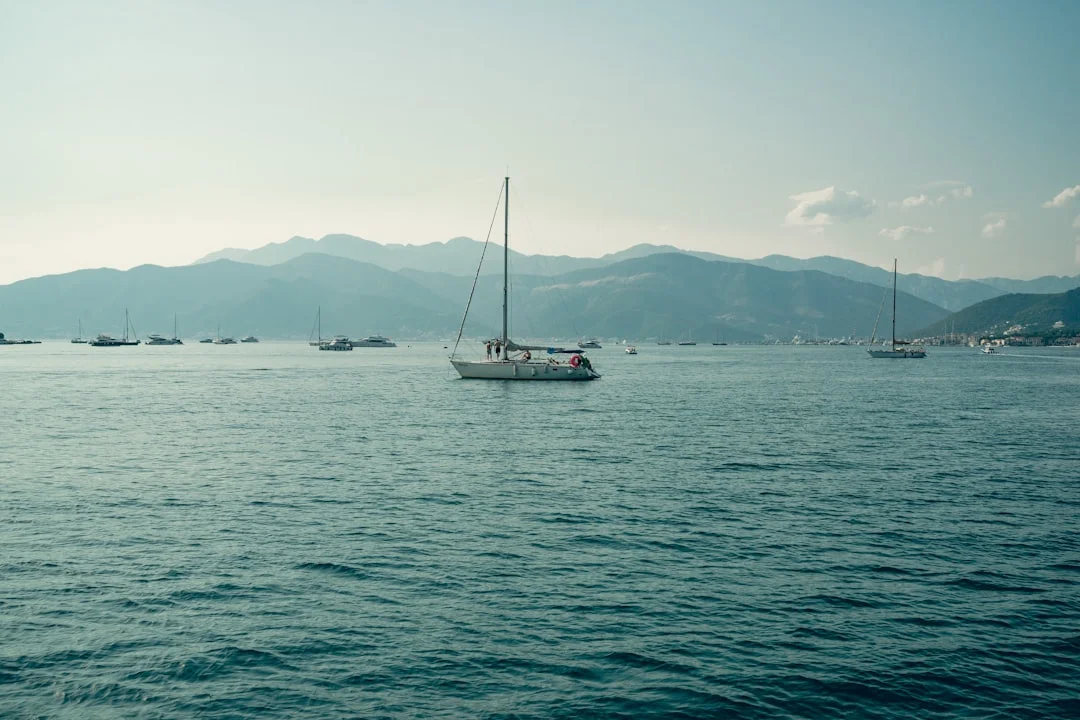
Photo by Alexander on Unsplash
A first-week 7-day loop with 6–12 nm legs
A realistic first week keeps legs short and allows lazy mornings without ending the day in a sweaty rush. Here’s a loop that stays inside the beginner window most days, with simple line-of-sight navigation.
| Day | From → To | Distance (nm) | Notes / Bail-outs |
|---|---|---|---|
| 1 | Tortola → Norman Island | 6–8 | Easy shakedown; multiple coves if one’s crowded |
| 2 | Norman → Peter/Cooper area | 4–8 | Short hop; practice anchoring or buoy pickup |
| 3 | Cooper → Virgin Gorda | 10–12 | Straightforward; watch ferry traffic lanes |
| 4 | Virgin Gorda → North Sound | 6–10 | Protected water; plenty of moorings |
| 5 | North Sound → Jost Van Dyke | 12–18 | Pick a weather window; several stop options en route |
| 6 | Jost → Soper’s Hole (Tortola) | 6–10 | Good return leg; tidy up the boat and crew |
| 7 | Buffer day | 0–15 | Weather day, snorkel day, or “we misjudged Tuesday” day |
Use a tool to calculate the distance between ports to sanity-check these legs against your actual route lines, not the brochure map. It’s also handy for figuring whether you’ll arrive before 1500–1600 after a slow start and a reluctant crew.
When BVI gets ‘advanced’: exposed legs and squall management
BVI can still bite when you choose the wrong day for the wrong leg. The classic step-up is Virgin Gorda → Anegada (~14–16 nm), more exposed and less forgiving if squalls roll through or visibility drops. If you’re seeing frequent 25 kn gusts or messy seas around >1.0 m, save Anegada for a later trip.
Squalls are part of the Caribbean deal. Keep reefing simple, keep someone on the VHF (fixed 25 W; handheld 5–6 W backup charged), and avoid being the boat trying to sort out sails while drifting toward someone else’s transom. This is why “secure early” is not a quaint tradition—it’s collision avoidance.
Greece (Ionian): Calmer Summer Pattern, Easy Alternatives
Ionian vs Aegean: why the Meltemi changes the game
If someone says “Greece is easy,” ask which Greece. The Ionian is often a starter-friendly Mediterranean sailing area because the summer pattern tends to be more moderate and predictable than the Cyclades. It’s common to see afternoon sea breezes around 10–18 kn in the Ionian, while Meltemi events in the Aegean frequently run 20–30+ kn and can last days.
That wind difference changes everything for beginners: reefing frequency, fatigue, and docking loads. A crew that’s fine at 15 kn in flat water can get rattled when gusts hit 25 kn in a harbor entrance with crosswind. Your first charter should build confidence; the Ionian usually does.
Tides are also friendlier here. With typical tidal range around 0.2–0.5 m in many Mediterranean areas, you’re not timing entries around big tidal gates. You still need current awareness in channels, but it’s generally not the “wrong hour, wrong harbor” stress you’ll find in high-range zones.
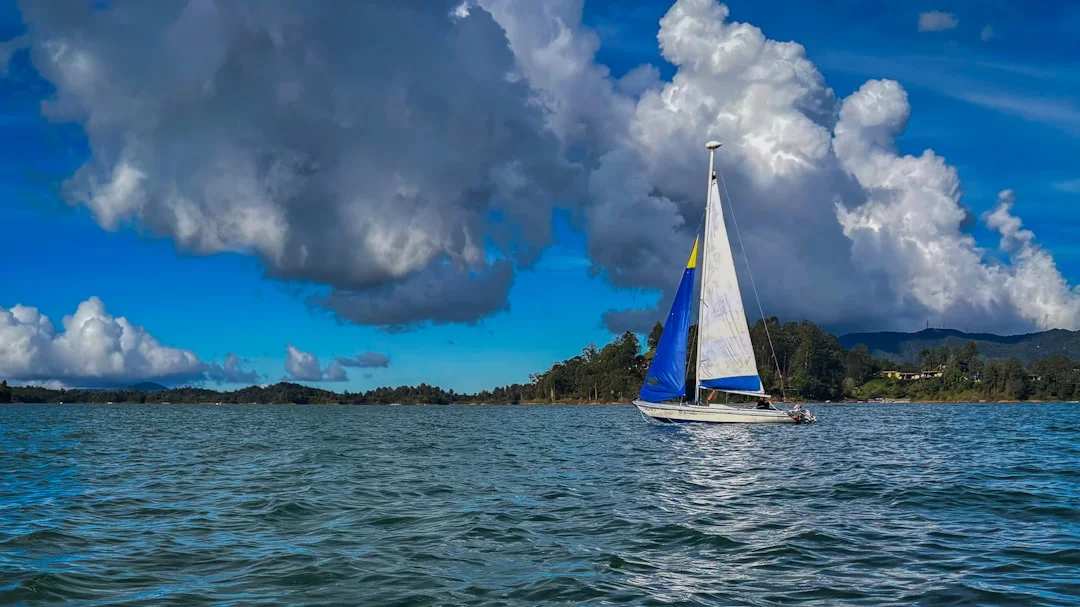
Photo by Samuel Montoya on Unsplash
7-day Ionian itinerary with 8–22 nm hops + bail-out ports
The Ionian is great for marina-to-marina cruising or mixed anchoring, and it’s easy to build days inside 8–22 nm. This loop starts and ends in Lefkada area and keeps alternates nearby.
| Day | From → To | Distance (nm) | Bail-outs / Practical notes |
|---|---|---|---|
| 1 | Lefkada → Meganisi | 8–12 | Protected water; many coves if the first pick is busy |
| 2 | Meganisi → Kalamos | 10–16 | Several stops along the way; good “short hop” day |
| 3 | Kalamos → Kastos | 6–10 | Simple navigation; arrive early for easier berths |
| 4 | Kastos → Ithaca | 12–18 | Watch afternoon breeze; aim secured by 1500–1600 |
| 5 | Ithaca → Kefalonia | 15–22 | Choose a harbor based on wind direction |
| 6 | Kefalonia → back toward Lefkada | 18–22 | Break it into two hops if crew energy is low |
| 7 | Buffer day | 0–15 | Weather, laundry, provisioning, or practice day |
Before you commit, check the nautical miles for your planned route to check your true distances and build an ETA using your boat’s realistic speed. It’s also a clean way to brief the crew: “We sail 15 nm, about 3 hours, plus 45 minutes for departure and docking.”
Anchoring, shorepower, and afternoon sea-breeze timing
Charter life in the Ionian often includes shore power, and most marinas are 230 V. House banks are commonly 200–600 Ah at 12 V, which sounds like a lot until you discover everyone wants the fridge cold, phones charged, and the inverter running. Get a battery and charging briefing on day one; ABYC E-11 and ISO 10133/13297 exist for good reasons, even if you never read them on vacation.
Anchoring is usually straightforward, but avoid complacency. Typical charter ground tackle is an anchor around 16–25 kg with 50–80 m of 8–10 mm chain; in a crowded bay you’ll often use 4:1–5:1 scope to manage swing room. If it’s blowing 15–20 kn, don’t be the boat trying to hold with “about 20 meters out.”
Depart earlier, arrive earlier. The Ionian’s afternoon breeze often builds right when everyone else is trying to dock, which is a terrific time to learn patience and a terrible time to learn stern-to techniques. Your best tool is the clock.
Croatia (Dalmatian Coast): Dense Harbors, Clear Wayfinding
Why Croatia works: island density + marina infrastructure
Croatia’s Dalmatian coast is popular because it’s visually obvious: islands everywhere, clear landmarks, and plenty of places to stop. Typical hops from the Split/Trogir area to Brač or Šolta run ~8–15 nm, and a hop like Šolta to Hvar Town is often ~17–22 nm depending on your route. That sits right in the 10–25 nm beginner range without forcing long open-water commitments.
The infrastructure is also real. You’ll find frequent marinas, town quays, and organized moorings, which makes planning simpler and reduces “where do we sleep tonight?” anxiety. Marina costs commonly land around $60–$180/night shoulder and $100–$300/night peak for 35–45 ft, depending on location and included services.
Good charting and marked channels reduce grounding risk, but they don’t eliminate it. Keep that +0.5–1.0 m under-keel margin, especially when cutting corners near headlands. Many charter monohulls draw 1.6–2.2 m, and rocks don’t care about your itinerary.
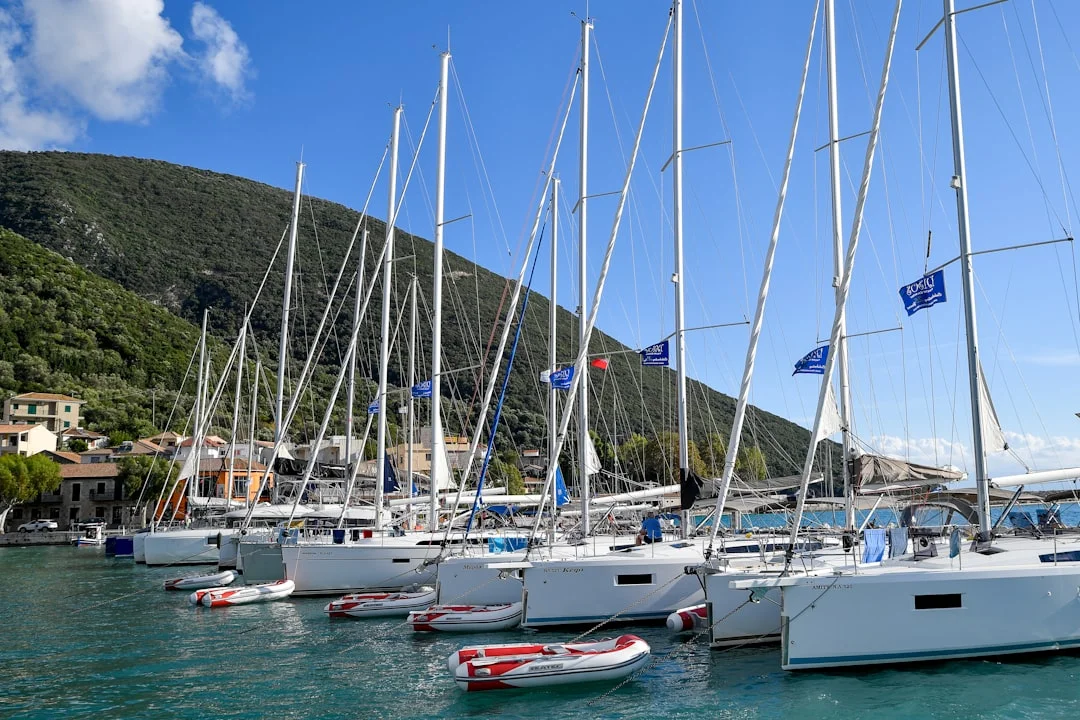
Photo by Margo Evardson on Unsplash
Med-mooring reality: stern-to skills and checkout expectations
The main “skill gap” in Croatia isn’t sailing—it’s parking. Med-mooring (stern-to) often involves reversing into a slot, handling crosswind, and picking up a lazy line while your audience offers advice in several languages. Docking incidents are among the most common novice charter claims, so operators often run a checkout of 1–2 hours that includes close-quarters maneuvering.
If you’re not comfortable, pay for instruction. A 3–6 hour training add-on—or even a full day—can be cheaper than a bent pulpit or a shredded neighborly relationship. It also makes the week more relaxing, because you’re not gambling every afternoon on your best reverse skills.
Tidal range is often small here (~0.2–0.5 m), which simplifies fender height and line angles compared with places that swing 6–10 m. That said, wind across the stern can still load your lines hard, and crowded quays don’t give you room to “figure it out slowly.”
Weather caveats: Bora spikes and ‘no-go’ triggers
Croatia is beginner-friendly until it isn’t. The Bora can arrive with enthusiasm, spiking winds well beyond the comfortable 8–18 kn band and turning channels into a washing machine. If local forecasts suggest repeated 25–30+ kn gusts or steep chop around >1.0 m, make it a harbor day and enjoy Croatia’s other talent: feeding you very well.
Build itineraries that reduce exposure. On windy days, pick routes tucked behind islands rather than long, open channels, and choose destinations with multiple entrances or protected harbors. “We can make it” is not a plan; a marked bailout every 5–10 nm is.
Use Breezada’s sea distance calculator when you’re weighing an inside passage versus a more exposed outside route. The shorter route isn’t always the safer one, but knowing the true mileage helps you decide early rather than mid-channel.
Route Planning Playbook: Distances, ETAs, and Bail-Outs
Sea-distance calculation: nm, speed made good, and time buffers
This is the boring part that keeps charters fun. Start with the chartplotter route, then sanity-check it against a paper chart view: traffic lanes, shallow patches, and places where “straight line” crosses something hard. Then run the leg distance through Breezada’s sea distance calculator so you’re working with real nautical miles, not guesswork.
For beginner crews, plan on 5–6 kn average speed made good on a typical charter boat once you include course changes and sail handling. That gives you reliable math: 15 nm ≈ 2.5–3.0 h and 25 nm ≈ 4.0–5.0 h under way. Add 30–60 minutes for departure and arrival maneuvering, because marinas are where time goes to die.
Then add a contingency buffer—at least 30 minutes—for small problems: a stuck furling line, a navigation double-check, or a crew member deciding this is the perfect moment to need a snack. The point isn’t to pad; it’s to avoid arriving tired and late, when mistakes multiply.
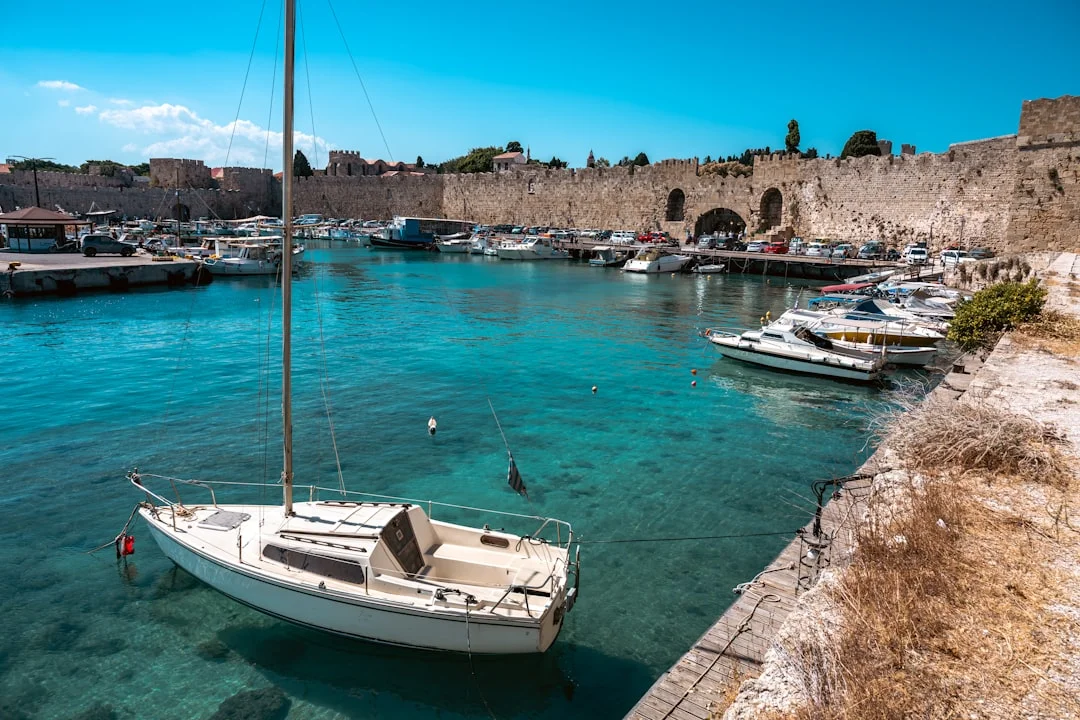
Photo by Sergey Leont'ev on Unsplash
Designing ‘short hops’ with alternates every 5–10 nm
A proper beginner route has decision gates. Every 5–10 nm, you should be able to say, “If the wind is building or visibility drops, we turn in there.” In dense island areas (BVI, Ionian, Croatia), this is easy; you’re almost never more than an hour from shelter if you plan it that way.
I like to brief three options at breakfast: primary destination, secondary destination, and “hidey-hole.” Put them on the plotter, but also describe them in plain language: “If it’s gusty, we stop in the bay behind that low headland.” Crews handle choices better than surprises.
Arrival timing is part of the plan, not a suggestion. Aim to be secured by 1500 whenever possible, and treat 1600 as the latest “still calm and polite” window in peak season. After that, docks get crowded, winds often peak, and your crew’s patience starts charging overtime.
Fuel, charging, and motoring assumptions beginners forget
Even on sailing holidays, engines run. You motor for calms, tight channels, battery charging, and the last mile into a harbor when you’re trying not to become a YouTube clip. Typical auxiliary burn is about 2–5 L/h for 35–45 ft monohulls and 4–8 L/h for 38–45 ft cats, which adds up quickly if you motor 10–20 hours over a week.
Charging is the hidden driver. With house banks around 200–600 Ah, a fridge, instruments, and autopilot can nibble away all day, and many charter boats only really recharge when the engine runs or you’re on shore power. Ask where the battery monitor is, what “low” looks like, and whether the boat has solar or a genset before you plan long off-grid stretches.
No-go triggers belong in the plan from day one. If forecasts suggest frequent 25–30+ kn, steep short chop >1.0 m, or poor visibility in ferry traffic, the correct seamanship move is a coffee day. Your logbook doesn’t need bravery; it needs consistency.
Costs, Checkouts, and Qualifications for First-Time Charters
Charter pricing is a game of “headline rate plus reality.” The weekly boat price matters, but so do deposits, cleaning, moorings, marinas, fuel, and optional instruction. If you budget only the brochure number, you’ll end up rationing ice, which is an oddly common way to stress a crew.
Below is a practical budget stack using typical ranges. Numbers vary by operator, week, and how fashionable your destination is that year, but the categories don’t change.
| Cost item (1 week) | Med monohull 35–40 ft | Med cat 38–45 ft | Caribbean monohull 35–40 ft | Caribbean cat 38–45 ft |
|---|---|---|---|---|
| Bareboat charter — shoulder | $2,500–$5,000 | $5,500–$9,500 | $2,500–$5,000 | $5,500–$9,500 |
| Bareboat charter — peak | $4,500–$9,000 | $8,500–$16,000+ | $4,500–$9,000 | $8,500–$16,000+ |
| Damage deposit (refundable) | $2,000–$8,000 | $2,000–$8,000 | $2,000–$8,000 | $2,000–$8,000 |
| Deposit insurance (alternative) | $150–$450 | $150–$450 | $150–$450 | $150–$450 |
| End cleaning | $150–$350 | $250–$500 | $150–$350 | $250–$500 |
| Fuel (typical week) | $100–$400 | $150–$600 | $100–$400 | $150–$600 |
| Marina berths (if used) | $60–$300/night | $90–$450/night | $60–$250/night | $90–$400/night |
| Mooring buoys / park fees | $20–$120/night | $20–$120/night | $20–$120/night | $20–$120/night |
| Skipper (optional) | $200–$400/day + food/cabin | $200–$400/day + food/cabin | $200–$400/day + food/cabin | $200–$400/day + food/cabin |
| Hostess/cook (optional) | $150–$300/day + food/cabin | $150–$300/day + food/cabin | $150–$300/day + food/cabin | $150–$300/day + food/cabin |
| Checkout sail (typical) | Included, 1–2 h | Included, 1–2 h | Included, 1–2 h | Included, 1–2 h |
| Paid instruction add-on | $350–$900 day | $350–$900 day | $350–$900 day | $350–$900 day |
Qualifications vary by country and company, but expect some combination of a sailing resume and an on-site assessment. Many regions also expect legal VHF competence; in the UK/Med that commonly means SRC for DSC use, and you’ll usually have a fixed 25 W set aboard.
If you’re short on experience, paying for a skipper for 1–2 days can be the smartest money you spend. It’s cheaper than a claim, and you’ll actually learn your boat rather than just surviving it.
Boat Choice & Handling: Catamaran vs Monohull for Beginners
Most arguments about cats versus monos are religious, so let’s keep it practical. For a first charter, the “best” choice is the one that matches your destination and your crew’s tolerance for motion, docking stress, and shallow-water anxiety. Both can be easy; both can embarrass you in front of a waterfront full of strangers.
The big handling difference shows up at low speed. Monohulls often involve prop-walk and momentum management, while cats have twin engines that can spin the boat in its length when handled correctly. That said, a cat’s windage is real, and in a tight marina with 15–20 kn crosswind, you’ll discover new ways to sweat.
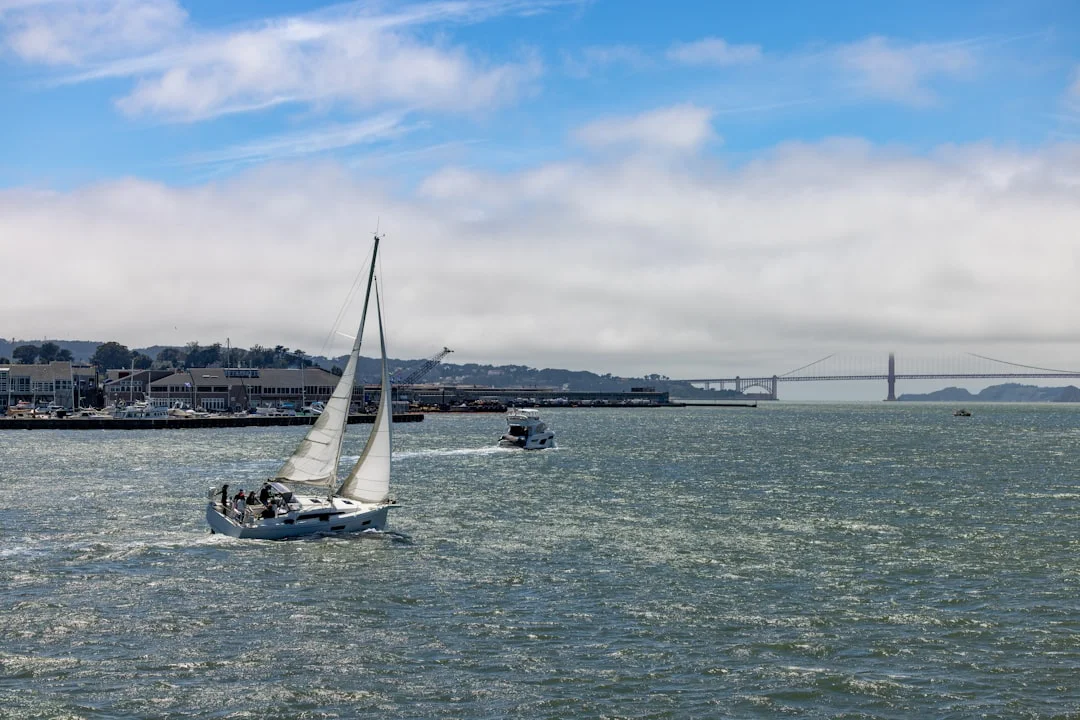
Photo by Royce Fonseca on Unsplash
Here’s the beginner-relevant comparison without turning it into a model-by-model rabbit hole:
| Feature | Monohull (34–45 ft) | Catamaran (38–45 ft) | Beginner takeaway |
|---|---|---|---|
| Typical draft | 1.6–2.2 m | 1.1–1.4 m | Cats reduce shoal anxiety; still keep +0.5–1.0 m margin |
| Displacement | 6–12 t | 10–20 t | Heavier boats carry momentum; plan slower approaches |
| Fuel burn | 2–5 L/h | 4–8 L/h | Cats cost more to motor and charge batteries |
| Docking control | Single screw + prop-walk | Twin screws (better pivoting) | Cats can be easier if you use engines gently |
| Comfort underway | Heels 10–20° common | Flatter, but bridge-deck slap in chop | Cats feel stable until short chop >1.0 m arrives |
| Anchoring footprint | Smaller swing circle | Wider beam, more room needed | Crowded bays can be trickier for cats |
| Typical weekly cost | Lower | Higher | Budget affects stress levels more than most sailors admit |
Reef early regardless of hull type. A beginner comfort target is ~10–20° of heel, and many skippers reef around 15–20 kn true depending on sail plan and sea state. If you’re thinking about reefing, you’re already late—especially with a charter crew that’s still learning winch etiquette.
Safety, Gear, and Standards in Protected-Water Cruising
Regulatory baseline: COLREGs, VHF/DSC, and carriage requirements
Protected waters don’t mean “no rules.” COLREGs is your universal baseline: maintain proper lookout, understand crossing situations, and don’t assume the other vessel has seen you because your boat is white and emotionally innocent. Busy areas in Greece and Croatia include ferries and fast traffic, so keep AIS on and actually look out of the cockpit.
VHF is more than a marina phone. Many regions require licensing; in the UK/Med it’s commonly SRC, and most charter boats carry a DSC-capable 25 W fixed set with a 5–6 W handheld backup. During check-in, verify the MMSI situation and how DSC distress calling is handled in that fleet—because “we thought it worked” is not a plan.
In U.S./USVI waters (including some Caribbean itineraries), expect USCG carriage basics to apply in some form: appropriate PFDs, a throwable, fire extinguishers, sound signals, and visual distress signals (requirements vary by vessel and operating area). Don’t get lost in the paperwork; just confirm the gear exists, is in date, and is where the briefing says it is.
Reboarding and swim safety in calm bays
Snorkeling-heavy itineraries (BVI especially) make reboarding gear a real safety item, not a comfort feature. ABYC H-41 is a useful standard lens here: you want a ladder you can deploy from the water, plus handholds that don’t require gymnast-level flexibility. Test it on day one, because discovering a stuck ladder after a long swim is a bad way to meet your cardio goals.
Establish simple swim rules. Engine off and key out before anyone enters the water, one person stays aboard as a spotter, and nobody “just jumps in for a second” near the stern in current. Even in calm anchorages with <0.5 m wavelets, small currents and fatigue can turn a casual swim into a problem.
If you use a dinghy a lot, treat it like a vessel, not a toy. Typical inflatables are 2.6–3.2 m with 6–15 hp outboards; they flip, drift, and run out of fuel just like everything else. Clip the kill cord, carry a handheld VHF, and keep a light on it at night.
Electrical and stability realities on charter boats
Charter electrical systems are usually robust, but they’re also heavily used and occasionally “creatively maintained.” ABYC E-11 and ISO 10133/13297 are why I always ask for a short battery and shore power briefing: where the battery switches are, what the monitor means, and what loads trip breakers. With typical house banks of 200–600 Ah, it’s easy to drain things faster than you expect when the fridge and autopilot run all day.
Stability categories are not permission slips. ISO 12217 underpins CE design categories, and many charter boats are rated A or B, but that does not make an exposed passage beginner-friendly by default. A Category B boat can still turn your crew miserable in 25 kn and >1.0 m chop, and misery is how mistakes get made.
Finally, remember that “protected” is conditional. A bay that’s calm in a southerly can be a washing machine in a northerly with the same 15–20 kn wind, just because fetch changes. Learn to read the geography, not just the forecast, and you’ll quietly level up faster than the guy bragging on the dock.
Frequently Asked Questions
How do I calculate a conservative ETA for a 22 nm leg at 5–6 kn including departure/arrival maneuvering and a 30-minute contingency?
At 5 kn, 22 nm is 4.4 hours; at 6 kn, it’s 3.7 hours. Add 30–60 minutes for departure/arrival maneuvering (call it 0.75 hours), plus a 0.5 hour contingency. Your conservative ETA becomes roughly 4.9–5.7 hours, so a 0900 departure targets arrival around 1400–1500, which fits the “secured by 1500” habit.
In a DSC-equipped VHF setup (25 W fixed + 5–6 W handheld), what MMSI/DSC functions should a beginner verify during charter check-in to ensure distress calling works?
Verify the fixed VHF has an MMSI programmed (or confirm the operator’s policy if they use fleet MMSIs), and that the DISTRESS button is functional and understood (cover off, press-and-hold procedure). Confirm the radio has a GPS position feed (either internal or via NMEA from the plotter), because DSC distress without position is a half-shout in the dark. Also check you can make a DSC test call if permitted, and that the handheld is charged and can transmit at 5–6 W on working channels.
For Med-mooring stern-to in Croatia, how does a 0.2–0.5 m tidal range change lazy-line pickup technique versus high-tide-range harbors (6–10 m) where line angles and fender height change significantly?
With only 0.2–0.5 m tide, your fender height and stern line angles stay nearly constant, so you can set fenders once and focus on boat position and lazy-line handling. In 6–10 m tide harbors, line angles change dramatically; you must allow for vertical movement, adjust fenders often, and avoid overtight lines that can hang the boat at low water. Lazy lines also angle differently with tide, so pickup timing and slack management become far more critical than in the Med.
Given typical drafts (mono 1.6–2.2 m; cat 1.1–1.4 m), what minimum charted depth should I target to maintain a 0.5–1.0 m under-keel clearance margin when anchoring?
Add your draft plus your margin. For a monohull at 2.0 m draft, target at least 2.5–3.0 m charted depth for 0.5–1.0 m under-keel clearance, then account for tide (even small 0.2–0.5 m ranges) and chart datum. For a cat at 1.3 m draft, target roughly 1.8–2.3 m charted depth, again adjusted for tide and any swell set-down in shallow areas.
With an anchor of 16–25 kg and 50–80 m of 8–10 mm chain, what scope (4:1–7:1) should I plan in 6–10 m depth to hold in 15–20 kn while keeping swing room in a crowded bay?
In 6–10 m depth, start with 5:1 scope in settled conditions (so 30–50 m of chain, plus bow height if you’re being precise). If it’s blowing 15–20 kn, or the bottom is sketchy, move toward 6:1–7:1—but only if you truly have swing room in the crowd. When space is tight, improve holding by resetting carefully, using proper snubbing, and choosing better bottom rather than pretending 4:1 is fine because the bay is full.
About the Author
Related Articles
Amalfi Coast vs French Riviera Sailing Guide (Costs & Routes)
Compare Amalfi Coast vs French Riviera sailing—costs, crowds, mooring rules, best months, and 7-day routes. Choose your coast and plan now.
By Breezada Team
Puget Sound Cruising Guide to Gulf Islands Routes
Plan routes, anchorages, and weather windows with this Puget Sound cruising guide for the Gulf Islands & San Juans. Read now and start plotting.
By Breezada Team

Sailing Amalfi Coast Guide: Ports, Anchorages & Rules
Sailing Amalfi Coast guide to Capri, Positano & Amalfi: best ports, anchorages, fees, VHF and rules. Plan your route—read now.
By Breezada Team
Dry Tortugas Sailing: Routes, Anchoring & Permits
Plan Dry Tortugas sailing from Key West with routes, weather windows, anchoring/moorings, and permits. Read the guide and plan your trip.
By Breezada Team