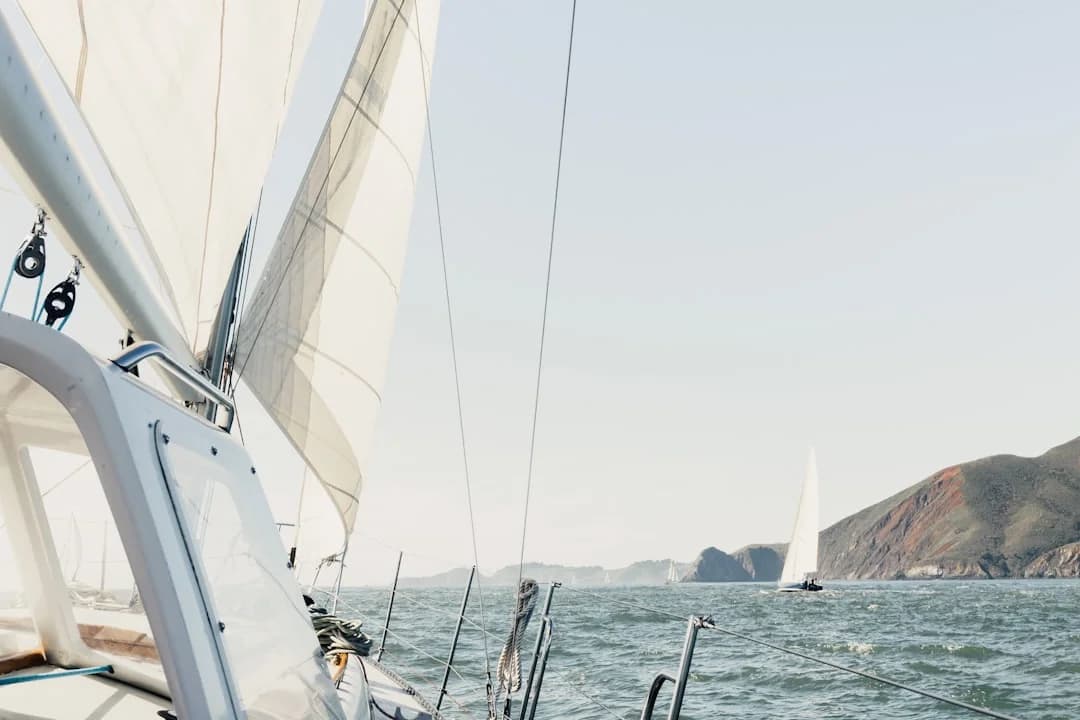
The best sailing routes in the world share a few things in common: reliable trade winds, warm water, protected anchorages within a day's sail of each other, and scenery that makes the long watches worth it. What separates a good route from a great one is the rhythm — the balance between challenging passages and easy daysails, between remote anchorages and towns where you can restock the icebox and find a cold beer.
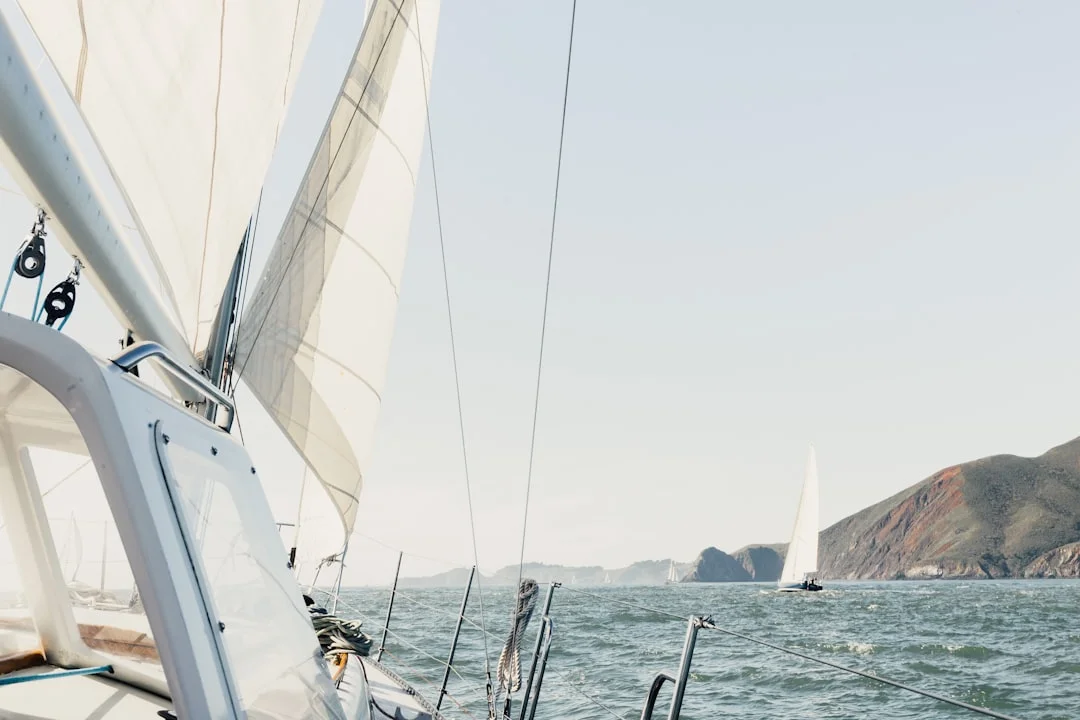
Photo by Thom Milkovic on Unsplash
This guide covers the routes that experienced cruisers return to again and again — from trade wind crossings to coastal hops, ranked by the quality of the sailing experience rather than Instagram appeal. For any route mentioned here, you can calculate the exact nautical miles between waypoints using Breezada's sea distance calculator.
The Atlantic Circuit: The Classic Cruiser's Loop
The Atlantic circuit remains the most popular long-distance sailing route on the planet, and for good reason. The trade winds are predictable, the passages are well-documented, and the destinations at each end — the Canary Islands and the Caribbean — are among the best cruising grounds anywhere.
The ARC Route (Las Palmas to St. Lucia)
Distance: ~2,700 nm | Duration: 14–21 days | Season: November–December
The Atlantic Rally for Cruisers (ARC) route from Las Palmas, Gran Canaria to Rodney Bay, St. Lucia is the most-sailed ocean crossing in the world. Around 200 boats make this passage every November, but you don't need to join the rally — hundreds more cross independently each season.
The first 2–3 days south of the Canaries can be light, with the wind shadow of the islands creating confused seas. Once you pick up the northeast trades around 20°N, the sailing becomes remarkably consistent: 15–25 knots from the east-northeast, broad reaching or running under twin headsails. Most boats average 120–150 nm per day. Our detailed Atlantic crossing guide breaks down the timing, weather windows, and preparation required.
The return trip — typically via Bermuda and the Azores — is harder. The passage from the Caribbean to Bermuda (850 nm) involves crossing the Gulf Stream, where northers can build steep, dangerous seas. The Bermuda-to-Azores leg (1,800 nm) crosses the variable horse latitudes before picking up the westerlies. Budget 4–6 weeks for the full return.
The Trade Wind Route (Circumnavigation via Panama)
For those with more time, the full trade wind circumnavigation follows the prevailing winds westward around the globe: Caribbean → Panama Canal → Pacific Islands → Southeast Asia → Indian Ocean → Red Sea (or South Africa) → Atlantic → Caribbean. Most boats take 3–5 years to complete the circuit. The key is timing each ocean crossing to avoid cyclone seasons — which effectively dictates your schedule.
The Mediterranean: Europe's Sailing Playground
The Med offers more variety per nautical mile than any other cruising ground. You can sail from the granite cliffs of Sardinia to the whitewashed villages of the Greek Cyclades in a few weeks, passing through completely different cultures, cuisines, and sailing conditions.
Greece and the Aegean
Best season: May–October | Typical daily distance: 15–40 nm
The Greek islands are, arguably, the finest coastal cruising in the world. Over 6,000 islands and islets — only 227 inhabited — create an endless maze of short hops, each one ending at a different taverna or deserted beach. The Cyclades, Dodecanese, Ionian, and Saronic islands each offer a distinct character.
The Meltemi — a strong northerly wind blowing from June through September — is the defining feature of Aegean sailing. It can reach Force 7–8 (30–40 knots) with little warning, particularly in the channels between islands. Sailing south through the Cyclades with the Meltemi behind you is exhilarating. Sailing north against it is a beating. Plan your itinerary accordingly.
The Ionian islands on the west coast are calmer — lighter thermal winds, better-protected anchorages, and gentler conditions that suit less experienced crews.
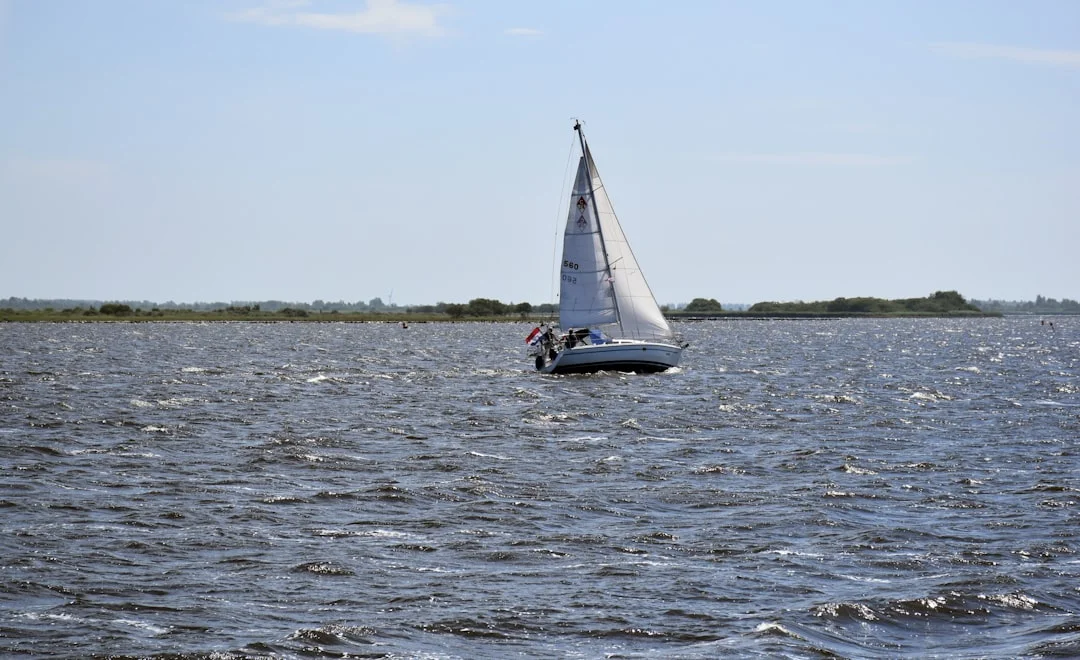
Photo by Ries Bosch on Unsplash
Croatia and the Dalmatian Coast
Best season: May–September | Typical daily distance: 10–30 nm
Croatia packs over 1,200 islands into a relatively compact stretch of the eastern Adriatic. The combination of medieval walled towns, crystal-clear water, and reliable afternoon sea breezes makes it one of Europe's most popular charter destinations — which is both a blessing and a curse. In July and August, the most popular anchorages (Hvar, Vis, Kornati) fill early. Our Croatia sailing guide covers the best strategies for beating the crowds.
The Maestral — a northwest afternoon breeze building to 10–18 knots — provides predictable sailing conditions from late morning to early evening. The Bora, a cold northeasterly katabatic wind, can hit suddenly and violently (40+ knots) between October and March, making off-season sailing a serious undertaking.
Turkey's Turquoise Coast
Best season: May–October | Typical daily distance: 15–35 nm
Turkey's southwest coast — from Bodrum to Antalya — remains one of the Mediterranean's best-kept secrets. Ancient Lycian ruins sit directly above secluded anchorages. The Gocek-Fethiye area alone has dozens of protected bays within a few miles of each other, and the daily costs (food, marinas, fuel) run roughly 40–50% less than Greece or Croatia.
The prevailing summer wind is a westerly sea breeze building to 15–20 knots by afternoon — ideal for the typical east-to-west routing along the coast. The region is also excellent for gulet charters if you prefer someone else to handle the anchoring.
The Caribbean: Trade Wind Paradise
The Caribbean island chain — stretching from the Virgins in the north to Grenada in the south — is the most popular winter cruising destination for good reason. The northeast trades blow a reliable 15–20 knots from December through May, the islands are spaced 20–60 nm apart, and the water temperature rarely drops below 26°C.
The Windward Islands (Martinique to Grenada)
Distance: ~200 nm | Best season: December–May
This is the chain that defines Caribbean sailing. The Windward Islands — Martinique, St. Lucia, St. Vincent and the Grenadines, and Grenada — offer the best combination of sailing, scenery, and shoreside culture. Each island has a distinct personality: the French-influenced gastronomy of Martinique, the dramatic Pitons of St. Lucia, the unspoiled Tobago Cays, and the laid-back boatyards of Grenada.
The passages between islands are typically 20–40 nm of open-water sailing in brisk trades, with the wind accelerating in the channels between high volcanic islands. The west (leeward) coasts provide calm anchorages in the wind shadow. For a deeper look at the full island chain, read our Caribbean sailing destinations guide.
The BVI (British Virgin Islands)
Best season: November–June | Typical daily distance: 5–20 nm
If the Windwards are for experienced sailors, the BVI is the gentle introduction. Sir Francis Drake Channel provides flat-water sailing between islands rarely more than a few miles apart. The anchorages at The Baths, Norman Island, and Jost Van Dyke are world-famous. It's a charter hotspot — over 3,000 charter boats operate here — but for good reason.
Southeast Asia: The Budget Cruiser's Dream
Thailand and Malaysia
Best season: November–April (Andaman Sea) | Typical daily distance: 10–30 nm
Thailand's Andaman coast — Phuket, Phang Nga Bay, the Phi Phi Islands, and Langkawi in Malaysia — offers dramatic limestone karst scenery, protected sailing, and living costs that make the Caribbean look expensive. A full meal ashore costs $3–5. Marina berths run $15–25/night for a 40-footer. Provisioning is excellent.
The sailing itself is relatively easy: light to moderate winds (8–15 knots), short distances between islands, and well-protected anchorages. The monsoon dictates the seasons — the Andaman coast is best from November to April, while the Gulf of Thailand (Koh Samui, Koh Phangan) works from May to October.
Photo by Dmitrii E. on Unsplash
The Pacific: Long Passages, Extraordinary Rewards
The Coconut Milk Run (Pacific Crossing)
Distance: ~3,000 nm (Galapagos to Marquesas) | Duration: 18–25 days | Season: March–May
The Pacific crossing from the Americas to French Polynesia follows the southeast trades and is widely considered one of the most pleasant ocean passages on the planet. Once past the doldrums near the ITCZ (typically around 5–8°N), you pick up steady 12–18 knot trades on a beam or broad reach. The wind and waves are behind you, the water is warm, and the fishing is outstanding — yellowfin tuna and mahi-mahi are regular catches.
The Marquesas Islands, your likely landfall, are unlike anything in the Caribbean or Med — steep volcanic peaks rising straight from the ocean floor, with Polynesian culture largely intact. From there, the Tuamotu atolls and Tahiti are a few weeks' sail west.
Use Breezada's sea distance calculator to plot the full Pacific crossing route and check distances between island groups.
New Zealand to Fiji (and the South Pacific Islands)
Distance: ~1,100 nm | Season: May–October
New Zealand serves as the southern hurricane-hole for Pacific cruisers during the November–April cyclone season. The passage north to Fiji, Tonga, or New Caledonia is a rite of passage — a mix of upwind slog and downwind trade-wind sailing as you cross from the temperate westerlies into the tropics. Fiji's 300+ islands offer world-class reef sailing, traditional village visits, and some of the warmest hospitality in the Pacific.
Patagonia and the Chilean Channels
Best season: December–March | Not for the faint-hearted
The Chilean channels from Puerto Montt to Cape Horn traverse some of the wildest, most remote cruising waters on Earth. Glaciers calve directly into anchorages. Williwaw squalls — violent katabatic gusts exceeding 60 knots — can hit without warning. You might go days without seeing another vessel.
This isn't a route you casually add to an itinerary. It demands a well-found boat, serious heavy-weather gear, and an experienced crew comfortable with cold, wet conditions. But for those who make the trip, the rewards are extraordinary — pristine wilderness that has changed little since Darwin sailed these waters aboard the Beagle in 1834. Average daily distance: 30–50 nm when conditions cooperate, which they often don't.
Choosing Your Route: What to Consider
| Factor | Caribbean | Med | Pacific | Southeast Asia |
|---|---|---|---|---|
| Wind reliability | Excellent | Variable | Excellent | Light-moderate |
| Daily distance | 20–60 nm | 10–40 nm | 80–150 nm (passages) | 10–30 nm |
| Cost of living | High | Moderate-high | Moderate | Low |
| Infrastructure | Good | Excellent | Limited | Good |
| Best for | Trade-wind sailing | Culture & variety | Adventure | Budget cruising |
| Season | Dec–May | May–Oct | Mar–Oct | Nov–Apr |
Key Planning Factors
Weather windows matter more than destination appeal. The single biggest factor in route planning is cyclone and storm seasons. The Caribbean hurricane season (June–November), the Pacific cyclone season (November–April), and the Mediterranean winter (November–March) all dictate when you can — and can't — be in certain waters. Plan your route around the weather, not the other way around.
Provisioning varies dramatically. In the Caribbean and Med, you can restock at nearly every port. In the Pacific, you might go 2–3 weeks between supply points. Southeast Asia offers the best value for provisioning, with fresh markets at virtually every stop.
Budget for the unexpected. Gear breaks. Weather windows close. Visas expire. The best cruising plans have enough slack built in to accommodate delays without turning the trip into a race. A good rule of thumb: budget 30% more time than you think you'll need.
You can verify distances between any of these waypoints to help plan realistic daily runs and passage times for your chosen route.
Frequently Asked Questions
What is the safest sailing route for beginners?
The British Virgin Islands and the Greek Ionian Islands are the two safest cruising grounds for less experienced sailors. Both offer short distances between anchorages (5–20 nm), well-protected waters, reliable weather patterns, and excellent marine infrastructure. The BVI's Sir Francis Drake Channel provides flat-water sailing with islands visible on all sides, while the Ionian benefits from gentle thermal winds that rarely exceed 15 knots.
What is the best time of year for an Atlantic crossing?
The ideal window for a westbound Atlantic crossing (Europe to Caribbean) is mid-November through mid-December. The northeast trade winds are established by this point, hurricane season in the Caribbean has ended, and you arrive in time for the Christmas trade-wind season. Eastbound crossings (Caribbean to Europe via the Azores) are best timed for May through June, when the North Atlantic weather systems are more settled and the Azores High is well-positioned.
How much does a sailing trip around the world cost?
A realistic budget for a 3–5 year circumnavigation on a 38–45 foot boat ranges from $1,500 to $4,000 per month, depending on where you sail and how you live. The biggest variables are marina fees (which you can minimize by anchoring), provisioning costs (lowest in Southeast Asia, highest in the Caribbean), and boat maintenance. Most cruisers spend roughly $25,000–$50,000 per year including insurance, haul-outs, and occasional gear replacements. Charter trips covering individual legs cost significantly less — see our yacht charter pricing guide for current rates by region.
Do I need ocean sailing experience before attempting a long passage?
Yes. Before attempting an ocean crossing like the Atlantic or Pacific, you should have substantial coastal sailing experience — at minimum several multi-day passages with overnight watches. Building up gradually is the standard approach: day sails, then weekend trips, then coastal passages of 48–72 hours, then your first offshore crossing. Many crews do a qualifying passage of 500+ nm before committing to a transoceanic route. Sailing schools offering offshore passage-making courses (such as RYA Yachtmaster Ocean) provide structured training.
What size boat do I need for ocean sailing?
Most ocean cruisers sail boats between 35 and 50 feet. Below 30 feet, you sacrifice storage, comfort, and safety margins. Above 50 feet, crew requirements increase and costs rise sharply. The sweet spot for a couple is generally a 38–42 foot well-built cruiser with a moderate draft, a reliable engine, and tankage for at least 500 nm under power. A heavy-displacement design with a full keel handles ocean swells better than a light, flat-bottomed racer. The specific boat matters far less than its preparation — a well-maintained 35-footer with good ground tackle and a solid rig is safer than a neglected 50-footer with tired rigging.
About the Author
Related Articles
NAVTEX for Sailing: SafetyNET Offshore Weather Guide
Learn NAVTEX & SafetyNET (Inmarsat-C) setup, filters, and what MSI to trust offshore. Get clearer forecasts—read the guide now.
By Breezada Team
Sailboat Hull Speed: Calculate It and Exceed It
Learn sailboat hull speed, the 1.34×√LWL formula, and when boats can exceed it. Get examples and tips—read now and calculate yours.
By Breezada Team
Sailing Right of Way Rules: COLREGs Made Simple
Learn sailing right of way rules with simple COLREGs scenarios—tack, overtaking, crossing, lights, and priority exceptions. Read & use the cheat sheet.
By Breezada Team

How to Read GRIB Files for Sailing and Avoid Errors
Read the guide and start sailing smarter today. Explore key tips, gear, and routes—click to learn more.
By Breezada Team