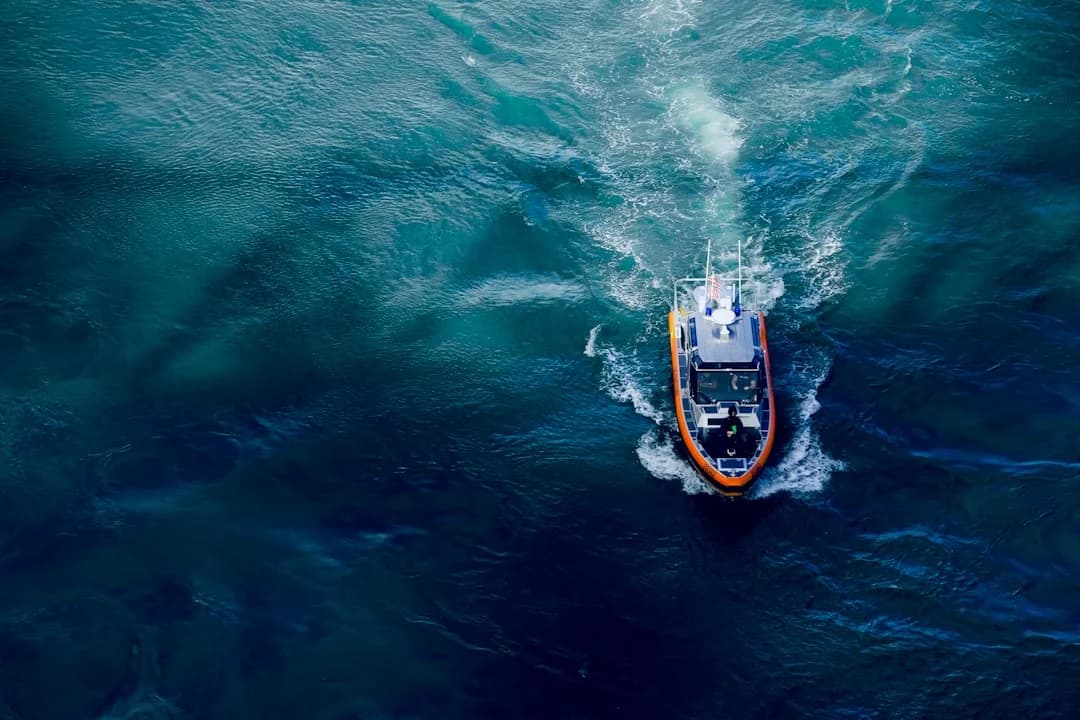
A VHF radio is the single most important piece of safety equipment on any boat after the life jackets. It connects you to the coast guard, nearby vessels, marinas, and — in a genuine emergency — to anyone within 20-25 nautical miles who can help. Yet a surprising number of recreational sailors either don't carry one or have never keyed the mic outside of a radio check. Here's how to use a VHF radio properly, which channels matter, and the protocols that could save your life.
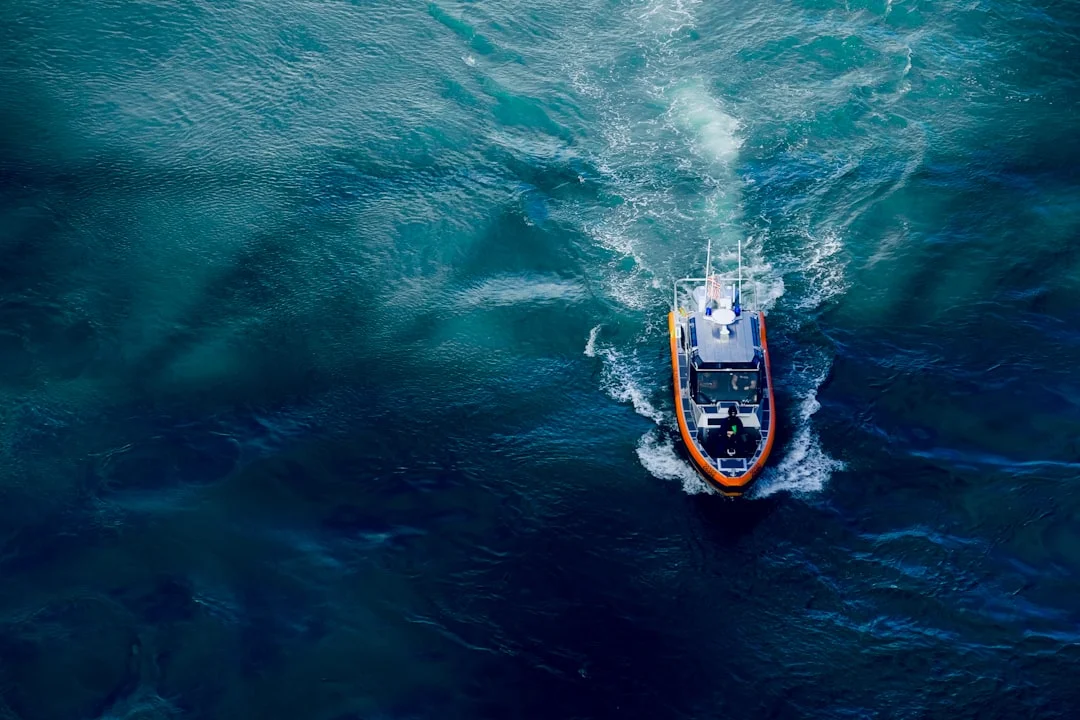
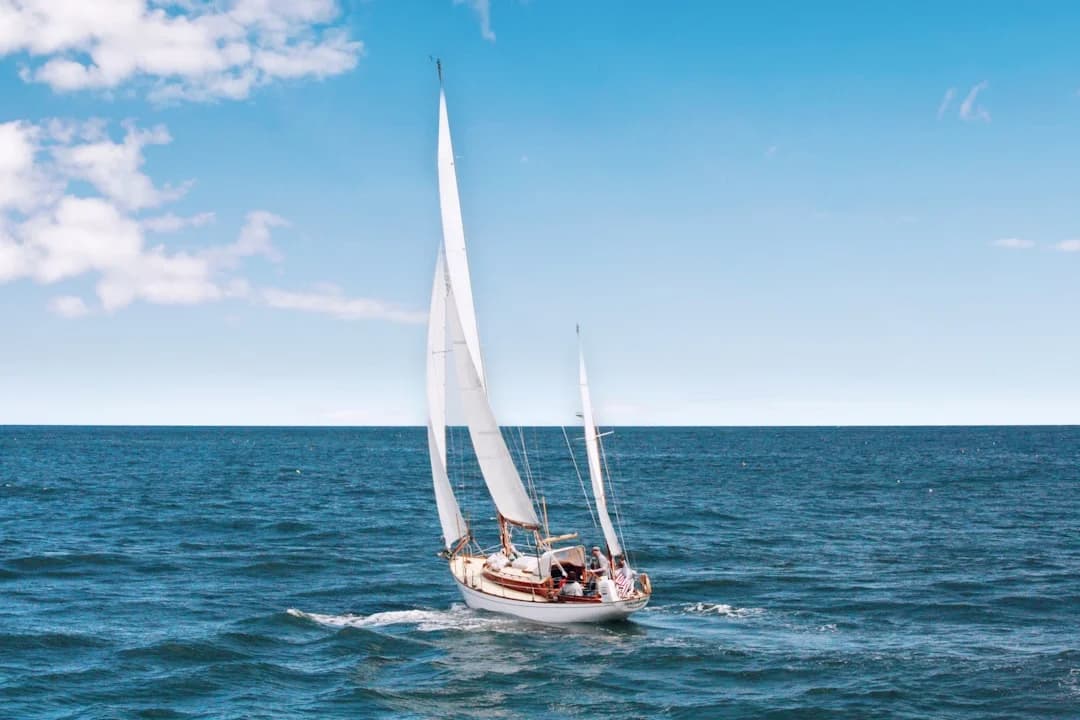
Photo by Johnyvino on Unsplash
Why Every Boat Needs a VHF Radio
Cell phones work fine — until they don't. Once you're 5-10 nm offshore, coverage gets patchy. At 20 nm, it's gone entirely. A VHF marine radio transmits on dedicated frequencies monitored by the coast guard, port authorities, and every commercial vessel within range. Unlike a phone call, a distress broadcast on Channel 16 reaches everyone simultaneously. That matters when you're taking on water and the nearest coast guard station is 45 minutes away but a cargo ship is 3 nm to your east.
VHF stands for Very High Frequency, operating between 156.0 and 174.0 MHz. Marine VHF is line-of-sight, meaning range depends on antenna height. A masthead antenna on a 40-foot sailboat typically gets 20-25 nm to another vessel, and up to 40-50 nm to a coast guard tower on high ground. Handheld units are more limited — roughly 3-5 nm — but they're invaluable as a backup or for dinghy use.
Most countries require a Ship Station License for the vessel and a Short Range Certificate (SRC) or equivalent operator's license for anyone transmitting. In the US, recreational vessels under 65 feet in domestic waters are exempt from the ship license, but using a VHF internationally or with DSC still requires an MMSI number — more on that shortly.
Essential VHF Channels You Need to Know
There are 55+ marine VHF channels, but you'll use fewer than a dozen regularly. Here's what matters:
| Channel | Name / Use | Notes |
|---|---|---|
| 16 | Distress, Safety & Calling | Monitored by coast guard and all vessels. Use for initial contact, then switch. |
| 9 | Secondary Calling | Used in some US areas as the recreational hailing channel |
| 13 | Bridge-to-Bridge | Navigation safety. Mandatory monitoring for large vessels. 1W power limit. |
| 6 | Intership Safety | Ship-to-ship safety communications |
| 22A | Coast Guard Liaison | US Coast Guard broadcasts after initial contact on 16 |
| 68, 69, 71, 72, 78A | Recreational Ship-to-Ship | Working channels for conversation between pleasure craft |
| WX1-WX7 | NOAA Weather | Continuous weather broadcasts (US). WX1 (162.550 MHz) is most common. |
| 70 | Digital Selective Calling (DSC) | Automated distress alerting. Never voice-transmit on this channel. |
| AIS 1 & 2 | AIS (87B, 88B) | Automatic Identification System. Radio handles this automatically. |
Channel 16 is sacred ground. Every vessel with a VHF radio must monitor Channel 16 while underway. It's the universal frequency for distress calls and the starting point for making contact with other vessels. You hail someone on 16, agree on a working channel, and switch. Keep conversations on 16 as short as possible — a few seconds for the hail, then move.
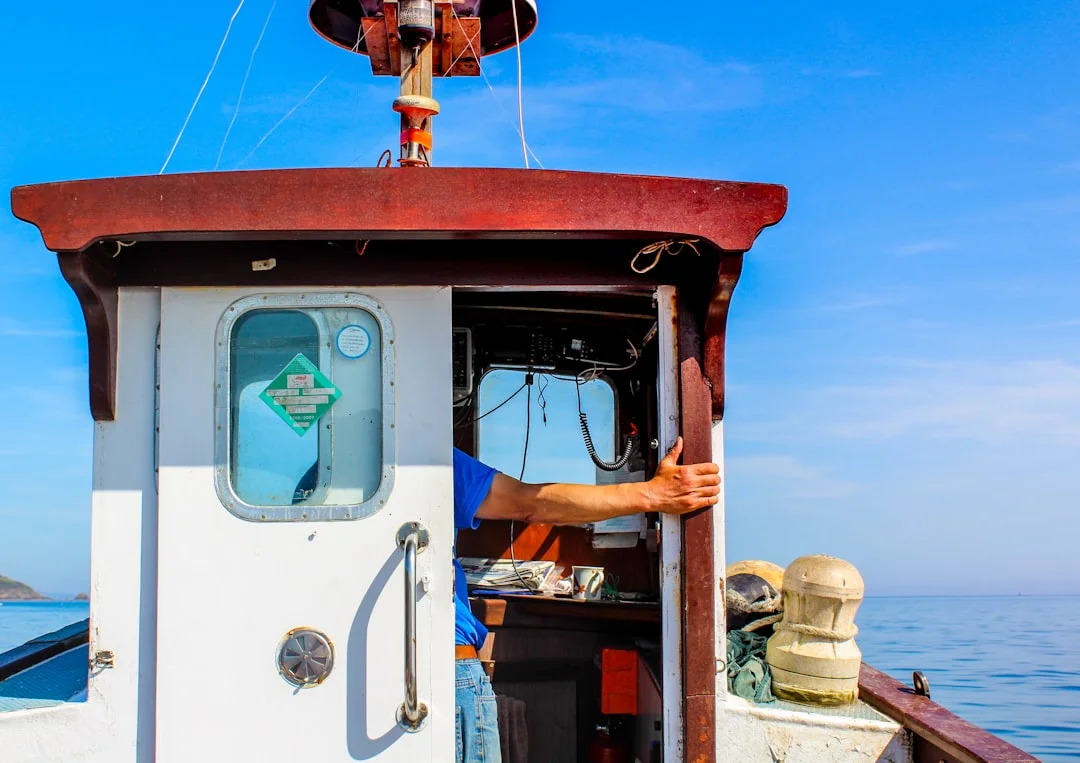
Photo by Leon McBride on Unsplash
How to Make a Basic VHF Radio Call
The standard procedure for a routine call is straightforward, but getting it right matters — sloppy radio work clutters the airwaves and can cause confusion in emergencies.
Step 1: Listen before you transmit. Switch to Channel 16 (or the appropriate working channel) and listen for 30 seconds to make sure you're not about to talk over someone else.
Step 2: Press the PTT (Push-to-Talk) button, wait one second, then speak. That one-second pause is important — many radios clip the first syllable, so you'll get "...rina Bay" instead of "Marina Bay" if you start talking immediately.
Step 3: Use this format for a routine hail:
"[Vessel name], [Vessel name], this is [Your vessel name], [Your vessel name], over."
For example: "Blue Horizon, Blue Horizon, this is Wayward Wind, Wayward Wind, over."
Step 4: Wait for a response. If no answer after 30 seconds, try again. After three attempts with no response, wait at least 2 minutes before retrying.
Step 5: Agree on a working channel and switch:
"Blue Horizon, switch to channel six-eight, over."
"Six-eight, roger, out."
Then both vessels switch to 68 for the actual conversation.
Key radio etiquette:
- Say "over" when you expect a reply
- Say "out" when the conversation is finished — never "over and out" (that's a Hollywood invention)
- Keep transmissions under 30 seconds
- Use plain language, not CB radio slang
- Speak slowly and clearly, especially vessel names and numbers
- Use the NATO phonetic alphabet for spelling: Alpha, Bravo, Charlie, Delta...
Distress, Urgency, and Safety Calls
This is where VHF radio protocol becomes genuinely life-or-death. There are three priority levels, each with its own prefix word. Using the wrong one — or worse, not using one at all — can delay rescue.
MAYDAY — Imminent Danger to Life or Vessel
A Mayday call is reserved for situations where there is grave and imminent danger to the vessel or crew: sinking, fire, someone overboard and drifting away, catastrophic structural failure. Don't hesitate to use it when it's warranted, but don't use it for a fouled propeller or a dead engine with no immediate danger.
The Mayday format:
"MAYDAY, MAYDAY, MAYDAY.
This is [Vessel name], [Vessel name], [Vessel name].
MAYDAY [Vessel name].
My position is [latitude/longitude or bearing and distance from a known point].
I am [nature of distress — sinking, fire, medical emergency].
I require [immediate assistance / medical evacuation / towing].
I have [number] persons on board.
[Any other useful information — vessel description, EPIRB activated, etc.]
Over."
Transmit on Channel 16 at full power (25W). Repeat if no acknowledgment within 1-2 minutes. If you have DSC, press and hold the red distress button first — it sends an automated alert with your MMSI and GPS position on Channel 70, then the radio automatically switches to 16 for the voice follow-up.
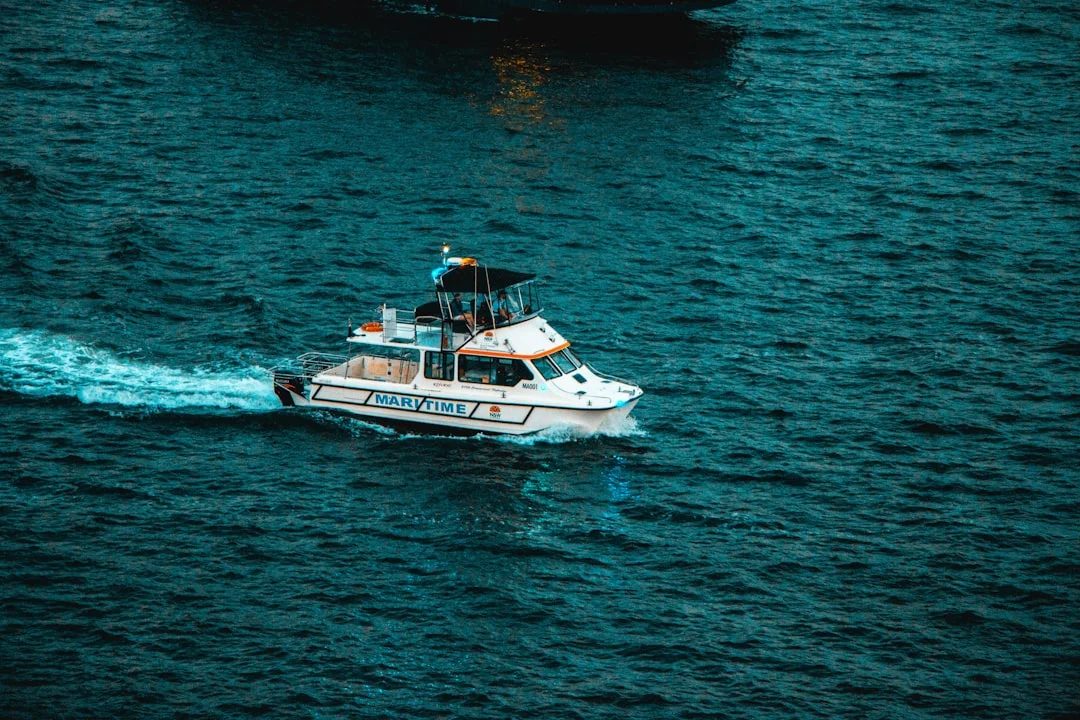
Photo by Padraig Treanor on Unsplash
PAN-PAN — Urgent but Not Immediately Life-Threatening
Pan-Pan (pronounced "pahn-pahn") covers situations that are serious but not yet life-threatening: engine failure and drifting toward a lee shore, a crew member with a broken limb, loss of steering in a shipping lane. It alerts other vessels and the coast guard that you need help, but you're not in immediate danger of loss of life.
Format:
"PAN-PAN, PAN-PAN, PAN-PAN.
All stations, all stations, all stations.
This is [Vessel name], [Vessel name], [Vessel name].
My position is [position].
[Nature of urgency].
[Assistance required].
[Number of persons on board].
Over."
If the situation deteriorates, you can upgrade a Pan-Pan to a Mayday at any time.
SÉCURITÉ — Safety Information
Sécurité (pronounced "say-cure-ee-tay") is for navigational or weather warnings: a floating container in a shipping lane, an unlit vessel adrift, a sudden weather change. Coast guard stations also use it for weather advisories.
"SÉCURITÉ, SÉCURITÉ, SÉCURITÉ.
All stations, this is [Vessel name].
[Safety information — hazard type, position, description].
Out."
Digital Selective Calling (DSC)
Modern fixed-mount VHF radios include DSC capability on Channel 70. Think of it as a digital layer on top of the voice radio. When you register your radio with a Maritime Mobile Service Identity (MMSI) number — a unique 9-digit identifier — and connect a GPS to the radio, DSC enables:
- One-button distress alerting: Press and hold the red distress button for 3-5 seconds. The radio transmits your MMSI, GPS position, time, and nature of distress to all DSC-equipped vessels and coast guard stations within range. This works even if you can't get a voice call out.
- Individual calling: Dial another vessel's MMSI to ring them directly — like a phone call on the VHF, without cluttering Channel 16.
- Position polling: Request another vessel's GPS position (useful for flotilla sailing).
Getting your MMSI:
- US: Register free through BoatUS or the FCC
- UK: Apply through Ofcom
- EU: Through your national maritime authority
If you're planning coastal passages, you can calculate the distance between ports beforehand and program waypoints to share via DSC position reports with your flotilla.
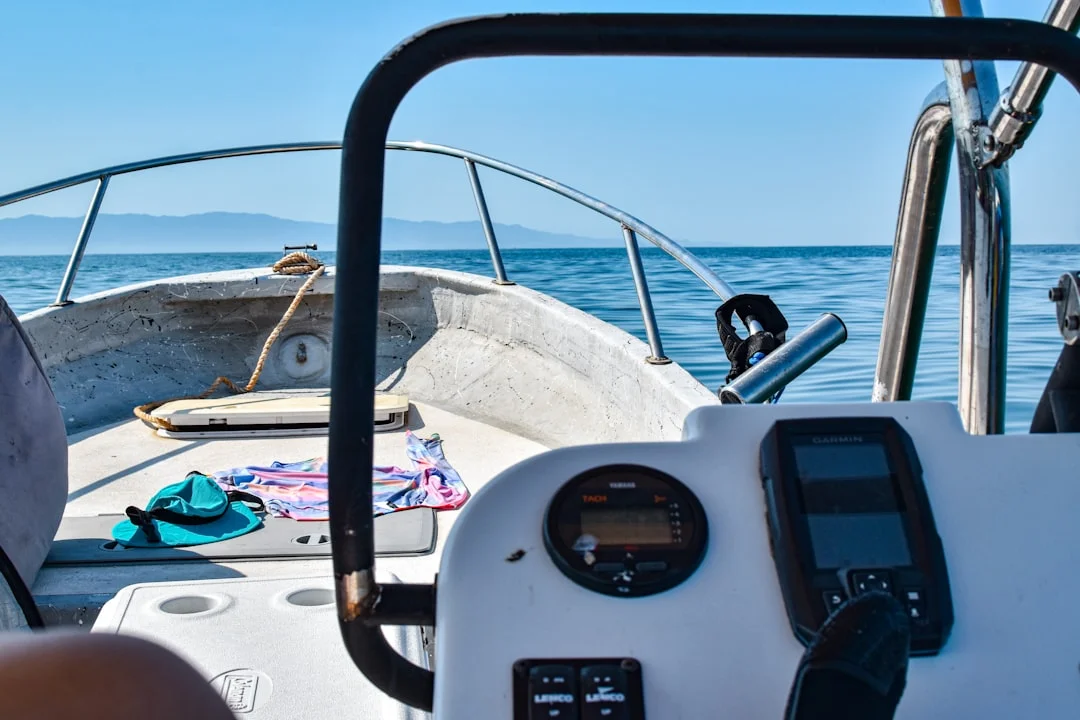
Photo by ANA CASTILLO on Unsplash
Choosing and Installing a VHF Radio
There are two categories: fixed-mount and handheld. Ideally, carry both.
Fixed-mount VHF (25W output):
- Mounted at the helm or nav station
- Connected to a masthead antenna for maximum range (20-25 nm ship-to-ship)
- Includes DSC on all modern models
- Needs 12V DC power from the ship's battery
- Budget: $150-$400 for recreational models (Standard Horizon, Icom, Raymarine)
Handheld VHF (5-6W output):
- Waterproof (IPX7 or IPX8 rated)
- Range limited to 3-5 nm
- Battery-powered — keep spares aboard
- Essential as a backup and for dinghy trips to shore
- Budget: $80-$250 (Standard Horizon HX210, Icom IC-M25)
Installation tips for fixed-mount units:
- Mount the antenna as high as possible — every additional meter of height extends range
- Use low-loss coaxial cable (RG-8X or LMR-240) and keep runs under 20 meters
- Connect a GPS feed to enable DSC position reporting
- Wire directly to the battery with an inline fuse, not through a switch panel — the radio should work even if main electrics fail
If you're fitting out for a bareboat charter, our bareboat charter packing list covers what communication gear is typically provided and what you should bring yourself.
Radio Procedures for Common Situations
Entering a Marina or Harbor
Switch to the marina's working channel (usually posted in cruising guides or on their website — often 9, 68, or a designated local channel) and hail:
"[Marina name], [Marina name], this is sailing vessel [Your name] requesting a berth for tonight, over."
Have your vessel's LOA (length overall), draft, and beam ready — they'll ask.
Communicating with Commercial Shipping
Large vessels monitor Channel 13 for bridge-to-bridge navigation. If you need to establish passing arrangements with a cargo ship or tanker, call them on 13. Keep it brief and professional. Give your vessel name, position relative to them, and your intentions:
"Bulk carrier approaching Strait of Messina southbound, this is sailing vessel Wayward Wind, one mile off your port bow. I intend to maintain my course, over."
Use Breezada's sea distance calculator to verify distances along shipping routes when planning passages through busy traffic separation schemes.
Weather Forecasts
In the US, NOAA broadcasts continuous weather on WX channels (162.400-162.550 MHz). In Europe, coast guard stations broadcast scheduled weather bulletins on specific channels at set times — check the Admiralty List of Radio Signals or local notices to mariners for schedules. If you're also looking for weather apps to complement your VHF, check out our guide to the best sailing apps for 2026, which covers several solid options for offshore forecasting.
Radio Checks
Need to test your radio? Call on Channel 16:
"Radio check, radio check, this is [Vessel name], on Channel 16, over."
You should get a response like: "[Vessel name], this is [Responding station], reading you loud and clear, over." Signal reports use a 1-5 scale for readability and signal strength. "Five by five" means perfect on both counts.
Some areas have a designated radio check channel (e.g., Channel 26 in the UK) to keep 16 clear. Check local regulations.
VHF Radio Regulations and Licensing
Regulations vary by country, but the core requirements are consistent:
| Region | Vessel License | Operator License | MMSI Required? |
|---|---|---|---|
| US (domestic) | Not required under 65 ft | Not required (but recommended) | Yes, for DSC |
| US (international) | FCC Ship Station License | Restricted Radiotelephone Operator Permit | Yes |
| UK | Ship Portable Radio License | SRC (Short Range Certificate) | Yes |
| EU | Varies by country | SRC or equivalent | Yes |
| Australia | AMSA registration | Marine Radio Operator's Certificate | Yes |
The SRC course typically takes one full day and covers radio operation, distress procedures, the phonetic alphabet, and basic regulations. It's often combined with a practical exam on an actual radio. Frankly, it's worth doing even where it's not legally required — the distress protocol practice alone could save a life.
Common Mistakes to Avoid
Using Channel 16 for chat. It's for distress and hailing only. Switch to a working channel immediately after making contact.
Forgetting to switch to low power. For short-range communication (marina calls, raft-ups with friends), switch from 25W to 1W. Less interference, longer battery life on handhelds, and it's often legally required on certain channels.
Not monitoring Channel 16. Keep your radio on and tuned to 16 whenever you're underway. Many modern radios have a dual-watch feature that monitors 16 while you listen to another channel.
Calling Mayday when it's a Pan-Pan. A dead engine in calm weather with no immediate danger? That's Pan-Pan. Save Mayday for when the situation is genuinely life-threatening.
Not programming the MMSI. A DSC-equipped radio without an MMSI is like a phone without a SIM card. Register it before you leave the dock.
Talking too fast. Slow down. The person on the other end might be hearing your transmission through static, with English as a second language, while trying to steer through a squall. Clarity beats speed every time.
Frequently Asked Questions
Do I need a license to use a VHF radio on a boat?
In the US, recreational boaters in domestic waters don't technically need an operator's license, but you do need an FCC Ship Station License if traveling internationally. In the UK, EU, and Australia, both a vessel license and an operator certificate (typically the SRC) are mandatory. Regardless of legal requirements, taking the SRC course is strongly recommended — it teaches distress procedures that could genuinely save lives. The course takes about one day and costs between $100-$200.
What is Channel 16 used for on a VHF radio?
Channel 16 (156.800 MHz) is the international distress, safety, and calling frequency. All vessels with VHF radios are required to monitor it while underway. It's used for Mayday, Pan-Pan, and Sécurité calls, as well as for initial hailing before switching to a working channel. Never use Channel 16 for casual conversation — keep transmissions brief and switch to a working channel like 68, 69, or 72 as quickly as possible.
How far does a marine VHF radio reach?
VHF is line-of-sight, so range depends primarily on antenna height. A fixed-mount radio (25W) with a masthead antenna on a typical sailboat reaches 20-25 nautical miles to another vessel, and up to 40-50 nm to a coast guard tower on elevated terrain. Handheld VHF radios (5-6W) are limited to roughly 3-5 nm due to lower power and antenna height. Weather, atmospheric conditions, and obstructions like headlands can also affect range.
What is the difference between Mayday and Pan-Pan?
Mayday indicates grave and imminent danger to the vessel or persons aboard — sinking, fire, crew overboard with no recovery in sight. It demands immediate assistance from all stations. Pan-Pan indicates an urgent situation that is not yet life-threatening — engine failure while drifting, a non-critical medical issue, loss of navigation in poor visibility. Both are broadcast on Channel 16, but a Mayday takes absolute priority over all other communications. A Pan-Pan can be upgraded to a Mayday if the situation worsens.
What does DSC do and why should I register for an MMSI?
Digital Selective Calling (DSC) is an automated digital system built into modern fixed-mount VHF radios. When you register for a free MMSI (Maritime Mobile Service Identity) number and connect a GPS, pressing the red distress button transmits your vessel identity, position, and time to all nearby DSC-equipped radios and coast guard stations on Channel 70. It's faster and more reliable than a voice Mayday alone, and it works even if you can't speak — for instance, if the crew is busy fighting a fire or performing a rescue. Registration is free in most countries and takes about 10 minutes online.
Can I use a VHF radio when anchored or in a marina?
Yes. You should monitor Channel 16 at all times when aboard, whether underway or at anchor. Many marinas have a designated working channel for berthing requests and harbor information. When anchored, listening to Channel 16 keeps you aware of weather warnings (Sécurité broadcasts), nearby vessel movements, and any emergencies where you could offer assistance. Switch to low power (1W) for short-range marina communications to minimize interference.
About the Author
Related Articles
Diesel Heater Troubleshooting Boat: No-Start & Soot Fixes
Fix diesel heater no-start and sooting on your boat. Step-by-step checks for power, fuel, air/exhaust and maintenance—read the guide now.
By Breezada Team
Docking a Catamaran: Maneuvers, Springs & Crew
Master docking a catamaran with close-quarters maneuvers, spring lines, and crew roles. Learn the steps and dock with confidence—read now.
By Breezada Team
Best Stove for a Sailboat: Propane vs Diesel vs Induction
Compare propane, diesel, and induction stoves for cruising safety, cost, and power needs—use our guide to choose the best stove for your sailboat.
By Breezada Team
Single Handed Docking Sailboat: Line Methods & Drills
Learn single handed docking sailboat line-first methods, setup, and drills for crosswind/current. Practice safely—get the step-by-step plan now.
By Breezada Team