Canal du Midi Boat Trip to the Med: Practical Guide
A Canal du Midi boat trip “to the Mediterranean” is one of those plans that sounds romantic until you’re on day three, you’ve counted your 28th lock, and the crew has started negotiating line-handling duties like a hostage exchange. The good news is that it’s a very manageable run if you plan it like a skipper, not like a tourist: distance, locks, hours, and a healthy buffer for queues, closures, and lunch breaks.
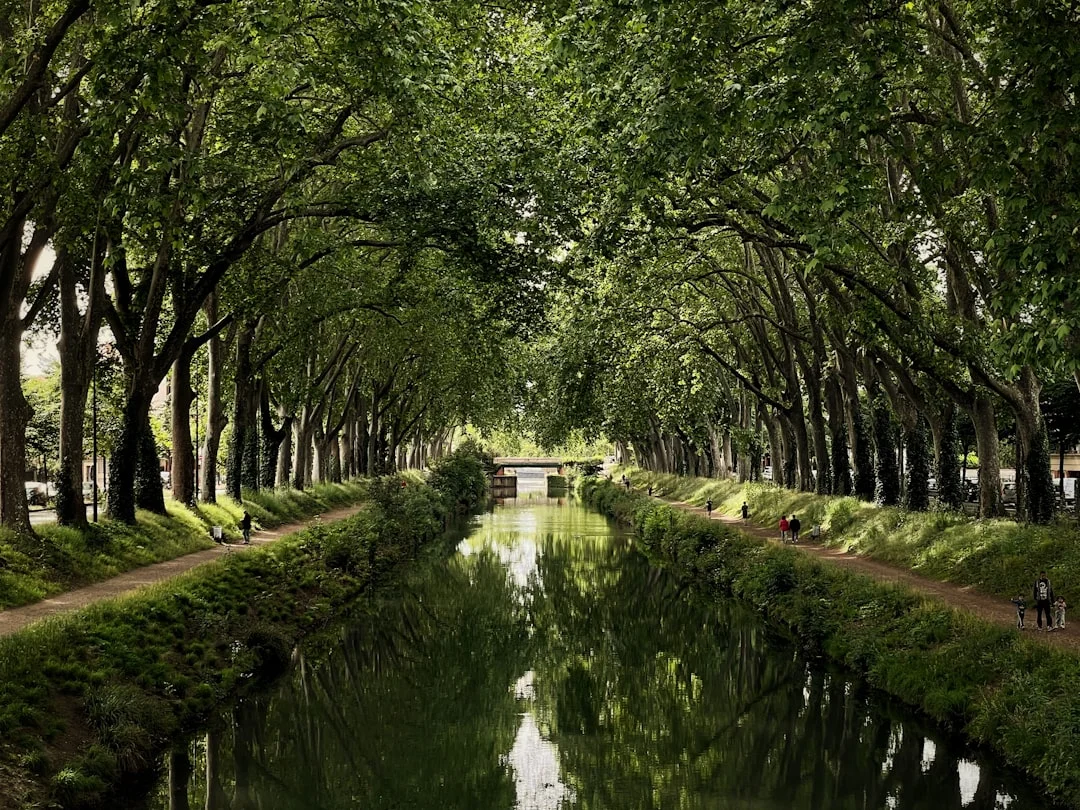
Photo by Nicolas Gaborit on Unsplash
Route Overview: Canal du Midi to the Med by Boat
What “to the Mediterranean” means (Étang de Thau vs open sea)
“Med access” on the Canal du Midi typically means reaching the Étang de Thau lagoon near Marseillan–Sète, not punching out into open water like a coastal passage. That matters because most hire boats on this route are designed for canals and sheltered waters, with low air draft and modest freeboard, not for offshore conditions. Treat the lagoon as exposed water that can kick up a nasty, short chop when the wind pipes up.
From a planning standpoint, the corridor most crews mean is Toulouse/Carcassonne → Narbonne area → Béziers → Agde → Marseillan → Étang de Thau. The headline number often quoted is ≈240 km from Toulouse to the Étang de Thau, and the canal is commonly cited at ≈63 locks end-to-end. If you start at Carcassonne, you’re trimming the western chunk, but you’ll still have a meaningful lock count and at least one “big day” around Béziers.
Planning math: km, speed, locks, and realistic day ranges
On French canals, 6 km/h is a common posted limit, and even when your boat can do 6–8 km/h, planning at 6 km/h average underway keeps your wash down and your schedule honest. The base model is simple: time = distance ÷ 6 km/h + (locks × 10–20 minutes), then add buffers for queues, bridges, provisioning, and the daily “where are we sleeping?” scramble.
A realistic day for a family crew is often 4–6 engine hours, not because the boat can’t do more, but because locks, mooring, shopping, and life happen. Lock flights compress progress: you can burn 45–90+ minutes at Fonserannes depending on traffic and how chambers are cycled. If you want an accurate feel for days and legs, plug your segments into a tool to check the nautical miles for your planned route (yes, it’s for sea miles, but it’s great for sanity-checking lagoon and coastal alternatives around Sète when you’re tempted to “just go outside”).
One-way vs out-and-back: how bases change the experience
A one-way trip Carcassonne → Étang de Thau is efficient and satisfying, but it adds logistics: relocation fees, transfer time, and the mild panic of returning a boat on schedule. An out-and-back keeps things simple and lets you linger where you like, but you’ll repeat scenery and locks, and the second time through that lock flight won’t feel half as charming.
Here’s a compact planning breakdown that matches how most crews actually move (segments are approximate; your hire base and detours change them). Use it as a first-pass schedule, then refine with daily lock counts and where you want to stop.
| Segment | Approx. km | Approx. locks | Typical days (4 h/day) | Typical days (6 h/day) |
|---|---|---|---|---|
| Carcassonne → Homps / Le Somail | ~55 | ~15–18 | 3–4 | 2–3 |
| Homps / Le Somail → Narbonne area | ~35 | ~8–10 | 2–3 | 1–2 |
| Narbonne area → Béziers (Fonserannes area) | ~45 | ~12–16 | 3–4 | 2–3 |
| Béziers → Agde → Marseillan / Étang de Thau | ~35 | ~6–8 | 2–3 | 1–2 |
Canal du Midi Locks Guide: Handling, Hours, and Flights
Approach and setup: fenders, lines, crew roles, communications
Treat every lock approach like you’re coming alongside in a crosswind: slow early, get organized, and don’t improvise at the last second. Bring fenders out before you’re in the lock cut, not while drifting sideways with an audience. On most 10–15 m hire boats, I want 4+ fenders, 2–4 long lines (12–15 m), and gloves for whoever is touching rope.
Assign roles every time: helm stays on helm, one crew works the bow line, one works the stern, and one person is the communicator with the lock-keeper (éclusier) if needed. Keep speed at dead slow near gates; prop wash in tight spaces makes you look clumsy fast. If you’re waiting, don’t block lock landings—service craft and working boats get priority whether you like it or not.
Inside the chamber: floating bollards vs fixed points
Many Canal du Midi locks use floating bollards, which are wonderfully forgiving: you put a turn around the bollard, keep the bitter end in hand, and the bollard rises or falls with you. Your job is mostly to prevent the boat from yawing and to avoid pinning the fenders. Still, keep fingers clear and never “hold” a loaded line by wrapping it around your hand.
Some locks have fixed points (ladders, rings, or bollards) where you must continuously ease or take in line as the boat moves. This is where people get in trouble: a line that’s made fast and forgotten can hang up, and a 10–15 m boat has plenty of leverage to turn your mistake into damage. Keep the engine in neutral when lines are under tension, and use short bursts only if the lock-keeper’s instructions and your line handlers are ready.
“Pénage” is a word you’ll hear for lock passage, but the real rule is simpler: do what the posted signs say and what lock staff direct. If you’re unsure, ask early and clearly, not after you’ve already thrown a line somewhere optimistic.
Operating hours, queues, and planning around lock flights
Lock operating hours vary by season and can be affected by works, drought, or staffing. Your baseline planning number is 10–20 minutes per lock cycle in light traffic, but popular stretches in high season can run longer, and lock flights magnify everything. Fonserannes near Béziers is the classic time-multiplier: depending on grouping and queues, it can add 45–90+ minutes even when you do everything right.
The tactic is to hit flights early, ideally with enough margin to clear them before closing or before the afternoon crowd stacks up. I plan the day so the “must-pass” sequence happens in the first half, then I use the second half for a relaxed run to a mooring. Crew fatigue is real: after 15–20 lock cycles in a day, line handling gets sloppy, and sloppy is where gelcoat and deposits go to die.
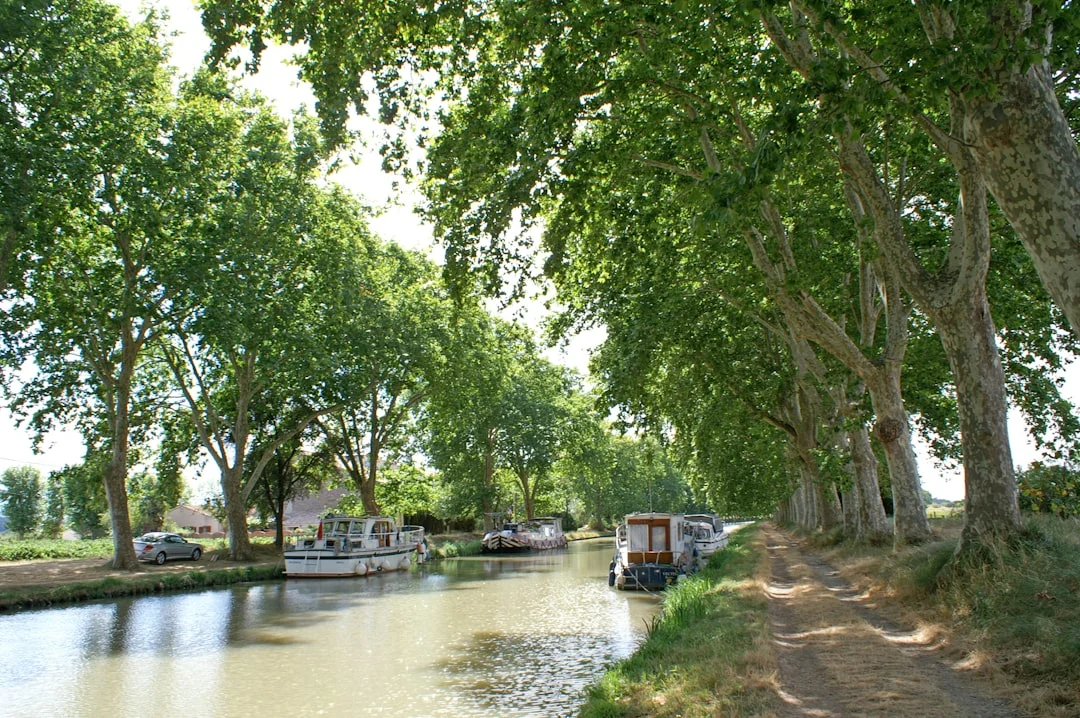
Photo by Margaret Riseley on Unsplash
Practical lock tip: If you’re waiting at a busy flight, prep the boat like you’re going in next—fenders set, lines flaked, gloves on—then hold station well clear of the gate. You’ll look competent, and you’ll actually be competent, which is cheaper.
Costs & Budget: Hire Prices, Moorings, Fuel, and Extras
Base hire pricing by season and boat size
Canal du Midi boat hire prices are driven more by season and cabin count than by your daily choices. Rough ranges: €1,200–€2,000/week gets you into smaller boats in shoulder season, while €3,000–€5,500+/week is normal for larger 4–5 cabin boats in peak weeks. If you’re flexible by even 2–3 weeks outside school holidays, you can often save more than you’ll ever save by hunting for “cheap moorings.”
The boat size question isn’t just comfort—it’s handling stress. A 10–11 m boat is easier in locks and moorings; a 14–15 m boat gives space and tankage but makes tight quay work more “interesting.” Interesting is fine; interesting at 19:30 with tired kids is less fine.
The true “all-in” cost: deposits, fuel, utilities, and add-ons
Most operators take a security deposit hold of ≈€1,500–€3,000, typically pre-authorized on a card. Deductions often come from groundings, lock scrapes, bent rails, lost boat hooks, or “mysterious” fender disappearance. Take photos at handover; it’s boring and it saves arguments later.
Fuel is usually charged by the litre on return, and canal hours add up because locks, queues, and slow maneuvering are still engine time. A typical burn is ≈2–5 L/hour, with many one-week trips landing ≈€150–€450 depending on how long you run each day and what diesel costs locally. Utilities and services add up: ports can be ≈€20–€60/night for a 10–15 m boat, and power/water may be €3–€10/night or metered.
Sample 7-day budgets: economy, typical, comfort
Here’s what a realistic 7-day budget looks like when you stop pretending you’ll never pay for anything except the boat. Numbers vary by base and week, but the structure holds.
| 7-day scenario | Hire | Fuel | Moorings | Bikes | Utilities | Cleaning | One-way fee | Total |
|---|---|---|---|---|---|---|---|---|
| Economy | €1,500 | €200 | €120 | €0 | €20 | €0 | €0 | €1,840 |
| Typical | €2,800 | €300 | €240 | €140 | €50 | €120 | €250 | €3,900 |
| Comfort | €4,800 | €450 | €420 | €360 | €80 | €200 | €600 | €6,910 |
If you want a per-day reality check, divide the total by 7 and ask if it still feels like a bargain when the crew requests a restaurant night in Béziers. Also, if you’re planning a lagoon leg near Sète, estimate your fuel needs based on the voyage distance to account for any add-on miles and hours if your operator allows limited coastal hops (some don’t—read the contract).
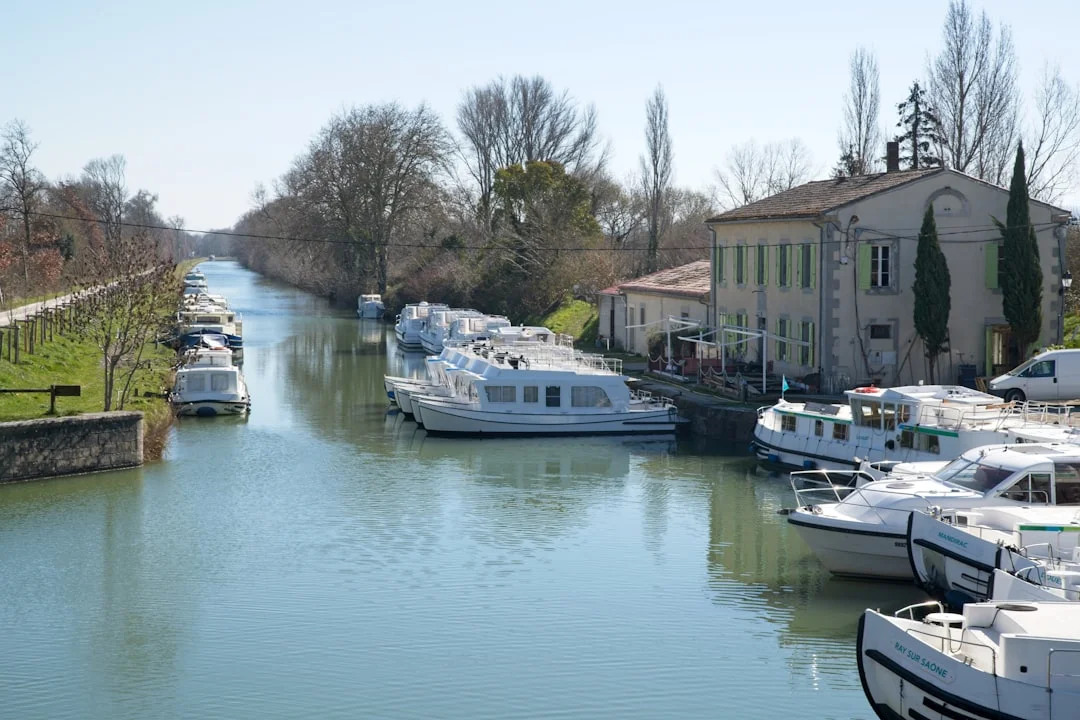
Photo by Brian Scott on Unsplash
Rules, Permits & Safety on French Inland Waterways (VNF)
Speed limits, wash control, and right-of-way in practice
The rules that get visitors in trouble are the simple ones: speed and wash. 6 km/h is a common posted canal limit, but signage rules—some reaches vary, and certain zones demand slower speeds near moorings or works. The practical test is your wake: if moored boats are snatching at lines or fenders are squealing, you’re too fast no matter what the GPS says.
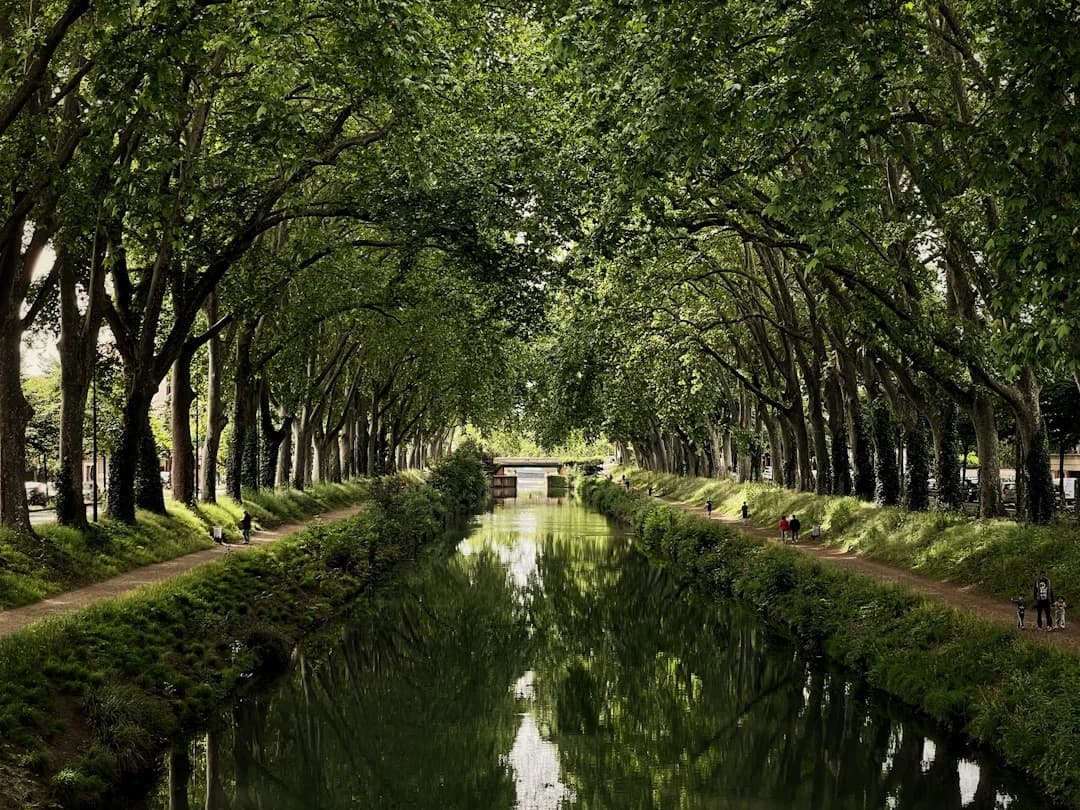
In narrows, bends, and bridge approaches, assume someone is coming the other way and keep right with room to stop. Passing moored boats is slow, wide, and early—reduce speed well before you reach them. It’s good manners, and it keeps the bank intact, which matters on a heritage canal lined with plane trees and fragile edges.
VNF oversight, notices to skippers, and local restrictions
Voies Navigables de France (VNF) manages much of the network and publishes Avis à la batellerie (notices to skippers) covering closures, restrictions, and temporary rules. Check them before you depart and again mid-week if you’re doing a one-way schedule. Works can mean reduced lock hours, a closed flight, a temporary speed limit, or a navigation window that forces everyone into the same bottleneck.
“Permits” are often wrapped into hire arrangements on these waterways, but don’t assume anything—confirm what your operator includes and what they expect you to carry onboard. If you own your boat, VNF vignettes and local requirements can apply depending on the reach and management.
Safety expectations: equipment, kids on deck, and waste rules
French inland navigation regulations govern behavior and carriage expectations, and your hire boat will be equipped accordingly—lifejackets, fire extinguishers, and basic safety gear. For context, many boats are built under the EU Recreational Craft Directive (RCD) 2013/53/EU, with stability principles aligned to ISO 12217, and fire protection concepts linked to ISO 9094. If you’re a US reader, ABYC and USCG practices are useful mindsets, but they are not the governing rules here.
Waste rules are not optional: use holding tanks where fitted and plan pump-outs where available, typically in larger ports. Don’t rely on finding a pump-out “tomorrow” when your tank is already complaining—plan by crew count and capacity, not hope. Also, avoid planning arrivals after dark; ensure navigation lights work in case a delay pushes you late, but don’t count on late lock transits near closing.
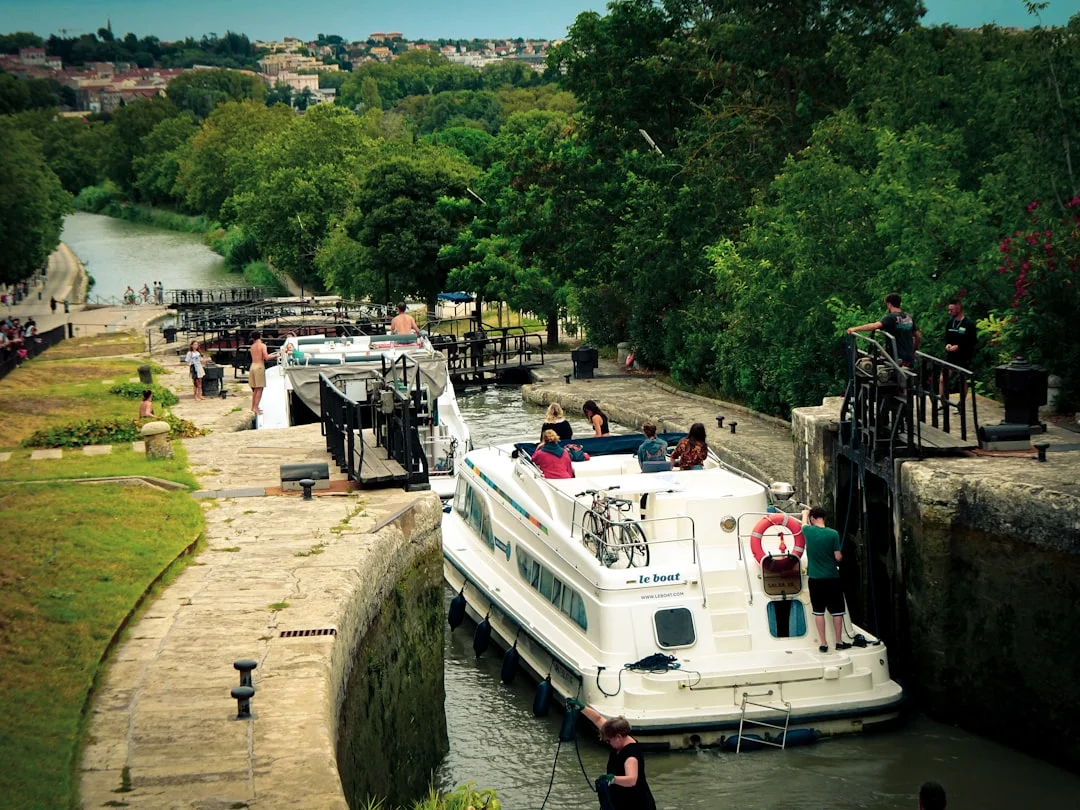
Photo by Tommy Brunel on Unsplash
Boat Selection & Technical Constraints: Fit the Canal, Then Fit You
Dimensions that matter: air draft, beam, draft, and bridge clearance
On the Canal du Midi, air draft is often the first filter. Many hire boats sit around ≈2.3–2.7 m air draft, specifically to slip under low bridges and through tree-lined reaches. Verify the exact figure for your model, because “about” doesn’t fit under stone.
Typical hire-boat dimensions are roughly 10–15 m LOA and 3.5–4.2 m beam, with ≈0.8–1.1 m draft common. Freycinet reference maxima (38.5 m × 5.05 m) are interesting trivia, not permission to bring a barge-sized attitude onto this canal. The Canal du Midi can be more constrained in practice: shallow edges, bends, and moorings designed for the fleet profile.
Draft matters because you’ll be tempted to cut corners at 6 km/h and “just nose in” to that pretty towpath spot. Don’t. Stay in the marked channel, keep off the soft edges, and remember bank suction is real even at low speeds when you pass close.
Systems that change comfort: tankage, shore power, and toilets
Comfort afloat is mostly water, power, and heads. Ask about freshwater capacity, charging setup, and whether the boat has an inverter capable of running what your crew considers essential. Shore power is common in ports but not guaranteed at every halte, and charging off the engine at low RPM can be slow—plan like you won’t have unlimited electricity.
Toilets and waste systems are where trips go sideways. If you have a holding tank, learn the operator’s rules on discharge (generally: don’t), and identify likely pump-out points early. A pump-out costs ≈€10–€30, and it’s cheaper than the look you’ll get when the head stops cooperating at the wrong moment.
Handover-day checklist and on-water handling tips
Handover day is when you buy reliability with your attention. Confirm you have 4+ fenders, 2–4 long lines (12–15 m), and a boat hook that isn’t already cracked. Check oil, coolant, bilge state, and that the prop actually engages cleanly in forward and reverse.
Before leaving the base, practice reversing for five minutes in open water. Most canal cruisers steer like shopping carts when backing, and you don’t want to discover your boat’s “personality” during a crowded quay arrival. Finally, confirm whether your contract and insurance explicitly allow Étang de Thau operation and under what wind limits; some operators restrict lagoon use or specify “sheltered waters only.”
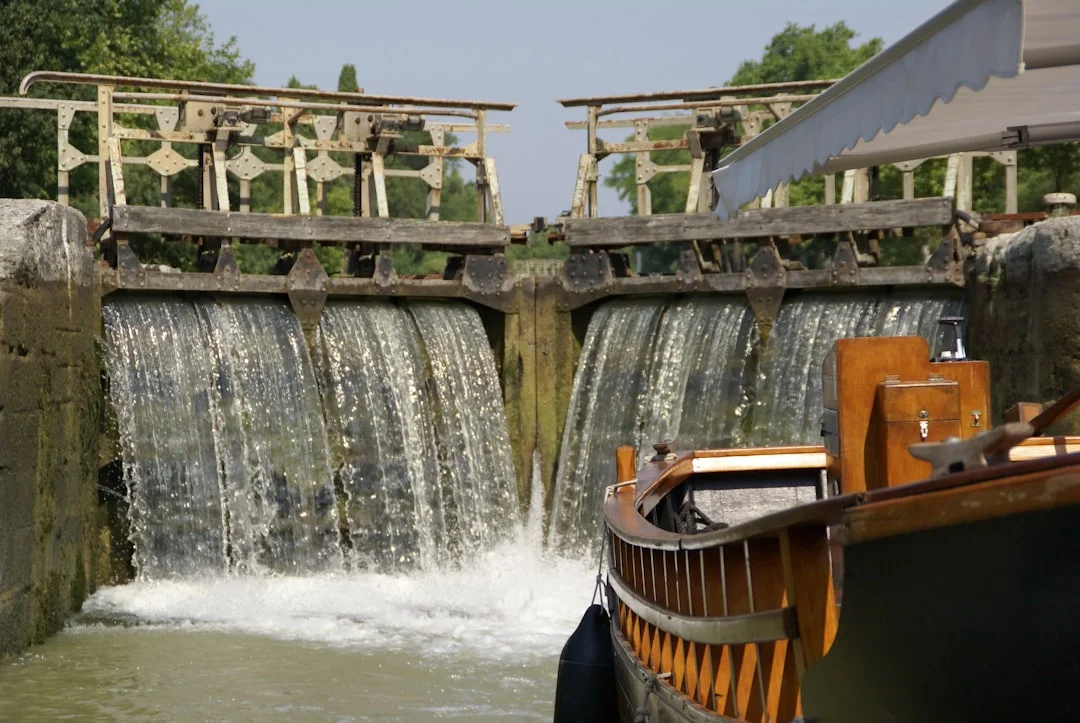
Photo by bruno orue on Unsplash
Mooring, Marinas & Services: Haltes Nautiques to Ports de Plaisance
Choosing your stop: free towpath vs halte vs full-service port
Overnights on the Canal du Midi fall into three buckets: free towpath mooring, a simple halte nautique, or a full port de plaisance. Free mooring is quiet and scenic, but it’s self-sufficient—no power, no water, and sometimes a longer walk to town. A halte is the middle ground: often closer to villages with basic services, sometimes with limited berths that fill early in peak season.
Ports cost more but solve problems: shore power, water, showers, laundry, and better security. Expect ≈€20–€60/night for a 10–15 m boat depending on season and facilities. If you’re running a tight one-way schedule, ports also make early departures easier because you’re already close to supplies and often near locks.
Utilities and hygiene: water, power, showers, laundry, pump-out
Utilities are frequently charged separately, commonly €3–€10/night or metered for water and electricity. Bring or confirm adapters; not every pedestal is generous about what it provides. If your crew needs showers every day, plan at least 2–3 port stops in a week, or you’ll spend too long negotiating “boat showers” like they’re a moral issue.
Pump-outs, where available, are typically €10–€30 per service. Plan pump-outs around tank capacity and crew size, not around alarm lights, because those alarms have a talent for triggering when you’re moored nowhere near a service dock.
Mooring etiquette to protect banks, trees, and other boats
The Canal du Midi’s banks and trees are not your cleats. Use rings and bollards where provided, and avoid tying to young trees unless you enjoy watching bark peel off while other skippers judge you. Set lines with sensible angles, add a spring line to stop fore-and-aft surging, and place fenders where the hull will actually touch, not where they look pretty.
Don’t moor near lock approaches, bridge holes, or on bends where boats need room to swing. Leave space for turning basins and service craft, and keep your wash low when passing moored boats. The canal is a shared space, and it has a long memory for bad manners.
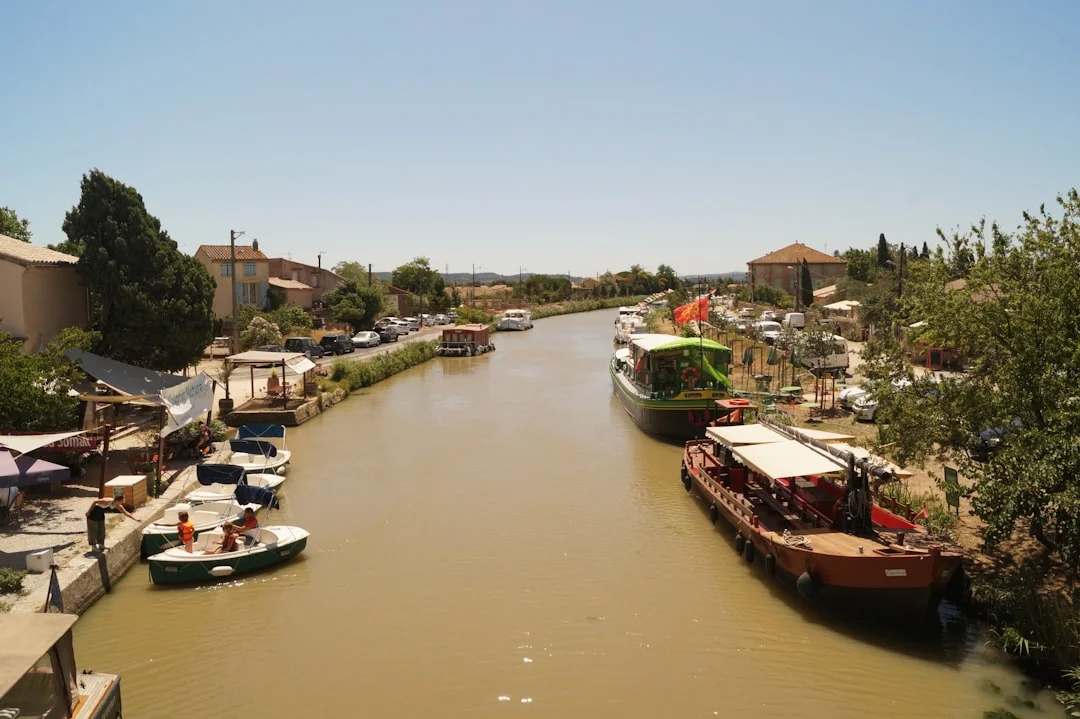
Photo by Frank Kirgis on Unsplash
7–10 Day Itinerary: Carcassonne to Sète/Étang de Thau
Daily progress model: distance + locks + contingency buffers
Build each day with the same math: plan 6 km/h underway, add 10–20 minutes per lock, then add a buffer for queues, docking, and shopping. A concrete example: 30 km is about 5 hours underway at 6 km/h, and 10 locks add roughly 100–200 minutes. With queue and docking buffer, that’s a 7–8 hour day—doable, but not the relaxed holiday people picture.
I like to set a “hard stop” arrival time about 16:00–17:00 in peak season, because popular haltes and towns fill up. That also keeps you away from late-day fatigue, which is when boats hit quays and skippers start blaming wind, children, or the French. Start earlier on lock-flight days, especially around Béziers, and you’ll look like you planned it that way.
Suggested day-by-day stops (with alternatives)
This framework assumes you start near Carcassonne and aim for Sète/Étang de Thau in 7–10 days. It’s not the only way, but it’s reliable.
Day 1: Carcassonne → Trèbes (short first day to settle the crew, test systems, and practice locks). Day 2: Trèbes → Homps or Le Somail (good provisioning rhythm, pleasant moorings). Day 3: Le Somail/Homps → Narbonne area (consider a halte with town access; don’t overrun your daylight chasing a “perfect” spot).
Day 4: Narbonne area → stage toward Béziers so you can hit Fonserannes early next morning. Day 5: Clear Fonserannes and continue to Béziers/Portiragnes area depending on berth availability and crew mood. Day 6: Run to Agde, then toward Marseillan, which sets you up for the lagoon crossing. Day 7: Cross to Étang de Thau and make Marseillan or Sète depending on conditions and contract limits.
If you have 8–10 days, insert slack: a rest afternoon, a market morning, or a shorter leg after Fonserannes. If you’re doing an out-and-back from Carcassonne, use the same stops but plan your turnaround around a town with good services so you don’t spend the “rest day” hunting for water.
Étang de Thau crossing: wind, chop, and arrival timing
Treat the Étang de Thau like open water. It’s a lagoon, but when the wind gets up it can build a short, steep chop that’s uncomfortable in flat-bottomed canal cruisers. Plan crossings early in the day when winds are often lighter, and avoid marginal forecasts; “it’ll probably be fine” is not a seamanship standard.
Before you commit, confirm your navigation lights work and that your hire contract and insurance cover the lagoon. Some operators specify operating areas or impose wind limits; ignore that and you’re volunteering to pay for your own rescue story. If you want to sanity-check distances across the lagoon or around Sète for alternate arrival points, plan your route using a sea distance calculator as a quick way to compare options and estimate time at conservative speeds.
Seasonality, Weather & Disruptions: Drought, Works, and VNF Updates
When to go: heat, crowds, pricing, and daylight
Peak season brings longer queues at locks and higher hire prices, especially for 4–5 cabin boats that push €3,000–€5,500+/week. You’ll also see more pressure on moorings by mid-afternoon, which tends to stretch days because crews keep going “just a bit farther.” Shoulder season can be calmer and cheaper, but you may lose daylight and sometimes see reduced operating hours depending on staffing and maintenance schedules.
Heat is not a small factor. On windless days, the canal can feel like a green hallway with the air conditioning set to “off,” and lock work in 30°C+ conditions is tiring. Plan shorter days and more swimming stops, and your crew will still like you on day six.
How to use VNF Notices to Skippers (Avis à la batellerie)
Make VNF notices part of your routine: check Avis à la batellerie before you depart and again every couple of days on a one-way trip. You’re looking for lock closures, reduced hours, works on flights, temporary speed limits, and drought measures that affect water availability. This is also where you’ll see warnings after storms when tree debris or bank damage affects navigation.
Local harbourmasters and base staff often know what’s coming, but VNF notices are the published source. Screenshot key updates because mobile coverage can be patchy in tree-lined reaches, and nothing improves your mood like learning about a closure after you’ve already committed to a long leg.
Contract and contingency planning for closures and restrictions
Build contingency into your itinerary: one slack day in a 10-day plan, or at least a few short legs that can be expanded if needed. Identify bailout ports with services (water, power, groceries, pump-out) so you can stage without running tanks to the edge. Plan water stops every 2–3 cruising days if you like fresh provisioning, and don’t assume every pretty halte has a functioning tap.
Before you pay, confirm the operator’s policy on closures: reroutes, refunds, relocation fees, and whether they’ll allow an adjusted end base. If VNF restrictions force changes, the best strategy is usually staging near the disruption and enjoying the area, not trying to “beat the closure” with an overlong day. Overlong days are how boats get damaged, and your deposit hold of €1,500–€3,000 doesn’t care about your timetable.
Frequently Asked Questions
For Carcassonne to Sète/Étang de Thau, how do you estimate total engine hours using 6 km/h planning speed plus 10–20 minutes per lock, and what buffer is realistic for Fonserannes queues?
Estimate engine hours as: (total km ÷ 6) + (locks × 0.17–0.33 hours), then add a daily buffer. For example, if your Carcassonne→Thau routing is roughly 170–190 km with, say, 40–50 locks, that’s 28–32 hours underway plus 7–17 hours of lock time depending on traffic and efficiency. For Fonserannes, add a dedicated 45–90 minutes buffer on the day you pass it, and start early to reduce queue exposure.
What line-handling setup works best in Canal du Midi locks with floating bollards versus fixed points, and how many 12–15 m lines should a 10–15 m hire boat carry?
For floating bollards, use a single turn around the bollard and tend the bitter end by hand, keeping the engine in neutral when lines load up. For fixed points, you must continuously ease or take in as the boat rises or drops; never make fast and walk away. A 10–15 m hire boat should carry 2–4 long lines (12–15 m) plus 4+ fenders, and having one extra spare line aboard is rarely regretted.
How do you verify your boat’s air draft (≈2.3–2.7 m typical) against posted bridge clearances, and what margin should you keep for seasonal water-level changes?
Verify air draft from the operator’s spec sheet and physically confirm at handover if there’s any doubt, especially if the boat has a folding canopy or wheelhouse. Compare that number to posted bridge clearances and remember water levels can vary; keep a sensible margin, ideally 10–20 cm or more, because “it looks like it fits” is not a measurement. If you’re close on paper, choose a different boat model rather than gambling on water level and loading.
On Étang de Thau, what wind direction/speed tends to produce the worst chop for small canal cruisers, and how do hire contracts/insurance typically limit lagoon operation?
The worst chop typically comes when a strong breeze has room to build across the lagoon’s fetch; the precise wind direction that hurts most depends on your intended track and shoreline shelter. As a practical rule, if winds are forecast to be fresh and sustained (often around 15–20+ knots), expect steep, uncomfortable chop for flat-bottomed canal boats and consider a no-go decision. Hire contracts commonly restrict operating areas to canals and sheltered waters, may require explicit permission for the lagoon, and can impose wind/condition limits—confirm this in writing before you cast off.
If VNF issues an Avis à la batellerie restricting lock hours or closing a flight, what is the most practical reroute or staging strategy without exceeding waste/water tank limits?
First, stage near a town with services rather than pressing on: choose a port de plaisance or well-equipped halte where you can top up water and manage waste. Plan groceries every 2–3 days and schedule pump-outs (€10–€30) proactively, because closures often create delays that push tanks past comfortable limits. If the closure blocks your one-way plan, the most practical strategy is usually to pause and enjoy the area, then negotiate a revised return plan with the operator rather than forcing long days that increase grounding and lock-damage risk.
About the Author
Related Articles
Amalfi Coast vs French Riviera Sailing Guide (Costs & Routes)
Compare Amalfi Coast vs French Riviera sailing—costs, crowds, mooring rules, best months, and 7-day routes. Choose your coast and plan now.
By Breezada Team
Puget Sound Cruising Guide to Gulf Islands Routes
Plan routes, anchorages, and weather windows with this Puget Sound cruising guide for the Gulf Islands & San Juans. Read now and start plotting.
By Breezada Team
Sailing Amalfi Coast Guide: Ports, Anchorages & Rules
Sailing Amalfi Coast guide to Capri, Positano & Amalfi: best ports, anchorages, fees, VHF and rules. Plan your route—read now.
By Breezada Team
Dry Tortugas Sailing: Routes, Anchoring & Permits
Plan Dry Tortugas sailing from Key West with routes, weather windows, anchoring/moorings, and permits. Read the guide and plan your trip.
By Breezada Team