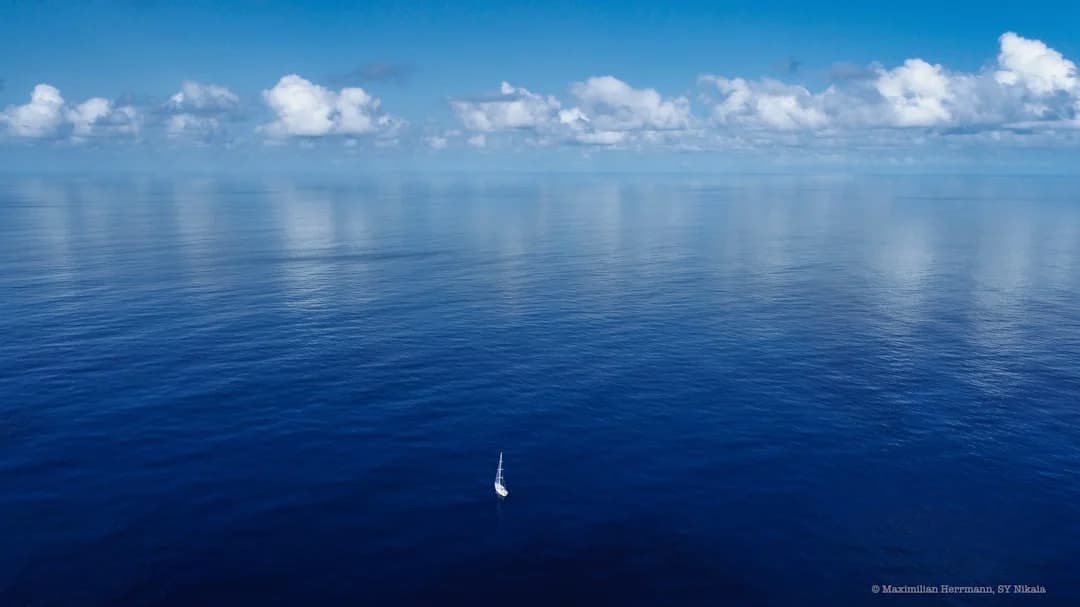
Sailing around the world takes most cruisers three to five years and covers roughly 26,000 to 30,000 nautical miles — usually following the tradewind belt westward from the Caribbean through the Pacific to South Africa and back across the Atlantic. Budgets vary wildly, but a realistic mid-range figure is US$1,500 to US$3,500 per month of cruising, on top of buying the boat. This guide breaks down the standard route, the side routes worth considering, what the money actually goes on, and the timeline you can plan around without lying to yourself.
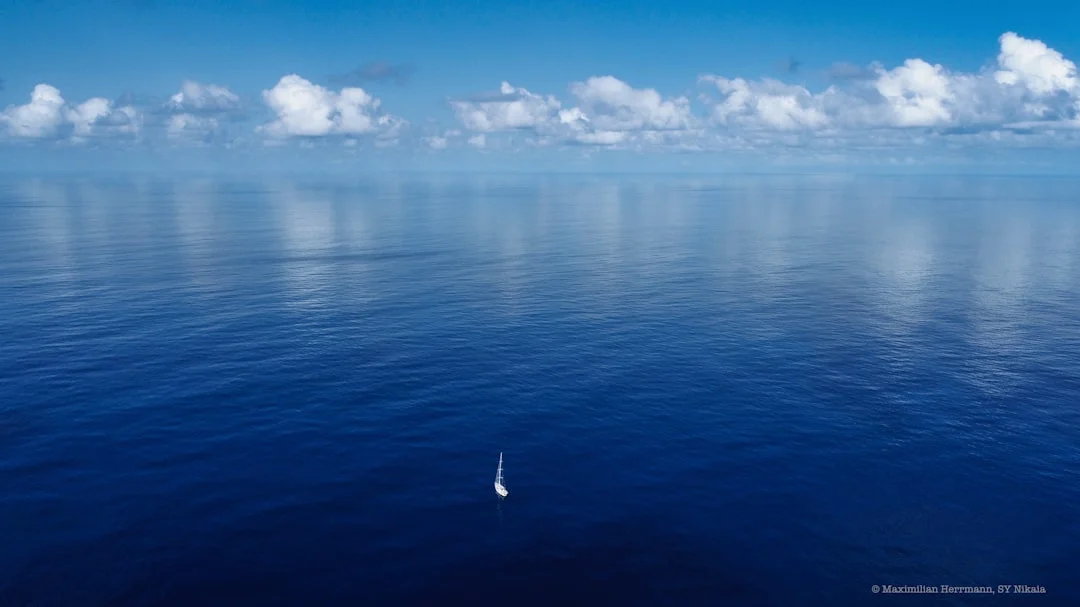
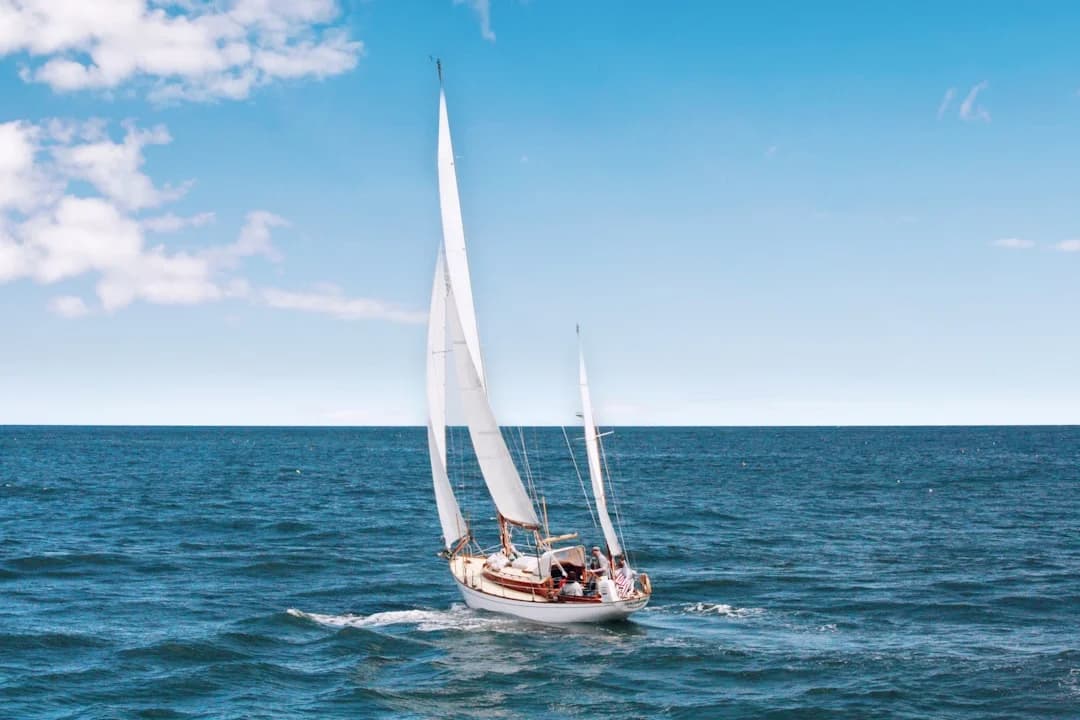
Photo by Max Herrmann on Unsplash
The Classic Tradewind Route — What Most Cruisers Actually Sail
The phrase "round the world" sounds singular but the route is essentially one big westward loop that hugs latitudes between roughly 5° N and 25° S, taking advantage of the easterly trades that blow there nine months of the year. The classic version, often called the Coconut Milk Run for the Pacific section, is what 80% of cruising circumnavigators do. It is the path of least resistance: downwind sailing, warm water, and a network of cruiser-friendly ports that have been welcoming visiting yachts since the 1960s.
The standard route, in order:
- Europe or US East Coast → Caribbean (Atlantic, west-going, Nov–Dec). The Las Palmas–Saint Lucia leg of the ARC is the famous version. Roughly 2,700 nm, 18–25 days for a 40-foot cruiser.
- Caribbean → Panama Canal → Pacific (Jan–Feb). The canal transit itself is a single day; the booking, paperwork, and line-handler logistics around it take a week.
- Panama → Galapagos → Marquesas (Mar–Apr). The big one — 3,000+ nm of Pacific from the Galapagos to Nuku Hiva, the longest passage on the route, 18–28 days.
- French Polynesia → Cook Islands → Tonga → Fiji (May–Sep). The "milk run" proper. Short hops of 300–800 nm with weeks in each archipelago.
- Fiji → New Zealand or Australia (Oct–Nov). Drop south to ride out the South Pacific cyclone season, 1,100 nm to Opua. Brutal weather windows; see our guide to the Tasman Sea crossing for the same kind of system.
- NZ/Australia → Indonesia → Singapore → Indian Ocean (next May–Sep). This is where the route splits — see "Route Decisions" below.
- Indian Ocean → South Africa (Cape Town) (Oct–Nov). The Mozambique Channel and Agulhas Current are the most genuinely dangerous water on the whole loop.
- South Africa → Saint Helena → Brazil or the Caribbean (Dec–Feb). South Atlantic trades take you home. 3,700 nm to the Caribbean, 25–35 days.
That is one full lap, and it works because each leg lines up with the right season at each latitude. If you fall off the schedule — say, miss the November weather window into New Zealand — you spend a year waiting, because reversing direction means thousands of miles to windward.
To get a feel for the scale of these legs before you commit, you can use Breezada's sea distance calculator to chain waypoints from Las Palmas through Panama, Nuku Hiva, Fiji, Cape Town, and home. The number will surprise you the first time you plot it: ~27,000 nm isn't an abstraction, it's a real line on a real chart, and it explains why this takes years rather than months.
Route Decisions — Three Real Choices You Have to Make
People talk about "the" route, but there are three forks in it where you make a call that shapes a whole year of your trip.
Decision 1 — Cape of Good Hope vs. Red Sea
Historically the Red Sea was the fast way home from the Indian Ocean: up through Bab-el-Mandeb, through Suez, into the Med. Faster, less mileage, more interesting ports. Today, almost no insurer will cover a yacht north of about 12° N in the Gulf of Aden because of Somali-region piracy risk and the wider Yemen-area conflict. The Cape of Good Hope route adds roughly 4,000 nm and one of the heaviest currents on the planet, but it is the route that actually gets sailed.
Decision 2 — Panama Canal vs. Cape Horn
The canal is the obvious choice: ~$2,000–$3,500 in fees for a 40–50 ft boat, 24 hours of transit, line handlers and an advisor on board. Cape Horn is for sailors who want the route to be the point of the trip. It adds 8,000+ nm, exposes the boat to Southern Ocean weather, and is sailed maybe once for every fifty Panama transits. Both are real circumnavigations. They are not comparable trips. If you are still asking the question, the answer is the canal.
Decision 3 — Westabout (Trades) vs. Eastabout (Roaring Forties)
99% of cruising circumnavigations are westabout, riding the trades. Eastabout means a Southern Ocean route through the Roaring Forties and Furious Fifties: persistent gales, big seas, freezing water, and either Cape Horn or the Cape of Good Hope going the wrong way against current. Vendée Globe boats do this in 80 days. Cruising boats do not.
Costs — A Realistic Breakdown
The "how much does it cost" question has three layers: the boat, the prep, and the monthly running cost. Lying to yourself about any of them ends the trip.
Layer 1 — Buying the boat
A capable, ready-to-go bluewater cruiser in the 40–48 ft range typically costs:
| Boat condition | Length | Realistic price (USD, 2026) |
|---|---|---|
| Used, 20+ years, needs refit | 40 ft | $80,000–$140,000 |
| Used, 10–15 years, sail-away | 42 ft | $180,000–$280,000 |
| Newer (5–8 years), well-equipped | 45 ft | $350,000–$500,000 |
| New production cruiser | 45 ft | $600,000–$900,000 |
| New bluewater (HR, Oyster, etc.) | 48 ft | $1.2M+ |
The trap is the middle of the used market. A 1998 Beneteau at $90k looks like a bargain until the rigging survey, the new sails, the watermaker, the windvane, and the dinghy and outboard add up to another $60k of pre-departure spend.
Layer 2 — Outfitting for offshore
A boat that has been daysailed in the Med for fifteen years is not a boat that can cross oceans. Standard pre-departure additions:
- New standing rigging (if over 10 years old): $5,000–$15,000
- Watermaker (40 L/h): $4,500–$8,000 installed
- Wind/solar (400W solar + wind gen): $3,500–$6,000
- Self-steering (windvane like Hydrovane): $5,000–$8,000
- SSB/HF or Starlink + Iridium GO: $1,500–$8,000
- Liferaft, EPIRB, AIS, jacklines, harnesses: $3,500–$5,000
- New cruising sails: $8,000–$20,000
- Ground tackle upgrade (60+ m chain, big anchor): $2,000–$4,000
Realistic pre-departure outfitting on a used 42-footer: $40,000–$70,000, even after you have already bought the boat. We have an anchor selection guide that covers the ground-tackle piece in detail — it is the single most important upgrade because you will spend more nights on the hook than in any marina.
Layer 3 — Monthly running costs
This is where most internet figures are wrong. The honest monthly numbers for two people cruising at a comfortable but not luxurious pace:
| Category | Budget cruiser | Comfortable | Higher-end |
|---|---|---|---|
| Food & drink | $400–$600 | $700–$1,000 | $1,200+ |
| Fuel (diesel + cooking gas) | $80–$150 | $150–$250 | $250+ |
| Marina/moorings | $100 | $300–$500 | $800+ |
| Boat maintenance | $300 | $500 | $800+ |
| Insurance | $150 | $250 | $400+ |
| Visas, fees, paperwork | $100 | $150 | $200+ |
| Comms (Starlink etc.) | $80 | $150 | $200 |
| Health insurance, two people | $250 | $400 | $600+ |
| Fun (eating out, tours, flights home) | $200 | $500 | $1,200+ |
| Total / month | ~$1,650 | ~$3,100 | ~$5,800+ |
The variable that swings hardest is marina nights. Cruisers who anchor 90% of the time and use marinas only for storms or repairs spend a third of what cruisers who marina-hop spend.
Then there is the one-off "something broke" line. Plan for a single $5,000–$15,000 hit per year. Maybe it is an engine rebuild in Fiji, maybe it is a sail tear in the South Atlantic. It will happen. Sailors who do not budget for it have to fly home and work for six months.
Timeline — How Long It Actually Takes
The shortest practical circumnavigation for a typical cruising boat is about 18 months, and that is rushed. Three to five years is the normal range. Boats that go faster than 18 months are racing or running deliveries. Boats that take longer than five years either took multi-year stops (a year in New Zealand is common) or used the trip as a way to live afloat indefinitely.
Here is what each year looks like in the standard 3-year version:
Year 1 — Atlantic and Pacific. Leave the Canaries in November, Caribbean season Jan–Apr, Panama Canal in May, French Polynesia June–Sep, Fiji or Tonga Oct, run south to NZ before mid-November when cyclone season starts. ~12,000 nm, ~6 months actually moving.
Year 2 — Indian Ocean. NZ refit through summer, leave for the tropics again April–May, Australia coast, Indonesia, Singapore, then either the south Indian Ocean route (Cocos Keeling → Mauritius → Reunion → Richards Bay) Aug–Nov. Arrive Cape Town November. ~9,000 nm.
Year 3 — Atlantic home. South African summer Dec–Mar, leave Cape Town for Saint Helena → Brazil/Caribbean in Feb–Mar, finish back where you started by midsummer. ~7,000 nm.
What the timeline does not tell you is how much time is spent stationary. A typical year on this route has about 60–80 days at sea and 280+ days at anchor or in port. The passages are dramatic; the cruising is mostly slow.
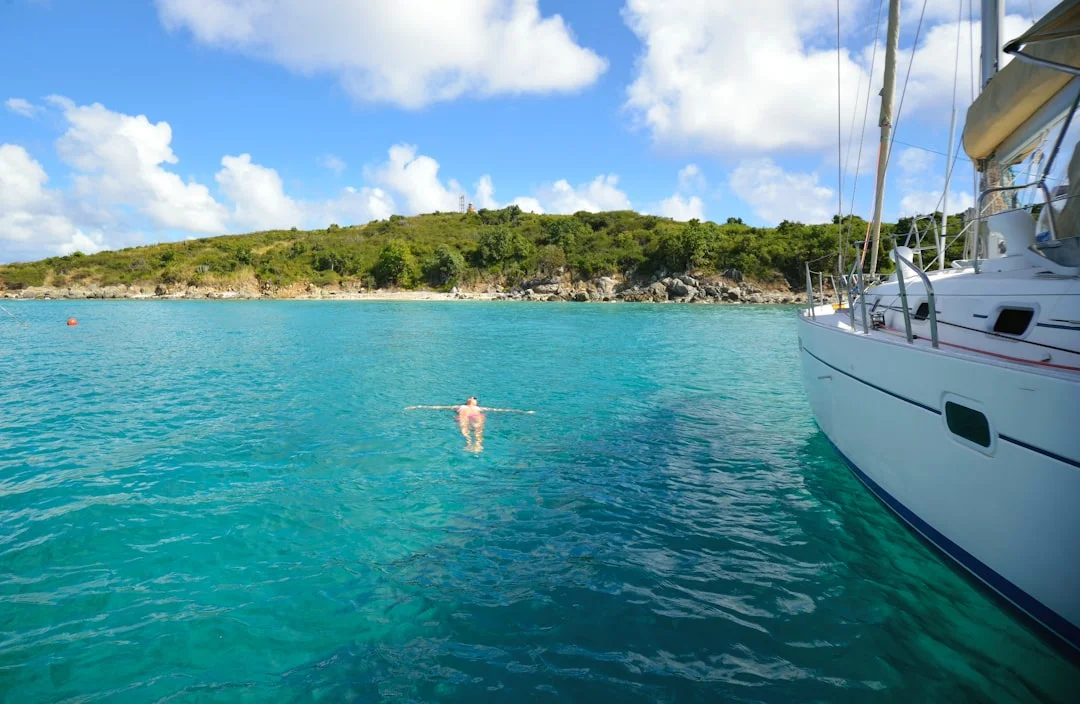
Photo by Karl Callwood on Unsplash
The Long Passages — What They Are Actually Like
The marketing pictures show calm trade-wind sailing under a poled-out genoa. That is real, and on the Galapagos–Marquesas leg you can get a week of it in a row. But the long passages are equally about the small grind of being at sea for 25 days.
Watch keeping is normally 3 hours on, 3 off for two people, or 4 on, 8 off for three. Sleep is fragmented. You wash with a kettle of seawater and a cup of fresh. You eat well for the first week, then plainly, then whatever is left for the last few days. The autopilot or windvane steers 95% of the time; you steer in squalls and approaches.
The genuinely hard pieces of the loop are not the long ones. They are:
- The Cape of Good Hope to Saint Helena leg — Agulhas Current and weather systems. The current can run 4+ knots and stack waves into freak seas when it meets a southwest gale.
- Indian Ocean lows in October–November — fast-moving systems south of Madagascar.
- The Tasman — short, vicious, exposed; treated by experienced offshore sailors as harder than any single Pacific passage.
- Caribbean → Panama upwind — the only big leg sailed against the trades on the standard route.
For the longest passages, navigation becomes routine: position three times a day, listen to weather, check the rigging, sleep. Plenty of circumnavigators learn how to take a sextant sight on the way as a backup to GPS — and as something to do during a long calm. You can also verify distances between waypoints up front so the noon-sight ETA actually matches the chart.
Provisioning, Maintenance, and the Boring Stuff That Decides Whether You Finish
The cruisers who finish their circumnavigations are not the ones with the fanciest boats. They are the ones who are patient with provisioning, methodical about maintenance, and willing to abandon a plan when the weather doesn't agree.
Provisioning is two different problems. In the Caribbean, NZ, Australia, and South Africa you can buy anything. Between French Polynesia and Fiji, you cannot. Crews leaving Panama for the Pacific carry 3–4 months of dry stores and basics like flour, rice, pasta, and UHT milk that simply aren't reliably available in Polynesian villages. Our provisioning guide for long voyages covers the shopping list and the rotation discipline that actually works at sea.
Maintenance runs on the same schedule on a circumnavigation as anywhere else, but the consequences are larger. A neglected raw-water impeller is annoying off the Solent. The same failure in mid-Pacific means using sails to slow the boat and a multimeter to find the heat exchanger blockage at 03:00 in a 2-metre swell. The discipline is to do small jobs on a fixed schedule rather than wait for something to break.
Insurance narrows your route options. A lot of policies will not cover cruising north of 35° N or south of 35° S, and many add a hefty premium or simply exclude you from the Gulf of Aden, parts of the Caribbean during hurricane season, and crossings undertaken without an approved skipper. Get quotes before you buy the boat. Premiums of 2–3% of hull value are typical for a coded offshore policy.
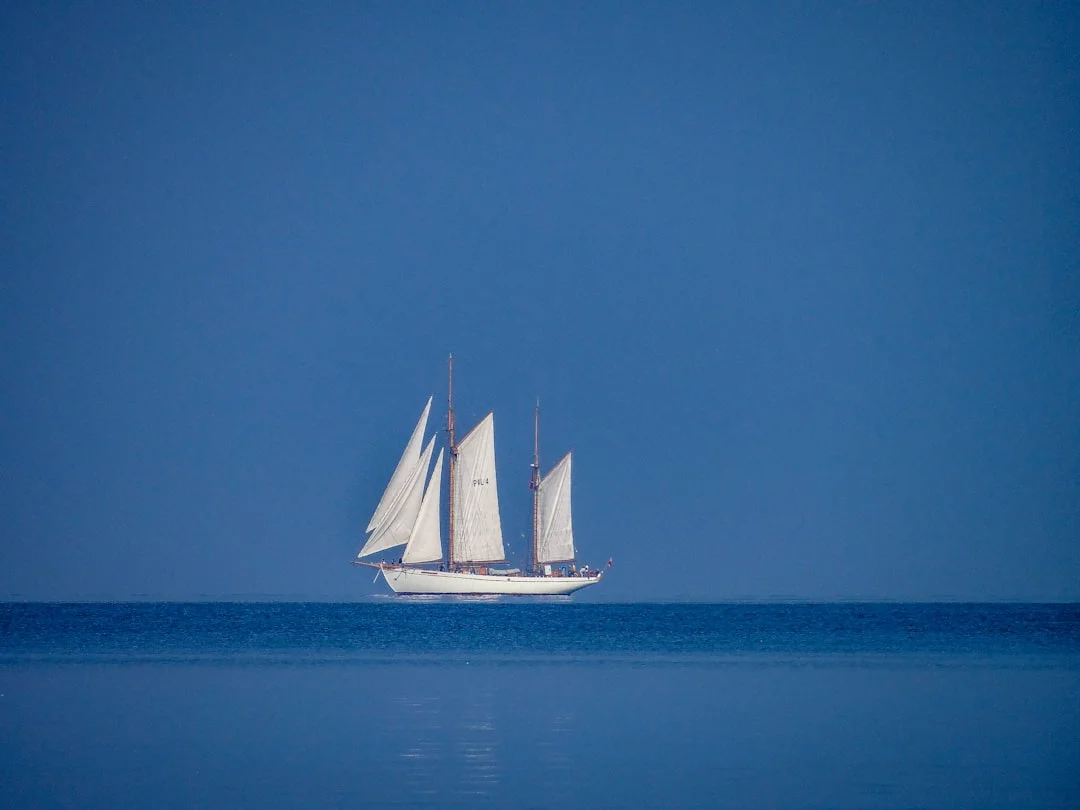
Photo by Lidia Stawinska on Unsplash
Crew — Two-Up, Family, or Picking Up Friends
The most common circumnavigating crew is a couple. The next most common is a family with school-age kids. Solo circumnavigations exist but are rare in cruising; the watch-keeping cost is brutal across years.
A useful pattern for couples is to fly friends out to share specific legs. Crewing the Atlantic crossing or the Galapagos–Marquesas passage is appealing to many sailors who cannot commit three years, and it gives you company on the hardest legs without changing the structure of your trip. Practical notes: confirm visas (American friends in French Polynesia, European friends in Indonesia, etc.), agree on a kitty for shared food, and have a written rule about who is in charge in the watch system. Friendships have ended over watch ambiguity.
Families with kids on board generally cruise slower — closer to the 4–5 year version of the loop — and spend more time in places with international schools or strong cruiser communities. New Zealand, Tasmania, and the South African winter (in Knysna or Cape Town) are popular long stops.
Paperwork — The Hidden Workload
The least romantic part of going round the world is admin. Every country wants different things, and a few will turn you around if your paperwork is wrong.
- Schengen 90/180 rule applies to most of the standard departure points in Europe. You cannot just sit in the Med all winter on a non-EU passport.
- French Polynesia — Long Stay Visa if you plan more than 90 days, which most cruisers do; apply before leaving Panama.
- New Zealand and Australia — strict biosecurity, advance arrival declarations, vessel category requirements for some marinas.
- Indonesia — historically a CAIT permit, now simpler with the e-CAIT system, but still 4–6 weeks lead time.
- South Africa — temporary import permit for the yacht, visa for crew, all controlled at first port of entry.
A digital folder with passport scans, ship's papers, insurance, last clearance, and crew list is the single most useful document you carry. You hand it to officials at every clearance and you do not want to be looking for the original at 07:00 in Suva.
Cyclone Seasons — The Calendar That Runs Your Life
The whole route is a dance around tropical cyclone seasons. You are always trying to be at the right latitude when the storms arrive at the wrong one.
| Region | Cyclone season |
|---|---|
| North Atlantic / Caribbean | June – November |
| South Pacific (Tonga–Fiji area) | November – April |
| South Indian Ocean | November – April |
| North Indian Ocean | May – Nov (two short peaks) |
That is why every cruising boat in Fiji starts moving south by mid-October. It is also why the Caribbean season is December–April: you arrive after the North Atlantic hurricane season, and you leave through Panama before the South Pacific cyclone season starts.
Practical Preparation Checklist — 12 Months Before Departure
If you have the boat and a target departure date, working back twelve months looks like this:
- T-12 months — full rigging survey, hull survey if you haven't refitted recently, decision on watermaker / windvane / SSB.
- T-9 months — major systems work done; sails ordered; insurance bound.
- T-6 months — shakedown cruise of at least two weeks; visas planned and started; medical and dental sorted.
- T-3 months — finalise crew, ship's medical kit, spare parts (impellers, belts, filters, alternator, starter motor, fuel pump).
- T-1 month — provisioning for the first ocean leg; final electronics tests; haul-out for fresh antifoul if needed.
- T-1 week — clearance paperwork; final weather window assessment.
The single most useful pre-departure exercise is a two-week passage somewhere serious — Bay of Biscay, Med to Canaries, US East Coast to Bermuda. Two weeks at sea reveals the problems that a coastal weekend never will: alternator output under sustained load, real-world watermaker behaviour, whether the watch system actually works for your crew.
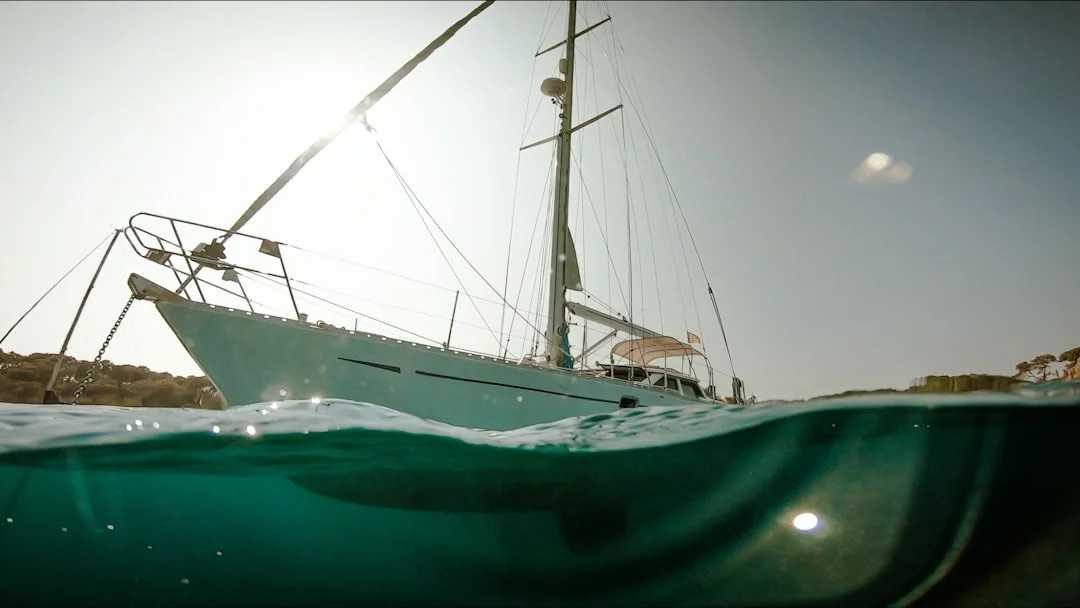
Photo by Victor Oonk on Unsplash
What People Don't Tell You
A few unromantic facts.
You will probably not love every minute of it. Most circumnavigators have a low point somewhere between months 9 and 14 — the novelty has worn off, you have replaced the same broken bilge pump three times, and you are still 18 months from home. Couples who finish are the ones who agree, on day one, that this is allowed.
You will spend a lot more time fixing the boat than sailing it. Every full-time cruiser jokes about "cruising is fixing your boat in beautiful places," but the proportion is higher than you expect. Budget the time, not just the money.
You will change your route. A friend gets sick. A part takes three months to arrive. A country closes its border. The cruisers who finish are the ones who treat the route as a draft, not a contract.
And you will probably find the trip is faster than you expected, and time is shorter than you thought. Three years sounds like forever before you leave. It feels like one long summer once you are six months in.
Frequently Asked Questions
How long does it take to sail around the world?
For a typical cruising couple on a 40–48 ft boat following the tradewind route, the answer is three to five years. Roughly 60–80 days per year are spent actually at sea; the rest is in port, at anchor, or refitting. A rushed circumnavigation can be done in 18 months, and racing boats like Vendée Globe IMOCAs do it non-stop in under 80 days, but those are not comparable to cruising.
How much does it cost to sail around the world?
Plan for US$1,500–$3,500 per month for two people while cruising, on top of the cost of the boat itself. A used, capable bluewater cruiser typically runs US$150,000–$400,000, plus US$40,000–$70,000 of pre-departure outfitting. Over three years, a comfortable mid-range circumnavigation costs roughly US$100,000–$150,000 in running costs alone. Marina-heavy cruising can double that.
What is the safest route to sail around the world?
The westabout tradewind route via the Panama Canal and Cape of Good Hope is by far the safest practical option. It keeps the boat downwind, in warm water, and out of cyclone latitudes during cyclone seasons. The Red Sea / Suez route is shorter but is currently considered too high-risk by most insurers because of Gulf of Aden piracy and regional conflict. Cape Horn and the Southern Ocean are real routes but are an order of magnitude harder than the tradewind loop.
What size boat do I need to sail around the world?
Boats between 38 and 50 feet are the sweet spot. Smaller than 38 ft and you sacrifice comfort, water capacity, and stores capacity on the longest passages. Larger than 50 ft and sail handling, marina costs, and maintenance bills scale up sharply for a couple. People have crossed oceans in 25-footers and 80-footers, but the typical successful circumnavigator is on a 40–46 ft monohull or 42–48 ft catamaran with good ground tackle and reliable systems.
When is the best time to start a circumnavigation?
For the standard westabout route, start in late October to early December from Europe or the US East Coast. That puts you in the Caribbean for the safe season, through Panama in early spring, and into the Pacific in time for the May–October weather window. Departing in any other season means waiting in the Caribbean for nearly a year before the Pacific opens up.
Do I need offshore sailing experience before circumnavigating?
Realistically, yes. You don't need to be a racing veteran, but you should have done at least one multi-day offshore passage — ideally 5–10 days, in conditions that included a gale and at least one night of poor visibility. Crews who depart on a circumnavigation as their first offshore experience often turn back within the first year, usually somewhere in the Caribbean. The Atlantic Rally for Cruisers (ARC) is a popular structured way to do your first crossing in company.
Is sailing around the world dangerous?
It carries real risk, but the modern tradewind route is managed risk rather than adventure risk. Big-picture danger comes from squalls, rogue waves, equipment failure offshore, and the Agulhas Current. Fatal incidents in cruising circumnavigations remain rare relative to the number of boats that complete the loop each year. The bigger dangers are mundane: falls on deck, fingers in winches, and onshore medical events far from a hospital. A well-prepared boat with a careful crew is statistically safer than highway driving.
Can you sail around the world alone?
It is possible, and a small number of cruising sailors do it, but it changes the trip fundamentally. Solo offshore sailing requires sleeping in 20–30 minute cycles for weeks, comprehensive AIS coverage, an extremely reliable self-steering setup, and a tolerance for solitude that few people actually have. Most solo circumnavigators report that the genuinely hard part is psychological rather than nautical. A two-person crew is dramatically safer and more sustainable than a singlehanded one.
What is the Coconut Milk Run?
The Coconut Milk Run is the cruiser nickname for the Pacific section of the tradewind route, from Panama or the Galapagos through the Marquesas, Tuamotus, Society Islands, Cook Islands, Tonga, and on to Fiji. It is so named because the legs between archipelagos are short and gentle by ocean standards, the trades are reliable, and the cruising in the islands is some of the best in the world. The Polynesia-to-Fiji portion is the part of a circumnavigation that most cruisers later remember as the highlight.
How do I get fuel and water mid-ocean?
You don't. Fuel is loaded at the last port and is essentially used for charging, manoeuvring, and motoring through calms. A 42 ft boat with a 250 L tank and a generator-equipped engine has roughly enough fuel for 700–900 nm of pure motoring, which is more than enough to cover the calms you can expect on any standard leg. Water is either rationed (typically 4–6 L per person per day for drinking and cooking, with seawater for washing) or produced by an onboard watermaker. Most circumnavigating boats now carry a watermaker; the alternative is to load 400+ litres of fresh water per person before a long passage.
About the Author
Related Articles

DSC Distress Call Guide: GMDSS, AIS, EPIRB & PLB
Learn the correct DSC distress call sequence, MMSI setup, and when to use AIS, EPIRB or PLB. Get it right—read the guide and drill it.
By Breezada Team
Sailing in Strong Currents: Tides, Tools & Examples
Learn sailing in strong currents with tide tools, rules of thumb, and real examples. Plan safer passages—read the guide and use the checklists.
By Breezada Team
NAVTEX for Sailing: SafetyNET Offshore Weather Guide
Learn NAVTEX & SafetyNET (Inmarsat-C) setup, filters, and what MSI to trust offshore. Get clearer forecasts—read the guide now.
By Breezada Team
Sailboat Hull Speed: Calculate It and Exceed It
Learn sailboat hull speed, the 1.34×√LWL formula, and when boats can exceed it. Get examples and tips—read now and calculate yours.
By Breezada Team