Roller Furling vs Hank-On Sails: Pros, Cons & When to Switch

Roller furling lets one person handle the headsail from the cockpit. Hank-on sails are heavier to set, lighter to trust, and almost always cheaper to maintain. Most modern cruisers should run furling; serious offshore sailors and budget-minded owners still have a real reason to keep hanks.

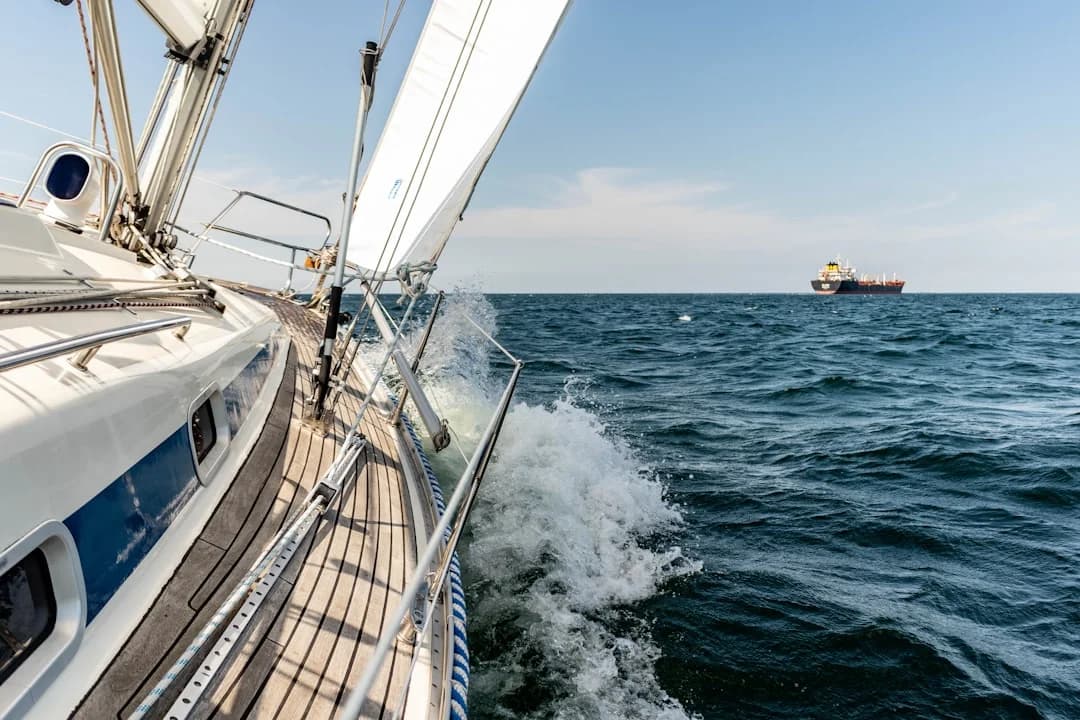
Photo by Valeria Terekhina on Unsplash
The debate between roller furling vs hank on sails has been settled for the production-boat market for two decades — almost every new cruiser leaves the factory with a furler. But that does not mean the decision is settled for you. If you sail short-handed in the trades, a furler probably saves a marriage. If you sail to high latitudes or you own a 28-footer on a tight budget, the hanks make a strong case. The honest answer is that the right system depends on three things — how you sail, where you sail, and what you can afford to fix at 02:00 in a building breeze.
This guide is written for cruising sailors who want a clear, working-knowledge comparison. We cover what each system actually is, the real pros and cons (not the brochure version), maintenance costs, when each system shines, and how to switch from one to the other.
What These Two Systems Actually Are
A hank-on headsail attaches to the forestay with bronze or plastic snap-hooks — the "hanks" — spaced every 18 to 24 inches up the sail's luff. The sail is hoisted on a halyard, hauled down by hand or with a downhaul line, and changed by taking it off the stay and putting a different one on. This is how sailboats worked from roughly 1900 until the 1980s, and how most racers still do it today.
A roller furling system wraps the headsail around an aluminium foil that sleeves over the forestay. A drum at the bottom of the stay turns the foil; a continuous furling line led aft to the cockpit lets you roll the sail in or out without leaving the helm. You hoist the sail once at the start of the season and leave it up. To reef, you partially furl it. To "drop" it, you furl it completely.
Both systems support the same forestay tension and use the same headsail shape principles. They differ in how the sail attaches, how you reduce area, and how you handle it in heavy weather.
Roller Furling — Honest Pros and Cons
Pros. Furling's one true superpower is single-handed sail management. From the helm, you ease the sheet, pull the furling line, and the sail wraps itself around the foil. You can reduce 50% of headsail area in 15 seconds without getting out of the cockpit. For couples cruising, parents with small children aboard, or anyone sailing short-handed offshore, that is a quality-of-life difference, not a luxury. A second-rate furler beats a first-rate hank-on for sheer practicality on a routine windy afternoon.
Furling also keeps the foredeck clear. No sail bag, no flogging Dacron, no need for someone to crawl forward on a wet deck at night. It plays well with deck-stepped solar panels, dinghy storage, and bow rollers — all the modern cruiser clutter that does not appreciate a hank-on sail being dragged over it. And because the sail stays attached, you cannot misplace it, lose hanks overboard, or rip a luff tape while bagging it in a hurry.
Cons. The big one: a furled sail is not a reefed sail. When you partially roll a genoa, the draft (the deepest part of the curvature) moves aft, the sail shape gets baggy, and upwind performance falls off a cliff at anything below about 60% furled. A genuine deep-reef furled headsail powers like a bag on a stick. Sailmakers compensate with foam luff pads and vertical leech battens, but they cannot replicate a properly cut storm jib. If you go to weather in 30+ knots, a furler is a worse upwind sail than three different hank-on sails would be.
The second issue is failure mode. When a hank-on jam happens, somebody walks forward and clears it. When a furler jams — typically by a wrap from the topping lift, halyard wrap at the masthead, or a riding turn on the drum — it can jam with the sail half-deployed in 40 knots of wind. Recovering from that is not fun, and it is a job that has to be done on the foredeck regardless. So furling does not remove offshore foredeck work; it just makes that work happen on the worst day of the season instead of every day.
Third: cost and complexity. A new Profurl, Harken, or Schaefer system installed runs $2,500 to $5,000 depending on stay length and load class. A used furler off a 35-footer goes for $600 to $1,200 — workable, but you inherit the seller's wear. Bearings, the most common failure point, are not always rebuildable; sometimes you replace the whole drum. Annual maintenance is modest if you flush bearings with fresh water after every sail, but neglect kills furlers fast.
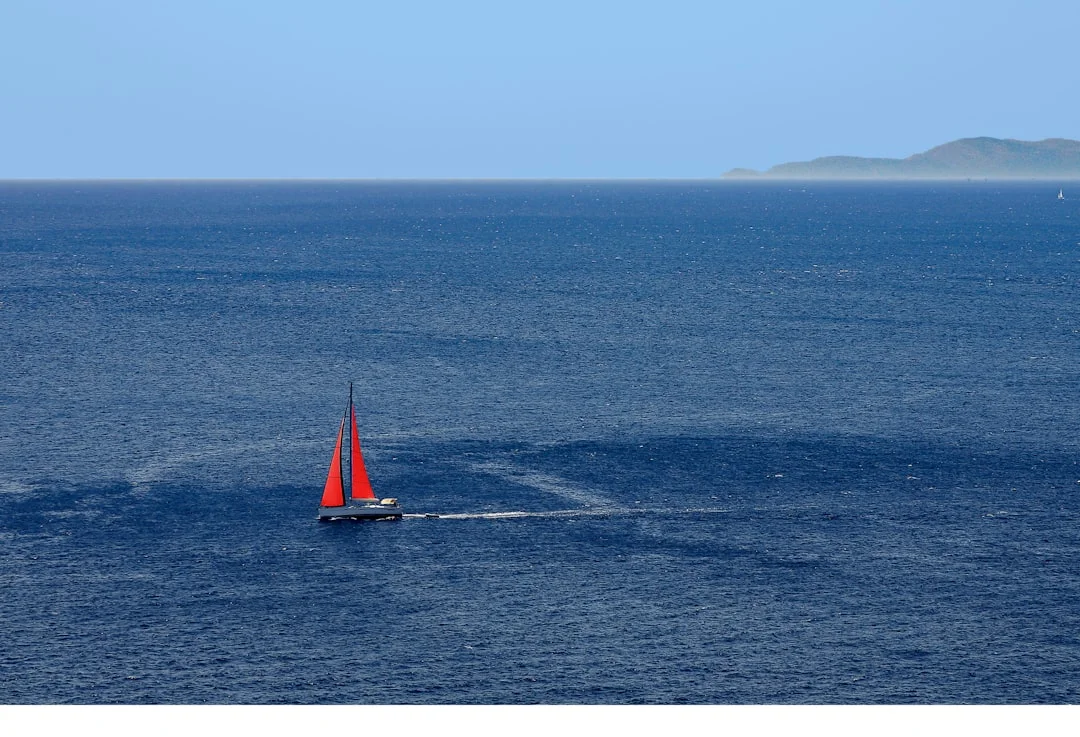
Photo by Vasilis Caravitis on Unsplash
Hank-On Sails — Honest Pros and Cons
Pros. Hanks are mechanical-simple. Twenty bronze snap-hooks and a halyard — there is nothing to fail in a way that ruins your day. The sail comes down because gravity exists. If a hank breaks, you have nineteen more. If the halyard breaks, you fix it. There is no aluminium extrusion at the masthead waiting to make a bird's nest of your jib at 30 knots.
The big practical advantage is that a hank-on sail keeps its designed shape at any reefed size, because you change sails. A boat with three headsails — a 135% genoa, a working jib, and a storm jib — has three sails optimised for three wind ranges, and the right one is always full of wind and pulling. Race boats use hank-on (or specialised foil-set, removable) headsails for exactly this reason. So do most serious high-latitude voyagers and singlehanded ocean racers.
Cost is the other lever. A used hank-on inventory for a 32-footer might be $400 to $1,200 for three sails — a working jib, a #2 genoa, and a storm jib — bought used from a sailmaker's loft. The same boat needs a $3,000 furler plus the cost of a new sail with foam pads and UV cover. Hank-on is the budget cruiser's friend, full stop.
Routine maintenance is almost nothing: rinse the sail with fresh water at the end of the season, fold and bag it properly, replace cracked hanks individually as you find them. There are no bearings, no drum, no halyard wrap risk.
Cons. The disadvantages are the things furling fixed. Sail changes are slow and wet. In rising wind, you go forward, drop the genoa (which now wants to be in the water), drag a sailbag up from below, hank on the working jib, hoist, and stuff the genoa down a hatch. That is fifteen minutes of foredeck work in a building breeze. A wave will catch you for at least part of it.
Crew also matters. Hank-on sail handling is a two-person job in anything above 20 knots — one on the foredeck, one at the helm watching the boat. If you sail with just a partner, both of you will be busy at the same time, and the boat will be steering itself or rounding up. Couples who sail mostly in 15-25 knot trade winds find this exhausting after a week.
Finally, the foredeck wears the boat. Sail bags on deck, downhauls flapping at night, hanks scraping the forestay — it is a busier, noisier foredeck. Some sailors love that. Others do not.
Cost & Maintenance Comparison
| Item | Hank-On (3-sail inventory) | Roller Furling |
|---|---|---|
| New cost (35-foot boat) | $3,000-$5,500 (3 sails new) | $3,000-$5,000 (system) + $2,500 (sail w/ foam pad & UV cover) |
| Used market cost | $400-$1,500 (3 sails) | $600-$1,500 (used drum + foil) |
| Annual maintenance | Fresh-water rinse, fold properly | Bearing flush, halyard wrap inspection, drum lube |
| Major service interval | Sails: 8-12 years | Bearings/drum: 7-10 years ($400-$1,000) |
| Lifetime cost (15 yr, used setup) | ~$2,500 | ~$4,500 |
| Repairable underway | Yes, by anyone | Sometimes — depends on failure |
The hank-on system is roughly 30-50% cheaper over a 15-year ownership when buying used. New, the two systems are closer, but furling still costs slightly more once you factor in the specialty cut sail with foam pads and an integrated UV strip.
A note on UV strips: a furling headsail lives outside year-round in most cases, so the leech and foot carry a sacrificial Sunbrella strip that hides inside the furl. That strip needs replacing roughly every 6-8 years in Mediterranean or Caribbean UV. A hank-on sail lives in a bag below — no UV strip needed, longer fabric life.
When Each System Wins
There is no single right answer. There is the right answer for your boat, your crew, and your sailing area. Here is the working sailor's view.
Use roller furling if:
- You sail short-handed (one or two people aboard most of the time)
- You cruise primarily in 10-25 knot conditions (Mediterranean, Caribbean, US east coast, most coastal)
- Your boat is 35 feet or larger, where headsail size makes manual handling exhausting
- Your spouse, partner, or kids would otherwise not enjoy sailing
- You charter or are setting up a boat to charter
Use hank-on if:
- You sail with a regular crew of 3+ and they know what they are doing
- You sail offshore in high latitudes (north of 45 degrees north or south)
- You race, or you cruise in a way where sail-change-on-the-money is normal
- Your budget is tight and you have a smaller boat (under 32 feet)
- You want to be able to fix everything yourself with hand tools
The hybrid answer: Many serious offshore boats run a roller-furling genoa on the headstay and a removable hank-on staysail on an inner forestay. This gives short-handed cruising convenience for normal conditions plus a proper storm jib option that does not depend on a baggy partial furl. It is the setup of choice on a lot of well-found 40-50 foot cruising boats heading to high latitudes.

Photo by Chris Harwood on Unsplash
How to Switch — Hank-On to Furling, or Back
Hank-on to furling is the more common upgrade. The job involves:
- Removing the existing forestay and replacing it with a new wire or rod stay that matches the furler's specifications (some furlers reuse the existing stay; many do not).
- Installing the drum at the chainplate and the swivel at the masthead.
- Sleeving the aluminium foil over the stay.
- Having the headsail re-cut: a furling sail needs a luff tape, foam luff pads (to keep shape when partially furled), vertical leech battens in some designs, and a UV strip along leech and foot.
Done by a professional yard, expect $3,500-$6,500 all-in for a 35-foot boat, sail re-cut included. DIY with a used furler purchase brings it down to $1,500-$2,500 if you are competent with rigging.
A surprising number of owners try to furl an existing hank-on sail without re-cutting it. Do not do this. Hanks left attached chew up the foil. A sail without foam pads bags out badly when reefed. A sail without a UV strip dies in two seasons. Cut the sail or buy a new furling-specific sail.
Furling to hank-on is unusual but happens — typically when a serious offshore sailor buys a production cruiser and wants belt-and-braces backup. The process is roughly the reverse: remove furler hardware, fit hanks to the sail's luff (or have a sailmaker do it for $200-$400 per sail), and possibly add an inner forestay for a staysail.
Real-World Judgment Calls
A few scenarios where the textbook answer breaks down.
Atlantic crossing in a 38-foot cruiser. You can do it on a furler. Most people do. The trade-wind passage from the Canaries to the Caribbean runs 2,700 nm in steady 15-25 knot easterlies — exactly the conditions where furling shines. You can check the exact distance and waypoints with Breezada's sea distance calculator before you plan your weather window. The risk is a single equipment failure leaving you with no headsail option. If you want belt-and-braces, you carry an emergency hank-on storm jib in a bag with a removable inner forestay you can rig up by hand. About a third of trans-Atlantic boats do this.
Mediterranean charter base. Always furling. Period. Charterers cannot be expected to hank on a sail, and the boats are sized so that single-handed sail handling is the norm.
High-latitude sailing to Iceland, Patagonia, the Falklands. Most serious boats here run a removable headstay system or hank-on. The reasons are not about furling reliability per se — modern furlers are pretty good — but about the absolute necessity of having a real storm jib that sets cleanly at 40 knots true wind. A 30% partial-furl genoa will not get you off a lee shore.
Singlehanded racing. Hank-on with bag changes, or specialised systems like the Solent rig (two parallel headstays with two different size sails, swap between them). Furlers add weight aloft and the partial furl loses too much VMG to be tolerable for serious racing.
Day-sailing a 28-footer on inland water. Either works. Hank-on is cheaper and probably what came with the boat. Keep it.
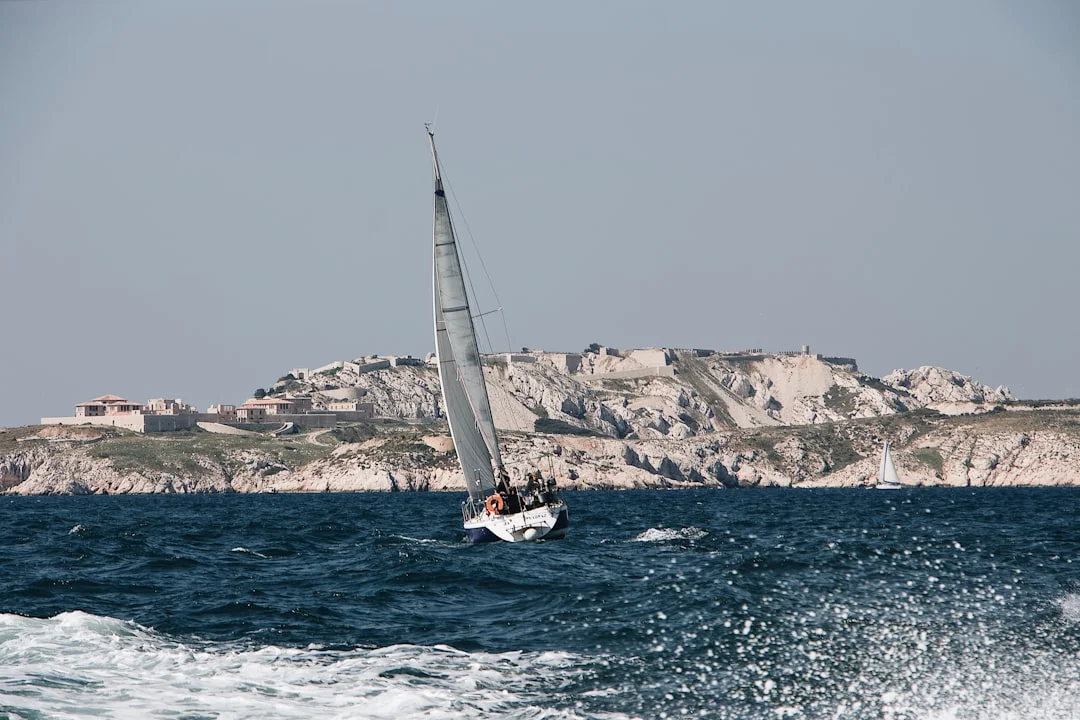
Photo by Maël BALLAND on Unsplash
Reefing — Where the Systems Really Diverge
Reefing technique matters enormously here. With a furler, reducing the headsail is one motion — ease the sheet, pull the line. But you also need to handle the mainsail, which on most cruisers is slab-reefed independently. The two systems work together, and the mainsail technique is the same regardless of which headsail system you have. For the actual procedure — when to start reefing the headsail and how to coordinate it with the main — our step-by-step guide to reefing under sail covers both furler and slab-reef workflows.
With hank-on, reefing the headsail means changing it. You drop the 135% genoa, hank on the working jib (sometimes called a #2 or #3), hoist, and tension. This is genuinely satisfying when conditions are stable but exhausting when wind is rapidly building. Race crews handle it by having two sails on deck at the same time, on a "double-luff-groove" foil (no hanks, two grooves) — but that is a different system again.
Maintenance — What Actually Breaks
For furlers, the failure points are predictable:
- Bearings in the drum and swivel — 7-10 year service interval, longer if you flush with fresh water religiously after every use. Symptoms: stiff furling, grinding noise, hard to roll.
- Halyard wrap at the masthead — happens if the swivel rises too high or the halyard fairlead is wrong. Causes the sail to wrap the foil during furling, can jam the system entirely.
- UV strip degradation — visible. Replace when it starts shedding fibres.
- Foil corrosion at joints — aluminium pitting from electrolysis. Inspect annually.
For hank-on, the failure modes are even simpler: broken hanks (replace individually with a punch and rivets), luff tape damage, halyard wear at the splice or thimble. A good seasonal inspection catches everything.
Honest assessment: a well-maintained hank-on sail will outlive a poorly-maintained furler. A well-maintained furler is fine for two decades. The variable is owner discipline, not system design. If you are diligent about end-of-sail rinsing and annual inspection, run a furler. If you are not, run hanks — they will tolerate more neglect.
For a complete walkthrough of furler and headsail maintenance by season, see our printable sailboat maintenance checklist.
Bottom Line
For 80% of cruising sailors today, roller furling is the right answer — single-handed convenience, foredeck clarity, and one fewer thing to think about. The cost premium is real but amortises over years of less-tired sailing.
Hank-on remains the right answer for a clear minority: serious offshore sailors who want a real storm jib option, racers, budget cruisers on smaller boats, and traditionalists who value mechanical simplicity. None of those reasons are wrong.
The smartest setup, for boats that can carry it, is both: a furling genoa for daily use and a hank-on storm jib on a removable inner forestay for the day the weather does what the GRIB file did not predict. It costs more, but offshore it is what the experienced fleet runs.
When you are planning your next passage, verify distances between waypoints so you can match sail inventory to expected conditions — a 200 nm hop is one conversation, a 2,000 nm passage is another. The headsail choice is part of the same plan.
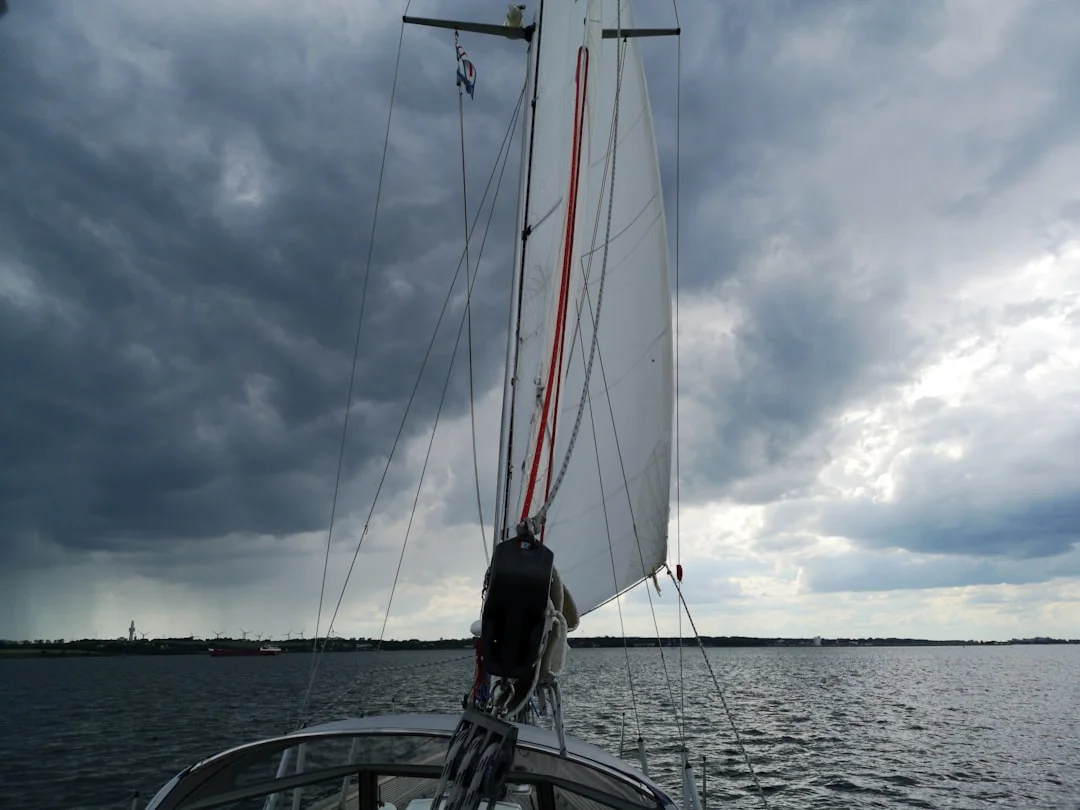
Photo by Wolkensegler Agentur on Unsplash
Frequently Asked Questions
Is a roller furler safe in heavy weather?
A modern, well-maintained furler is safe in heavy weather provided you do not rely on the partial furl as a substitute for a storm jib. Furl the headsail completely well before the wind reaches 30 knots true, and use either a deeply reefed mainsail or a separate storm jib on an inner forestay. The danger is a half-furled genoa flogging itself to pieces because you waited too long — that is a procedure failure, not a hardware failure.
How long does a roller furling system last?
Bearings typically last 7 to 10 years before a service or rebuild, and the aluminium foil and drum can last 20 to 25 years if rinsed with fresh water regularly and kept out of salt residue. The most common cause of premature failure is corrosion from salt and lack of maintenance, not mechanical wear. Budget around $400 to $1,000 for a mid-life bearing rebuild on a 35-foot boat's furler.
Can I use my existing hank-on sail with a new furler?
Not effectively. A furling-cut sail needs a luff tape (not hanks), foam luff pads to maintain shape when partially furled, and a sacrificial UV strip along the leech and foot. A sailmaker can re-cut an existing sail for around $400 to $800 if the cloth is in good condition, but if the sail is more than 8 years old it is usually better to buy a new furling-specific sail.
Why do some offshore sailors prefer hank-on?
Three reasons: a hank-on sail keeps its designed shape at every reefed size because you change sails rather than reduce one; the system is mechanically simpler with fewer failure modes that require foredeck work in heavy weather; and it allows a true purpose-built storm jib instead of a deeply-furled genoa that loses upwind performance. For passages to high latitudes or for serious offshore voyaging, this matters more than the convenience of furling.
What is the cheapest way to upgrade to roller furling?
Buy a used furler from a similar-size boat — typically $600 to $1,500 for a Profurl, Harken, or Schaefer system off a 32-38 foot cruiser — and have a sailmaker re-cut your existing genoa with a luff tape, foam pads, and UV strip for around $500 to $800. DIY installation if you are competent with rigging brings the total to roughly $1,500 to $2,500, versus $3,500 to $6,500 for a fully professional new install.
Do roller furling sails need a UV cover?
Yes, almost always. A furled sail lives outside year-round on most boats, so the leech and foot that show when furled need protection. The standard is a sacrificial Sunbrella strip sewn along the leech and foot, hidden inside the furl when the sail is rolled away. Expect to replace the strip every 6 to 8 years in high-UV regions like the Mediterranean or Caribbean. Without it, the sail will fail along the exposed edges within two or three seasons.
About the Author
Related Articles

Bahamian Moor Guide: Tandem Anchors & Snubbers
Learn bahamian moor setup, tandem anchoring, and proper snubbers for crowded anchorages. Get step-by-step tips—read and rig it right.
By Breezada Team
Best Radar Reflector for Sailboat: Active vs Passive
Compare active vs passive radar reflectors for sailboats, mounting tips, and real-world results. Choose the best radar reflector—read now.
By Breezada Team

Sail Trim for Beginners: Main + Jib Cruising Guide
Learn sail trim for beginners with simple main + jib settings, telltales, twist, traveler & vang. Get quick wind-based trims—read now.
By Breezada Team
Sailboat Bimini Guide: Dodger & Enclosure Choices
Learn how to choose a sailboat bimini, dodger & cockpit enclosure—materials, fit, costs, and DIY vs pro. Get the right setup today.
By Breezada Team