Sailing the Whitsundays: Australia's Best Cruising Ground
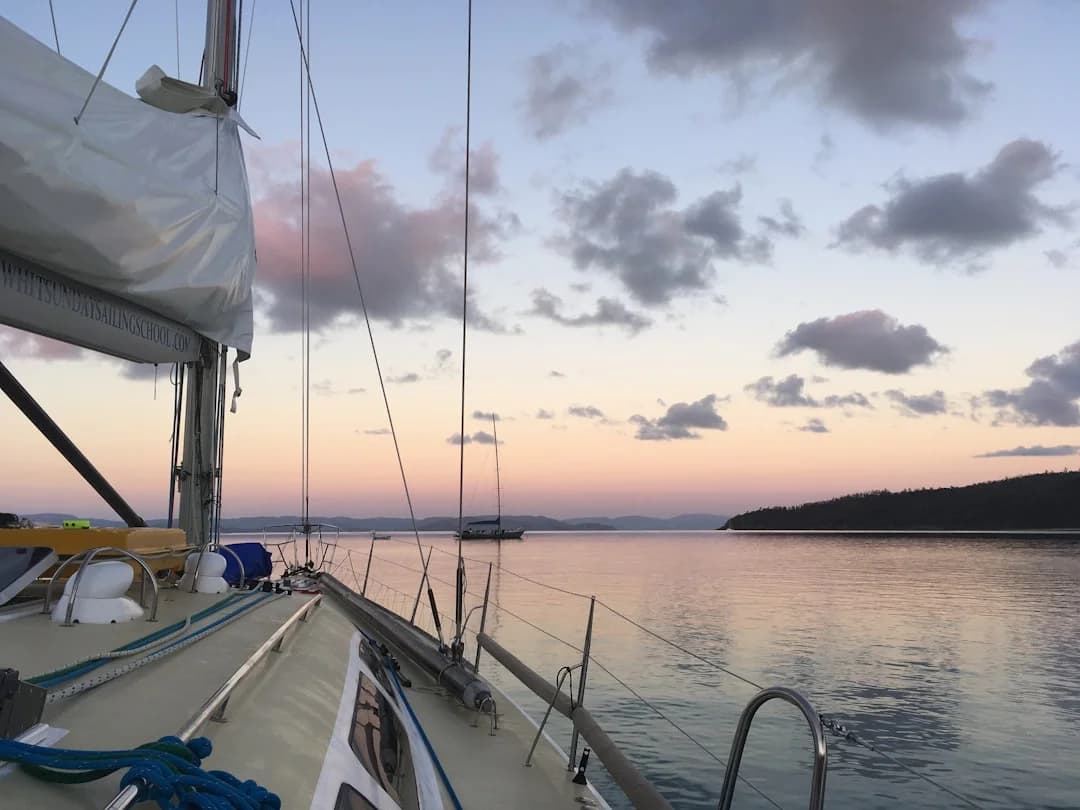
The Whitsundays are 74 islands strung across the Coral Sea between Mackay and Townsville on Australia's Queensland coast — and if you ask any cruiser who has spent a season here, they will tell you it is the best charter ground in the country, possibly in the southern hemisphere. Steady trade winds, short hops between protected anchorages, no tides to fight, and a fringing reef that turns the water the colour of cheap mouthwash — only better. This guide covers what sailing the Whitsundays actually involves: the routes, the season, the costs, the anchorages worth chasing, and the practical detail you need before you sign a charter contract.
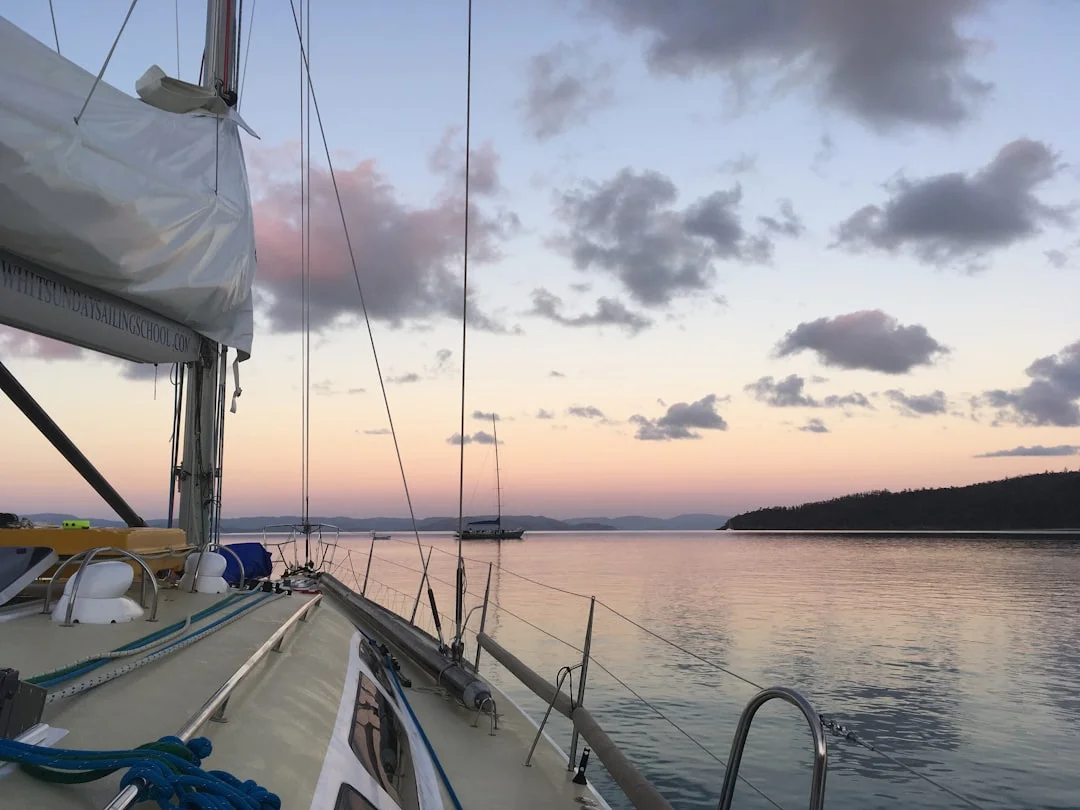
Photo by chiara bonetto on Unsplash
Why the Whitsundays Are Australia's Best Cruising Ground
The geography does most of the work. The 74 islands sit inside the Great Barrier Reef Marine Park, which means the outer reef breaks the open Pacific swell about 40 nautical miles east of the islands. By the time the ocean rolls into the Whitsunday Passage, it has lost almost all of its energy — you are sailing on what is effectively a giant, sheltered lagoon. The trade winds blow from the southeast at 15 to 25 knots for most of the cruising season, which is reliable enough that you can plan a week's itinerary around them and not be surprised.
The islands themselves are mostly continental — drowned mountains, not coral cays — so you get steep granite headlands, eucalyptus-covered hills, and deep bays that hold your anchor. Distances between anchorages are short: you rarely sail more than 12 nautical miles between stops, and the longest open-water leg most charters do is around 18 nm from Hamilton Island to Border Island. That makes it forgiving for less experienced crews and pleasant for everyone — you are sailing on flat water, in steady wind, with the next bay always in sight.
A few practical numbers. The Whitsunday Passage runs about 35 nm north to south. Tidal range varies from 1.5 to 4 metres depending on the moon, but currents inside the islands are gentle compared with the open coast. Water temperature stays between 22°C in winter and 28°C in summer. There are no significant rivers nearby, so visibility underwater is usually 10 metres or better.
When to Go: The Season Matters More Than Anything
Pick the wrong months and the Whitsundays will not look like the postcards. Here is what each part of the year actually feels like:
| Season | Months | What to expect |
|---|---|---|
| Dry season (best) | May–October | 15–25 kt SE trades, 22–25°C, low humidity, almost no rain. Peak: July–September. |
| Shoulder | November, April | Lighter winds, warmer water, occasional storms. Cheaper charters. |
| Wet season | December–March | Tropical cyclones possible, humidity 90%+, frequent squalls, stingers in the water. Most charter companies don't operate. |
The sweet spot is June through September. Trades are reliable, skies are clear, and the water has lost its summer plankton bloom — you get those impossible turquoise colours that show up in every aerial shot of Whitehaven. August is arguably the best month: school holidays have ended, the wind is steady but not honking, and the anchorages aren't crowded.
Avoid December through March unless you really know what you're doing. Cyclone season is real, and even between systems you'll deal with marine stingers (irukandji and box jellyfish) that make swimming a hazard. Most bareboat operators won't even hand you the keys between mid-December and the end of February.
The Classic Whitsundays Itinerary (5–7 Days)
Most bareboats charter from Airlie Beach (Abel Point Marina) or Hamilton Island. Airlie is cheaper and gives you a longer first sail; Hamilton is faster to get to by air and lets you skip the open Whitsunday Passage on day one. Either way, the typical week looks like this:
Day 1 — Airlie Beach to Nara Inlet (Hook Island, ~14 nm)
Pick up the boat by lunch, brief by 14:00, leave the marina by 15:00. Nara is a long fjord-like inlet that cuts deep into Hook Island — protection from any direction, holding ground that's unimpeachable, and Aboriginal rock art at the head of the inlet that's worth the dinghy ride.
Day 2 — Nara to Stonehaven or Macona Inlet (~6 nm)
Short hop, then a snorkel afternoon at Manta Ray Bay. Mackerel here are fearless. The reef drops off straight from the moored boat.
Day 3 — Hook Island to Whitehaven Beach (~10 nm)
The big one. Anchor at Tongue Bay, take the dinghy ashore, walk the trail to Hill Inlet lookout. Then sail south around Whitsunday Island and anchor off Whitehaven proper for a beach day. Seven kilometres of pure silica sand, 98% pure — squeak between your toes when you walk.
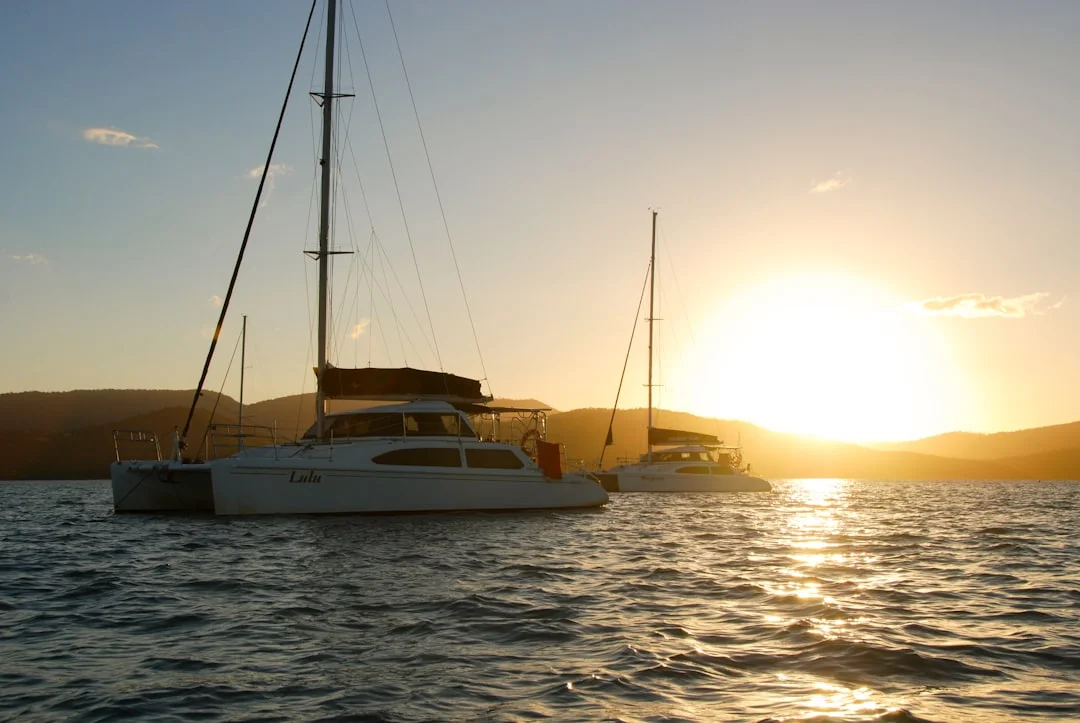
Photo by Bart van Griensven on Unsplash
Day 4 — Whitehaven to Border Island or Lindeman (~12 nm)
Border Island for hardcore snorkellers — the fringing reef on the north side is spectacular. Lindeman Group for quiet anchorages with almost no other boats.
Day 5 — South to Hamilton Island (~10 nm)
Refuel, restock, and have a hot shower. Hamilton has the only proper marina in the area outside Airlie. Marine fuel runs around AUD 2.30 per litre, and the bakery sells out of pies by 11am.
Day 6 — Hamilton to Cid Harbour (~9 nm)
Sawmill Beach is one of the most protected overnight anchorages in the entire group. Drop the hook, swim, watch the resident eagles work the cliffs.
Day 7 — Cid Harbour back to Airlie (~14 nm)
Easy downwind run home. Hand back the boat by 09:30. Breakfast on shore.
If you have ten days, swing further north to Butterfly Bay (Hook Island's north end), Langford Reef (a sand cay that disappears at high tide), and the Black Island/Hayman area. If you have only five days, skip Border and Lindeman and double down on Whitehaven.
You can verify distances between waypoints for any custom itinerary, which matters when you're trying to balance a downwind day against the trades for a day's snorkelling.
Bareboat or Skippered? The Honest Trade-off
The Whitsundays is the biggest bareboat fleet in the southern hemisphere — Cumberland Charter Yachts, Whitsunday Rent A Yacht, Sunsail and Dream Yacht Charter all operate from Airlie. You don't need a formal certification; what they want is documented experience equivalent to about a week of skippering, plus a sensible briefing performance. They take you out in a launch, watch you anchor, and decide.
Reasons to go bareboat:
- You decide where to go. That's the whole point. No fixed itinerary.
- It's cheaper per head. A 38ft catamaran for AUD 1,200/day split four ways is around AUD 300 each, all in.
- The cruising area is genuinely easy. Short legs, predictable wind, no offshore exposure.
Reasons to take a skipper:
- You're new to multihulls. Most charter boats here are catamarans, and they handle differently.
- Reef navigation makes you nervous. There are bommies (isolated coral heads) inside some anchorages that don't show up on basic charts.
- You want to learn. A skipper who knows the area will teach you more in a week than a year of weekend sailing at home.
If you are weighing this up, our bareboat versus skippered charter breakdown covers the cost differences and skill thresholds in more detail. For most cruising couples with previous bareboat experience anywhere in the world, the Whitsundays is well within bareboat range.
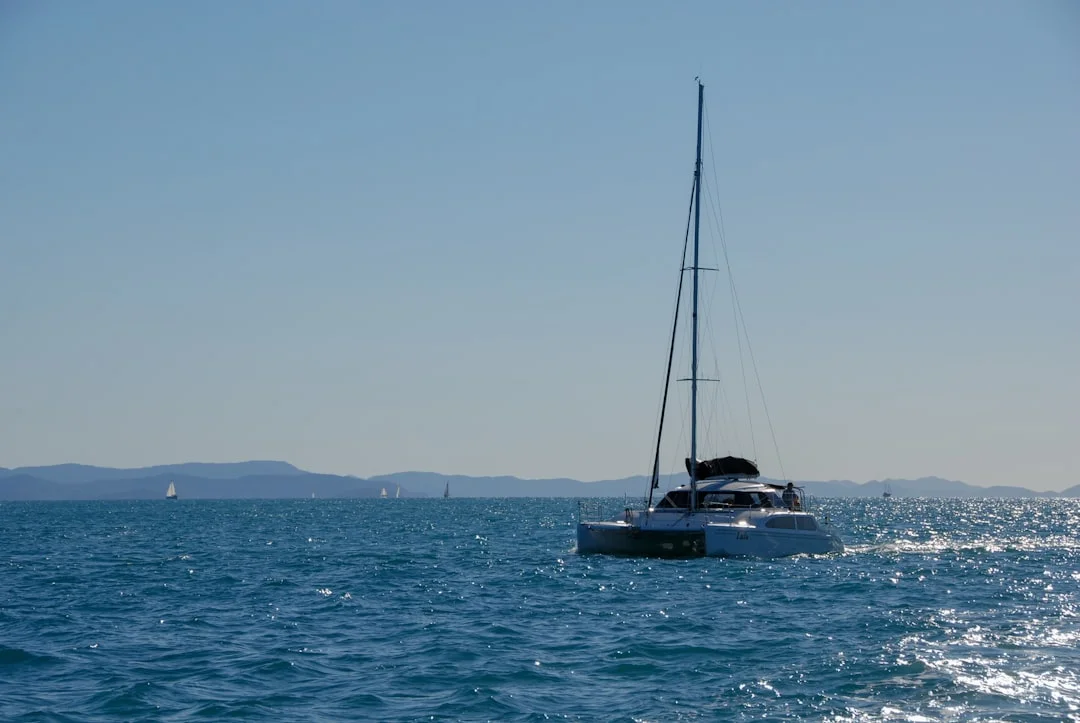
Photo by Bart van Griensven on Unsplash
The Anchorages: Where to Drop the Hook
There are roughly 70 named anchorages inside the cruising ground. The ones that matter most:
- Nara Inlet (Hook Island) — best all-weather refuge. 8–15m, mud, holds anything.
- Macona Inlet (Hook Island) — sister inlet to Nara, slightly less crowded.
- Butterfly Bay (Hook Island, north) — exposed in northerlies, but the reef snorkelling is the best in the islands.
- Stonehaven (Hook Island) — public moorings; first-come, first-served.
- Tongue Bay (Whitsunday Island) — staging anchorage for Hill Inlet. Not great for overnighting.
- Whitehaven Beach — anchor in the lee. Watch the swell wrap around the southern point.
- Cid Harbour (Whitsunday Island) — Sawmill Beach is the all-time-favourite calm overnight stop. Note: signs warn against swimming due to historical shark incidents. Snorkel from the dinghy elsewhere.
- Border Island (Cataran Bay) — small, exposed in southerlies, but the snorkelling is exceptional.
- Hamilton Island Marina — the only place to refuel, take on water, and eat dinner ashore in the southern group.
Public moorings (yellow floats) exist in many bays — they are free, but they are also limited and there is no booking system. Get to popular bays before 15:00 in season or be prepared to anchor. Holding ground is generally good (mud and sand) but check your set carefully — some bays have grass patches that won't hold even a well-sized anchor. If you want a refresher on how to set scope properly in deep, tide-affected anchorages, the step-by-step anchoring technique guide covers exactly this scenario.
Whitehaven Beach and Hill Inlet
Whitehaven gets all the marketing attention, and for once the marketing isn't lying. The sand is 98% pure silica, which is why it stays cool underfoot even in 35°C heat and why it shows up so blindingly white from the air. Hill Inlet, at the northern end, is where the tide pushes the white sand and the turquoise water into those swirling, abstract patterns you see in every Australian tourism advertisement.
The practical drill: anchor at Tongue Bay (which faces north), dinghy ashore, walk the marked track to the Hill Inlet lookout — about 20 minutes uphill, easy. Best photos in the hour before low tide, when the patterns are most defined. Then move the boat around to Whitehaven proper for the afternoon. Don't try to anchor in Hill Inlet itself — the bottom is sand-over-coral and the tide will lay you sideways.
A note on stingers and crocs. From November through May, marine stingers can be present and you should wear a stinger suit if you swim. Saltwater crocodiles are very rare in the Whitsundays themselves but do occasionally turn up in mainland creeks — don't paddle the dinghy up rivers near the mainland coast.
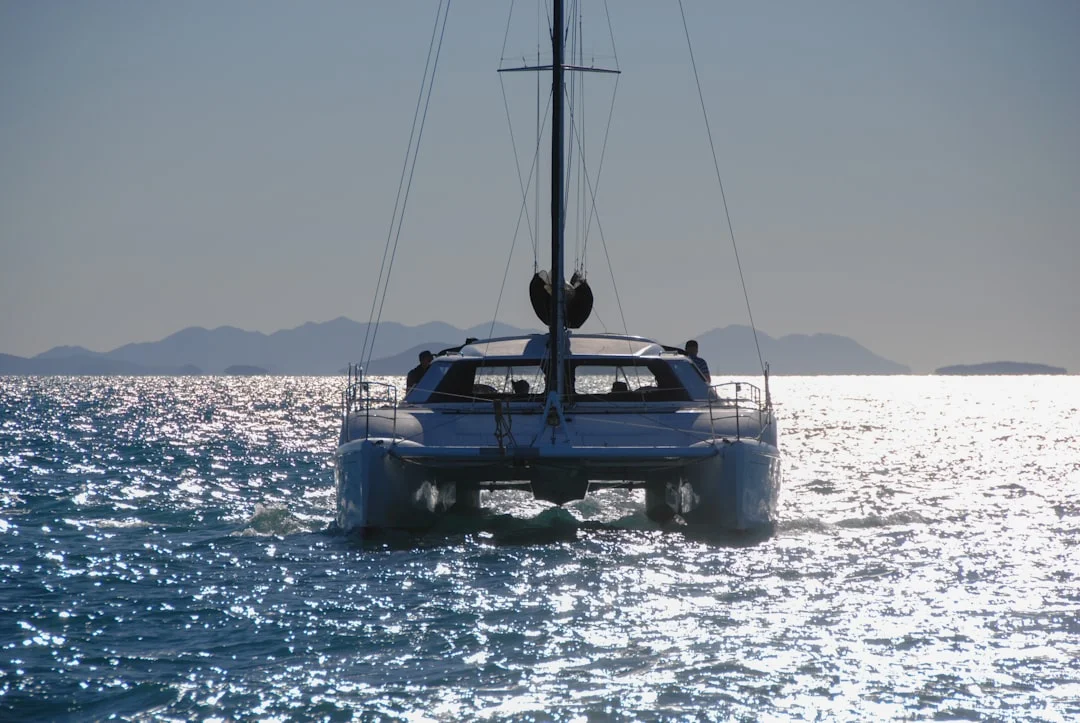
Photo by Bart van Griensven on Unsplash
Snorkelling and the Reef
The fringing reef around the islands is what most cruisers actually come for. The Great Barrier Reef proper is another 25–40 nm offshore from the islands and beyond the range of a typical week-long charter, but the inshore reef around Hook, Border and Black Islands is excellent — coral cover is good, fish life is dense, and you can swim straight off the boat in most places.
Top snorkel spots, ranked roughly:
- Manta Ray Bay (Hook Island) — moored snorkelling site, deep wall, big mackerel and the occasional turtle
- Luncheon Bay (Hook Island) — gentle entry, soft corals, good for first-time snorkellers
- Maureen's Cove / Butterfly Bay — best hard coral cover in the group
- Border Island north side — fewer day boats, more macro life
- Langford Reef — sand cay with a fringing reef; only accessible at low tide
Bring fins. Don't try to snorkel from a swimming pool stride entry off a 40ft catamaran — get in via the swim ladder, sort yourself out, then drop the mask. If you've never snorkelled before, the islands will spoil you for life.
What Will It Cost?
A Whitsundays charter sits in the middle of the global price range — cheaper than the Caribbean in season, more expensive than Greece. Real numbers for a 7-night bareboat charter in peak season (July–September):
| Item | Approx. cost (AUD) |
|---|---|
| 38ft sailing catamaran (sleeps 6) | $9,000–$13,000 / week |
| 41ft monohull (sleeps 6) | $5,500–$7,500 / week |
| Provisioning (6 people, 7 days) | $900–$1,400 |
| Fuel and pump-out | $200–$400 |
| Marina fees (1 night Hamilton) | $90–$130 |
| Mooring fees (public moorings) | Free |
| Charter insurance / damage waiver | $500–$1,000 |
Catamarans dominate the Whitsundays charter fleet because they sit shallow, anchor flat, and give you space when you're cooking and showering at anchor. If you're new to the platform, our comparison of the best charter and cruising catamarans is a good place to size up which model you'll be living on for a week. For a couple chartering on their own without crew, expect to pay around AUD 6,000 all-in for a week on a small monohull. For a family of six on a catamaran, budget AUD 14,000–17,000 once everything is added up. Tip without ruining the budget: provision for breakfast and lunch from the IGA at Cantonment Point in Airlie, and only eat ashore at Hamilton Island. That's where the price difference between a good week and an expensive week shows up.
Practical Detail: Charts, Comms, and Other Things You'll Be Glad You Knew
Charts. Use the official AHS charts AUS 252, AUS 253 and AUS 254 plus the Cruising Guide to the Whitsundays by David Colfelt — it's the local bible and every charter boat carries one. Electronic charts (Navionics or C-Map) are accurate but the bommies inside some anchorages are not always shown. Watch the colour of the water; if it goes pale green ahead of you, something is shoaling.
Comms. Mobile coverage is decent across most of the islands now (Telstra is the only network that really works) but expect dead zones at Border Island and the back of Nara Inlet. VHF 16 is monitored 24/7 by the Whitsunday Coast Guard. Charter operators will give you a daily 08:00 radio sched — keep it.
Tides. Spring tides run 4m, neaps 1.5m. The current matters most when leaving Hamilton or transiting Whitsunday Passage on a falling tide — plan to enter Cid Harbour with the flood, not against the ebb.
Wind. Trades come SE most days. They tend to build through the morning, peak between 14:00 and 17:00, then drop after sunset. Plan your sail for the morning if you have nervous crew.
Wildlife. Humpback whales migrate through July–September. You'll see them — keep 100m clearance by law. Turtles everywhere. Reef sharks at every snorkel site (harmless). Stingers November–May.
Distance planning. Most legs are 6–14 nm, but if you decide to swing wide to the outer islands or the reef, you can calculate the exact distances before you commit to a day plan.
Final Word
The Whitsundays do not need to be oversold. They are a genuinely outstanding cruising ground for sailors of almost any experience level: protected enough that a competent bareboat couple can have a smooth week, varied enough that veterans will still find anchorages they haven't explored, and beautiful in the kind of saturated, almost-fake way that makes you stop trying to photograph it after the second day. Charter in July or August, sail south to north so the trades are on your beam, and give yourself enough days that you're not glancing at the schedule. Someone opens the rum.
Frequently Asked Questions
How many days do you need to sail the Whitsundays?
Five days is the practical minimum to see the highlights — Whitehaven Beach, one or two reef snorkel sites, and a couple of the better anchorages on Hook Island. Seven days lets you slow the pace, add a night at Border Island or Hamilton, and not feel rushed. Ten days lets you reach the northern islands (Hayman, Black, Langford Reef) and explore beyond the standard route. Fewer than five days and you'll spend more time moving than enjoying the islands.
Do you need a sailing licence to bareboat in the Whitsundays?
No formal certification is legally required, but charter operators want documented sailing experience equivalent to about a week of skippering — typically a previous bareboat charter abroad, an ICC, RYA Day Skipper, ASA 104, or similar. They'll also assess you in person during the briefing: anchoring drill, MOB drill, and a basic chart-and-engine check. If you fail the on-water assessment, they put a skipper aboard for the first day at your cost.
Is sailing the Whitsundays safe for beginners?
Yes — within reason. The cruising area is sheltered, distances are short, and tides are manageable, which makes it one of the more forgiving places in the world for less experienced cruisers. Beginners should still take a skipper for the first day or two, sail in the May–October dry season only, and avoid the wet season entirely. Stick to public moorings rather than anchoring solo until you've watched a local set their hook a few times.
When is the best time to sail the Whitsundays?
June through September. Trade winds are steady at 15–25 knots from the southeast, humidity is low, water is clear, and rain is rare. August is the sweet spot — peak winter holiday crowds have gone, the wind is reliable but not over-strong, and the marine stinger season is well past. Avoid December through March, when tropical cyclones are possible and stingers make swimming dangerous.
Can you sail to the Great Barrier Reef from the Whitsundays?
Yes, but it's a longer day than most charters allow. The outer Great Barrier Reef sits 25–40 nautical miles east of the islands, depending on which section. Bait Reef and Hardy Reef are the closest accessible parts and require a 4–6 hour beam reach in settled trades, plus an early start, plus an overnight at the reef on a public mooring or pontoon. Most charters skip it and snorkel the inshore fringing reef instead, which is excellent on its own terms.
Do I need to worry about saltwater crocodiles?
In the Whitsundays themselves, crocs are very rare — the islands are continental and the cool, deep water doesn't suit them. They're occasionally seen near the mainland coast and in creek mouths around Airlie. The practical rule: don't paddle the dinghy up mainland rivers, don't swim in mangrove creeks, and you'll never see one. Shark and stinger awareness matters more day-to-day, especially at Cid Harbour where signage warns against swimming.
What's the best charter base — Airlie Beach or Hamilton Island?
Airlie Beach (Abel Point Marina) is the bigger fleet, cheaper provisioning, and gives you a longer first sail north into the islands. Hamilton Island is closer if you're flying in (it has its own airport), has a wider boat selection from premium operators, and skips the Whitsunday Passage on day one. Most experienced charterers prefer Airlie for the choice and the prices; first-timers often pick Hamilton for the convenience.
About the Author
Related Articles
Sailing San Juan Islands: Routes, Tides & Moorings
Plan your sailing San Juan Islands trip with routes, tide tips, and moorings. Get the guide and chart your itinerary today.
By Breezada Team
How to Pick Up a Mooring Buoy: Med Mooring Tips
Learn how to pick up a mooring buoy with buoys & lazy lines, step-by-step. Get confident and dock faster—read the guide now.
By Breezada Team
Best Dinghy for Cruising Sailboat: Setup Guide
Learn the best dinghy setup for cruising sailboats—choose, equip, and stow it right. Read the guide and upgrade your tender today.
By Breezada Team
Sailing San Juan Islands Itinerary: 7 Days & Tides
Plan the perfect sailing San Juan Islands itinerary with a 7-day route, tide tips, and anchorages. Get the full day-by-day plan now.
By Breezada Team