Sailing with kids is one of the most rewarding ways to travel as a family — and one of the most misunderstood. People imagine tantrums mid-crossing, toddlers tumbling overboard, and teenagers glued to phones with no signal. The reality is different. Children adapt to boat life faster than adults do. They learn to read the wind, coil lines, spot dolphins at 200 metres, and fall asleep to the sound of water against the hull. But making it work takes specific preparation, the right boat setup, and a willingness to adjust your sailing rhythm to smaller legs and shorter attention spans.
Photo by Artyom Kabajev on Unsplash
Why Sailing Works for Families
Most family holidays involve airports, queues, hotel buffets, and a constant battle to keep kids entertained. Sailing strips all of that away. Your accommodation moves with you. The entertainment is the journey itself — steering, fishing, snorkelling off the stern, watching the sunset from a different anchorage every night.
Kids who sail develop confidence, spatial awareness, and practical skills that landlocked holidays simply cannot provide. A seven-year-old who can tie a bowline and read a chart plotter has learned something genuinely useful. And the close quarters of a boat — paradoxically — tend to reduce family conflict rather than increase it. Everyone has a role. Everyone contributes.
The key is matching your sailing plans to your children's ages and temperaments. A two-week Atlantic crossing with a three-year-old is a different proposition from a week of island-hopping in Greece with teenagers. Both are possible. Neither should be attempted without thought.
Choosing the Right Boat for Family Cruising
The boat you choose matters more when kids are aboard. Stability, space, and safety features that experienced sailors might overlook become critical when a toddler is learning to walk on a moving platform.
Catamaran vs Monohull
For families, catamarans win on almost every metric. The level deck eliminates the constant heeling that makes monohull life difficult for small children. The wider beam provides more living space — separate cabins mean teenagers get privacy, and parents get evenings to themselves in the saloon. The shallow draft lets you anchor closer to beaches, which means shorter dinghy rides with restless kids.
A 40–45 ft catamaran like the Lagoon 42 or Fountaine Pajot Elba 45 comfortably sleeps a family of four to six with room left over for gear, toys, and the inevitable accumulation of shells and interesting rocks. If you're weighing up boat types, our guide on what's different about sailing a catamaran covers the handling differences in detail.
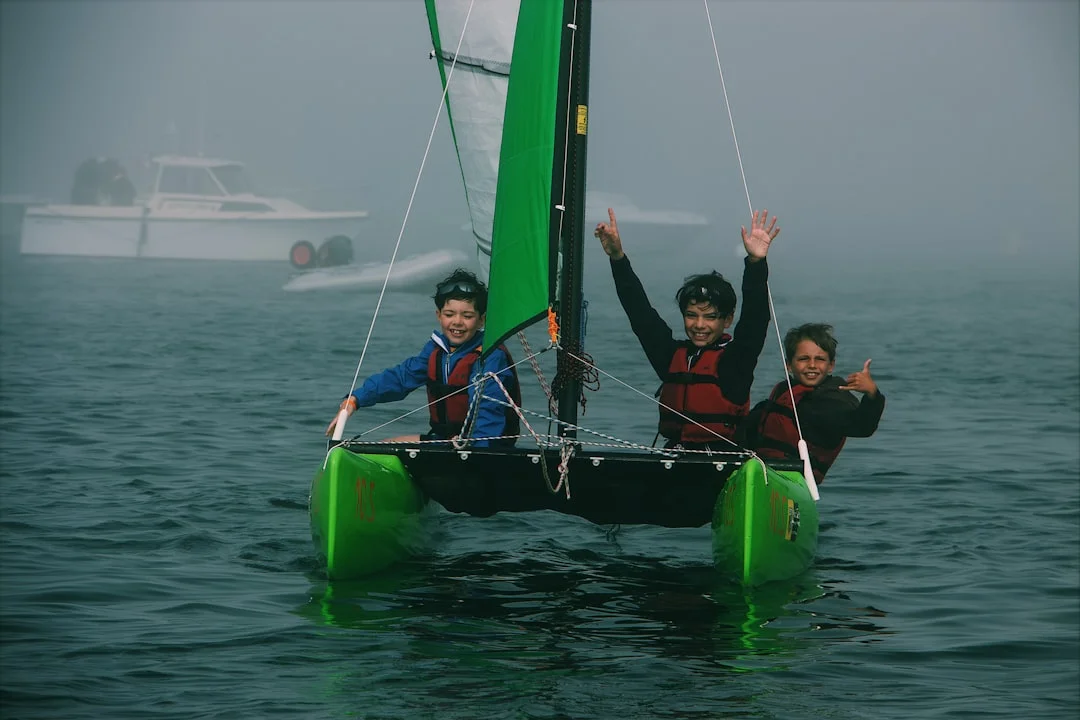
Photo by Maël BALLAND on Unsplash
That said, monohulls are not ruled out. A beamy cruiser like a Bavaria 46 or Jeanneau Sun Odyssey 440 with a centre cockpit provides reasonable security for kids, and the sailing experience is arguably richer. The boat responds more directly to wind and wave, which older children — particularly those interested in racing — tend to find more engaging.
Key Boat Features for Families
Whatever hull type you choose, look for these features:
| Feature | Why It Matters |
|---|---|
| Enclosed cockpit | High coamings or rigid bimini sides prevent falls overboard |
| Transom steps / swim platform | Easy water access for swimming and dinghy boarding |
| Jacklines and harness points | For clipping on children in rough weather or at night |
| Netting on lifelines | Prevents small children slipping under guardrails |
| Aft cabin access | Kids can reach their bunks without crossing the cockpit at night |
| Shallow draft | Anchor closer to beaches, more anchorage options |
| Autopilot | Frees a parent to supervise children while the other navigates |
If you're chartering rather than sailing your own boat, these features should drive your booking decision. A boat that looks great in photos but has open pulpits and low lifelines is a non-starter with kids under eight.
Safety Gear and Boat Modifications
No amount of supervision replaces proper safety equipment. When sailing with kids, you need age-appropriate gear and a few boat modifications that most charter companies do not provide by default.
Photo by Rafael Garcin on Unsplash
Life Jackets
Bring your own. Charter company life jackets are almost always adult-sized, poorly maintained, and uninspiring enough that kids resist wearing them. A well-fitted, auto-inflating junior PFD — Spinlock Deckvest Cento Junior or Crewsaver Crewfit — makes all the difference. For children under 15 kg, use a foam buoyancy aid rather than an inflatable; they need the passive flotation.
The rule in our family: life jackets on whenever you leave the cockpit, no exceptions, no negotiation. Kids accept rules they see adults follow, so clip on yourself too.
Lifeline Netting
Most production boats have lifeline spacing wide enough for a small child to slip through. Plastic mesh netting cable-tied to the stanchions and lifelines solves this. It takes 30 minutes to install, weighs almost nothing, and should be considered mandatory for any boat carrying children under six. You can buy purpose-made sailing netting from companies like Safety Marine or simply use strong garden mesh — the critical thing is that it is there.
Jacklines and Tethers
For overnight passages or rough weather, children should be clipped to a jackline with a short tether. A 1-metre tether is better than a 2-metre one — it keeps them in the cockpit rather than allowing them to reach the rail. Wichard and Spinlock both make tethers sized for children.
Sun Protection
Children burn faster than adults, and the reflected UV off water intensifies exposure dramatically. A rigid bimini over the cockpit is essential, not optional. Add a sun awning over the foredeck if you plan to anchor for extended periods. High-SPF reef-safe sunscreen, UV-protective rash vests, and wide-brimmed hats round out the protection.
First Aid
Your onboard first aid kit needs paediatric additions: children's paracetamol/ibuprofen, antihistamine syrup, child-dose seasickness medication (dimenhydrinate works well for kids over two), rehydration sachets, and wound closure strips. Carry a laminated card with dosages by weight — you will not want to calculate milligrams per kilogram while the boat is rolling.
Planning Your Route and Pace
Here is where most families get it wrong. They plan the same passages they would sail as a couple — 40 nm days, early starts, tight schedules — and wonder why the kids are miserable by day three.
Sailing with kids means sailing less. Aim for 15–25 nm between stops, which translates to 3–5 hours of actual sailing. That leaves the morning for a relaxed breakfast and departure, the early afternoon for arriving and anchoring, and the rest of the day for swimming, exploring, or just doing nothing.
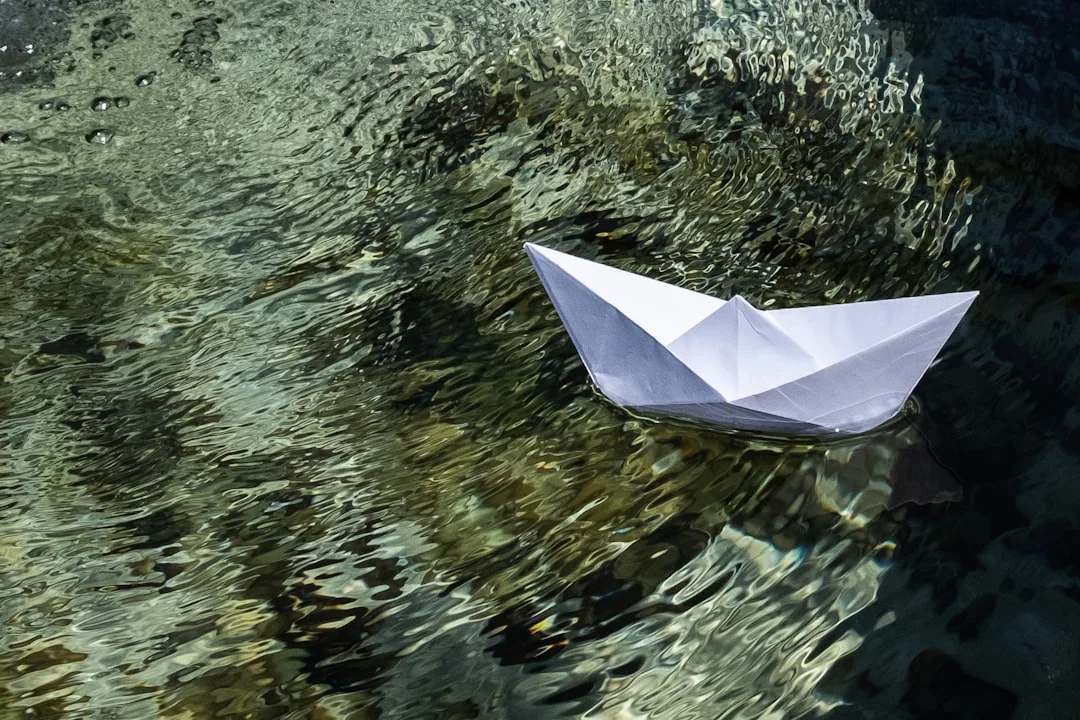
Photo by Clément Falize on Unsplash
Best Family Sailing Destinations
Some cruising grounds suit families better than others. The ideal has short passages between anchorages, sheltered waters, warm temperatures, and interesting things to see ashore.
| Destination | Typical Leg | Best For Ages | Season |
|---|---|---|---|
| Greek Ionian | 8–15 nm | All ages | May–Oct |
| Croatian coast | 10–20 nm | 5+ | Jun–Sep |
| BVI | 5–15 nm | All ages | Dec–Apr |
| Whitsundays, Australia | 10–25 nm | 8+ | Apr–Nov |
| Balearic Islands | 15–30 nm | 6+ | May–Oct |
| Thailand (Andaman) | 10–20 nm | 8+ | Nov–Apr |
The Greek Ionian is hard to beat for a first family charter. The winds are predictable (Force 3–4 thermal breeze most afternoons), the distances are short, the anchorages are well-protected, and the water is warm enough for swimming from May onward. You can calculate the exact distances between Greek islands using Breezada's distance calculator to plan realistic daily legs.
The BVI is another standout — the passages between islands rarely exceed 15 nm, the trade winds are steady, and the snorkelling is exceptional. If you're considering the Caribbean, you can check distances between ports to plan an itinerary that keeps sailing time under four hours per day.
For families with older children (10+) looking for something more adventurous, the San Blas Islands between Panama and Colombia offer short island hops through pristine coral atolls with Guna Yala communities — a genuine cultural experience that most kids find unforgettable.
Build in Rest Days
For every three sailing days, schedule one day at anchor with no passage planned. Kids need time to decompress, swim until they are exhausted, and explore a beach. Adults need time to do laundry, reprovisioning, and minor boat maintenance. These rest days often become the trip highlights — the afternoon someone catches a fish, the morning the kids build a raft out of driftwood.
Keeping Kids Engaged Aboard
Boredom is the enemy. A bored child on a boat is louder and more disruptive than a bored child anywhere else, because there is nowhere to escape. The solution is structured involvement combined with planned entertainment.
Give Them Real Jobs
Children want to feel useful. Assign age-appropriate boat tasks:
- Ages 3–5: Coiling lines (they love this), spotting boats, ringing the bell
- Ages 6–9: Helm duty with supervision, operating the windlass, reading depth sounder
- Ages 10–13: Navigation on the chart plotter, VHF radio procedure, dinghy driving
- Ages 14+: Watch-keeping, passage planning, anchor watch, sail trimming
The key word is real. Kids know when they are being given busy work. If you ask a ten-year-old to plot the course on the chart plotter and then ignore their input, they will not volunteer again. If you follow their course, they own the passage — and they are invested in the outcome.
Entertainment for Downtime
Even the most engaged young sailor needs downtime. Pack:
- Fishing gear — a simple hand line with feathers catches mackerel in most European waters
- Snorkelling equipment — properly fitted masks, not cheap tourist ones that leak
- Waterproof playing cards and compact board games
- Books — real ones, not tablets (screens in bright sunlight are useless anyway)
- A paddleboard or kayak — inflatables stow easily and provide hours of entertainment
- Art supplies — watercolour sets and a sketchbook; kids draw what they see, and they see a lot
Managing Screens
This is a personal decision, but most sailing families find that screens naturally fade into the background. When there are dolphins to watch, fish to catch, and new places to paddle to, a tablet cannot compete. That said, for overnight passages or bad weather days, having a loaded e-reader or a few downloaded films is a sensible backup. The goal is not to ban technology but to make the alternatives more compelling.
Provisioning for a Family Crew
Kids eat constantly. They eat when they are hungry, when they are bored, when they are seasick (sometimes), and when they see someone else eating. Your provisioning needs to account for this.
Staples That Work
- Pasta, rice, couscous — quick to cook, universally accepted
- Canned tuna, beans, chickpeas — protein that does not need refrigeration
- Bread mix — fresh bread from a boat oven is a morale booster for the entire crew
- Fruit — bananas, apples, and oranges store well; buy locally at each stop
- Snack bars and crackers — for the constant grazing that defines childhood at sea
- Peanut butter — calorie-dense, shelf-stable, versatile
Galley Tips
Cook one-pot meals. A boat galley in a seaway is no place for complex recipes with multiple pans. Pasta sauces, stews, and curries are your friends. Pre-chop vegetables in the morning when the boat is stable. Use non-slip mats under everything — pots, plates, chopping boards. A child-height step in the galley lets older kids help with cooking without standing on tiptoe near a stove.
If you're thinking about chartering and wondering what to bring versus what's already on the boat, our bareboat charter packing list breaks down exactly what charter companies typically provide and what you should carry aboard yourself.
Dealing with Seasickness
Children are more susceptible to motion sickness than adults, particularly between ages two and twelve. The good news: most adapt within 48 hours. The bad news: those 48 hours can be miserable.
Prevention is everything. Start medication (dimenhydrinate or meclizine, age-appropriate dose) one hour before departure, not after symptoms appear. Encourage kids to look at the horizon, stay on deck in fresh air, and avoid reading below decks while underway. Ginger biscuits genuinely help — the ginger, not the biscuit.
If a child is prone to severe seasickness, consider scopolamine patches (prescription-only, suitable for children over 12) for longer passages. For shorter legs, keeping them in the cockpit with a job to do — steering or watching for landmarks — is often enough to keep nausea at bay.
Night Sailing and Passage Making with Kids
Short answer: avoid it when you can, prepare properly when you cannot.
For coastal cruising and island-hopping, there is rarely a reason to sail at night with children aboard. Plan departures and arrivals during daylight. If a passage requires more than 8 hours, consider whether breaking it into two days with an overnight stop is possible.
When night sailing is unavoidable — repositioning legs, weather windows — establish a clear watch system. One parent sleeps while the other watches. Children stay below in their bunks, clipped to a leeboard or wedged with cushions so they cannot roll out. Brief them beforehand: if they wake up, they do not come on deck without calling a parent first.
What Age Can Kids Start Sailing?
Babies as young as six months have sailed with their families, though most experienced cruising parents suggest two years old as a practical starting point. Below two, the supervision demands are relentless and the child gets almost nothing from the experience.
At three to five, children begin to genuinely engage — they steer with help, they notice the wind, they develop sea legs. This is the golden age for building sailing into a child's identity.
From six onward, kids can take on real responsibilities and start learning the technical side. Many sailing schools accept students from age eight for dinghy courses, and by twelve, a motivated child can competently crew a 30-footer.
The honest answer is that there is no wrong age to start sailing with kids. There is only the wrong level of preparation.
Frequently Asked Questions
Is sailing with kids safe?
Yes, with proper preparation. Statistically, sailing is safer than driving — most injuries aboard are minor bumps and scrapes. The key safety measures are fitted life jackets worn at all times on deck, lifeline netting for children under six, jacklines and tethers for rough weather, and a strict cockpit rule: children do not leave the cockpit without a parent present. Thousands of families cruise full-time with children, including infants, and serious incidents are extremely rare when basic precautions are followed.
What is the best age to start sailing with kids?
Most cruising families find two years old to be the practical minimum. Below two, supervision demands are intense and the child gains little from the experience. The sweet spot for introducing sailing is between three and six — children are mobile enough to participate but still young enough to accept safety rules without resistance. That said, older kids adapt quickly too. A ten-year-old who has never been on a boat can become a competent crew member within a single week-long charter.
How do you handle homeschooling while sailing?
Many liveaboard families use a combination of structured curriculum (Khan Academy, Oak National Academy, or a registered distance-learning programme) and experiential learning. Navigation teaches mathematics, marine biology is a living classroom, and visiting new countries covers geography and languages organically. Most families dedicate 2–3 hours in the morning to formal study and let the rest of the day provide its own education. Check your home country's legal requirements — some require registered programmes and periodic assessments.
What should I pack for kids on a sailing trip?
Beyond standard clothing, prioritise: properly fitted PFDs (bring your own, do not rely on charter stock), UV-protective rash vests, reef-safe sunscreen, children's seasickness medication, snorkelling gear, fishing tackle, waterproof playing cards, and a few favourite books. Skip bulky toys — kids invent their own games aboard. For babies and toddlers, add a portable high chair that clips to the cockpit table, a sun tent for the foredeck, and plenty of rehydration sachets.
Do charter companies allow children aboard?
Yes, virtually all bareboat and skippered charter companies welcome children. Some require that at least one adult holds a recognised sailing certification (ASA 104, RYA Day Skipper, or ICC). A few companies offer family-specific boats with pre-installed netting, child PFDs, and shallow-water itineraries. Always inform the charter company of children's ages at booking — they can recommend suitable boats and routes, and often provide booster seats, child harnesses, and other equipment on request.
About the Author
Related Articles
Diesel Heater Troubleshooting Boat: No-Start & Soot Fixes
Fix diesel heater no-start and sooting on your boat. Step-by-step checks for power, fuel, air/exhaust and maintenance—read the guide now.
By Breezada Team

Docking a Catamaran: Maneuvers, Springs & Crew
Master docking a catamaran with close-quarters maneuvers, spring lines, and crew roles. Learn the steps and dock with confidence—read now.
By Breezada Team
Best Stove for a Sailboat: Propane vs Diesel vs Induction
Compare propane, diesel, and induction stoves for cruising safety, cost, and power needs—use our guide to choose the best stove for your sailboat.
By Breezada Team
Single Handed Docking Sailboat: Line Methods & Drills
Learn single handed docking sailboat line-first methods, setup, and drills for crosswind/current. Practice safely—get the step-by-step plan now.
By Breezada Team