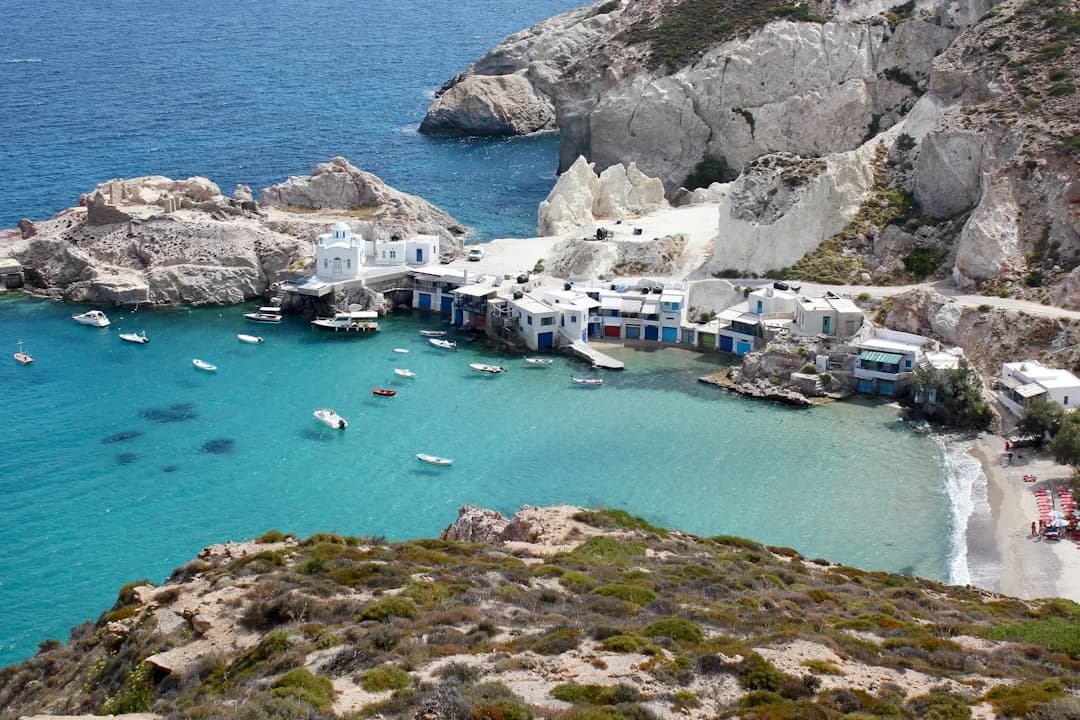
7-Day Greek Islands Sailing Route from Athens (Saronic vs Cyclades)
A Greek islands sailing itinerary 7 days long sounds simple until you add real wind, real ferry traffic, and the very real fact that most crews want lunches, swims, and showers more than 10-hour slogs. From Athens you’ve got two honest options: a Saronic Gulf sailing itinerary that keeps legs short and sheltered, or a Cyclades sailing itinerary 7 days long that’s iconic—plus a little sporty when the Meltemi decides you’ve had enough comfort.
Use Breezada’s route planning distance check between ports early in your planning to sanity-check every leg in nautical miles (nm), then build the week around what your crew can actually do at 5–6 knots without turning your holiday into a delivery.
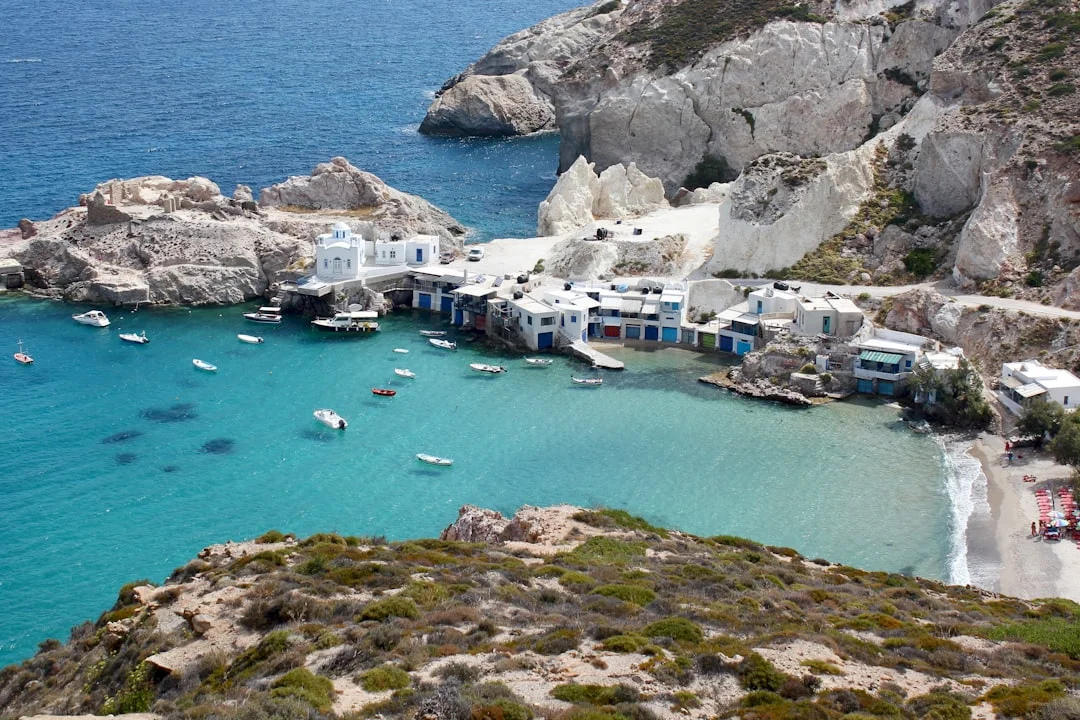
Photo by David Tip on Unsplash
Saronic vs Cyclades in 7 Days: Choose the Right Route
The clean way to choose is to treat it as a risk/comfort trade, not a “bragging rights” decision. The Saronic gives you shorter hops (12–28 nm/day) with plenty of shelter and bailout options, which is why the typical week totals ~120–170 nm. The Cyclades are more exposed and often longer-legged, commonly ~180–260 nm/week, with 20–40 nm crossings that can feel twice as long when you’re punching into a steep Aegean sea.
Crew profile, comfort, and risk (beginner vs experienced)
If your crew is mixed—say two confident sailors and four “enthusiastic passengers”—the Saronic is usually the smart call. You’ll still med-moor most nights, still handle traffic, and still get real sailing, but you’ll do it with shorter passages and calmer water. A typical charter monohull here is 36–46 ft (11–14 m) with 1.9–2.3 m draft, which fits most quays if you pay attention to the corners.
The Cyclades demand more discipline: early starts, conservative reefing, and fewer “let’s see how it goes” decisions. In June–September, the Meltemi (Etesian) commonly runs Force 5–7, and Force 8+ is not a myth invented by skippers to cancel beach plans. If your least-experienced crewmember gets green in a washing machine, keep your pride in check and stay in the Saronic.
Distance, fatigue, and the ‘time-to-open-water’ factor
Numbers-first planning keeps the week fun. At 5–6 kn, a 25 nm leg is 4–5 hours once you include sail handling, traffic avoidance, and the inevitable “why is the genoa sheet inside the lifelines” moment. The Saronic lets you arrive early, swim, and still have daylight to med-moor without the audience getting impatient.
Cyclades planning is ruled by exposure. If you leave late and hit the afternoon peak, you’ll find out why locals don’t schedule crossings for 1500 in July. Use Breezada’s check the nautical miles for your planned loop to total your loop and to spot where a “quick hop” is actually a 30–40 nm open-water commitment.
Decision trigger: when to switch to a Plan B week
Make a go/no-go framework tied to conditions and crew capability, not optimism. If the forecast is sustained F6–F7 with gusts above that, you shorten legs, choose leeward harbors, or you stop pretending and take a hold day. In a one-week charter, one well-timed rest day can save the whole trip; one stubborn crossing can ruin it.
A practical trigger I like: if you can’t name two bolt-holes within 10–15 nm of your intended track, you’re not “adventurous,” you’re just underplanned. The Cyclades reward good timing; they punish rigid itineraries.
Tip box (captain’s rule): For a 7-day Athens charter, pick the route that keeps your average day under 5 hours underway at 5–6 kn. If you need longer, you’re borrowing time from rest, mooring daylight, and crew morale.
Departure Base: Alimos vs Lavrion (Logistics and Sailing Time)
Your departure base isn’t a lifestyle choice—it’s an engineering decision about time, traffic, and how fast you can reach open water. Alimos/Kalamaki is the classic Athens hub and works perfectly for the Saronic. Lavrion is the Cyclades enabler, because it reduces your first-day exposure and cuts miles before the real Aegean starts asking questions.
From ATH airport with no traffic, plan ~35–60 minutes to Alimos and ~30–45 minutes to Lavrion, but add 30–60+ minutes in peak traffic and you’ll still be late for the charter briefing. I’ve seen more sailing plans ruined by the Attiki Odos than by the Meltemi.
Charter checkouts take time. Between inventory, briefing, and paperwork, 2–4 hours disappears quickly, especially if you’re also provisioning. That’s why I like a first-night strategy: either sleep aboard at the base, or do a very short shakedown hop (think 10–15 nm) before dark, not a heroic departure into ferry lanes.
Photo by Derek Nielsen on Unsplash
For costs, Athens marinas for a 40–45 ft boat typically run €25–€80/night, season dependent, and they’re rarely shy about charging for utilities. Shore power is standard 230V/50Hz, usually 16A (≈3.7 kW) and sometimes 32A (≈7.4 kW), so bring a proper cable and expect to need an adapter. The electrical standards you’ll see referenced on modern boats—ISO 10133 / ISO 13297 and the philosophy behind ABYC E-11—all boil down to the same dockside truth: don’t plug into a crispy pedestal with a wet connector.
“Time-to-open-water” matters most in summer. Leaving Alimos late means threading traffic, ferries, and sea breeze build before you’re clear. Leaving Lavrion gives you quicker access to routes that make a Cyclades sailing itinerary 7 days long feel achievable without turning Day 1 into a forced march.
Route Option A: 7-Day Saronic Gulf Itinerary (nm + mooring notes)
This is the “easy week” that still feels like Greece. You’ll do 12–28 nm/day, spend 2–5 hours underway at 5–6 kn, and keep the total around ~120–170 nm so you have time for swims, markets, and learning to med-moor without an audience chanting.
Use Breezada’s sea distance calculator to tweak this loop based on your exact base slip and your crew’s tolerance for early starts.
Photo by Evangelos Mpikakis on Unsplash
Day-by-day legs and timing at 5–6 kn
| Day | Leg (example) | Distance (nm) | Time @ 5.5 kn (hrs) | Notes |
|---|---|---|---|---|
| 1 | Alimos → Aegina (town or Perdika) | 15–20 | 2.7–3.6 | Late start friendly; watch ferry lanes leaving Athens |
| 2 | Aegina → Poros | 18–22 | 3.3–4.0 | Good lunch stop en route; Poros can get busy by 1600 |
| 3 | Poros → Hydra | 18–20 | 3.3–3.6 | Hydra is tight; arrive earlier for a sane med-moor |
| 4 | Hydra → Spetses (or Ermioni) | 15–20 | 2.7–3.6 | Choose based on berth space and swell direction |
| 5 | Spetses/Ermioni → Epidaurus | 20–28 | 3.6–5.1 | Epidaurus is a great “quiet night” after the hotspots |
| 6 | Epidaurus → Aegina (or Agistri) | 20–25 | 3.6–4.5 | Flexible day; swim stop and practice anchoring |
| 7 | Aegina → Alimos | 15–20 | 2.7–3.6 | Return early for fuel dock and checkout buffer |
Shelter, swell angles, and where nights are easiest
The Saronic is forgiving, but it’s not a lake. Afternoon breeze can still stack chop in channels, and ferry wakes add spice near Athens and around Aegina. The comfort advantage is that you’re rarely far from shelter; most days you can shorten the plan by 5–10 nm and still land somewhere pleasant.
Quay depths often run ~2.5–5.0 m, but shoaling near corners is real, especially when the harbor is packed and the only slot is where the depth sounder starts telling jokes. For boats drawing 1.9–2.3 m, pick the center of a quay, go slow, and don’t accept a corner berth just because someone on shore is waving.
Mooring practice progression (lazy line → anchor-to-stern)
Early in the week, aim for harbors with lazy lines where you can take your time. As confidence grows, you can handle anchor-to-stern nights if needed, but keep your ground tackle realistic for a charter boat: typically a 25–30 kg anchor with 60–80 m of 8–10 mm chain. In settled conditions, 4:1–6:1 scope is normal; in gusty weather, more scope—or a different harbor—is often the right answer.
Busy water means proper watchkeeping. COLREGs aren’t optional when a high-speed ferry is doing 30 knots and you’re doing 6; keep a lookout, make early course changes, and don’t loiter in traffic lanes because the view is nice.
Route Option B: 7-Day Cyclades Itinerary (Lavrion) + Wind Strategy
A Cyclades week is absolutely doable, but it’s a different rhythm: earlier mornings, more reefing, and fewer leisurely lunches under sail. The distances are honest—~180–260 nm/week—and the Meltemi is the metronome, commonly Force 5–7 in June–September, with occasional Force 8+ episodes that will make you appreciate good harbor geometry.
Lavrion is the practical base because it reduces initial miles and gets you positioned for crossings before the afternoon breeze builds. Departures 0700–0900 are not “keen”; they’re how you avoid arriving tired at a tight quay when the wind is peaking.
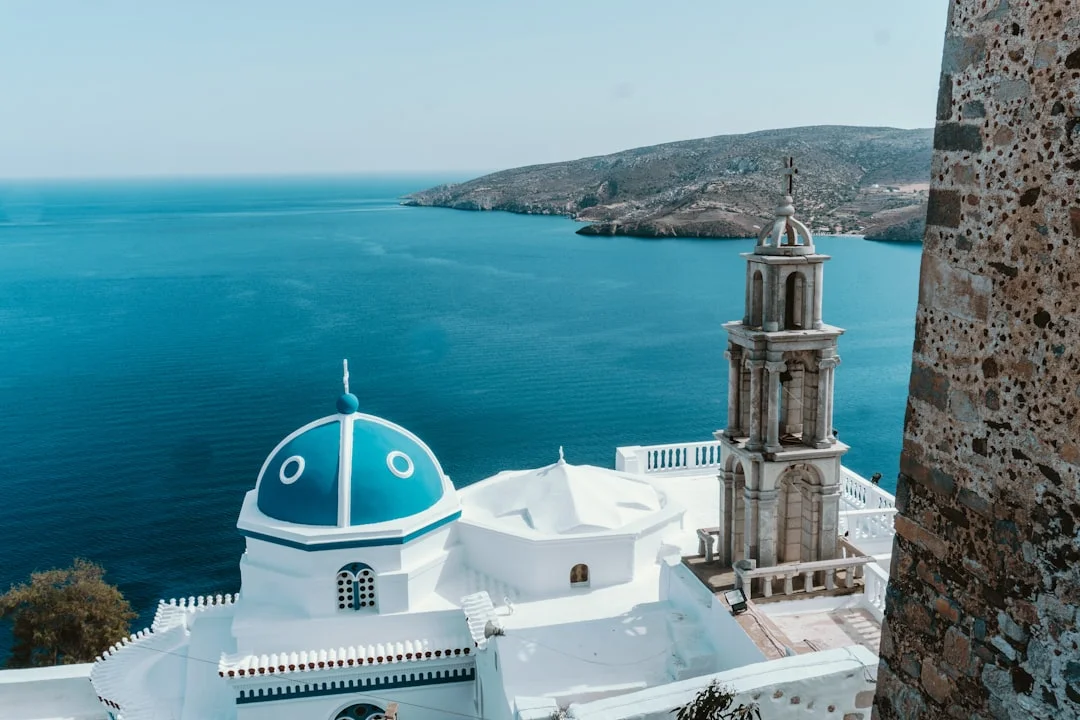
Photo by Johnny Africa on Unsplash
Core loop options (Mykonos/Paros/Naxos) vs conservative alternatives
Here are two realistic loops: one “flagship” plan if conditions cooperate, and one conservative plan that keeps you nearer shelter and shorter hops.
| Loop style | Example islands | Typical daily legs (nm) | Weekly total (nm) | Best when Meltemi is… |
|---|---|---|---|---|
| Flagship | Lavrion → Mykonos → Paros → Naxos → Syros → Lavrion | 25–40 | 210–260 | F4–F6, crew happy upwind |
| Conservative | Lavrion → Kythnos → Syros (or Kea) → Serifos (optional) → Kythnos/Kea → Lavrion | 15–30 | 180–220 | F6–F7, gusty, steep sea |
| Minimum-risk | Lavrion → Kea → Kythnos → Kea → Lavrion (with day sails) | 10–25 | 120–180 | F7+ or mixed crew fatigue |
Early-departure rule and Aegean acceleration zones
The Aegean has “acceleration zones” where wind funnels between islands and around headlands. In practice, a forecast 20–25 knots can mean 30+ knot bullets off a cape, plus short-period seas that slow you below 5 kn even with engine assist. That’s why “20 nm” can take 5 hours when you expected 3.5, and why you plan crossings like you’ll be late.
Reef early, and do it before the boat tells you. If you’re seeing sustained F6 and you’re still full main because it “feels fine,” you’re just delaying the reefing until it’s sweaty, loud, and takes twice as long. Cyclades sailing rewards boring competence.
Plan B harbors and ‘hold day’ logic in Force 7+
A smart Cyclades plan includes at least one hold day. If the forecast is sustained F7 with higher gusts, your best seamanship may be staying put, topping up water, and letting the gusts waste themselves on someone else’s itinerary.
Bolt-holes should be leeward and aligned with the prevailing northerlies, avoiding wide-open north-facing bays when it’s blowing. Don’t romanticize an exposed anchorage because it looks good on Instagram; you’ll be awake at 0300 re-setting the anchor while everyone else discovers new ways to complain.
Mooring in Greece: Med-Moor, Lazy Lines, Anchoring, Depths
If you haven’t med-moored before, Greece will teach you—sometimes with an audience, sometimes with a crosswind, often with both. Expect stern-to mooring with either a lazy line (your bow secured to a permanent ground line) or anchor-to-stern. Spacing can be tight, often 1.0–2.0 m of fendered clearance in busy ports, so your fender game matters more than your vocabulary.
Quay depths are commonly ~2.5–5.0 m, with localized shoals near corners and ramps. With 1.9–2.3 m draft, you plan for errors: depth sounders lag, prop wash kicks up mud, and the “helpful” dockhand may be standing exactly where the shallow patch is.
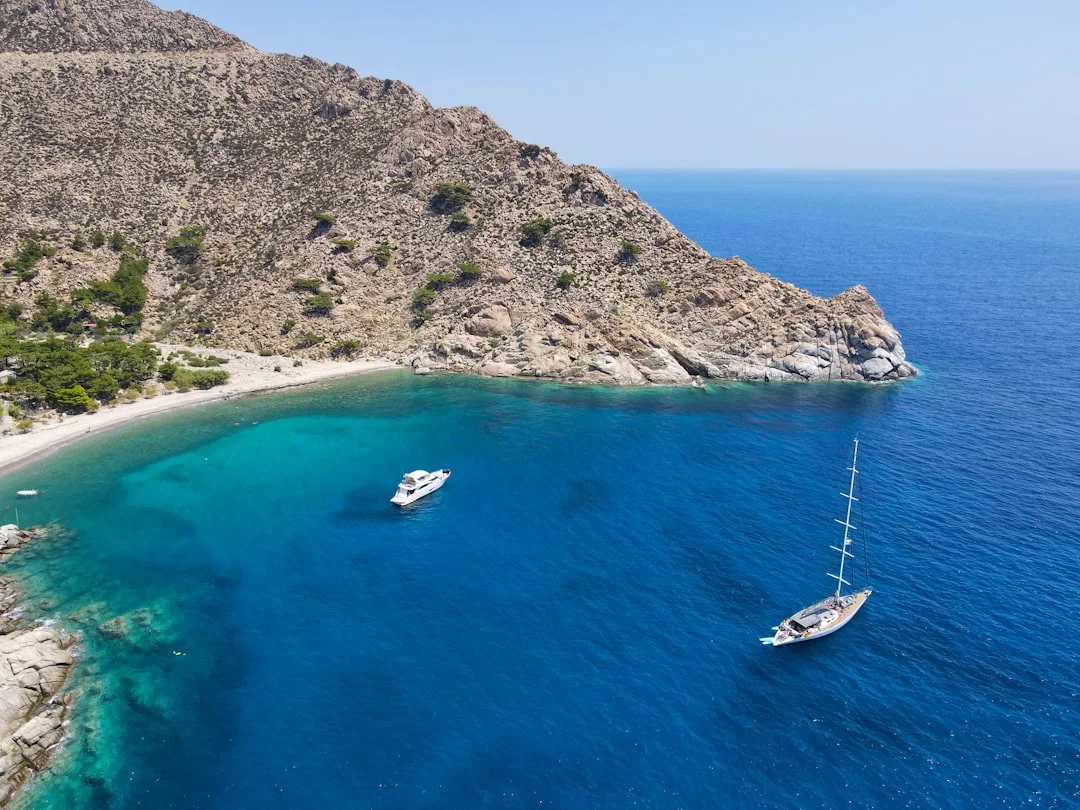
Photo by Dimitris Kiriakakis on Unsplash
Stern-to geometry, fendering, and line handling
Approach slowly with a plan for stopping distance. On a 40–45 ft monohull, you want the stern about 0.5–1.0 m off the quay at rest, close enough for a passerelle but not so close that a wake bangs your rudder. Rig at least 6 fenders, with two low ones ready for awkward quay edges, and have two stern lines pre-led outside everything.
Give crew simple jobs with simple words. One person on each stern line, one on the boat hook, one floating as a safety spotter, and nobody improvising heroics near the prop. Dry humor is allowed; dry instructions are mandatory.
Lazy line pickup vs anchor-to-stern technique
With a lazy line, your goal is to secure stern lines first so you can hold station, then pick up the lazy line cleanly and keep it out of the prop. Crossed lazy lines happen when boats drift sideways during pickup, and fouled props happen when someone drops the line in the water and hopes the universe is kind.
Anchor-to-stern is a different beast. You drop in the fairway, pay out enough chain for the depth—say 12 m with at least 4:1 scope in calm weather—and back down as you approach the quay. In gusty Meltemi, you may want 6:1+, plus a snubber to reduce shock loads and keep the boat from snatching.
Power, water, and onboard systems at the quay
Shore power is usually 230V/50Hz, typically 16A (≈3.7 kW) and sometimes 32A (≈7.4 kW). Plug in with dry hands, inspect the pedestal, and don’t run high loads (kettle, water heater, aircon) simultaneously on a tired 16A connection. The intent behind ISO 10133/13297 and the good habits echoed in ABYC E-11 is simple: keep AC faults from becoming onboard fires.
Water is often available but not always on your schedule. Many boats carry 200–400 L, and at 10–20 L/person/day, a crew of 6–8 refills every 2–4 days without a watermaker. Also: MARPOL Annex V means no plastics overboard, and local rules expect holding tanks used in harbors and bathing areas, even if pump-out options are limited.
Weather, Forecasting, and Go/No-Go Thresholds for 1 Week
Summer in Greece is predictable in the way a strong animal is predictable: it usually behaves, but it’s still stronger than you. The Meltemi/Etesian typically runs June–September, often F5–F7, and it tends to be lighter early, building through the afternoon. That daily pattern is why smart skippers depart 0700–0900 in the Cyclades and keep Saronic legs short enough that timing stays flexible.
Forecast products are only useful if you translate them into actions. “North 25 knots” should immediately become: reefing plan, departure time, route angle, and harbor choice. If your plan requires arriving at 1800 to a busy harbor with 25–30 knots on the stern, you’re not planning; you’re bargaining.
Photo by Denisa on Unsplash
A conservative go/no-go threshold for many charter monohulls is less about the boat and more about the crew. A CE/ISO stability concept like ISO 12217 reminds us that loading, sail plan, and sea state matter; a 40-footer is capable, but a tired crew makes bad calls. If you’re seeing sustained F7 and you know you’ll be upwind in short seas, shorten the hop or stay put, especially on a schedule that punishes delays.
Don’t forget traffic. The Saronic has dense ferry routes, and the Cyclades add high-speed craft with huge closing speeds. Keep a proper COLREGs lookout, use AIS if fitted, call on VHF Ch.16 for distress/calling, and check local working channels posted by harbors. Wakes and spray also matter for comfort; even at 24–27°C water temps around Athens, a windy Cyclades day can chill people into fatigue faster than they expect.
Costs, Fuel/Water Budgets, Fees, and Paperwork Reality Check
Greek charters are rarely cheap once you add the real-world extras, and the worst time to discover your budget is on Day 6 at the fuel dock. For a 38–45 ft monohull, bareboat weekly rates commonly run €2,200–€6,500/week depending on season, with July/August usually at the upper end. Skippers run about €180–€250/day + meals, and hostesses €150–€220/day + meals, which adds up fast but can also save a holiday if nobody actually wants to park stern-to in a crosswind.
Paperwork varies by boat and base, so ask your charter company what applies. You’ll hear terms like DEKPA and TEPAI in conversations; the key is confirming what’s handled by the operator versus what you must carry or pay. Keep copies of passports, charter contract, and any radio paperwork handy, because “we’ll find it later” is a classic dockside time-waster.
Weekly budget structure (charter + mandatory extras + variable spend)
| Cost item (typical) | Range | Notes |
|---|---|---|
| Bareboat charter (38–45 ft, 7 days) | €2,200–€6,500 | Season drives most of the spread |
| Security deposit | €2,000–€4,000 | Refundable if you return the boat intact |
| Damage waiver (optional alternative) | €250–€600/week | Fleet dependent; read exclusions carefully |
| Skipper | €180–€250/day + meals | Often worth it for Cyclades or mixed crews |
| Hostess/cook | €150–€220/day + meals | Reduces workload; doesn’t replace seamanship |
Fuel and water planning with example calculations
Fuel first: a 40–55 hp diesel typically burns ~3–6 L/hr at 5–6 kn. If you motor-sail 10–20 hours/week, that’s ~30–120 L, usually €60–€250/week depending on pump prices and how hard you lean on the throttle into chop. Add a long no-wind leg and your “we barely motored” story changes quickly—so it helps to estimate your fuel needs based on the voyage distance before you leave.
Water next: with 200–400 L tanks and a crew of 6–8, targeting 10–20 L/person/day means you’re budgeting 60–160 L/day. That’s why you refill every 2–4 days without a watermaker, and why the “infinite shower” person gets a short briefing from the skipper. Greek quays might charge €3–€15 per fill or €0.50–€2.00/m³ where metered.
Harbor/marina fees and utility charges
| Berthing type (40–45 ft) | Typical nightly cost | Utilities (common add-ons) |
|---|---|---|
| Athens marinas (Alimos/Lavrion area) | €25–€80/night | Electric sometimes extra; water often available |
| Island town quay/municipal harbor | €0–€25/night | Water €3–€15/fill; electric €5–€15/night where charged |
| Private marina (island, if available) | €50–€150+/night | More consistent power/water; can be windy berths |
Town quays can be cheap, but “cheap” isn’t the same as “free.” Budget for the occasional municipal fee, for utilities, and for the night you pay extra because it’s August and every skipper on the coast had the same idea.
Frequently Asked Questions
For a 40–45 ft monohull averaging 5.5 kn, how do you convert a 28 nm leg into a departure time that avoids afternoon Meltemi (including a 30–45 min mooring buffer)?
At 5.5 kn, 28 nm ÷ 5.5 = ~5.1 hours underway, then add 0.5–0.75 hours for approach, traffic, and docking, so call it ~5.6–5.9 hours total. To be secured before the typical afternoon peak (often noticeable by 1300–1500 in summer), you want to arrive by 1230–1300, which puts departure around 0630–0730. If the leg is upwind in short seas, assume you’ll average closer to 4.5–5.0 kn and leave earlier rather than “making it up later.”
When Med-mooring with a lazy line in 20–30 kt gusts, what is the safest sequence for securing stern lines vs taking up the lazy line to prevent prop fouling?
Come in slow, stop the boat with the stern where you want it, and get both stern lines on and lightly tensioned first so you can hold position without drifting sideways. Only then pick up the lazy line with a boat hook, keeping it out of the water and forward of the beam, and walk it to the bow cleat while someone watches the line’s lead. Keep the engine in neutral once the lazy line is near the stern quarter, because a moment of prop wash is how lazy lines become very expensive rope spaghetti.
With a 1.9–2.3 m draft charter yacht, what minimum under-keel clearance margin should you target on town quays that read 2.5–3.0 m, considering squat and wave action?
In tight harbors, I like at least 0.7 m under-keel clearance as a practical minimum when you’re maneuvering, especially if ferry wake rolls in. If the quay reads 2.5 m and you draw 2.3 m, that’s only 0.2 m—too tight once you account for sounder error, mud humps, and wave action. If you must use a shallow spot briefly, do it dead slow, centered, and be ready to back out; better is choosing a different section of quay or a different harbor.
How do you estimate weekly diesel burn if you motor-sail 2 hours/day at 1,800–2,200 rpm with a 40–55 hp engine (using 3–6 L/hr) and add one 6-hour no-wind delivery leg?
Motor-sailing 2 hours/day for 7 days = 14 hours, plus a 6-hour delivery leg equals 20 engine hours. At 3–6 L/hr, that’s 60–120 L/week. In practice, if you’re often pushing into chop at 2,200 rpm, plan toward the top end, and keep a reserve so you’re not sweating the last-day fuel dock queue.
What scope and snubber setup is appropriate for a 25–30 kg anchor with 60–80 m chain when anchoring bow-to in 12–18 m with Meltemi gusts (and when is it smarter to leave and re-anchor)?
In 12–18 m with gusty Meltemi, a starting point is 6:1 scope if you have swinging room, so roughly 72–108 m of rode for 12–18 m depth (including bow height and any tide effect). With 60–80 m chain, you may be chain-limited at the deeper end, which is your cue to pick a shallower spot or a more sheltered bay, not to “hope it holds.” Add a snubber (nylon line) to take shock loads and reduce yawing, and back down firmly to set; if you’re dragging, veering more chain doesn’t help when you’re already in a bad lee with bullets—leave and re-anchor somewhere with better protection and room.
If you want one simple selection rule to close the chart table: choose the Saronic for shorter hops and flexible sightseeing, or choose the Cyclades for the iconic islands only if your crew can support early starts, reefing discipline, and real Plan B decisions when the Meltemi hits F6–F8. The week works when you respect three pillars: distance discipline (nm/day), mooring competence (lazy lines/anchor-to-stern), and weather timing (morning crossings). Use Breezada’s sea distance calculator to finalize legs, then confirm base logistics (Alimos vs Lavrion) and budget realistically for marinas, fuel, and utilities before you cast off.
About the Author
Related Articles
Sailing Galapagos Islands: Permits, Costs & Rules
Understand sailing Galapagos Islands permits, costs, and rules—plus clear-in steps, routes, and biosecurity. Plan your yacht trip now.
By Breezada Team
La Maddalena Sailing Itinerary: Quiet 7-Day Sardinia
Plan a La Maddalena sailing itinerary for a quiet 7-day Sardinia escape—routes, anchorages, rules and costs. Get the full day-by-day plan.
By Breezada Team
Amalfi Coast Sailing Itinerary: Naples to Salerno Guide
Plan an Amalfi Coast sailing itinerary from Naples to Salerno with 7–10 day routes, anchorages, moorings & costs. Get the full plan now.
By Breezada Team
Canal du Midi Boat Trip: Practical Guide to the Med
Plan a canal du midi boat trip to the Med with routes, locks, timing & tips. Read the practical guide and start planning your cruise today!
By Breezada Team