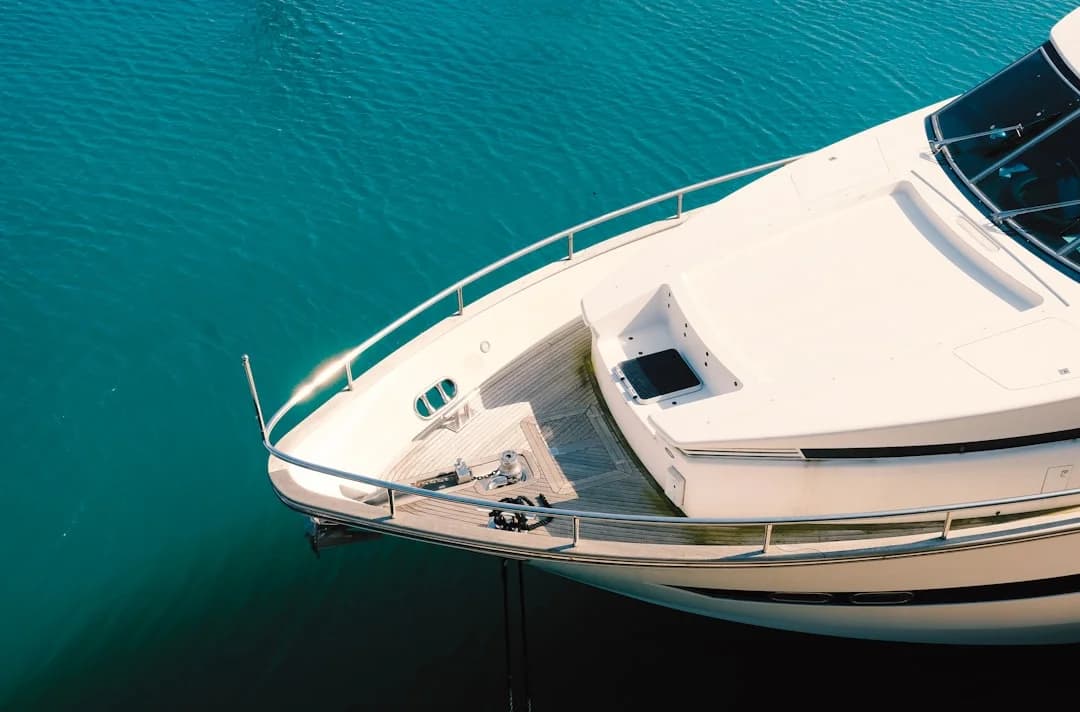
Bareboat Charter Checklist: Handover Inspection Guide (Protect Your Deposit)
A bareboat charter checklist isn’t about being picky. It’s about proving what was wrong before you left the dock, and confirming the boat can motor, steer, communicate, and anchor when the day goes sideways. Most charter damage deposits sit in the $2,000–$10,000+ range, and in the Med it’s often €3,000–€6,000 for 40–50 foot monohulls, with €6,000–€10,000 not unusual for bigger cats. That’s real money to “trust the process” with vague notes and blurry photos.
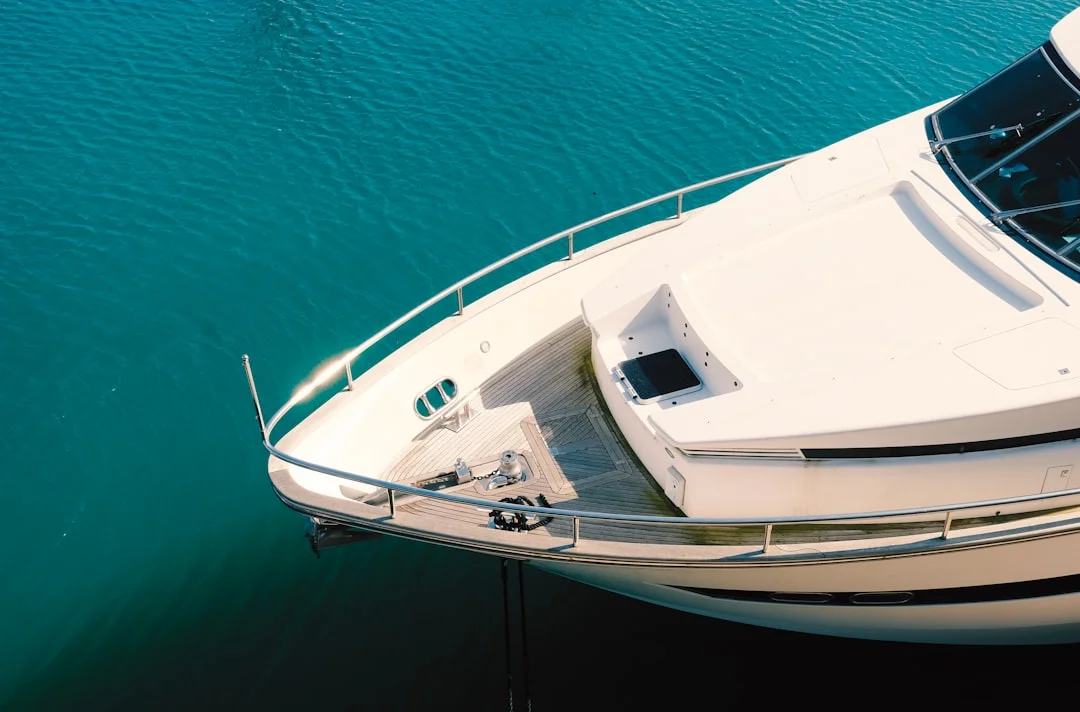
Photo by Luke Moss on Unsplash
Before You Arrive: Documents, Deposit, Photos, Time-Box Plan
Paperwork you must see (and what to write on it)
Before you touch a winch handle, confirm the charter base has a charter acceptance form / inventory sheet that will be signed by base staff and skipper. If they don’t have a form, you make one on your phone and get initials on each page; no signature, no leverage. I write the boat name, date, and the exact handover start time (down to the minute), because later arguments always turn into “when did you tell us?”
Record the security deposit amount and method: pre-auth hold vs. charge, and whether you paid a damage waiver. Waivers commonly run $25–$75/day (€20–€60/day) and can still carry a non-refundable deductible around €250–€500, which surprises people every season. Put those terms in your notes next to the booking number so you’re not searching inboxes at the dock.
Deposit risk control: evidence, wording, and timestamps
The deposit doesn’t get protected by “we mentioned it.” It gets protected by unambiguous language on the check-in form: “pre-existing,” “non-functional at handover,” “documented on check-in form item #__,” “base notified at :.” Those phrases matter because they establish condition, functionality, and notification timing in one line.
Set a photo system that matches your deficiency list. Start with wide baseline shots (bow, stern, both quarters, both topsides, cockpit, mast base), then take close-ups of every defect with a finger or winch handle for scale. Use a naming convention like 2026-06-BoatName_Item12_StbdStanchionBase.jpg, so your photos line up with the form item numbers.
A realistic 60-minute dockside workflow + sea-trial add-on
Dockside handovers can take 1–3 hours, but attention fades after the first hour and people start talking about dinner reservations. Time-box it: 0–15 minutes paperwork/deposit/photos, 15–35 hull/deck/rig/sails, 35–50 engine/drive checks, 50–60 safety gear and tender. If something is safety- or mission-critical, you stop the tour and document it while staff is still standing there.
Your “red lines” should be written down before you arrive: propulsion, steering, seacocks, nav lights, VHF, and ground tackle. If any of those fail, delaying departure or requesting another boat is reasonable, not dramatic. Add an optional 15–45 minute sea trial to load-test sails, furlers, autopilot, and verify engine cooling under rpm.
Practical tip: Treat handover like a pre-flight check for sailboats: verify propulsion, steering, communications, anchoring first. Comfort items come last, right before you stop caring.
Hull, Deck, Rig, and Sails: Inspect, Then Load-Test
Hull/deck walkaround: high-cost damage and water ingress clues
Start with a slow perimeter lap. Look at topsides, toe-rail, stanchion bases, gelcoat chips, rudder and keel seam lines, transom corners, and the swim platform—because those are where “mystery impacts” get blamed on the last skipper. Pay attention to hairline cracks radiating from hardware; that’s often movement, not cosmetics, and it can mean wet core if ignored.
Check every hatch and portlight you can reach and look for water staining inside. A little salt crust around a port isn’t the end of the world; a wet headliner or swollen veneer is a different conversation. Photograph anything that suggests water ingress, because deposits get eaten fast when a base claims “you caused the leak.”
Rigging and deck hardware checks (ABYC H-22 touchpoints)
ABYC H-22 (Lifelines) is a good mental checklist even outside the U.S. Grab stanchions and push—there should be no wobble at the base, no creaking, no cracked bedding. Inspect terminals and swages for corrosion “tea stains,” broken strands, and sharp meat hooks that love to find forearms.
Run every winch you’ll use. Many 38–45 foot charter boats carry 40–50 size self-tailing primaries, and replacement can run $900–$2,500 per winch before labor, so bases care about winch abuse. Verify the winch handles fit (often 8-point) and that at least two handles are onboard, not one handle playing musical chairs between pedestals.
Sail inventory and sail condition check under tension
Most charter monos show up with a fully-battened main and a furling genoa, with mains around 35–55 m² and genoas 30–55 m² on 38–42 foot boats. Cats in the 40–45 foot range often carry 60–80 m² mains and 40–60 m² headsails, so loads and wear show sooner. Confirm the sail plan from bag labels or the spec sheet, not from memory or brochure claims.
Then load-test: hoist the main, put tension on halyard and outhaul, and check reef points (often 2–3 reefs) for clean runs and intact cringles. Roll and unroll the headsail under moderate sheet load and watch for halyard wrap, override, and a furler drum that only behaves when unloaded. Charter-stopping triggers are simple: cannot reef at dock, furler jams under load, broken batten, or a leech tear that’s propagating.
Engine, Transmission, Cooling, and Fuel: 10-Min Checks + Trial
Engine bay: leaks, belts, filters, seacocks (ABYC H-33 / H-27)
Open the engine box early, while the base staff is still fresh and cooperative. Look first for fluid evidence: oil sheen, diesel smell, coolant staining, and loose absorbent pads. You’re not diagnosing; you’re documenting “dry” versus “not dry,” and that’s often the difference between a shrug and a repair.
ABYC H-27 (seacocks/thru-hulls) is the standard mindset here: locate the raw-water intake seacock, move the handle, and confirm it’s operable. Inspect hoses below the waterline and look for sound clamps; best practice is double clamps on critical connections, and you want to see clamps that aren’t rusted into modern art. If you can’t move a seacock by hand, note it—because you’ll need it in a real blockage.
Start-up and shifting: what ‘normal’ looks like on charter diesels
Record engine hours on the acceptance form. Typical charter auxiliaries on 35–45 foot monohulls are 20–55 hp, while cats commonly run twin 30–57 hp engines, and “it’s a charter” is not a valid excuse for missing documentation. Ask when oil/filters and impeller were last done; many operators use 100–250 hours for oil/filter, 200–400 hours for fuel filters, and impeller annually or around 200 hours, depending on engine.
If possible, start cold. At key-on, you want a proper alarm self-test (lights and ideally a beeper), stable idle around 800–1,000 rpm, and no unusual knocking. The big one: strong raw-water flow at the exhaust within 10–30 seconds; a weak spit can mean a clogged strainer, impeller issues, or a tired hose.
Sea-trial verification: cooling, charging, and prop/drive vibration
At dock lines-off, engage ahead and astern at idle and then at modest rpm, feeling for smooth engagement and noting expected prop walk. Under load, watch coolant temperature stabilize—many diesels run around 80–90°C, with overheat alarms often near 95–105°C. If the gauge climbs steadily while flow looks weak, you’re not “being cautious” by stopping; you’re preventing a ruined afternoon and a base blaming you for cooked rubber.
Check charging once the engine is at cruise rpm. A healthy alternator often shows a clear rise above resting battery voltage, and you’ll usually see 60–120 A alternators on production boats, depending on model. Also listen: belt squeal, grinding bearings, or rattling mounts are problems that get worse the moment you hit chop.
Electrical, Electronics, and Navigation: Batteries, VHF/DSC, Autopilot
12V/24V reality check: house bank health and charging sources (ABYC E-11)
Most charter boats are 12 V DC, though some larger cats run 24 V, so confirm system voltage before you plug in assumptions. Find battery switches, main fuses, and any emergency parallel function, and make sure you can operate them without dislocating a shoulder. ABYC E-11 is the guiding principle: circuits protected, cables supported, and labeling that tells you what will actually shut off.
Record house voltage at rest and under load. Typical house banks are 200–600 Ah at 12 V (about 2.4–7.2 kWh), and a common “weak bank” symptom is under about 12.1 V at rest for lead-acid, roughly 50% SOC. To avoid false readings, shut off big loads for 10–15 minutes, then measure, then turn on fridge + lights + instruments and watch the sag.
Shore power should match the inlet rating plate: commonly 230 V/16 A in the EU and Med, or 120 V/30 A in the U.S. Confirm the correct cord and adapters are onboard, and test RCD/GFCI behavior if accessible. If the inlet is scorched or the plug is loose, document it; overheated shore power gear fails at night, loudly.
VHF/DSC, AIS, and nav lights: functional tests tied to COLREGs
A fixed VHF is typically 25 W, and handheld backups are usually 5–6 W. Verify the radio receives clearly on Ch. 16, that transmit works (using local-approved methods), and that DSC/MMSI is correctly programmed for the boat and region. A VHF with blank DSC settings is basically a loudspeaker from the 1990s.
Cycle navigation lights with COLREGs in mind: sidelights, stern, steaming light, and anchor light, and confirm the correct configuration for mono versus cat. If bulbs are replaceable, ask where spares and fuses live; if they’re sealed LED units, you want proof they work now. “We’ll look at it later” becomes “why did you sail at night with no light” surprisingly fast.
Autopilot and instruments: failure points to catch before departure
Autopilot failures ruin charters because they don’t feel urgent until you’re short-handed in breeze. Engage it during sea trial at slow speed and confirm course-hold, response, and that the drive doesn’t trip the breaker. A typical pilot might draw 2–8 A average but more in a seaway, so weak batteries plus a hunting pilot becomes an argument with physics.
Check depth, speed, wind, and GPS position against reality. If depth reads zero at the dock, that might be normal depending on transducer placement, but it should behave once you’re in deeper water. Any instrument that’s dead gets written down immediately, because “it was like that” is not a defense without ink.
Safety Gear and Compliance: PFDs, Liferaft, Flares, Fire, LPG
PFDs and harnesses: count, buoyancy class, serviceability (ISO 12402 / USCG 33 CFR 175)
Count PFDs against berths plus spares. Many fleets provide one adult PFD per berth and 1–2 extras, but don’t assume; physically count and inspect. ISO 12402 markings commonly show 100 N or 150 N on charter gear, and you want whistles and reflective elements present, not “somewhere.”
If they’re inflatables, check cylinder and bobbin dates and overall condition. Rearm kits typically cost $20–$45, and a replacement inflatable PFD can be $120–$350, so bases sometimes leave marginal gear aboard until somebody complains. In the U.S., USCG 33 CFR 175 governs carriage expectations; elsewhere, local rules plus operator policy apply, but your responsibility as skipper stays the same.
Liferaft, pyrotechnics, EPIRB/PLB: dates, seals, certificates (ISO 9650)
If there’s a liferaft, treat it like a critical system, not luggage. Check capacity (often 4–12 person rafts in charter service), stowage, and whether you can actually launch it without untying a knot puzzle. ISO 9650 rafts typically require service every 1–3 years; photograph the service certificate and the raft’s label.
Flares and pyrotechnics are region-specific and sometimes controlled tightly by the operator, especially in the EU/Med. In the U.S., operators often carry 3–6 day/night visual distress signals, and replacement kits run roughly $40–$150. Photograph expiry dates and storage location, because “they were expired” becomes your problem when an incident report is written.
EPIRBs run $450–$1,200 and PLBs $280–$450, and many bareboats won’t carry them unless you rent one. If you do have one aboard, photograph registration labels and battery expiry. If you don’t, decide before departure whether your cruising ground warrants bringing your own.
Fire, CO/smoke, and LPG system checks (ABYC A-1)
Locate extinguishers and confirm charge and service tags. Many charter boats carry 2–4 dry powder units (often 1–2 kg each), and an engine compartment may have a fixed system; if so, verify labeling and access. Check smoke/CO alarms where fitted, especially on cats with generators or enclosed sleeping spaces.
Test bilge pumps: electric and manual, plus any high-water alarm. Find the lowest pickup and make sure it isn’t clogged with zip ties and yesterday’s sunscreen cap. A dead bilge pump is a “no” item, because it turns minor leaks into real stories.
For LPG, ABYC A-1 is the gold standard: lockers should drain overboard and be vapor-tight to the interior. Check the bottle size—often 2–3 kg small EU bottles or 10–13 kg larger—and confirm spare quantity, regulator condition, and that the solenoid shutoff works. If there’s a gas sniffer, test it; if there isn’t, don’t ignore the smell and call it “galley vibes.”
Ground Tackle, Mooring Gear, and Route Planning Reality Checks
Windlass/anchor system tests at the dock (without damaging gear)
Operate the windlass both directions and verify breaker, foot switches, and any remote. Many mid-size charter boats run windlasses around 700–1,200 W, and they’ll happily pretend they’re healthy until they’re lifting a muddy anchor in a crosswind. Lower and raise 5–10 m of chain to confirm alignment and that the chain self-stows without piling into a metal bird’s nest.
Check the clutch behavior without free-falling the anchor. You’re verifying control, not practicing anchor-baseball. If chain jumps the gypsy, the wrong chain size might be installed, and that becomes a real problem at 0200.
Chain/rode length, markings, and snubber/bridle setup
Physically confirm chain length and diameter. Typical fit-outs are 50–80 m of 8 mm on 35–45 foot monohulls, and 60–100 m of 10 mm on larger boats and cats, but I’ve been handed “about 50” more than once. Chain costs roughly $4–$10 per meter, so short chain is a silent budget cut some fleets make.
Look for chain markings every 10 m (paint, tags, or colored links) and confirm they’re readable. Verify there’s a chain stopper, and that it’s actually used to take load off the windlass. Then find the snubber (mono) or bridle (cat), confirm chafe gear exists, and practice rigging it so your first anchoring isn’t improvised with a dockline and optimism.
Route planning + sea distance calculation: anchoring drives itinerary
Anchoring readiness should shape your itinerary, not the other way around. If chain is borderline, the windlass is weak, or the snubber is missing, pick anchorages with more room, better holding, and less “must-anchor-close” pressure. Your best plan is the one that doesn’t require heroics at sunset.
Do a simple sea-distance check before departure: chartplotter route + pilot book notes + conservative speed, then add time for set/clear of harbor. Use this tool to calculate the distance between ports so you can sanity-check legs and avoid the classic mistake of arriving after dark with everyone tired and the anchor gear working overtime. Use it again when you adjust plans for weather or slower-than-advertised hull speed. For tropical island-hopping where short hops cluster around fragile anchorages, our Phuket-to-Langkawi route guide shows how to work daily distances around afternoon squalls and national park fee schedules.
Practical tip: If you wouldn’t bet your deposit on the windlass lifting 30–40 m of chain in chop, don’t build a route that requires it every night.
Dinghy, Outboard, Plumbing, and Heads: High-Failure Items to Prove
Dinghy/outboard check charter: cold start, cooling, spares
Treat the tender like safety equipment, because it often is. A typical package is a 2.7–3.4 m inflatable with a 2.5–10 hp outboard and a 12–25 L fuel tank, and any one of those components can ruin your shore access. Inspect tubes, seams, valves, floor, oars, pump, patch kit, and confirm a painter of at least 10–15 m is onboard.
Start the outboard cold if you can—warm starts hide sins. Verify kill switch lanyard, cooling telltale, and clean shifting F/N/R, and make sure the fuel line and venting are correct. Ask about spares like a shear pin (if applicable), spark plug wrench, and the right prop nut hardware, because “we don’t have that” becomes “you can’t use the dinghy.”
Freshwater, hot water, and tank gauges: verify, don’t trust
Water capacity is usually 200–500 L on monohulls and 600–1,000 L on cats, and typical use is 15–30 L/person/day depending on showers and dishes. Run the freshwater pump and listen for short-cycling, which often signals an accumulator problem or a leak. Open each faucet and shower, check drains, and look under sinks for drips.
Do not trust tank gauges. Cross-check with a known fill state or a visual inspection if there’s a sight tube, and document dead senders immediately. “Gauge reads full” is not a plan when the next water dock is 18 miles away and you’re washing salt off a toddler.
Heads/holding tanks and seacocks: rules, odors, and operability
Cycle each head: intake, flush, and discharge. Production charter boats often have holding tanks around 40–120 L per head, and clogs appear when guests discover “marine toilets are different” after you’ve left the marina. Confirm Y-valves are positioned correctly for local rules; in U.S. No Discharge Zones, overboard discharge must be secured (locked or handle removed).
Operate the relevant seacocks so you know which ones are stiff or mislabeled. A head seacock that won’t move is a problem you want in daylight with staff nearby, not at midnight with a full bowl and an audience. Also note odor control: a boat that already smells like a head problem is usually a head problem.
Downloadable Checklist + Deficiency List Punchlist + Sign-Off Process
What the downloadable PDF/Sheet should include (fields that protect you)
A useful yacht charter inspection checklist is not a generic list of “check engine” boxes. Your printable PDF and Google Sheet should have fields for engine hour meter, battery voltage at rest, shore power rating (230V/16A or 120V/30A), liferaft service date, flare expiry, chain length/diameter, and VHF DSC/MMSI status. Those are the items that turn subjective arguments into objective entries.
Build an escalation tier into the deficiency list punchlist: safety-critical, mission-critical, comfort-only, and cosmetic. It keeps the conversation calm and makes it harder for a base to dismiss a steering or cooling issue as “just a little thing.” Add pass/fail triggers like “cannot reef at dock” or “nav lights non-functional,” and you’ll avoid negotiating against yourself.
Photo log and file naming that matches the acceptance form
Your checklist should include a photo log table: photo ID, location, description, impact, agreed remedy, and staff initials. The secret is consistency: if defect is “Item 14,” then the photo file names should include Item14 so you can pull them up instantly. On checkout day, you’re tired and sunburned, and that’s when sloppy documentation costs money.
Take one last set of wide-angle “baseline” photos after any repairs are done. Then capture the repaired item close-up with staff present, because “we fixed it” can mean “we tightened it once.” If you want to be extra careful, do a short repeat test (windlass 5 m, engine start, nav lights) and note “retested OK at :.”
Negotiation script: repair, spare gear, time credit, or boat swap
Keep your negotiation simple and priority-based. For safety or propulsion items, ask for immediate repair or a boat swap, not a promise. For mission-critical but fixable problems, ask for spares or workarounds: extra snubber line, replacement winch handle, spare jerrycan for the outboard, extra fender, or written permission to return late for repairs.
If a base offers “we’ll fix it later,” put a time and plan in writing. Dockside rigging checks by an independent rigger can run $250–$800 for a visual, and $800–$2,000+ if someone goes aloft with a report, so be realistic about what can be done same-day. If the fix can’t happen, write the deficiency as “pre-existing” with signatures—then adjust the plan and use check the nautical miles for each leg to shorten passages and reduce night arrivals until you trust the boat.
Practical tip: Never leave the dock with an unresolved critical defect unless it’s written down, signed, and paired with a clear operational limitation.
FAQ: Dockside Numbers and Proof Points
What battery voltage at rest should I record on the acceptance form to document a weak house bank, and how long should the loads be off before measuring?
For lead-acid house banks, record anything below ~12.1 V at rest as a red flag (about 50% SOC). Shut off significant loads for 10–15 minutes before measuring so surface charge and active draws don’t distort the number. Then turn on a moderate load set (fridge + a few lights + instruments) and note the voltage sag after 2–3 minutes.
During the charter checkout sea trial, what coolant temperature and raw-water exhaust flow cues indicate a cooling restriction, and what immediate actions should I take?
You want strong raw-water exhaust flow within ~10–30 seconds of starting; weak flow suggests a strainer blockage, closed seacock, or impeller issue. Many diesels stabilize around ~80–90°C, and overheat alarms often trigger around ~95–105°C, depending on engine and sender. If temperature climbs steadily or you lose water flow, reduce rpm, shift to neutral, verify the raw-water seacock is open, check the strainer, and call the base before you cook the impeller.
How do I verify the fixed VHF is correctly configured for DSC and perform a transmit/receive test without violating local radio-check rules?
Confirm the radio shows a valid MMSI and that DSC menus aren’t blank or locked in an incorrect region setting. For testing, use local marina/harbor procedures where provided, or ask the base for their approved method; many areas discourage casual “radio check” calls on Ch. 16. At minimum, verify you can receive clearly on Ch. 16, and if permitted, do a brief test with the base or a service channel using low power first.
What chain length/diameter should I confirm is onboard and how do I safely test the windlass, clutch, and chain stopper at the dock?
A common target is 50–80 m of 8 mm chain on 35–45 foot monohulls, and 60–100 m of 10 mm on larger boats and cats. Test by lowering and retrieving 5–10 m under control, watching gypsy engagement and self-stow, without free-falling the anchor. Confirm a chain stopper is present and can take load off the windlass, and that a snubber/bridle can be rigged with chafe protection.
For ISO 9650 liferafts and ISO 12402 PFDs, which date markings should I photograph to avoid liability if gear is out of date?
For ISO 9650 liferafts, photograph the raft label and the service certificate showing last service date and next due date (service intervals are often 1–3 years). For ISO 12402 inflatable PFDs, photograph the cylinder date, bobbin date, and any inspection tag or manufacturer service guidance. Also photograph the storage location and count so you can prove what was aboard at handover.
Conclusion: The Skipper’s Handover Philosophy (and Why It Works)
If you remember nothing else, remember order of operations: verify propulsion, steering, communications, and anchoring first. Then load-test sails, furlers, winches, and the autopilot during a short checkout sea trial while you still have daylight and staff within shouting distance. Finally, document every defect in writing with timestamped photos and get it signed on the acceptance form.
A time-boxed workflow plus a signed deficiency list is the best protection for your charter damage deposit—more effective than arguing, and cheaper than learning the hard way. Build your own reusable bareboat charter checklist from the downloadable PDF/Sheet format described above, and when you’re figuring engine hours versus range, estimate your fuel needs based on the voyage distance before committing to long motoring legs. That’s how you finish the week with memories, not a deductible.
About the Author
Related Articles

Anchor Light Rules for Sailboats & Best LED Options
Learn anchor light rules (COLREGS/USCG) and choose the best LED anchor light. Avoid common mistakes—use our quick checklist today.
By Breezada Team
Composting Toilet Sailboat: Manual vs Electric vs Composting
Compare marine head options—manual, electric, composting—costs, rules, and odor control. Choose the right setup for your boat. Read now.
By Breezada Team
How to Fuel a Boat: Fuel Dock Etiquette & Safety
Learn how to fuel a boat safely with fuel dock etiquette, diesel vs gas tips, and spill prevention. Follow our step-by-step checklist before you pump.
By Breezada Team

Float Plan Template: What to Include & Update
Use this float plan template with examples, check-ins, and shore contact tips. Copy the form and update it before every trip—stay SAR-ready.
By Breezada Team