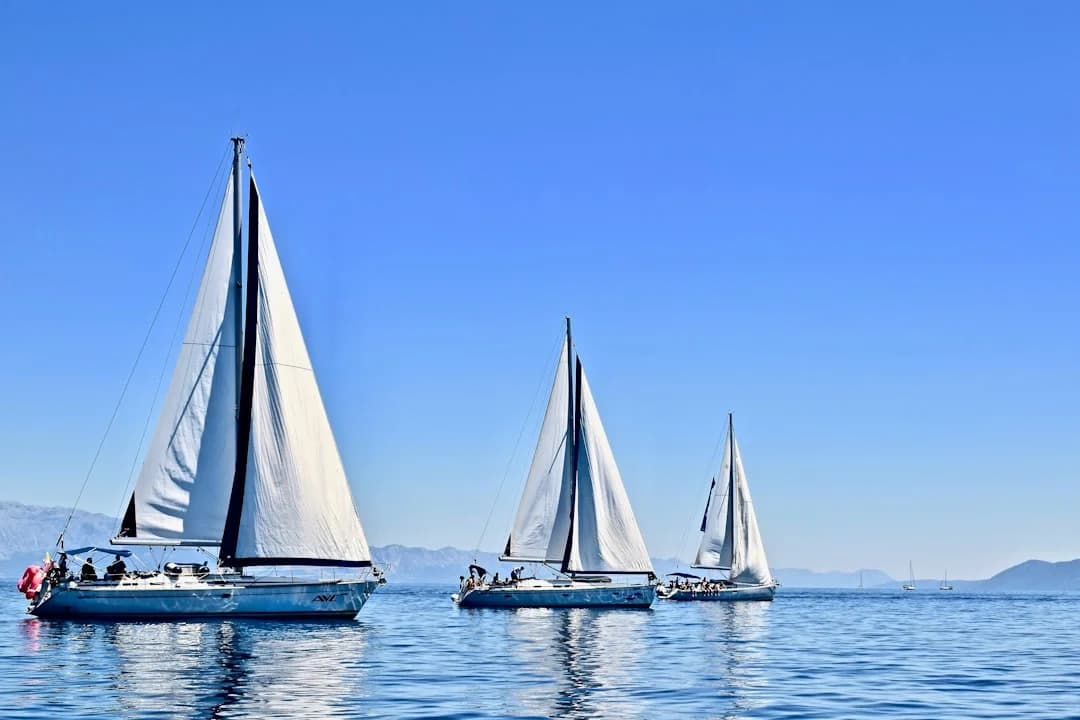
The British Virgin Islands pack more world-class anchorages into roughly 60 square nautical miles than just about anywhere else on Earth. With over 60 islands and cays, short hops of 2-10 nm between stops, and consistent northeast trade winds averaging 15-20 knots from December through April, the BVI is the Caribbean's undisputed anchorage capital — and this bay-by-bay guide covers the best of them.
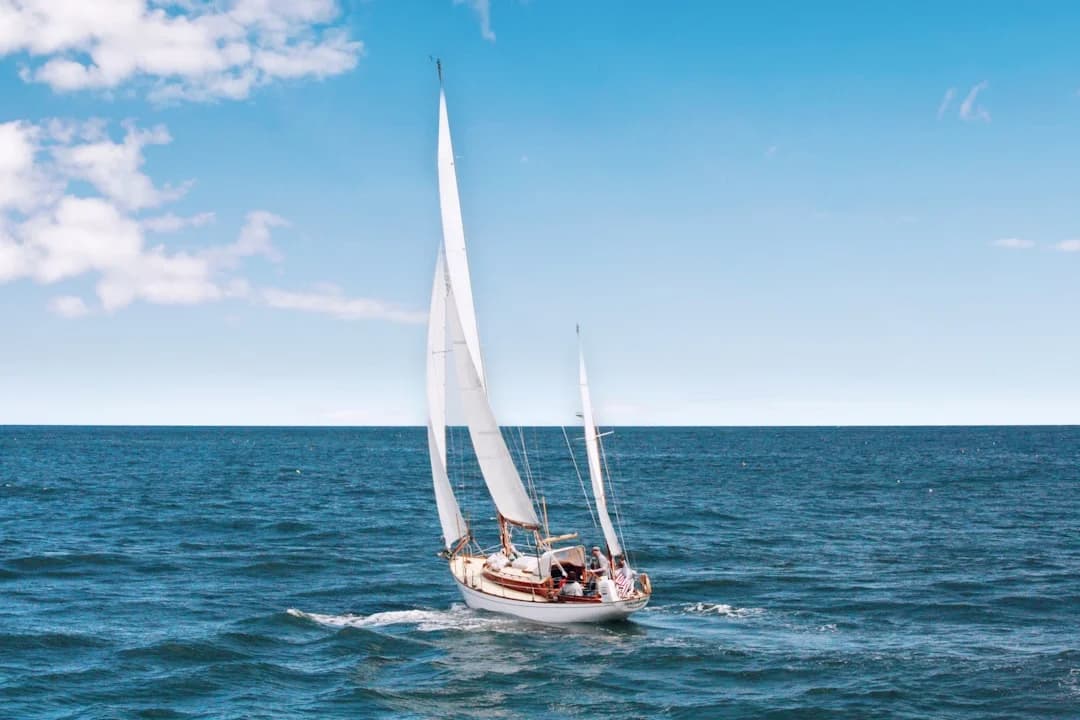
Photo by Karla Car on Unsplash
Why the BVI Is the World's Best Cruising Ground for Anchorages
Three factors make the BVI almost absurdly well-suited for cruising sailors. First, the Sir Francis Drake Channel acts as a protected highway between islands — you rarely face open-ocean swells during inter-island passages. Second, the volcanic terrain creates deep, well-defined bays with reliable holding in sand over hard-packed marl. Third, distances between anchorages are short enough that you can move to a new bay every day without ever spending more than 90 minutes under sail.
Most charter itineraries loop through 6-8 anchorages in a week. But there are easily 20+ legitimate overnight stops in the territory, and part of the pleasure is discovering your own favorites. If you're planning your route and want to check exact distances between BVI stops, Breezada's sea distance calculator will give you the nautical miles in seconds.
The territory implemented a mooring ball system years ago, and many popular bays now have National Parks Trust moorings (white balls) at $25-30/night. Some anchorages still allow free anchoring where moorings aren't available, but the trend is toward moorings in the busiest bays. Bring cash — not all moorings accept cards.
Norman Island — The Bight
Norman Island sits at the southern end of the Drake Channel and claims to be the inspiration for Robert Louis Stevenson's Treasure Island. Whether or not that's true, The Bight is one of the BVI's most popular anchorages for good reason.
The bay is a wide, horseshoe-shaped indent on Norman's north side, offering protection from the prevailing easterlies and southeast swell. The holding is excellent — thick sand over a clay base in 15-25 feet of water. The National Parks Trust maintains about 30 mooring balls here, and there's additional room to anchor on the fringes.
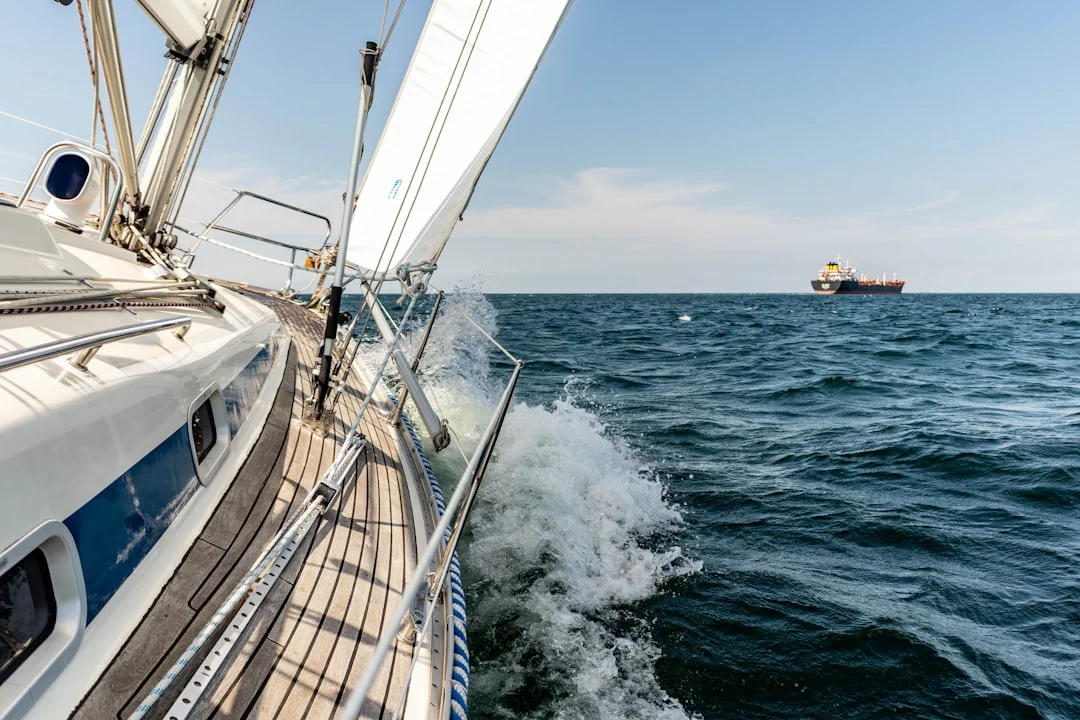
Photo by Michael Held on Unsplash
What makes it special: The Caves at Treasure Point, on the west side of the bay, are snorkel-worthy grottoes with schooling fish and soft coral. Pirates bar and restaurant sits on a permanently moored vessel in the bay. Norman Island is uninhabited, so the anchorage is remarkably quiet after sunset — just anchor lights, stars, and the sound of water slapping hulls.
Watch out for: The Bight fills up fast in high season (December-April). Arrive before 14:00 to secure a mooring. The western side of the bay shoals; stay in the center or eastern portion if you're anchoring deep-draft.
Peter Island — Great Harbour and Deadman's Bay
Peter Island, the largest private island in the BVI, shelters two distinct anchorages on its north coast.
Great Harbour is a deep, narrow bay with moorings and good holding in sand at 20-30 feet. It offers the best all-around protection — the hills on either side block wind and swell from nearly every direction. The resort ashore was damaged by Hurricane Irma in 2017 and has been undergoing redevelopment, so services here change year to year. Check local notices before counting on dinghy dock access.
Deadman's Bay, slightly to the east, is a stunner — a crescent of white sand backed by palm trees, looking like something off a postcard. The anchorage is more exposed than Great Harbour and works best as a lunch stop or calm-weather overnight. In northerly swells, which can happen from November through February, the bay develops an uncomfortable roll.
Passage note: Peter Island is only about 4 nm south of Road Town, Tortola — a quick reach across the Drake Channel. You can calculate the distance from your previous anchorage to plan arrival time.
Cooper Island — Manchioneel Bay
Cooper Island is one of those places that gets under your skin. Manchioneel Bay, on the island's west side, has about 25 mooring balls and draws a loyal crowd of repeat visitors.
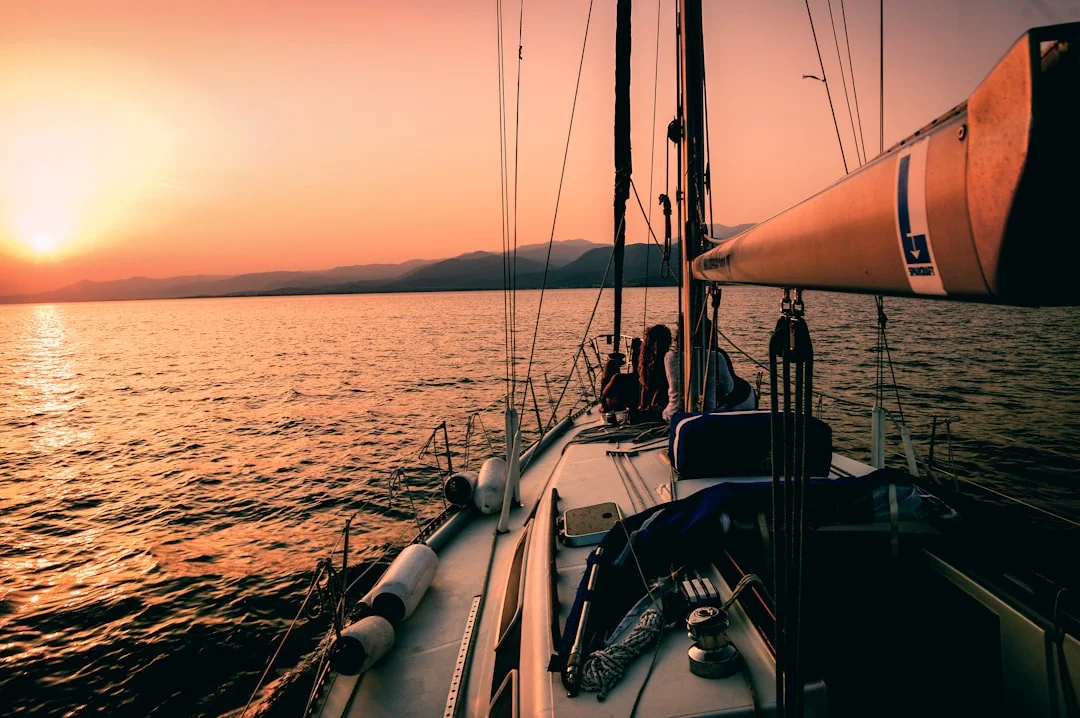
Photo by Markos Mant on Unsplash
The Cooper Island Beach Club runs the moorings, a small restaurant, a rum bar, and an eco-friendly microbrewery. This is one of the few places in the BVI where you can grab a locally brewed IPA right off the dinghy dock. The snorkeling along the southern reef is some of the best in the territory — nurse sharks, rays, and healthy coral heads in 8-15 feet of water.
Holding: Sand and grass, 20-35 feet. The moorings are well-maintained and positioned to keep you in the best holding. If you need to anchor, tuck into the southern end of the bay and make sure your hook is set properly — a few patches of grass can cause dragging. If you need a refresher on technique, our guide to anchoring a sailboat covers scope ratios and overnight best practices.
Best time to visit: Late afternoon, when the charter fleet thins out and the light turns golden on the hillside.
Virgin Gorda — The Baths, North Sound, and Spring Bay
Virgin Gorda delivers three of the BVI's most distinctive anchorage experiences within a few miles of each other.
The Baths
The Baths is arguably the single most famous landmark in the BVI — massive granite boulders forming grottoes, tide pools, and cathedral-like chambers along the southwestern shore. The anchorage is exposed and rolly, with moorings in 25-30 feet of water over a rocky bottom. This is a day stop only — pick up a mooring, dinghy ashore, explore the trails through the boulders, and leave before dark.
Important: The Baths is a National Park. No anchoring is permitted — you must use a mooring ball ($25/night, though almost no one stays overnight). The dinghy dock has a small entry fee. Bring water shoes; the boulders are slippery.
North Sound
North Sound, at the northeast tip of Virgin Gorda, is the BVI's great protected harbor — a vast lagoon sheltered by Mosquito Island, Prickly Pear Island, and a barrier reef. Inside, you'll find space for dozens of boats in 10-20 feet of water over sand, with virtually no swell under any conditions.
This is where experienced BVI cruisers go to escape the Drake Channel crowd. The Bitter End Yacht Club (rebuilt after Irma) and Saba Rock are the social hubs, but there's plenty of room to anchor far from anyone. The catch: entering North Sound through the reef requires careful navigation via a well-marked channel. Don't attempt it in failing light.
Spring Bay
Just north of The Baths, Spring Bay offers a quieter alternative with similar boulder scenery. There are a few moorings and the holding is decent in sand pockets between rock outcrops. Much less crowded, though more exposed to northerly swell.
Jost Van Dyke — Great Harbour and White Bay
Jost Van Dyke, the smallest of the BVI's four main islands, has an outsized reputation thanks to one bar: the Soggy Dollar. But there's more here than rum punches.
Photo by Jeremy Bishop on Unsplash
Great Harbour is the island's main settlement and customs port. The anchorage is open to the south but protected from the northeast trades by the hillside. Holding is moderate — sand and grass in 12-20 feet. Foxy's Tamarind Bar, one of the Caribbean's legendary watering holes, is right on the beach. On New Year's Eve, the harbor fills with hundreds of boats for Foxy's famous party.
White Bay, a short dinghy ride west, is the picture-postcard anchorage. Blinding white sand, crystal water in shades of turquoise and emerald, and the Soggy Dollar Bar — where you swim ashore (hence the soggy dollars). Moorings here are tightly packed in season. The bay is shallow — 8-15 feet — and the holding is sandy but can be patchy. A stern anchor or two bow anchors may be necessary when boats are packed in tight.
Passage from Tortola: Jost Van Dyke sits about 4 nm northwest of Cane Garden Bay on Tortola's north shore. It's a quick, scenic beat to windward, or a sleigh ride back downwind. Check the sea distance calculator to plan your departure time.
Tortola — Cane Garden Bay and Soper's Hole
Tortola is where most BVI charters begin and end, but it also has two anchorages worth visiting on their own merits.
Cane Garden Bay is Tortola's most popular beach anchorage — a wide, sandy bay on the north coast with moorings and anchoring room. The beach is lined with bars and restaurants, and there's usually live music somewhere after dark. Protection is good in normal trade wind conditions, but the bay is wide open to the north. If a northerly swell is running, it gets uncomfortable quickly — I've seen boats drag here in surge that the gentle-looking bay doesn't advertise.
Soper's Hole, at the western tip of Tortola, is a hurricane hole and all-weather anchorage. The holding is excellent in thick mud at 15-30 feet. It's not the prettiest anchorage in the BVI — the shoreline is developed with a small marina and commercial buildings — but it's where you go when the weather turns — reef your sails early if the trades are piping above 20 knots. It's also the departure point for the short hop to Jost Van Dyke or the sail south to Norman Island.
Anegada — Setting Point
Anegada is the BVI outlier in every sense. It's flat (highest point: 28 feet), it's coral (not volcanic), and it's 14 nm north of Virgin Gorda across open water — the longest inter-island passage in the territory. The reef surrounding Anegada has wrecked more than 300 ships over the centuries, and the approach requires careful navigation through a marked channel.
Setting Point, on the island's south coast, has moorings and anchorage space in 8-15 feet of sand. The approach from the south is well-marked with red and green channel markers. Do not approach from the north or east — the reef is shallow and poorly charted.
Why make the trip? Anegada has the best lobster in the BVI (the Anegada lobster is a protected species, harvested sustainably), miles of empty beaches, and flamingos in the salt ponds. It feels like a different country from the rest of the territory. Most charter companies require advance notification before you sail to Anegada — check your agreement.
For timing your itinerary across the wider Caribbean, our guide to the best time to sail the Caribbean breaks down conditions month by month.
BVI Anchorage Quick-Reference Table
| Anchorage | Island | Depth (ft) | Bottom | Mooring Balls | Protection | Best For |
|---|---|---|---|---|---|---|
| The Bight | Norman Island | 15-25 | Sand/clay | ~30 | Excellent (E/SE) | Snorkeling, quiet nights |
| Great Harbour | Peter Island | 20-30 | Sand | Yes | Excellent (all-round) | All-weather stop |
| Deadman's Bay | Peter Island | 15-25 | Sand | Limited | Fair (calm weather) | Lunch stop, beach |
| Manchioneel Bay | Cooper Island | 20-35 | Sand/grass | ~25 | Good (W/NW) | Snorkeling, rum bar |
| The Baths | Virgin Gorda | 25-30 | Rock/sand | Yes (required) | Poor | Day visit only |
| North Sound | Virgin Gorda | 10-20 | Sand | Some | Excellent (all-round) | Extended stays, reef sailing |
| Great Harbour | Jost Van Dyke | 12-20 | Sand/grass | Yes | Good (N/NE) | Nightlife, customs |
| White Bay | Jost Van Dyke | 8-15 | Sand | Yes | Fair (calm weather) | Beach bars, swimming |
| Cane Garden Bay | Tortola | 15-25 | Sand | Yes | Good (E/SE only) | Beach, live music |
| Soper's Hole | Tortola | 15-30 | Mud | Yes | Excellent (all-round) | Heavy weather, provisioning |
| Setting Point | Anegada | 8-15 | Sand | Yes | Good (S/SW) | Lobster, solitude, beaches |
Practical Tips for Anchoring in the BVI
Mooring etiquette: Pick up the mooring pennant with a boat hook, run your own line through the loop, and cleat it back on your boat. Never tie directly to the mooring ball hardware — it's a reef-damaging liability. The BVI mooring system uses color codes: white balls are National Parks Trust (overnight OK), yellow balls are day-use only, and red balls are commercial (restaurant or dive shop — ask before using).
Anchoring regulations: Several bays — including The Baths, The Indians, and parts of the Rhone Marine Park — prohibit anchoring entirely. In other bays, you can anchor freely if no mooring is available. Set your anchor properly with a 5:1 scope minimum in sand, 7:1 if the wind is up. The BVI bottom is generally forgiving, but patches of sea grass can fool you into thinking you're set when you're not.
Wind patterns: The trades blow reliably from the east-northeast at 15-20 knots in high season. Afternoon gusts can push 25 knots in the channels. In summer (June-November), winds are lighter and more variable — better for the exposed west-facing anchorages, but hurricane risk rises sharply after August.
Navigation: The Drake Channel is well-charted and mostly deep, but reefs and rocks exist — particularly around Salt Island, the approach to North Sound, and the Anegada reef. Use updated charts, not the ones that came with the charter boat in 2018. A GPS chartplotter is essential, but eyeball navigation in good light is equally valuable in these waters. Polarized sunglasses are not optional.
Provisioning: Stock up in Road Town or East End, Tortola before heading out. The outer islands have limited supplies — a few small shops on Jost Van Dyke and Virgin Gorda, essentially nothing on Norman or Cooper. Bring more water and ice than you think you need.
Frequently Asked Questions
How many days do I need to see the best BVI anchorages?
Seven days is the sweet spot for a thorough BVI cruise. That gives you time for 6-8 anchorages, including a night on Jost Van Dyke, a day at The Baths, a run to Anegada, and unhurried stops at Cooper Island and Norman Island. Five days works if you skip Anegada and move efficiently. Anything less than four days means you're rushing.
Do I need a mooring ball or can I anchor freely in the BVI?
It depends on the bay. Some anchorages — The Baths, The Indians, and parts of the Rhone Marine Park — require moorings and prohibit anchoring entirely. In other bays like The Bight and Great Harbour, you can anchor if the mooring field is full, but moorings are preferred. When anchoring is allowed, avoid sea grass beds. Mooring fees run $25-30 per night for National Parks Trust balls.
What is the best time of year to visit BVI anchorages?
The prime season runs from December through April, when trade winds are steady at 15-20 knots, rainfall is minimal, and anchorages are well-protected from the east. The shoulder months — November and May — offer fewer crowds and good conditions. June through October is hurricane season; while many sailors cruise happily through June and early July, insurance restrictions and unpredictable weather make late summer risky.
Are BVI anchorages safe for beginners?
Yes — the BVI is widely regarded as the best beginner cruising ground in the Caribbean. Short inter-island distances (most passages are under 10 nm), line-of-sight navigation between islands, protected waters inside the Drake Channel, and a well-maintained mooring system all reduce risk. That said, you still need basic anchoring skills, the ability to read a chart, and common sense about weather. A bareboat charter company will check your qualifications before handing you the keys.
Can I sail from the BVI to the US Virgin Islands?
You can, but it involves clearing customs and immigration in both directions. The USVI (St. Thomas, St. John, St. Croix) is about 8 nm west of Tortola across the Leeward Passage. Many sailors day-trip to St. John's Cruz Bay from the BVI's West End. You'll need passports, a customs declaration, and patience with the clearance process. Check current requirements before making the crossing, as regulations change periodically.
About the Author
Related Articles
Amalfi Coast vs French Riviera Sailing Guide (Costs & Routes)
Compare Amalfi Coast vs French Riviera sailing—costs, crowds, mooring rules, best months, and 7-day routes. Choose your coast and plan now.
By Breezada Team
Puget Sound Cruising Guide to Gulf Islands Routes
Plan routes, anchorages, and weather windows with this Puget Sound cruising guide for the Gulf Islands & San Juans. Read now and start plotting.
By Breezada Team
Sailing Amalfi Coast Guide: Ports, Anchorages & Rules
Sailing Amalfi Coast guide to Capri, Positano & Amalfi: best ports, anchorages, fees, VHF and rules. Plan your route—read now.
By Breezada Team
Dry Tortugas Sailing: Routes, Anchoring & Permits
Plan Dry Tortugas sailing from Key West with routes, weather windows, anchoring/moorings, and permits. Read the guide and plan your trip.
By Breezada Team