Catamarans have taken over the charter fleets, the cruising rallies, and the yacht shows — and the numbers back it up. In 2024, catamarans accounted for over 60% of new charter fleet orders in the Mediterranean and Caribbean. The reasons are practical: more living space, shallower draft, no heeling, and a motion that keeps non-sailors from turning green.
But not all cruising cats are equal. Some are floating apartments that sail poorly. Others are genuine offshore boats that happen to have two hulls. The right catamaran depends on whether you're chartering for a week, cruising for a year, or crossing an ocean. Here's how to sort through the options.
Photo by Michael Fruehmann on Unsplash
Why Catamarans for Cruising
The Space Advantage
A 40-foot catamaran offers roughly 400–500 square feet of living space — nearly double a monohull of the same length. Four private cabins, each with its own head (bathroom), a full-width saloon with 360-degree views, and a cockpit that seats 8 for dinner. On a monohull, you'd need 50+ feet for equivalent space.
The galley is the biggest difference. Catamaran galleys are typically at saloon level with full-size countertops, proper ovens, and enough room for two people to cook simultaneously. Monohull galleys are cramped by comparison.
No Heeling
Monohulls heel — lean 15–25 degrees under sail. Most sailors love it; most passengers hate it. Catamarans sail flat. Books stay on shelves, drinks stay on tables, and dinner stays on plates. This makes cats dramatically more comfortable for families, guests, and anyone who gets seasick.
Shallow Draft
Most cruising cats draw 3.5–4.5 feet versus 5.5–7 feet for equivalent monohulls. This opens up hundreds of anchorages, gunkholing spots, and shallow lagoons that keelboats can't reach — particularly valuable in the Bahamas, the Chesapeake, the Greek islands, and Southeast Asia.
The Best Cruising Catamarans by Category
Best for Charter and Coastal Cruising (38–42 ft)
| Catamaran | LOA | Draft | Cabins | New Price | Used Price | Standout Feature |
|---|---|---|---|---|---|---|
| Lagoon 40 | 39'4" | 4'1" | 3–4 | $450K | $280–380K | Most popular charter cat worldwide |
| Bali 4.2 | 42'8" | 3'11" | 3–4 | $480K | $300–400K | Open-space saloon/cockpit concept |
| Fountaine Pajot Elba 45 | 44'4" | 4'3" | 3–4 | $550K | $350–450K | Best build quality in class |
| Leopard 40 | 39'5" | 3'10" | 3–4 | $420K | $250–350K | Strong offshore pedigree |
The Lagoon 40 dominates the charter fleets for good reason — it's roomy, easy to handle, and forgiving of rookie mistakes. The Bali 4.2 is the more modern design with its fold-down transom platforms and open-plan living. For build quality, the Fountaine Pajot Elba 45 is a step above — you can feel the difference in the joinery, the hardware, and the sailing performance.
If you're considering chartering one of these before buying, our yacht charter cost guide breaks down weekly pricing by boat type and region.
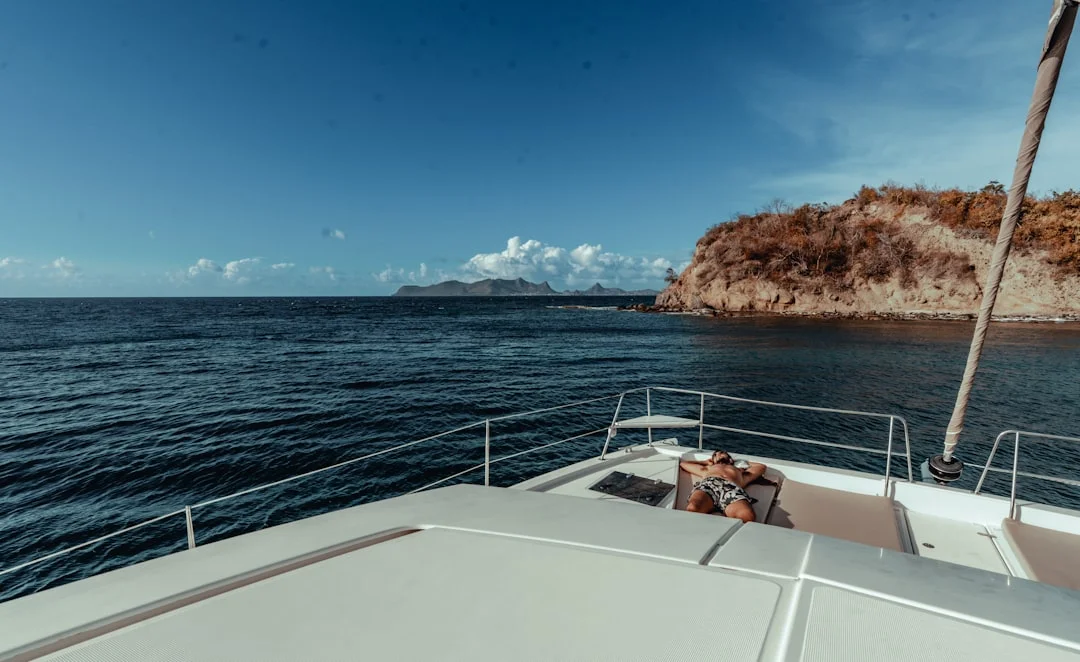
Photo by Hugh Whyte on Unsplash
Best for Bluewater Cruising (42–50 ft)
| Catamaran | LOA | Draft | Cabins | New Price | Used Price | Standout Feature |
|---|---|---|---|---|---|---|
| Lagoon 46 | 45'11" | 4'5" | 3–4 | $680K | $450–580K | Best-selling bluewater cat |
| Fountaine Pajot Tanna 47 | 46'1" | 4'5" | 3–5 | $750K | $500–650K | Superior sailing performance |
| Leopard 45 | 44'6" | 4'3" | 3–4 | $620K | $400–520K | Proven Atlantic crosser |
| Nautitech 46 Open | 45'2" | 4'1" | 3–4 | $700K | $480–600K | Fast, light, performance-oriented |
| Excess 15 | 47'8" | 4'7" | 3–5 | $750K | $500–650K | Sporty cat with serious speed |
For ocean crossings, the Leopard 45 has the strongest track record — hundreds have completed Atlantic circuits. The Nautitech 46 is the sailor's choice — lighter, faster, and better balanced than the more interior-focused designs. The Excess 15 from Beneteau's performance line bridges the gap between cruising comfort and genuine sailing speed.
Use Breezada's sea distance calculator to plan bluewater routes — the typical Atlantic circuit (Med → Canaries → Caribbean → Azores → Med) covers roughly 8,000 nm.
Best Value: Used Catamarans Under $250K
| Catamaran | Years | Why It's Good Value |
|---|---|---|
| Lagoon 380 (2005–2015) | $150–220K | Thousands built, parts everywhere, proven design |
| Fountaine Pajot Mahe 36 (2008–2015) | $180–250K | Solid build, compact but liveable |
| Leopard 38 (2007–2014) | $160–230K | Good sailing performance for the size |
| Gemini 105Mc (2000–2015) | $80–140K | Budget entry, trailerable, fits standard slips |
The Lagoon 380 is the Toyota Corolla of catamarans — not exciting, but reliable, well-supported, and holds its value. If your budget is tight, a well-maintained 380 from 2010–2012 at $180–200K is the sweet spot.
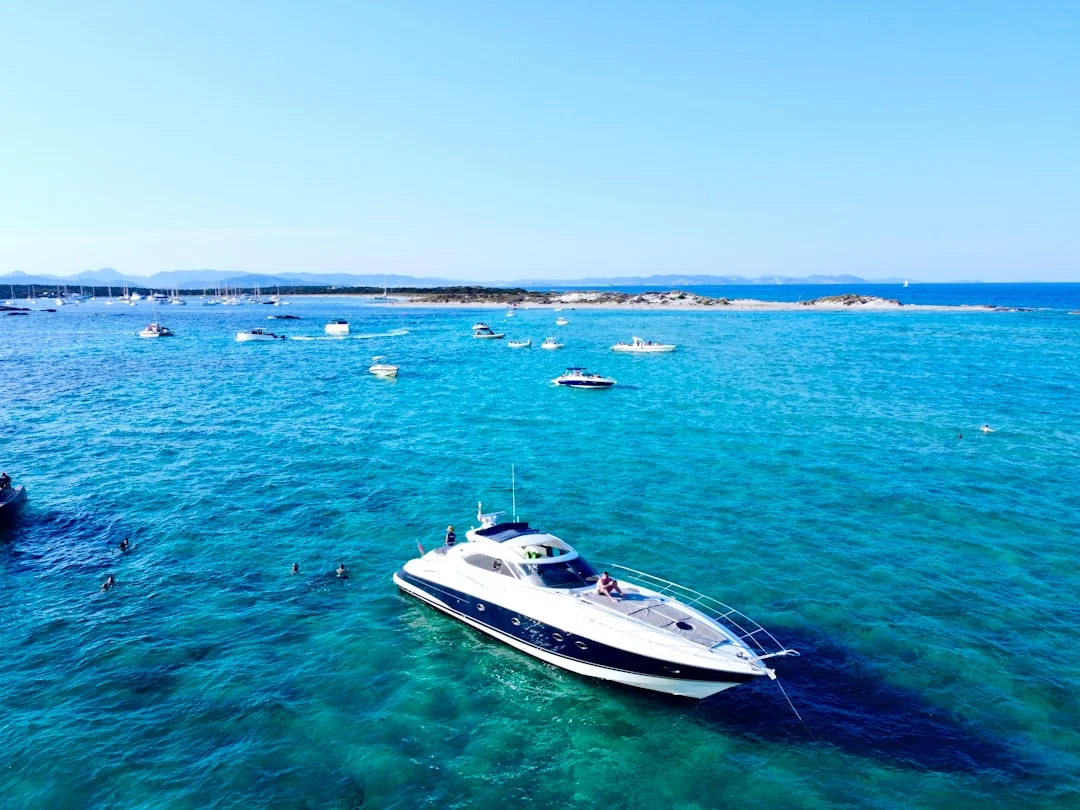
Photo by Mike Swigunski on Unsplash
Catamaran vs Monohull: The Honest Trade-offs
| Factor | Catamaran Wins | Monohull Wins |
|---|---|---|
| Living space | 2x more for same length | — |
| Stability | No heeling, flat sailing | — |
| Draft | 3.5–4.5 ft vs 5.5–7 ft | — |
| Upwind performance | — | Better VMG, higher pointing |
| Marina costs | — | 30–50% cheaper (narrower beam) |
| Purchase price | — | 40–60% less for equivalent length |
| Maintenance | — | One engine, one hull, simpler systems |
| Heavy weather | — | More predictable, self-righting |
| Resale | Strong demand, holds value | Larger buyer pool |
The uncomfortable truth about catamarans in heavy weather: monohulls are self-righting — knock them down and they come back up. Catamarans are not. An inverted catamaran stays inverted. In practice, modern cruising cats are extremely stable and capsize is extremely rare (requiring sustained 60+ knot winds with breaking seas). But if you're planning serious Southern Ocean sailing, a monohull is the safer choice.
For coastal and trade-wind cruising — the Med, Caribbean, Pacific islands — catamarans are arguably the better platform. The comfort, space, and shallow draft outweigh the upwind performance penalty for most cruisers.
What to Inspect When Buying Used
The Hull-Deck Joint
This is where catamarans fail first. Look for cracking, delamination, or flexing at the joint between the hulls and the bridge deck. Tap along the joint with a coin — a dull thud means moisture intrusion. Walk away from any cat with bridge deck delamination — the repair is expensive and often incomplete.
The Engines
Two engines means twice the maintenance cost — but also redundancy. Check hours (aim for under 3,000 hours on a diesel), look for oil leaks, and run both engines simultaneously. Listen for vibration or misalignment. Saildrive seals are a known weak point on many catamarans — check the service history.
The Trampolines and Nets
Replacement trampoline nets cost $2,000–$5,000. UV damage is the main enemy. Check for fading, stretching, and torn stitching. Budget for replacement if they're over 8 years old.
The Rudders and Steering
Catamaran rudders are more exposed than monohull rudders and take more abuse in reverse. Check for play in the rudder stocks, inspect the bearings, and look for impact damage on the leading edges.
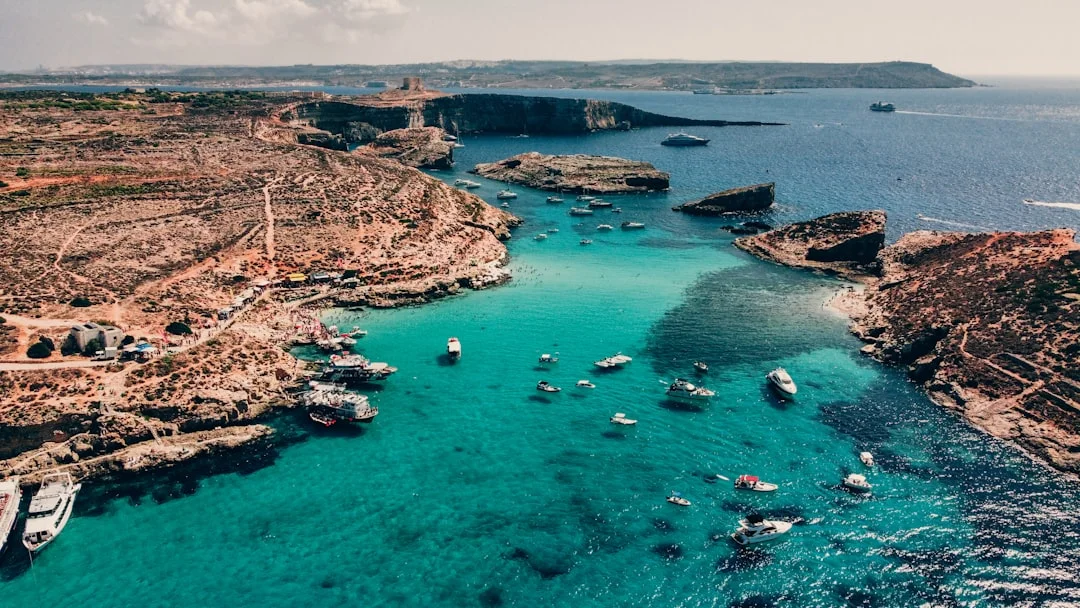
Photo by Fadi Al Shami on Unsplash
Operating Costs: Catamaran vs Monohull
| Annual Cost | 42-ft Catamaran | 42-ft Monohull |
|---|---|---|
| Marina slip | $12,000–$24,000 | $8,000–$15,000 |
| Insurance | $4,000–$8,000 | $2,500–$5,000 |
| Bottom paint | $3,000–$5,000 (two hulls) | $1,500–$3,000 |
| Engine service | $1,500–$3,000 (two engines) | $800–$1,500 |
| General maintenance | $5,000–$10,000 | $3,000–$7,000 |
| Total | $25,500–$50,000/yr | $15,800–$31,500/yr |
Catamarans cost roughly 50–60% more per year to own than equivalent monohulls. The biggest drivers: wider beam means larger (more expensive) slips, two engines double the service costs, and two hulls double the antifouling. If budget is tight, a monohull is the more economical choice. If comfort and space are the priority, the premium is worth it.
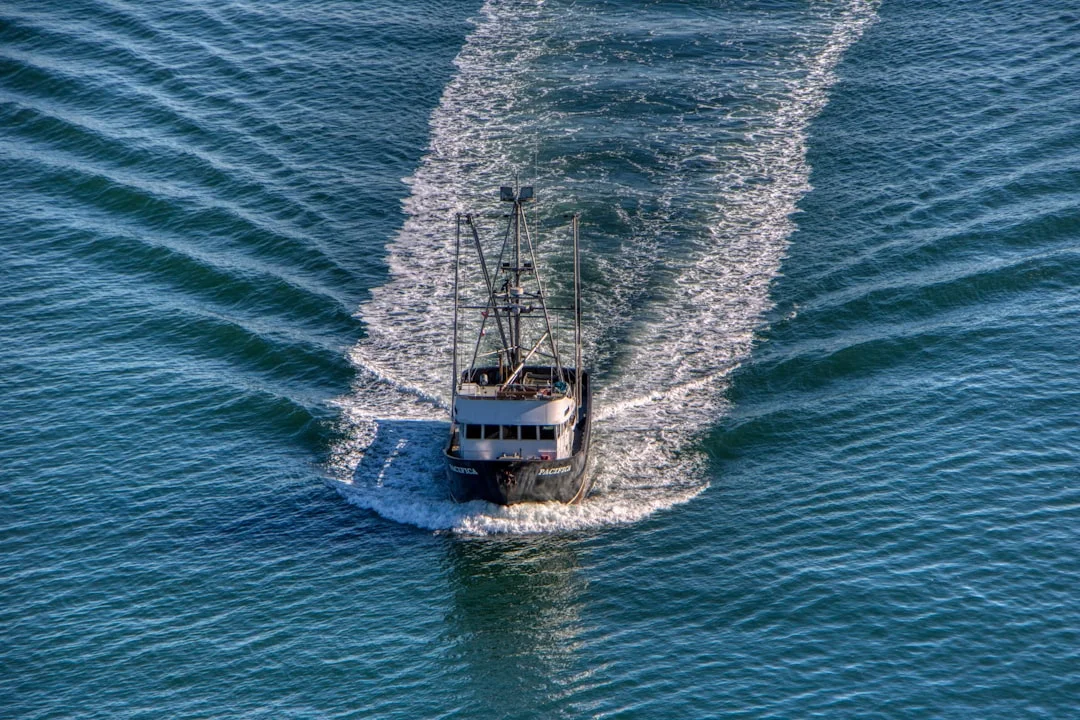
Photo by Mate Homolya on Unsplash
Best Cruising Grounds for Catamarans
Catamarans shine where the water is shallow, the winds are steady, and the anchorages are plentiful:
- Bahamas: Shallow banks (6–10 feet), perfect for cat draft. See our Florida to Bahamas guide
- Greek Islands: Short hops, sheltered bays, Med mooring. Our Greek islands guide covers the best areas
- BVI/Caribbean: Trade winds, mooring balls, warm water year-round
- Thailand: Shallow draft essential for Phang Nga Bay and the Andaman coast
- Chesapeake Bay: Shoal waters, countless creeks and rivers
Use Breezada's distance calculator to plan routes in any of these regions — knowing the distance between anchorages helps you pick the right boat speed and departure time.
Frequently Asked Questions
What size catamaran do I need for ocean crossing?
Minimum 40 feet for comfortable offshore passages. The sweet spot is 42–48 feet — big enough for serious provisioning and water/fuel capacity, small enough for a couple to handle. Below 40 feet, bluewater cats feel cramped for extended passages. Above 50 feet, you need crew to handle the boat safely.
Are catamarans safe in storms?
Modern cruising catamarans are extremely stable — they resist capsizing up to roughly 60-knot sustained winds with breaking seas. The real risk is structural failure at the bridge deck or rudder damage, not capsize. In 30 years of ARC rallies, no modern cruising catamaran has capsized. That said, they don't self-right like monohulls, so seamanship and weather avoidance matter more.
Should I buy new or used?
Used, almost always. A 5–8 year old catamaran in good condition costs 40–50% less than new and has already had its teething problems sorted out by the first owner. The exception: if you want a specific layout or can't find the model you want on the used market, ordering new makes sense — but expect an 18–24 month wait.
Can a couple sail a 45-foot catamaran?
Yes — most modern cruising cats in the 42–48 foot range are designed for shorthanded sailing. Electric winches, self-tacking jibs, and reliable autopilots make them manageable for two. The key is good sail handling systems and the willingness to reef early. A couple can comfortably handle a Lagoon 46 or Leopard 45 in trade wind conditions.
How long do catamarans last?
With proper maintenance, 25–30+ years for fiberglass construction. The hulls and structure are essentially permanent. What wears out: engines (overhaul at 8,000–10,000 hours), standing rigging (replace every 10–15 years), electronics (10 years), sails (5–8 years), and gelcoat (refinish every 15–20 years). A well-maintained 20-year-old cat with updated systems is a perfectly viable cruising boat.
About the Author
Related Articles
Diesel Heater Troubleshooting Boat: No-Start & Soot Fixes
Fix diesel heater no-start and sooting on your boat. Step-by-step checks for power, fuel, air/exhaust and maintenance—read the guide now.
By Breezada Team
Docking a Catamaran: Maneuvers, Springs & Crew
Master docking a catamaran with close-quarters maneuvers, spring lines, and crew roles. Learn the steps and dock with confidence—read now.
By Breezada Team
Best Stove for a Sailboat: Propane vs Diesel vs Induction
Compare propane, diesel, and induction stoves for cruising safety, cost, and power needs—use our guide to choose the best stove for your sailboat.
By Breezada Team
Single Handed Docking Sailboat: Line Methods & Drills
Learn single handed docking sailboat line-first methods, setup, and drills for crosswind/current. Practice safely—get the step-by-step plan now.
By Breezada Team