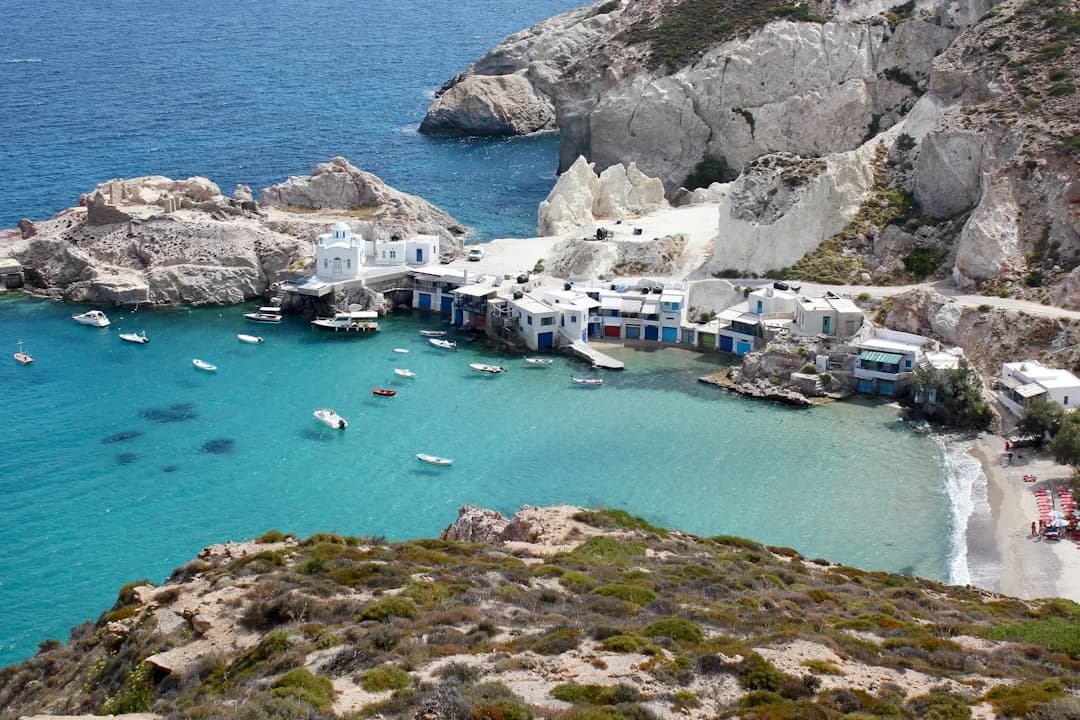
Best Greek Islands for Sailing: Cyclades vs Ionian (vs Dodecanese) — a 2026 Reality Check
“Best Greek islands for sailing” is only meaningful if it matches your crew, your boat, and your tolerance for getting bounced around at 0200. Greece gives you three distinct sailing products: the Cyclades for high-wind performance days, the Ionian for low-stress logistics and short hops, and the Dodecanese for steadier breeze and longer-leg exploring with (often) less quay drama.
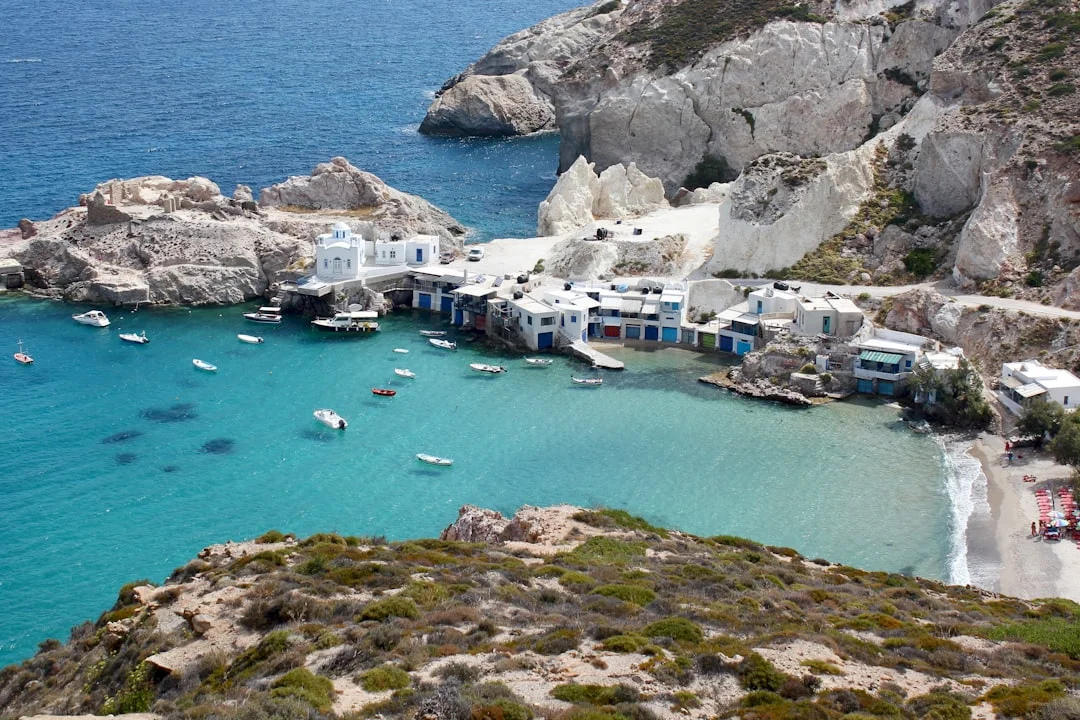
Photo by David Tip on Unsplash
Practical tip (captain’s rule): If the forecast shows 25 kn sustained (F6), shorten legs and stay in the lee. If it’s 30+ kn sustained (F7) and your crew is green, call it a shore day and protect your deposit.
Cyclades vs Ionian vs Dodecanese: Sailing Snapshot
Wind strength & sea-state reality (what it feels like onboard)
The Cyclades in summer are driven by the Meltemi: most frequent June–September, strongest July–August, and commonly 20–30 kn in the afternoon. In the exposed channels—think the Mykonos–Paros/Naxos straits—those “occasionally” days can mean 35–45 kn (Beaufort 8–9), which is less “holiday sailing” and more “why is the dodger screaming.”
The Ionian islands sailing pattern is friendlier: afternoons often build to 10–18 kn, and many mornings sit at 0–8 kn. The sea state is usually modest, so you spend less time bracing and more time eating tomatoes that somehow taste better within sight of an anchorage.
The Dodecanese sits between them: typical summer northerlies 15–25 kn, plus acceleration zones between islands that can add an unpleasant 5–10 kn when you least want it. It’s generally a more consistent sailing day than the Ionian, with fewer “full-send” afternoons than the central Cyclades.
Crowds & harbor pressure (how hard evenings get)
Think of “harbor friction” as the sum of tight berths, crosswinds, lazy lines, surge, and how quickly your crew’s patience evaporates at 18:30. The Cyclades run high friction in July–August because boats pile into the same headline ports, and the wind rarely helps you dock neatly.
The Ionian is crowded too, but the docking tends to be calmer because the breeze eases earlier and swell is less of a factor. The Dodecanese often feels like you found the “other Greece” in peak season—still busy, but with fewer knives-out moments on the quay.
Budget drivers (charter, ports, fuel, extras)
Region choice changes where your money goes. In the Ionian you’ll likely rack up 10–25 engine hours/week, while a Cyclades week can be 5–15 hours if you time departures early and let the Meltemi do the work. Diesel at €1.70–€2.20/L is rarely what breaks a trip, but it’s enough to matter when you’re motoring 4 hours a day.
Port costs are usually €10–€35/night for municipal quays (38–45 ft) and €40–€110/night for full-service marinas. Your extras (SUP €100–€200/week, Wi‑Fi €40–€90/week, damage waiver €250–€600/week) add up faster than most crews admit on day one.
Who each region fits (skills, crew mix, comfort tolerance)
If your crew likes trimming sails and doesn’t panic when it’s 28 kn true and the cockpit conversation becomes hand signals, the Cyclades are magic. If you’re managing kids, non-sailors, or anyone who equates heeling with personal betrayal, the Ionian is the default for good reasons.
The Dodecanese rewards crews who can plan longer legs (15–35 NM/day) and who don’t mind treating distances like math, not vibes. Check the nautical miles between ports before you commit to a day’s hop; it’s the quickest way to sanity-check ETAs and bailout options.
Cyclades (Aegean) Deep Dive: Meltemi, Routes, Risk
Meltemi mechanics: timing, gusts, and acceleration zones
The Meltemi rarely reads your itinerary, but it does follow a pattern. In July–August, you’ll often see lighter mornings and a build toward 20–30 kn by early afternoon, with gusts that can tack on another 5–10 kn near headlands and island gaps. Those gaps are the trap: the wind funnels between islands and turns a “moderate” forecast into a cockpit full of wide eyes.
The channel between Mykonos and Naxos/Paros is the classic example: when it goes, it can hit 35–45 kn. On a 40–45 ft charter boat, that’s not automatically unsafe, but it’s objectively uncomfortable and it narrows your margin for errors in sail handling, seasickness, and gear failures.
Cyclades sailing itinerary logic: lee-hopping and early starts
A workable Cyclades sailing itinerary is less about ticking famous names and more about building a week that can absorb a 30+ kn day without drama. Plan 15–35 NM/day, favor reaching or downwind legs, and start early—if you leave at 07:30–09:00, you often arrive before the afternoon peak and before the quay becomes competitive.
Hard numbers keep you honest: Lavrio–Kea is ~12–15 NM, Paros–Naxos ~10 NM, and Mykonos–Tinos ~10 NM. Run each leg through a route-planning distance tool for Greek island hops and then overlay a conservative speed assumption (say 5.5–6.5 kn mono, 6–7 kn cat) plus time for reefing, traffic, and the inevitable “quick swim” that is never quick.
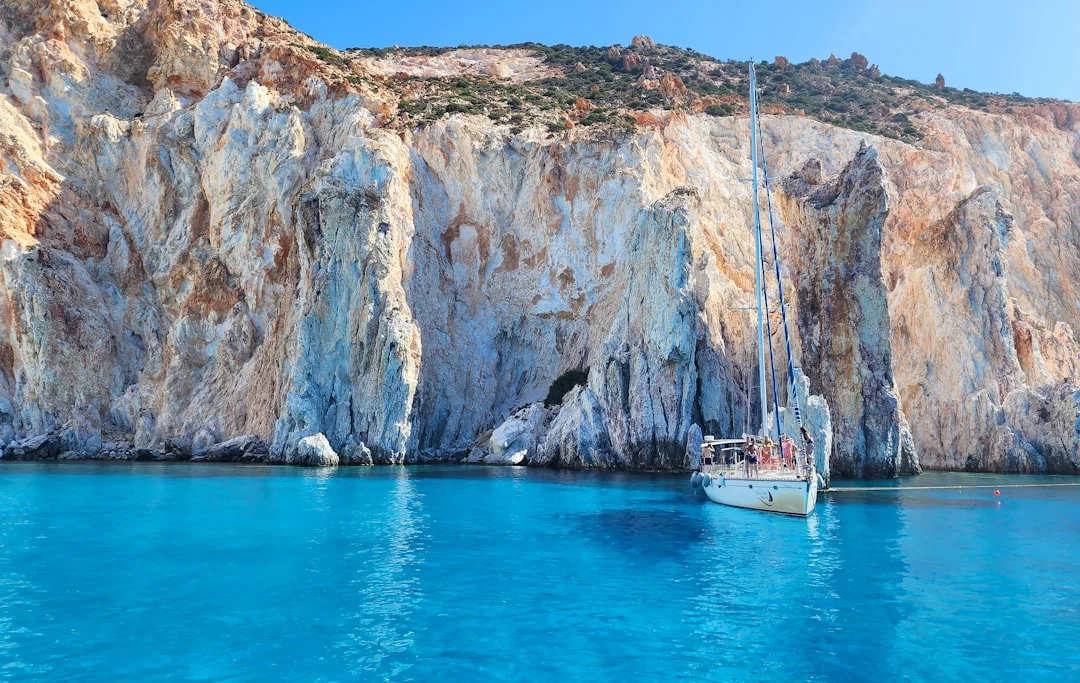
Photo by Derek Nielsen on Unsplash
Harbors, swell, and anchoring in summer northerlies
Cyclades harbors can be deceptively “fine” at lunchtime and miserable by dinner. When northerly swell wraps in, open quays start surging, and your stern-to becomes a slow-motion fender murder scene. If you don’t like the look of it, don’t force it—go anchor in a lee bay and dinghy in.
Anchoring is simple math and relentless consequences. Example: 6 m depth + 1.5 m bow height = 7.5 m; at 5:1 scope you want about 38 m of chain, and at 7:1 you want 53 m. Many 40–45 ft monohull charters carry 60–80 m of 8–10 mm chain with a 16–20 kg anchor; cats often carry 80–100 m chain with a 20–25 kg anchor.
Who should (and shouldn’t) choose the Cyclades in July–Aug
Pick Cyclades in high season if your crew can reef early, steer in steep chop, and accept that some days are “stay put” days. Many crews treat 25 kn sustained as the line to shorten legs and seek lee; 30+ kn sustained is when less experienced groups should stop pretending it’s character-building.
Boat choice matters, but so does the mindset. ISO 12217 stability categories are worth understanding at a basic level: a higher-category design isn’t a license to send it; it’s a buffer for when the Aegean does what the Aegean does. The best Cyclades skipper I know is the one who still has the crew smiling on day seven.
Ionian Islands Sailing: Light Air, Short Hops, Value
Typical Ionian wind pattern: breeze vs calm mornings
The Ionian is where schedules stop being dominated by wind warnings and start being dominated by breakfast. In peak season, afternoons commonly deliver 10–18 kn of sea breeze, while mornings are often 0–8 kn. The result is a gentler sea state and fewer “hold on” moments moving around the deck.
That lighter wind is not a flaw; it’s a feature if your crew wants easy swims, easy passages, and easy docking. The trade is that you’ll motor more, and you need to treat your fuel and battery plan like part of seamanship, not an afterthought.
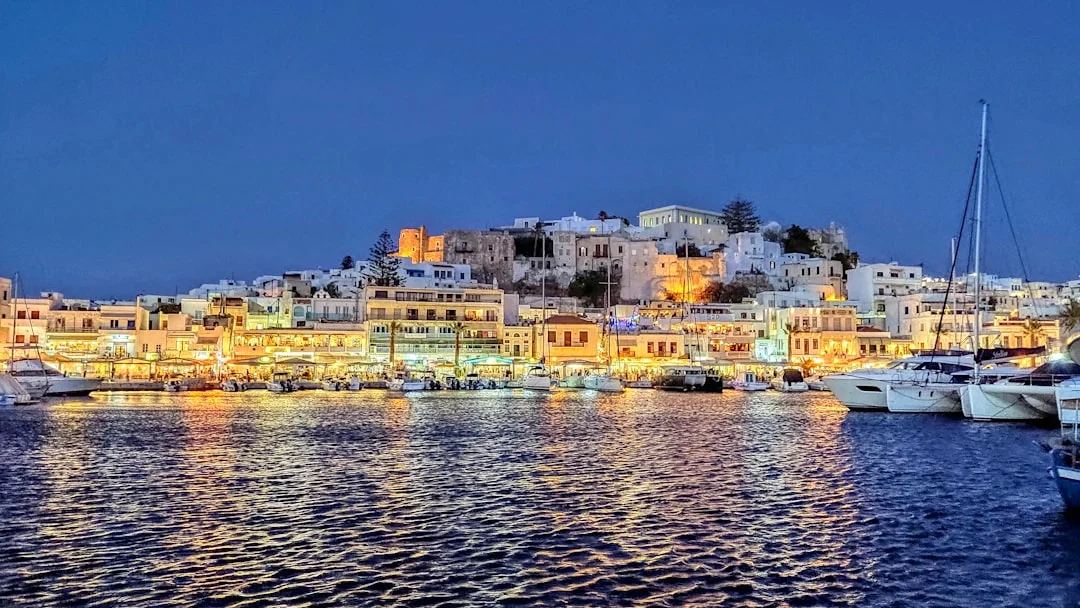
Photo by Evangelos Mpikakis on Unsplash
Route design from Lefkas/Corfu: maximizing swim stops
The Ionian rewards short legs and flexible nights. A classic example is Lefkas–Meganisi at ~6–8 NM, which is the sort of “passage” where the coffee is still warm when you drop anchor. Typical daily targets are 10–25 NM/day, but you can build a perfect week on less if your crew prefers long lunches to long tacks.
Because distances are short, route planning becomes about anchorage selection and timing, not endurance. Use Breezada’s sea distance calculator to compare two or three options each day; it’s the fastest way to pick a Plan A, a Plan B, and the “fine, we’ll go there” alternative when the anchorage is full.
Motoring reality: batteries, fuel, and timing arrivals
Expect 10–25 engine hours over a 7-day Ionian week, especially if you like morning departures. A 40–45 ft monohull typically burns 3–6 L/h at 5.5–6.5 kn, while a 40–45 ft cat is often 5–10 L/h combined at 6–7 kn. At €1.70–€2.20/L, even a modest top-up of 60 L is €100–€130, and 200 L is €340–€440.
Small quays may not have shorepower pedestals, and when they do it’s usually 230V/50Hz with 6–16A. Think ABYC E-11 mindset: manage high loads, don’t assume you can run water heater plus battery charger plus A/C, and keep an eye on hot plugs and tired adapters.
Why the Ionian is the default for mixed-experience crews
The Ionian’s real value is that your decisions are easier and your errors are cheaper. It’s calmer when you’re stern-to, calmer when you’re anchoring in 4–8 m over sand, and calmer when someone drops a winch handle because they forgot gravity works in Greece too.
It’s also a better classroom. You can practice anchoring technique, dinghy handling, and basic navigation without the Cyclades penalty of “now do it in 28 kn and short seas.” For many crews, that’s the difference between a great week and a long group chat apology.
Dodecanese Route Planning: Steady Wind, Longer Legs
Aegean vs Ionian sailing conditions—SE Aegean edition
The Dodecanese often gets overlooked by crews who only hear “Cyclades or Ionian,” which is a shame. In summer, expect northerlies around 15–25 kn, frequently steadier than the Ionian and typically less aggressive than the central Cyclades channels. You still get acceleration zones, especially when islands create a venturi, so a forecast 20 kn can feel like 25–30 kn in the wrong place.
Sea state tends to build with fetch, so longer legs deserve more respect than their knot numbers suggest. When the wind is up, a 20–25 NM hop can feel like a full day if you misjudge the angle and end up slamming.
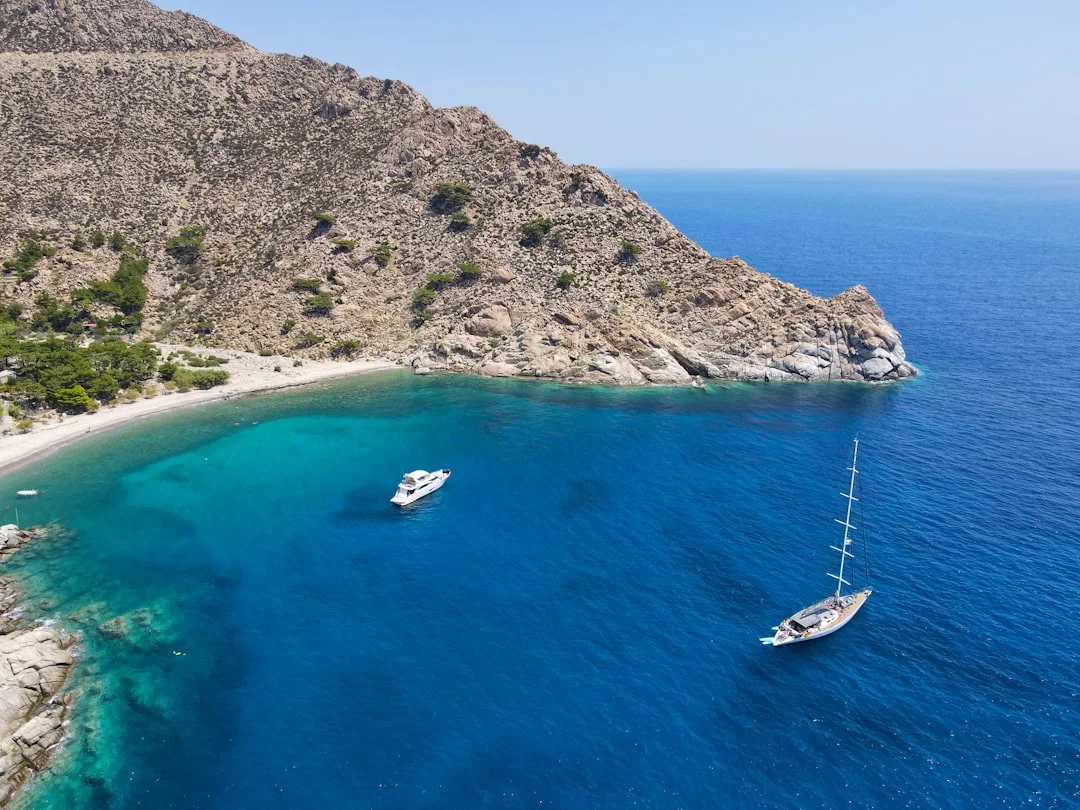
Photo by Dimitris Kiriakakis on Unsplash
Dodecanese sailing route patterns from Kos or Rhodes
A Dodecanese sailing route often starts from Kos or Rhodes, then works downwind or on a steady reach depending on the week’s pattern. Two practical distance anchors: Kos–Nisyros is ~18–22 NM, and Rhodes–Symi is ~20–25 NM. Those are real legs, not “pop over for lunch” hops, which is why crews report they sailed more and queued less.
Daily targets of 15–35 NM/day are realistic, with occasional longer open-water days if crew and boat are happy. If you want the trip to feel like exploration rather than commuting, plan at least 2 nights in quieter stops and avoid packing every day with a named island.
Sea distance & passage windows: planning with NM, not vibes
This is the region where distance planning pays off fastest. Use Breezada’s sea distance calculator to build triangles: your intended destination, the nearest bailout harbor 5–10 NM earlier, and a “lee option” if the wind swings north harder than forecast. Then compute ETAs using conservative speeds—6 kn average is a friend, not a disappointment.
Apply a simple leave/no-leave rule that doesn’t require heroism. Sustained 25 kn: shorten legs and stay under a lee shoreline where possible. 30+ kn sustained: less experienced crews should consider staying put, especially if the arrival harbor demands stern-to in crosswind.
Shoulder-season advantages and one-way charter logic
The Dodecanese shines in shoulder months because you can keep the wind without peak-quay stress. Even a small drop in pressure reduces the “everyone arrives at 17:00” circus, and charter availability can improve outside the tight July–August window.
One-way charter Greece options can unlock routing that makes sense with prevailing northerlies, but they add logistical complexity. Ask your operator early about port police clearance Greece requirements and base-to-base paperwork; the process varies by operator and itinerary, and it’s not something you want to improvise on the morning of departure.
Greece Sailing Costs 2026: Real 7-Day Budget by Region
Charter quotes are only the cover charge. The real question is what a credible, all-in 7-day budget looks like once you add fuel, ports, provisions, and the usual temptations (skipper, hostess, toys, damage waiver). Below are realistic bands using high-season charter pricing, diesel at €1.70–€2.20/L, and provisioning at €20–€35/person/day for a 6-person crew.
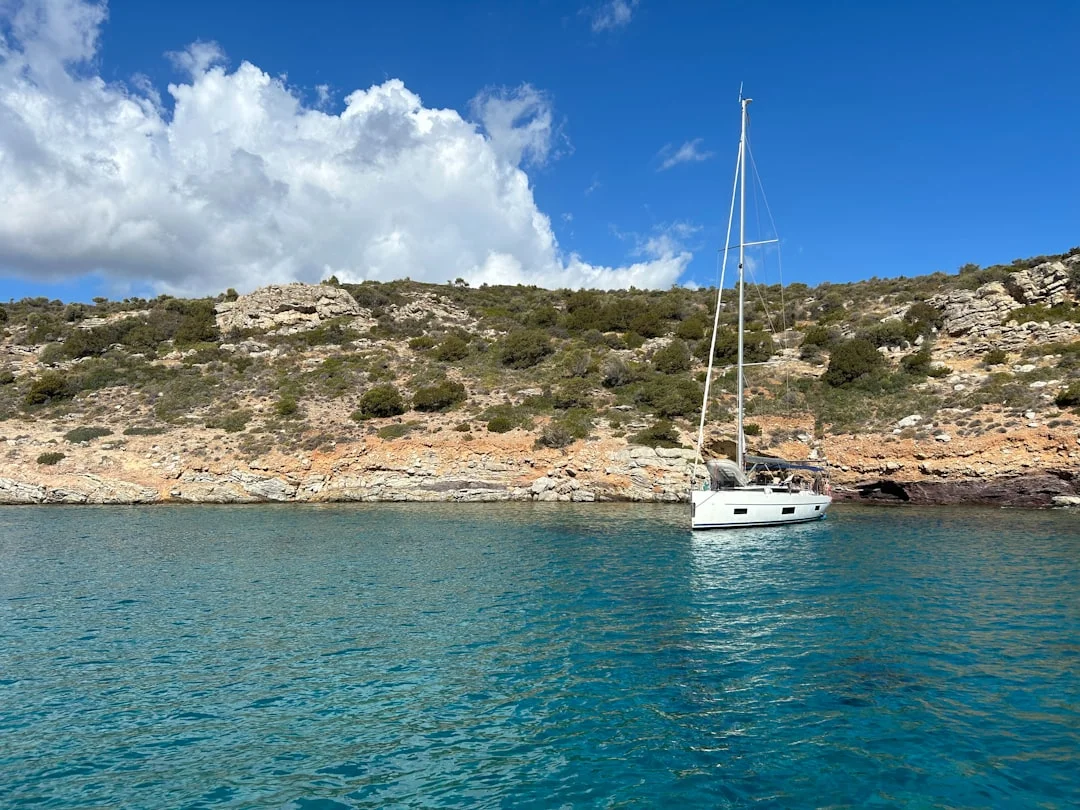
Photo by Denisa on Unsplash
| Cost Item (7 days) | Cyclades (more sailing, higher harbor pressure) | Ionian (more motoring, easy logistics) | Dodecanese (steady breeze, longer legs) |
|---|---|---|---|
| Bareboat charter 40–45 ft monohull | €5,500–€8,500 | €4,500–€7,500 | €5,000–€8,000 |
| Bareboat charter 40–42 ft catamaran | €9,500–€14,000 | €7,500–€12,500 | €8,500–€13,500 |
| Skipper (optional) | €1,260–€1,750 ( €180–€250/day ) + food | same | same |
| Hostess (optional) | €1,050–€1,540 ( €150–€220/day ) + food | same | same |
| Damage waiver / deposit insurance | €250–€600 | €250–€600 | €250–€600 |
| Security deposit (cashflow) | €2,000–€4,000 (mono) / €3,000–€6,000 (cat) | same | same |
| Fuel (diesel) | Mono: 5–15 h × 3–6 L/h = 15–90 L → €25–€200 | Cat: 5–15 h × 5–10 L/h = 25–150 L → €45–€330 | Mono: 10–25 h × 3–6 L/h = 30–150 L → €50–€330 | Cat: 10–25 h × 5–10 L/h = 50–250 L → €85–€550 | Mono: 8–20 h × 3–6 L/h = 24–120 L → €40–€265 | Cat: 8–20 h × 5–10 L/h = 40–200 L → €70–€440 |
| Port fees / nights on the quay | €10–€35/night or marina €40–€110/night (Cyclades hotspots skew higher) | usually closer to the low–mid range | often mid range; fewer “pay-anything” moments |
| Provisions (6 people) | €840–€1,470 | €840–€1,470 | €840–€1,470 |
| Typical extras (cleaning, outboard, Wi‑Fi, SUP) | €400–€800 (varies by taste and operator) | €400–€800 | €400–€800 |
The Ionian often wins “lowest total” because base charters can be cheaper and you can anchor out comfortably, even if you motor more. The Cyclades can cost more indirectly through marinas (when swell makes the quay a bad idea) and through the occasional “we’re staying put, let’s eat out” weather day. The Dodecanese tends to be the best value when you want reliable sailing hours without paying the Cyclades stress tax.
Crowds, Berths, and Greek Marina Fees: Peak-Season Playbook
Where crowds spike (July–August) and why it matters
Greek sailing crowds in July–August are not just a comfort issue; they’re a risk multiplier. When the last spots are gone, crews start forcing stern-to maneuvers in gusts, skipping proper fendering, and accepting lazy lines they haven’t checked for chafe. The Cyclades amplify this because afternoon wind and swell can turn a mediocre docking job into a broken stanchion.
The Ionian is busy too, but you’re more likely to find a workable anchorage when the quay fills. In the Dodecanese, the crowd profile often feels more distributed, which reduces the “everyone piles into the same postcard harbor” effect.
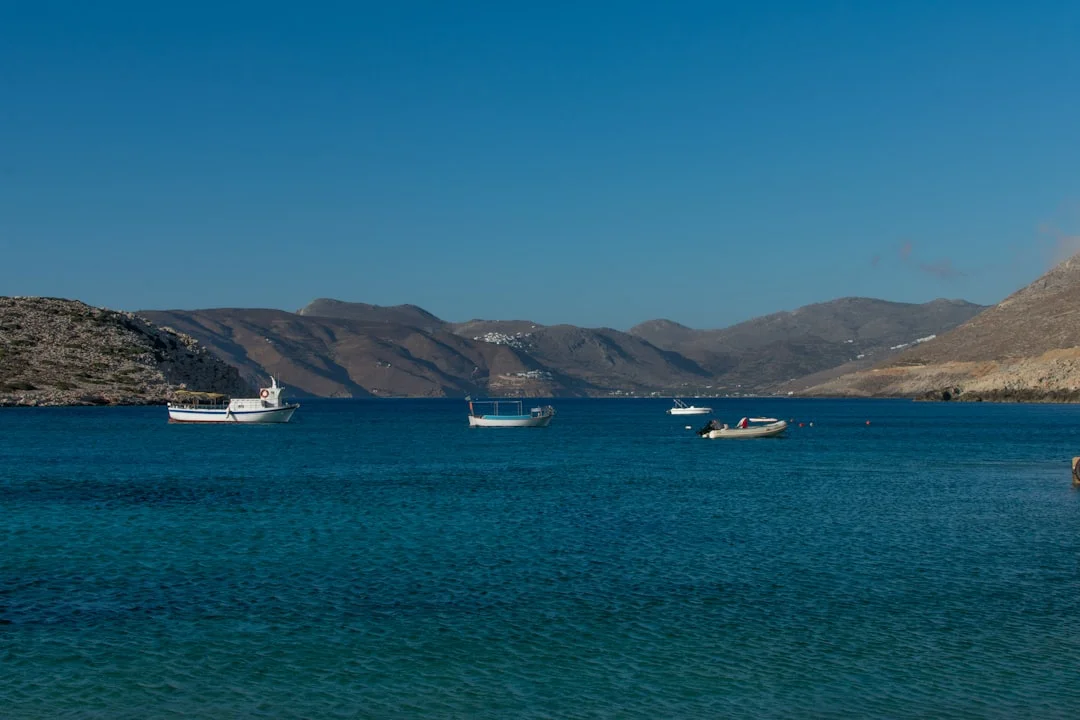
Photo by Kostas Fotiadis on Unsplash
Stern-to mooring with lazy lines: technique that prevents damage
Mediterranean stern-to with lazy lines is easy to do badly and hard to fix once you’re committed. For a 40–45 ft yacht, I want 2 stern lines ready, 2 bow lines ready (to the lazy lines), and 8–10 fenders out before we even approach. Brief the crew on hand signals and who touches what—if two people grab the same line, it becomes a team-building exercise you didn’t schedule.
In 20–30 kn crosswinds, your “no-go” threshold should be crew-dependent. If you can’t keep the stern controlled without panic and shouting, don’t dock; anchor out and come in by dinghy, then try again early tomorrow when it’s calmer and emptier.
Arrival timing, backup plans, and harbor selection by swell
Arrival timing is the cheapest hack in Greece. In the Cyclades, I aim to be entering the harbor by 14:00–15:00 on busy days; after that, options shrink and gusts grow. In the Ionian you can arrive later, but the smart crews still like an early berth because it gives you choices, not because they enjoy bureaucracy.
Swell matters more than most itineraries admit. A quay that’s safe in 10 kn can be nasty in 25 kn with wraparound waves, and that’s how lifelines get bent and stern steps get cracked.
Cost vs convenience: municipal quays vs full-service marinas
Here’s what you generally get for your money in 2026. Prices vary by island and season, but the bands are consistent enough to plan.
| Berthing Type (38–45 ft) | Typical Fee/Night | Usually Included | Often Not Included / Watch-outs |
|---|---|---|---|
| Municipal harbor / town quay | €10–€35 | Quay space, sometimes water | Shorepower may be absent; if present often 230V 6–16A; swell/surge exposure; tight lazy lines |
| Full-service marina | €40–€110 | More shelter, staff assistance, showers, shorepower | Can be beam-limited for cats; can be noisy; popular hubs can be “take what you get” in August |
Paying for a marina is worth it when you need shelter from swell, reliable shorepower to reset batteries, or a low-stress docking environment for tired crews. It can also reduce overall risk when the alternative is forcing a stern-to in gusts with a fatigued team and a deposit on the line.
Boat Choice & Safety: Mono vs Cat, Standards, Seamanship
Catamaran vs monohull Greece: handling in 25–35 kn and tight quays
In 25–35 kn, cats are often more comfortable under way, especially reaching, because they stay flatter and give the crew more usable living space. The trade is windage: a cat gets pushed around in crosswind docking, and in peak season your beam can limit berthing options at marinas or crowded quays. Monohulls tolerate tight spaces better and often feel easier when backing stern-to in gusts, especially with a single prop that bites predictably (assuming you know its walk).
In the Cyclades, I lean monohull for crews who expect lots of stern-to and want simpler handling in tight harbors. In the Ionian, cats shine because anchoring is easy and you’re living aboard more than you’re sailing hard. In the Dodecanese, either works—pick based on crew comfort and docking competence, not internet debates.
Anchoring and holding: chain length, scope, and setting technique
Greek bays are often sand with weed patches, and the anchor will lie to you if you let it. Most 40–45 ft monohull charters carry 60–80 m of 8–10 mm chain with a 16–20 kg anchor; cats often have 80–100 m chain and 20–25 kg anchors. That’s usually enough, but only if you manage scope and set properly.
Work the numbers, then test them. Using the same example, 7.5 m bow-to-bottom needs 53 m of chain at 7:1—and that’s before you consider swing room and nearby boats that think “anchoring” means “somewhere near the middle.” Reverse at 1,500–2,000 rpm (as appropriate) to set, then confirm with transit bearings or anchor alarm drift limits.
Fueling, fire, bilge, and electrical checks (what to inspect)
Charter check-in should be boring, because boring means nothing surprises you at sea. For fuel and fire safety, look at hose condition, clamps, and ventilation, with ISO 10088 and ISO 9094 as the conceptual backbone; ABYC H-33 covers diesel fuel system best practices many sailors recognize. During refueling at a busy quay, keep the nozzle attended, confirm tank venting is clear, and don’t let the dockhand rush you into spilling diesel into the water.
Bilge and electrics matter more than brochure photos. ISO 15083 is the reference point for bilge pumping expectations; practically, you want to see pumps work, float switches activate, and the bilge not already smelling like neglect. On shorepower, keep ABYC E-11 habits: check polarity/grounding where possible, avoid overheated adapters, and treat 6–16A supplies as a limitation, not a suggestion.
Rules and standards that support best practice (not theory)
COLREGs aren’t optional because you’re on holiday; they’re the baseline for watchkeeping, lights, and right-of-way. The SOLAS V concept—voyage planning discipline—applies even on a one-week charter: you should know your distances, daylight windows, alternates, and “no-go” conditions before the lines come off.
For routing guardrails, repeat the simple thresholds because they work. Sustained 25 kn: shorten legs, seek lee, arrive early. 30+ kn sustained: less experienced crews should seriously consider staying put, especially if the destination demands stern-to in gusts or has a swell problem.
Frequently Asked Questions
In the Mykonos–Paros/Naxos channel, what sustained wind and gust range should trigger a Cyclades re-route, and how does that map to Beaufort 6–9 handling on a 40–45 ft charter?
Treat 25 kn sustained (≈ Beaufort 6) as the point to shorten the leg, stay under a lee where possible, and avoid committing to the most exposed parts of the channel late in the day. If you’re seeing 30+ kn sustained (≈ Beaufort 7), especially with gusts pushing into 35–45 kn (Beaufort 8–9), many 40–45 ft charter crews are better off delaying, rerouting, or staying put. The boat may handle it, but crew fatigue, seasickness, and arrival risks stack up fast.
For a 7-day Ionian charter with 10–25 engine hours, what diesel volume should you budget using 3–6 L/h (monohull) vs 5–10 L/h (cat), and what’s the expected cost at €1.70–€2.20/L?
For a monohull: 10–25 h × 3–6 L/h = 30–150 L, costing roughly €50–€330 at €1.70–€2.20/L. For a catamaran: 10–25 h × 5–10 L/h = 50–250 L, costing roughly €85–€550. Those ranges assume typical cruising speeds of 5.5–6.5 kn (mono) and 6–7 kn (cat), and they don’t include generator hours if fitted.
With 60–80 m of chain on a 40–45 ft monohull, what maximum overnight anchoring depth is realistic if you want 7:1 scope in a Meltemi blow, and when must you switch to a different bay or mooring?
At 7:1 scope, your usable bow-to-bottom depth is roughly chain length ÷ 7. With 60–80 m of chain, that’s about 8.5–11.5 m total bow-to-bottom depth; subtract typical bow height (~1–1.5 m) and you get roughly 7–10 m seabed depth as a practical max in strong wind. If the bay is 12–15 m deep where you need to anchor, you either move shallower (with good holding and swing room), choose a different bay, or take a mooring if available and trustworthy.
When Mediterranean stern-to on Greek quays with lazy lines, what line plan (number/placement) and fendering is recommended for a 40–45 ft yacht in 20–30 kn crosswinds?
Plan 2 stern lines (led to quay cleats/bollards) and 2 bow lines to the lazy lines, with chafe awareness where lines cross the transom corners. Put out 8–10 fenders before you enter the slot, including at least 2 “sacrificial” fenders near the stern quarters where contact happens first. In 20–30 kn crosswinds, brief the crew on roles and hand signals, and don’t be shy about aborting early if the approach is unstable.
How do municipal harbor dues (€10–€35/night) compare to full-service marinas (€40–€110/night) for a 38–45 ft yacht in terms of services, and when does paying for a marina reduce overall risk (shorepower, shelter, space)?
Municipal quays at €10–€35/night usually buy you basic space and sometimes water, but shorepower can be absent or limited (often 230V/50Hz, 6–16A when available), and exposure to swell/surge can be real. Full-service marinas at €40–€110/night typically add shelter, staff assistance, showers, and more reliable power, which can reduce docking damage risk and help you reset batteries and systems. Paying for a marina reduces overall risk when swell makes the quay unsafe, when crosswinds exceed your crew’s comfort, or when you need reliable power and space in peak season.
Next step: pick your base (Lavrio/Paros–Mykonos, Lefkas/Corfu, or Kos/Rhodes), map 15–35 NM days with at least one Plan B anchorage per leg, and run your planned legs through a sea-distance-and-ETA check before you fall in love with a route. Then build your 2026 budget from the only numbers that matter: charter + ports + fuel + provisions, with extras added deliberately rather than accidentally.
About the Author
Related Articles
Sailing Galapagos Islands: Permits, Costs & Rules
Understand sailing Galapagos Islands permits, costs, and rules—plus clear-in steps, routes, and biosecurity. Plan your yacht trip now.
By Breezada Team
La Maddalena Sailing Itinerary: Quiet 7-Day Sardinia
Plan a La Maddalena sailing itinerary for a quiet 7-day Sardinia escape—routes, anchorages, rules and costs. Get the full day-by-day plan.
By Breezada Team
Amalfi Coast Sailing Itinerary: Naples to Salerno Guide
Plan an Amalfi Coast sailing itinerary from Naples to Salerno with 7–10 day routes, anchorages, moorings & costs. Get the full plan now.
By Breezada Team
Canal du Midi Boat Trip: Practical Guide to the Med
Plan a canal du midi boat trip to the Med with routes, locks, timing & tips. Read the practical guide and start planning your cruise today!
By Breezada Team