Diesel vs Propane vs Electric Heat for Liveaboards (Condensation, Safety, and Power Math)
Living aboard in a damp winter teaches you a blunt lesson: the “best boat heater” isn’t the one that makes the saloon hot. It’s the one that keeps the boat dry enough to live in, runs safely when you’re tired or asleep, and doesn’t force you into daily fuel or power gymnastics. Heat is comfort, but dryness is sanity.
Photo by Mathias Reding on Unsplash
Liveaboard Heating Goals: Heat, Dryness, and Reliability
The best boat heater for a liveaboard is the one that delivers usable heat where you sleep, manages moisture, and can operate safely without constant babysitting. On a cold, wet boat, “warm” and “dry” are two different projects that overlap but don’t automatically come together. If you only chase cabin temperature, you’ll still wake up to dripping portlights and a mildew comeback tour.
The real constraint is simple math wearing a complicated hat: heat output (BTU/hr) versus energy supply (diesel, propane, or kWh), plus the ventilation you need to keep humidity under control. A small cabin might need roughly 5,000–18,000 BTU/hr, while many 30–40 ft liveaboard sailboats in cold damp climates plan around 10,000–20,000 BTU/hr as a starting range. That’s not a guarantee—insulation, draft leaks, and layout can swing it hard.
Electric numbers are the easiest to visualize because they’re printed on the box. 1 kWh = 3,412 BTU, so a 1,500 W shore-power heater makes about 5,118 BTU/hr at point of use. Diesel air heaters are commonly sold as 2 kW (~6,824 BTU/hr) and 5 kW (~17,060 BTU/hr) units, and that 5 kW class often hits the “one heater can actually carry the boat” threshold for typical 30–40 footers.
Don’t confuse rated output with real comfort, because liveaboard heating is almost always a duty-cycle game. Thermostats, ducting losses, and air leaks can turn a “17,060 BTU/hr” system into a lukewarm breeze in the aft cabin. I think in three archetypes: marina-only (shore power makes electric viable), anchoring/cruising (stored energy rules, diesel shines), and hybrid (diesel for off-grid, electric/dehumidifier at the dock). Your heater choice is really a lifestyle choice wearing a stainless exhaust.
Photo by cetteup on Unsplash
Condensation on Boats: Dew Point, Ventilation, and Wet Heat
Why cabins “rain” on hatches and portlights
Condensation is a dew-point problem, not a “you didn’t heat enough” problem. Warm cabin air holds more water vapor, and when that moist air hits a cold surface below the dew point, it dumps water—usually on single-pane portlights, hatch lenses/frames, uninsulated deckhead beams, and the cold corners near the hull-to-deck joint. If you’ve ever watched droplets form on an aluminum frame like it’s sweating, you’ve met dew point in person.
Warming the air can help, but it can also make the boat feel better while the relative humidity stays high enough to keep mildew happy. A cabin at 68°F with 70% RH is still a wet cave; the surfaces are just warmer while the moisture remains. The goal isn’t tropical heat—it’s keeping interior surfaces above dew point and keeping RH in a livable range with controlled ventilation.
Combustion moisture: vented vs unvented heaters
Combustion adds another twist: burning fuel makes water. Roughly speaking, propane produces ~1.64 kg of water per 1 kg of propane burned, and diesel produces ~1.1–1.2 kg water per 1 kg diesel. The key detail isn’t just the water production—it’s where that water goes. If combustion is vented outside (sealed combustion), most of that moisture stays outside; if it’s unvented, it becomes cabin humidity and amplifies condensation.
That’s why unvented propane heaters can feel “warm but clammy,” especially overnight with hatches dogged down. They’re not just heating your air—they’re humidifying it, while also consuming oxygen and raising CO risk if ventilation is inadequate. A sealed diesel air heater (or a properly vented propane furnace) tends to support a drier cabin because it’s not dumping combustion water into your living space.
Practical condensation control targets and tactics
My repeatable workflow is boring, which is why it works: measure, identify, ventilate, then size heat. Use a cheap thermometer/hygrometer and track RH and temperature morning and night; you’ll quickly see patterns around cooking, drying gear, and sleeping. Then find the first cold-soak surfaces—portlights, hatch frames, chain locker bulkheads—and treat them with insulation, draft sealing, or airflow.
Finally, ventilate deliberately instead of “cracking something and hoping.” Even a small controlled vent plus a gentle fan can keep moisture moving without turning the boat into a wind tunnel. If you want to get nerdy about planning routes to warmer anchorages or fuel stops during heating season, calculate the distance between ports for estimating days between warm marinas, fuel docks, or protected anchorages where you can run the heater efficiently.
Tip (captain’s version): Aim for a dry boat first, not a hot boat. If your RH stays high, add ventilation and stop unvented combustion before you buy more BTUs.
Photo by Drew Taylor on Unsplash
Diesel Air Heaters: Output, Power Draw, and Install Reality
Heat output and fuel burn: what the numbers mean aboard
Diesel forced-air heaters became the liveaboard standard off-grid for a reason: diesel stores a lot of energy, and the heater can deliver useful cabin heat without punishing your batteries. A 2 kW unit is about 6,824 BTU/hr, while a 5 kW unit is about 17,060 BTU/hr, which matches the planning range many 30–40 ft boats land in. The trick is not just picking “bigger,” because oversizing leads to short-cycling, soot, and coking.
Diesel contains roughly 128,000–130,000 BTU per US gallon. At about 80% efficiency, you can plan on roughly ~102,000 BTU of usable heat per gallon through the heater. A common 5 kW heater burn range is 0.10–0.24 L/hr (about 0.026–0.063 gal/hr), which works out to ~2.4–5.8 L/day (about 0.6–1.5 gal/day) if it runs across a full day at varying load.
In the real world, ducting losses and air leaks matter as much as the heater’s nameplate. Long runs of 60 mm ducting, multiple outlets, and poor return-air pathways reduce delivered heat and increase noise. I’ve seen a “5 kW” heater feel weak simply because it was trying to push hot air through a maze of crushed duct and sharp bends.
12V electrical loads, startups, and battery impacts at anchor
Diesel air heaters are mostly easy on the electrical system once running. Typical steady draw is ~8–30 W, roughly 0.7–2.5 A at 12V, depending on fan speed and controller. Startup is the spike: glow plug draw around 8–12 A at 12V for several minutes, which is why marginal wiring and weak batteries cause nuisance shutdowns.
At anchor, that startup draw is where sloppy installs show themselves. Undersized wire, no proper fusing, corroded crimps, and long runs create voltage drop, and the controller throws a tantrum right when you want heat. If you’re planning an anchoring itinerary in winter, it’s smart to budget heater run time like you budget water: estimate your fuel needs based on the voyage distance to estimate days between fuel stops, then carry a realistic reserve.
Installation factors that drive safety and comfort
The install is where diesel heaters earn their reputation—good or bad. Exhaust is typically 24–28 mm ID stainless; keep the run short, insulate it, and use proper heat shielding where it passes near wood, wiring, or hoses. Put the through-hull where fumes won’t get sucked into opening ports, cockpit tents, or dorade vents, especially in a following wind at anchor.
Combustion intake and exhaust must avoid recirculation, and the heater needs clean return air from the cabin. Duct sizing matters too: 75 mm ducting is often quieter and less restrictive than 60 mm, but the heater and outlets must match. Fuel pickup, metering pump angle, and secure mounting reduce the “tick-tick” soundtrack and prevent air ingestion that causes flame-outs.
About the off-brand “Chinese diesel heater” kits: the core concept is sound, but the weak points are usually wiring, exhaust parts, clamps, and controls. If you upgrade the fuel line, use marine-grade wiring and proper fusing, fit a quality exhaust skin fitting, and install ABYC-style CO alarms, you can make them far safer than the out-of-box kit suggests. If you install it like a lawnmower accessory under your bunk, you’ll eventually get the kind of excitement nobody needs at 0300.
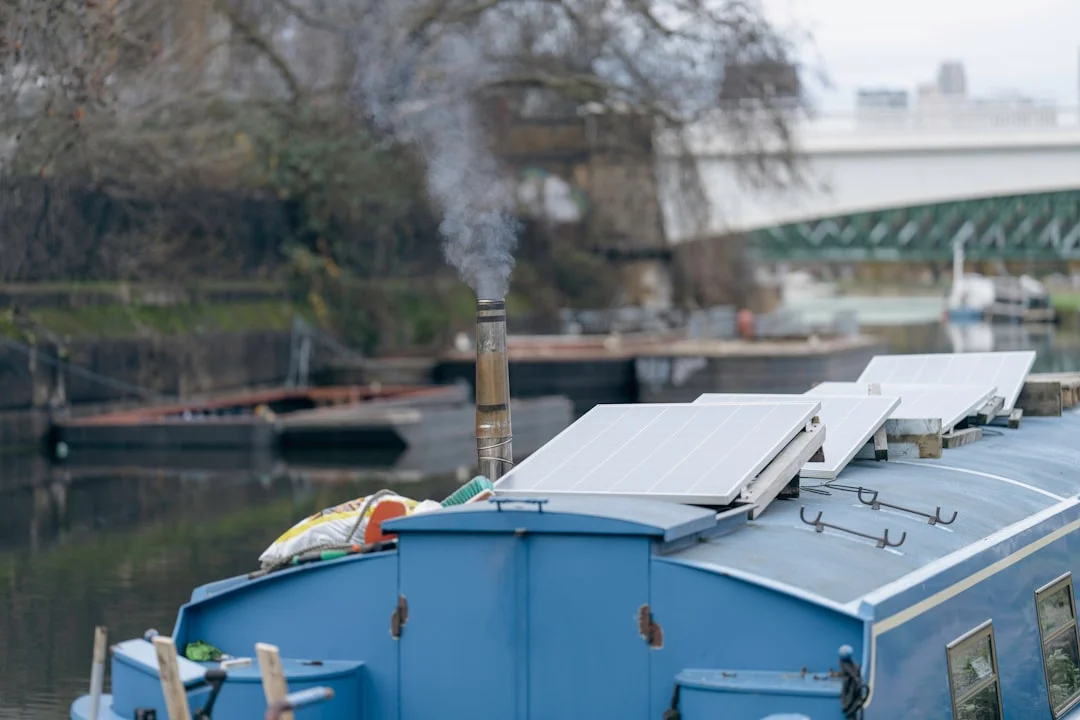
Photo by w sh on Unsplash
Propane Heat: Sealed Furnaces vs Unvented Cabin Heaters
Moisture and CO risk: the venting line you can’t ignore
Propane heat on boats is two completely different animals: sealed/vented furnaces versus unvented catalytic/portable heaters. A vented propane furnace (marine or RV style) keeps combustion outside and can deliver serious heat—often 12,000–20,000 BTU/hr—without dumping combustion water into the cabin. An unvented unit may be rated anywhere from 3,000–18,000 BTU/hr, but it adds moisture and requires ventilation that can erase much of the heating gain.
Unvented propane is also where CO and oxygen depletion risk gets real, fast. You can reduce risk with ventilation and alarms, but you’re choosing a system that needs perfect human behavior every time. Liveaboards are human, and humans do dumb things when they’re tired, cold, and trying to make coffee.
ABYC A-1 LPG system requirements that affect real installs
If you want propane to be a responsible choice, the LPG system has to be built like a marine system, not a camping setup. ABYC A-1 drives the basics surveyors and insurers care about: a cylinder locker vented overboard, a proper regulator, an electric solenoid shutoff, correctly marked LPG hose, and a way to do leak testing. Many boats also fit a propane “sniffer” (LPG vapor detector), because propane is heavier than air and collects in the bilge like trouble.
This is where propane gets expensive in a retrofit. An ABYC-style LPG locker rebuild with drain/vent, solenoid, regulator, hose runs, and sniffers can run $600–$2,500 in parts and $1,500–$5,000 installed, depending on access and how much of the old system needs to be ripped out. It’s money well spent if you want to sleep aboard with propane aboard and keep your insurance company’s blood pressure down.
When propane makes sense for liveaboards
Propane’s big advantage is energy density and familiar appliances. Propane carries about 21,600 BTU per lb, so a standard 20 lb cylinder holds about 432,000 BTU. If you’re running a 15,000 BTU/hr vented furnace at a moderate duty cycle, you can get multiple nights out of one cylinder—until you can’t, because refill logistics vary wildly by region.
Cold weather is the other reality check: propane vaporization drops as temperatures fall, and cylinder pressure can sag when you draw hard in near-freezing conditions. Exchange cylinders are also inconsistent; you might get a “20 lb” bottle filled to less than 20 lb of propane, and your runtime math quietly dies. If your cruising route includes areas where propane fills are scarce, check the nautical miles for your planned route to plan stops and keep a reserve—because running out of heat is annoying, but running out while wet is memorable.
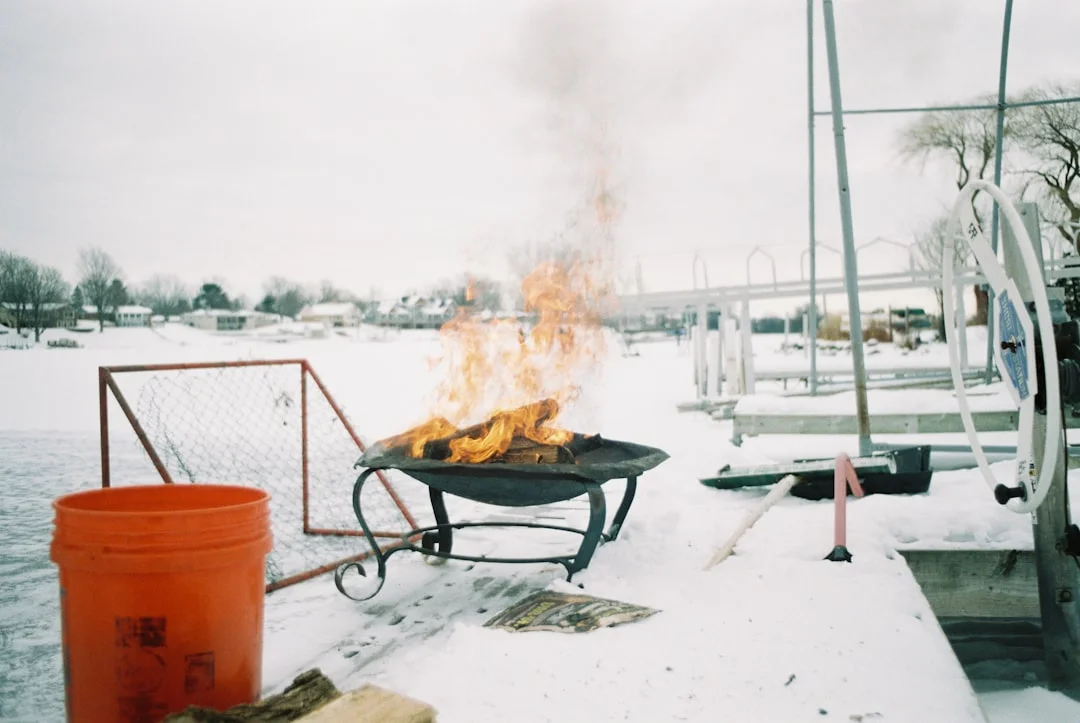
Photo by Luke Schlanderer on Unsplash
Electric Heat Aboard: Shore Power Math and Off-Grid Limits
30A vs 50A service: what you can actually run
Electric resistance heat is simple, clean, and effectively 100% efficient at point of use. The catch is that it’s limited by shore power capacity and marina pricing. On 120V, a 1,500 W heater draws 12.5 A, and a 750 W unit draws 6.25 A, which sounds manageable until you stack liveaboard loads.
A 30A/120V pedestal gives you about 3,600 W max. One 1,500 W heater eats roughly 42% of that capacity; two heaters (3,000 W) nearly max it out before you even run a battery charger, water heater, or induction cooker. On 50A/240V service (often 12,000 W total available), electric heat becomes far easier, and you can actually warm a larger boat without playing breaker roulette.
Why resistive heat rarely pencils out on batteries/inverters
Off-grid electric heat is where wishful thinking goes to die. A small 12V ceramic “car heater” at 150 W only makes about 512 BTU/hr, which is a rounding error in a damp cabin. Meaningful electric heat requires kilowatts, and kilowatts require a generator or a very serious inverter and battery bank.
Could you do it with lithium, big alternators, and solar? Sure—if you like funding your installer’s retirement plan and you don’t mind the system complexity. For most cruising liveaboards, electric heat is a dockside luxury and an off-grid nonstarter, unless you already run a generator for other reasons.
Electric heater safety and ABYC E-11 considerations
Portable electric heaters are safe-ish if you treat them like open flames in disguise: clearance, stability, and proper circuits. Many household units recommend 3 ft (0.9 m) clearance to combustibles, and on boats that can be hard to achieve without roasting curtains or igniting a forgotten oilskin. Tip-over protection and overheat shutoff are non-negotiable features.
From a systems perspective, shore power wiring should follow ABYC E-11, including correct wire gauge, proper breakers, and shore power inlet integrity. Modern installs often include ELCI protection (common in newer panels), and USCG 33 CFR 183 Subpart I sets baseline electrical requirements. Also: don’t put household heaters in machinery spaces, and don’t run them on sketchy extension cords—your marina neighbors didn’t sign up for your learning curve.
Photo by Krzysztof Płocha on Unsplash
Running Costs and Power Use: Diesel vs Propane vs Electric
Here’s the comparison sailors actually need: cost per 10,000 BTU delivered, then what that looks like over 8 hours and 24 hours. Assumptions are explicit: diesel usable heat ~102,000 BTU/gal (80% efficiency), electricity 1 kWh = 3,412 BTU, propane 21,600 BTU/lb with a 20 lb cylinder = 432,000 BTU (appliance efficiency varies; figures below treat fuel energy as delivered for planning, which favors propane a bit if your appliance is less efficient).
| Heat source | Energy price range used | Delivered energy basis | Cost per 10,000 BTU (low–high) | Cost for 8 hours @ 10,000 BTU/hr | Cost for 24 hours @ 10,000 BTU/hr |
|---|---|---|---|---|---|
| Diesel (forced-air, ~80% overall) | $3.50–$6.00/gal | ~102,000 BTU/gal | $0.34–$0.59 | $2.75–$4.71 | $8.24–$14.12 |
| Propane (planning basis) | $15–$35 per 20 lb | 432,000 BTU/cyl | $0.35–$0.81 | $2.78–$6.48 | $8.33–$19.44 |
| Electric resistance | $0.15–$0.45/kWh | 3,412 BTU/kWh | $0.44–$1.32 | $3.52–$10.56 | $10.56–$31.68 |
Battery overhead matters off-grid. Diesel heaters typically sip ~0.7–2.5 A @12V after startup, while many propane furnaces use ~2–7 A @12V for the blower, and that can change your charging schedule. Dockside pricing is the wild card: if electricity is “included” in slip fees, electric heat is hard to beat; if it’s metered at $0.35–$0.45/kWh, the math flips quickly.
Safety, Standards, and Installation Checklists (ABYC/USCG/ISO)
CO, fire, and fume pathways: the failure-mode view
On boats, accidents rarely come from one failure. They come from a chain: a small exhaust leak, a following wind, a partially blocked vent, and a CO alarm with a dead battery. Think in layers: sealed combustion where possible, proper exhaust routing, correct fuel and electrical installs, working alarms, and a plan for what you do when something smells “off.”
CO is odorless, and cabins are small. ABYC A-24 addresses CO detection on boats with fuel-burning heaters/engines/generators, and it’s not optional in any practical sense for liveaboards. Put alarms near sleeping spaces and in the main cabin where airflow actually carries fumes; one alarm buried behind a cushion doesn’t count as a safety system.
What ‘ABYC compliant’ should mean for each heater type
For propane, ABYC A-1 is the big one: vented overboard locker, regulator, solenoid, proper hose/markings, and leak testing provisions. Surveyors commonly check that the locker drain really exits overboard, that the solenoid shuts off at the tank, and that hoses and fittings are marine-appropriate. USCG 33 CFR 183 Subpart J provides fuel-system baseline context, and insurers typically expect ABYC-level execution.
For electric heat and shore power, ABYC E-11 is your reference for wiring methods, overcurrent protection, shore power inlets, and safe integration with inverters. USCG 33 CFR 183 Subpart I is the federal floor, but ABYC is the ceiling most pros work to. If you’re using certified liquid-fueled heaters, ISO 14895 is part of the conversation for forced-draught burners and CE-marked appliances, especially when comparing certified units to bargain kits.
Liveaboard preflight checklist (daily/seasonal)
Daily, I do three quick checks: sniff test near the heater and exhaust outlet, verify the CO alarm is alive, and look for anything stored too close to hot ducting. Seasonally, I inspect exhaust insulation and heat shields, check clamps, and confirm the through-hull fitting hasn’t loosened or started chafing nearby wiring. I also keep a fire extinguisher accessible and appropriate to the boat, because fires don’t care about your opinions.
Portable electric heaters deserve the same seriousness: maintain clearance (often 0.9 m / 3 ft per manufacturer guidance), avoid cheap extension cords, and don’t run them unattended around bedding. I’ve been aboard enough boats to know that “it’ll be fine” is the leading cause of exciting stories at the dock bar.
Tip (non-negotiable): If you have any fuel-burning heater aboard, install CO alarms per ABYC A-24, test them monthly, and replace them on schedule. A dead CO alarm is decorative plastic.
Choosing the Best Boat Heater by Lifestyle, Climate, and Routes
Marina liveaboard vs cruising/anchoring: energy logistics
If you sleep at the dock most nights, electric heat is hard to beat for simplicity and dryness, provided your shore power is robust. On 30A/120V, you’ll likely top out at one 1,500 W heater plus careful load management, while 50A/240V lets you heat a bigger boat without choosing between warmth and a hot shower. For many marina liveaboards, a small electric heater plus a dehumidifier is the least dramatic winter plan available.
If you anchor often, diesel forced-air becomes the practical answer because it delivers 10,000–17,000 BTU/hr-class heat on ~0.6–1.5 gal/day and modest 12V draw. Propane can work off-grid too, but only if your LPG system is truly ABYC A-1 grade and your appliance is sealed/vented; otherwise you’ll fight condensation and manage higher risk.
Route planning and distance-to-fuel planning for heating season
Winter cruising adds a planning constraint: fuel availability and shore power access can matter as much as air temperature. If your diesel heater can burn 0.6–1.5 gal/day, you can estimate heating fuel needed between stops, then add a reserve for weather delays. My rule is simple: carry 2–3 extra days of heating reserve beyond your calculated interval, because forecasts lie and headwinds happen.
This is where tools like Breezada’s sea distance calculator earn their keep. If you can estimate distance and typical passage time between fuel docks or marinas, you can translate that into heater runtime, fuel burn, and whether you need to slow down or stop earlier. It’s not about fancy routing—it’s about not arriving cold and underfueled.
Decision matrix: what to install first (heat vs insulation vs ventilation)
Before you throw money at a heater upgrade, reduce the BTU you need. Insulate hatch lenses, add removable window covers, seal obvious drafts, and create a controlled ventilation path that doesn’t turn the boat into a wind instrument. Drying lockers and wet-gear management often do more for livability than another 5,000 BTU/hr.
Here’s the straight decision matrix I use when friends ask what to install first.
| Heater type | Dock-only liveaboard | Mixed dock + anchor | Anchor-heavy / cruising |
|---|---|---|---|
| Diesel forced-air (2–5 kW) | Works well, but install cost may feel high if shore power is cheap | Best all-around: off-grid capable, dry heat (sealed combustion), modest 12V draw | Best fit: plan 0.6–1.5 gal/day for 5 kW class; carry fuel reserve and spare parts |
| Propane furnace (sealed/vented) | Good if you already have ABYC A-1 LPG and want centralized heat | Viable, but LPG logistics and blower draw 2–7 A @12V can matter | Works if LPG refills are reliable; ABYC A-1 compliance is non-negotiable |
| Electric resistance (750–1500 W) | Best value if power is included; limited by 30A service | Great at the dock, useless at anchor without generator/inverter | Usually impractical off-grid; “12V heaters” are tiny (150 W ≈ 512 BTU/hr) |
Frequently Asked Questions
For a 30A/120V shore power pedestal, what continuous load margin should I reserve if I run one 1,500 W heater (12.5 A) alongside a 40–60A battery charger and a 6-gal water heater, and how should breakers be sized per ABYC E-11?
On 30A/120V, you have 30A total and you should avoid riding the limit continuously; I reserve 20–25% margin when I can, especially on old pedestals and warm cords. A 1,500 W heater draws 12.5A; a 6-gal water heater is commonly 1,500 W as well (another 12.5A), and a 40–60A battery charger can pull roughly 700–1,200 W AC depending on charge rate and efficiency (~6–10A). That combination can exceed 30A quickly, so you typically stagger loads (heater + charger, then water heater later) and size breakers per ABYC E-11 and manufacturer guidance, using properly rated branch circuits and avoiding nuisance trips from continuous near-max draw.
What exhaust routing details most reduce CO risk on small diesel air heaters (24–28 mm ID exhaust)—maximum practical run length, insulation, through-hull location, and how to avoid intake/exhaust recirculation in following winds?
Keep the 24–28 mm ID exhaust run as short and straight as practical, minimize bends, and fully clamp and seal every joint because tiny leaks matter in small cabins. Insulate the exhaust and add heat shielding anywhere it passes within a few inches of wood, wiring, or hoses, and use a proper exhaust skin fitting at the hull/deck exit. Place the outlet where fumes won’t drift into cockpit enclosures or open ports, and separate combustion intake from exhaust so a following wind doesn’t push exhaust back toward the intake. Finally, treat a CO alarm per ABYC A-24 as part of the system, not an accessory.
How do I estimate delivered heat and daily fuel use for a 5 kW diesel heater using a 0.10–0.24 L/hr burn range, and what signs indicate short-cycling/coking from oversizing?
Start with the burn range: 0.10–0.24 L/hr equals 2.4–5.8 L/day over 24 hours, or roughly 0.6–1.5 gal/day. Delivered heat depends on duty cycle and losses; if you’re only comfortable with the heater blasting then shutting down repeatedly, your “effective” heat may be lower than expected due to duct losses and poor air return. Signs of oversizing and short-cycling include frequent start/stop behavior, sooty exhaust odor, smoky startups, and eventual hard-starting from coked combustion chambers. A correctly sized system runs longer at lower output, with steadier cabin temps and less soot.
In an ABYC A-1 compliant LPG retrofit, what are the minimum functional elements (vented locker drain overboard, solenoid shutoff, regulator, hose marking/type, leak test point, and sniffer) that surveyors/insurers typically verify?
Surveyors usually want to see a dedicated LPG locker that is sealed from the interior and vented/drained overboard from the lowest point, not into the bilge. They look for a tank-mounted or locker-mounted solenoid shutoff, a proper marine regulator, correctly marked LPG hose of the proper type, secure chafe-protected routing, and a means of leak testing (often a test point or gauge setup). Many also expect a working LPG vapor detector (“sniffer”) with the sensor mounted low where propane would collect. In practice, if it doesn’t look and function like ABYC A-1, you’ll fight both safety risk and insurance acceptance.
How much cabin moisture does an unvented propane heater add in practice (using 1.64 kg water per 1 kg propane), and how does that change dew point and condensation on single-pane portlights at night?
Using the planning number, burning 1 kg of propane produces about 1.64 kg (1.64 L) of water vapor. If that heater is unvented, most of that water ends up in the cabin air and soft goods, raising RH and pushing dew point upward, which makes condensation more likely on cold surfaces like single-pane portlights and hatch frames. At night, those surfaces cold-soak toward outside temperature, so a higher dew point means they cross the condensation threshold sooner and stay wet longer. The result is the classic “warm cabin, raining windows” effect—especially if you’re also cooking, drying gear, and breathing in a closed boat.
Conclusion (working captain’s summary): The best boat heater for liveaboards is the one that matches your energy reality and keeps moisture and CO risk under control. Diesel forced-air dominates for anchoring and off-grid heat with dry cabins (sealed combustion), electric is the simplest dockside option but amps-limited, and propane only shines when it’s a sealed/vented system installed to ABYC A-1. Condensation control is a system—heat plus ventilation plus insulation—and CO detection and compliant installation details are not optional for full-time living aboard.
About the Author
Related Articles
San Francisco Bay Sailing: Winds, Tides & Hazards Guide
Plan safer San Francisco Bay sailing with wind patterns, tides, currents, fog and key hazards. Use this guide to pick a route and go sail today.
By Breezada Team
Sailboat Engine Won't Start: Diagnostic Flowchart
Troubleshoot a sailboat engine that won't start with a step-by-step flowchart for batteries, starter, fuel, air, glow plugs & alarms. Fix it now.
By Breezada Team
Sailboat Bottom Paint Guide: Types, Costs & Prep
Learn sailboat bottom paint types, costs, and prep steps—plus how often to repaint. Get the right antifouling plan for your boat today.
By Breezada Team
Diesel Heater Troubleshooting Boat: No-Start & Soot Fixes
Fix diesel heater no-start and sooting on your boat. Step-by-step checks for power, fuel, air/exhaust and maintenance—read the guide now.
By Breezada Team