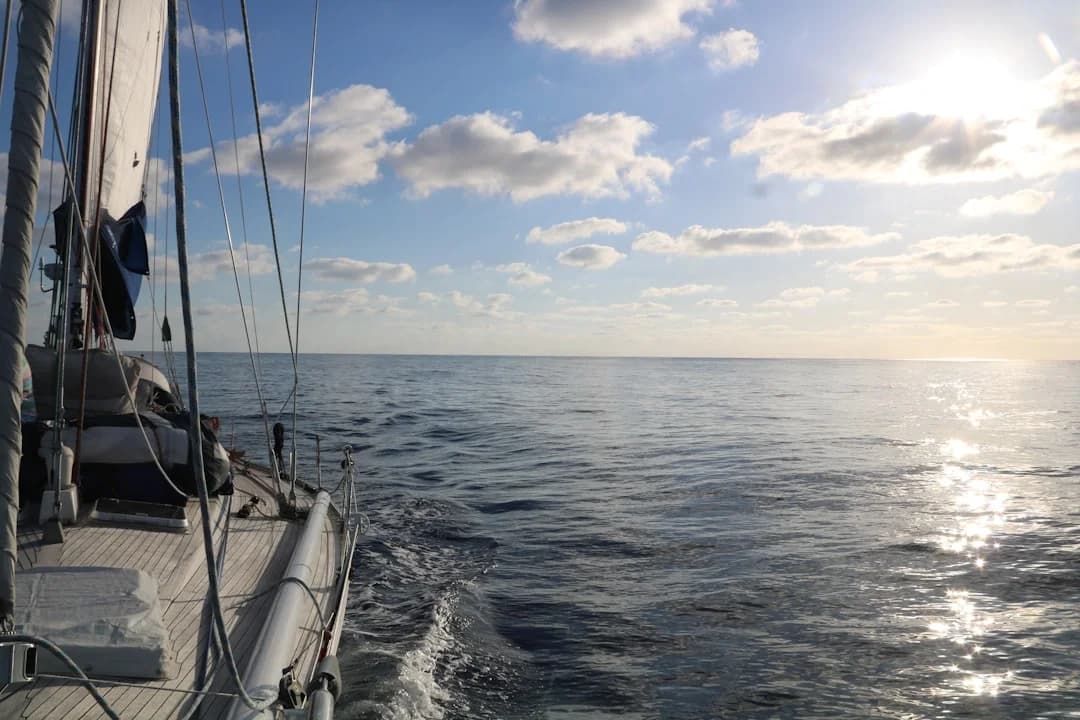
Buying your first sailboat is one of those decisions that feels monumental — because it is. Get it right and you have a boat that teaches you, grows with you, and takes you places you never expected. Get it wrong and you spend weekends fixing things in a boatyard instead of sailing.
The good news: the "right" first sailboat is not a single make and model. It is a category of boats defined by your sailing goals, your budget, the waters you will sail, and how much maintenance you are willing to tolerate. This guide walks through each of those factors so you end up with a boat that fits your life, not someone else's fantasy.
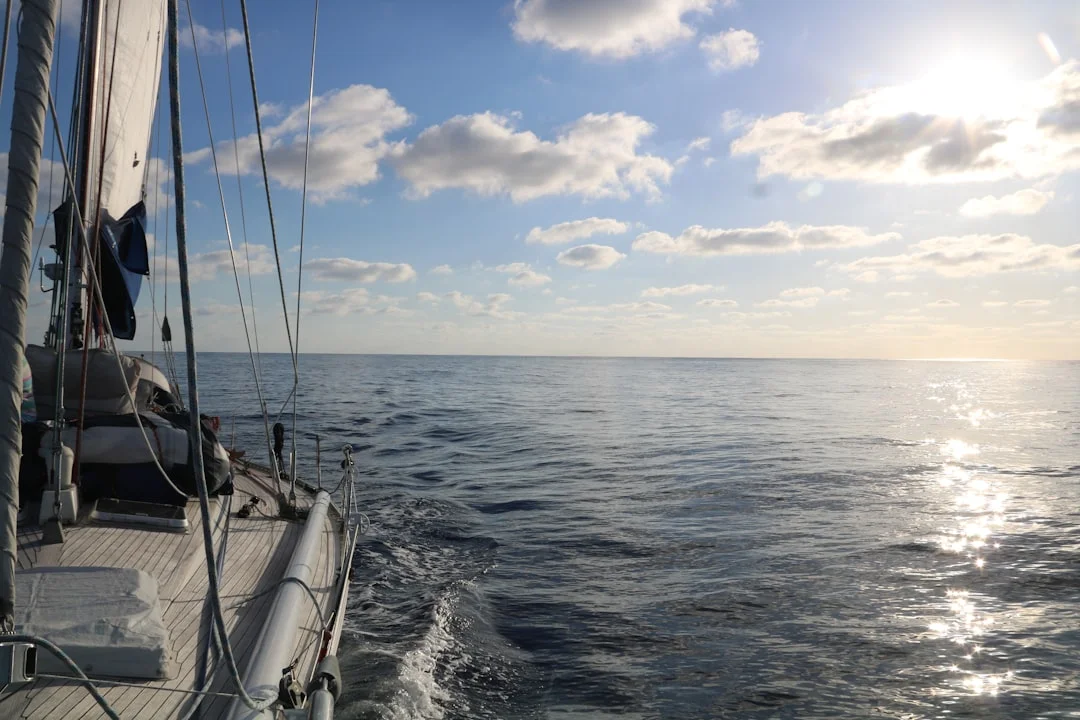
Your first sailboat does not need to be your last — but picking the right one means you will actually use it
Monohull vs. Catamaran: The First Big Decision
Every boat conversation starts here, and there is no wrong answer — only trade-offs.
Monohulls
The classic sailboat shape. One hull, a weighted keel underneath, and the ability to heel (lean) when the wind picks up. Monohulls are less expensive to buy and maintain at the same length, easier to find in the used market, and generally better upwind performers than catamarans. They also fit into more marina slips, which matters when you are paying monthly dock fees.
Monohulls feel like sailing. The heel, the responsiveness to the helm, the way the boat communicates through the tiller — there is a visceral feedback loop that many sailors find addictive. For learning, this feedback is genuinely useful. You know immediately when you have trimmed a sail wrong because the boat tells you.
Best for: Budget-conscious buyers, marina slip availability, learning fundamentals, solo sailing, racing.
Catamarans
Two hulls connected by a bridgedeck. Catamarans offer dramatically more interior space, no heeling (they sail flat), shallower draft for anchoring close to shore, and better stability at rest. They are floating apartments, and for couples or families, the comfort factor is hard to ignore.
The downsides: catamarans cost roughly 40-60% more than a monohull of comparable quality at the same length. They require wider slips (and wider slips cost more). They are slower to tack, less responsive in light air, and if you ever plan to cross an ocean, a poorly designed catamaran in breaking seas is a genuine safety concern — though well-built bluewater cats like the Lagoon 42 or Fountaine Pajot Elba 45 handle offshore conditions well.
Best for: Families, liveaboard plans, coastal cruising in warm climates, charter use, anyone prone to seasickness.
For a deeper comparison of cruising catamarans with specifications, check out our catamaran buying guide.
What Size Boat Do You Actually Need?
Bigger is not always better. In fact, for a first boat, bigger is usually worse. Here is why:
A 26-32 foot monohull is the sweet spot for most first-time buyers. It is large enough to have a basic cabin (berth, head, maybe a small galley), small enough to single-hand comfortably, and cheap enough that your mistakes — and you will make them — are affordable mistakes.
| Boat Length | Best For | Typical Used Price | Annual Costs |
|---|---|---|---|
| 20-25 ft | Day sailing, racing, learning | $5,000 - $20,000 | $2,000 - $4,000 |
| 26-32 ft | Weekending, coastal cruising | $15,000 - $60,000 | $4,000 - $8,000 |
| 33-38 ft | Extended cruising, liveaboard | $40,000 - $150,000 | $8,000 - $15,000 |
| 39-45 ft | Bluewater passages, families | $100,000 - $400,000 | $15,000 - $30,000 |
| 46+ ft | Circumnavigation, charter fleet | $200,000+ | $25,000+ |
The annual costs column is the one most first-time buyers ignore. Moorage, insurance, bottom paint, engine service, rigging inspection, sails — it adds up relentlessly. The rule of thumb is 10-15% of the boat's value per year in maintenance and operating costs. A $50,000 boat costs $5,000-$7,500 a year to keep sailing.
If you are planning to charter before buying, our yacht charter cost guide breaks down what you will pay to test-sail different boat types in various regions.
The Best First Sailboats: Proven Models
Some boats have earned reputations as excellent first boats through decades of production and thousands of happy (and occasionally unhappy) owners. Here are the models that come up repeatedly in every harbor conversation:
Day Sailers and Small Keelboats (20-25 ft)
Catalina 22 — The Honda Civic of sailboats. Over 15,000 built since 1969. Trailerable, simple, with a pop-top cabin that converts to basic overnight accommodation. Parts are everywhere. Advice is everywhere. If something breaks, someone on a Catalina 22 forum has already fixed it and posted photos. Used price: $2,000-$8,000.
J/24 — If you want to race, this is where you start. The J/24 is a one-design racing class with active fleets worldwide. It teaches you sail trim, tactics, and boat handling better than any larger boat because mistakes are immediately obvious. Not great for cruising — the cabin is essentially a cave with a portable toilet. Used price: $5,000-$15,000.
Hunter 25 — More interior comfort than the Catalina 22 with a similar price point. The Hunter's fractional rig is forgiving for beginners. Used price: $4,000-$12,000.
Weekender Cruisers (26-32 ft)
Catalina 27 / Catalina 30 — More room, same Catalina philosophy: accessible, well-documented, and easy to maintain. The Catalina 30 has a proper V-berth, enclosed head, and small galley. It is the boat that has introduced more people to cruising than probably any other. Used price: $8,000-$25,000.
Pearson 26 / Pearson 28 — Built like tanks in the 1970s and 80s when fiberglass was cheap and hulls were thick. These boats are overbuilt by modern standards, which means they survive decades of neglect and can be brought back to life with sweat equity. Used price: $5,000-$15,000.
Cal 29 — A Bill Lapworth design (same designer as the legendary Cal 40) that sails beautifully for its size. The Cal 29 performs well upwind and has a comfortable cockpit for its length. Used price: $8,000-$20,000.
Ericson 27 — A Bruce King design with a balanced helm and lovely lines. Ericsons are well-regarded on the West Coast of the US and sail noticeably better than many competitors at this size. Used price: $6,000-$18,000.
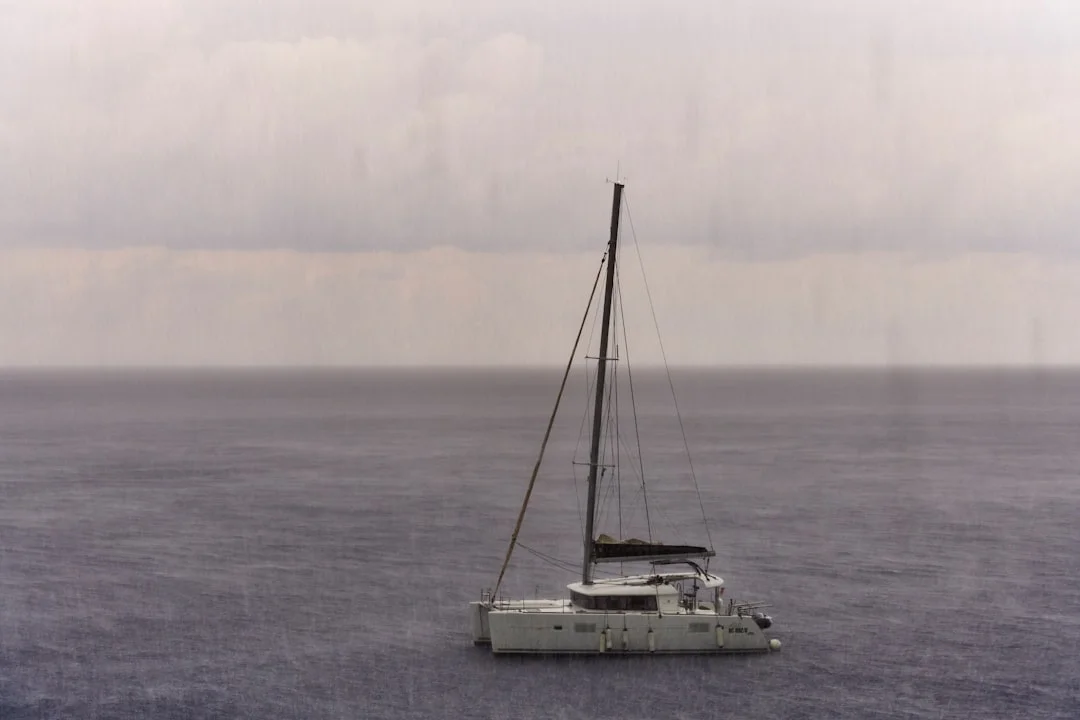
Catamarans offer unmatched interior space and stability — but the higher price tag means they are rarely first boats unless the budget allows
Capable Cruisers (33-38 ft)
If your first boat will also be your first passage-maker — say you are planning a Caribbean season within a year or two — starting at 33-38 feet makes sense.
Catalina 36 — The big sister. Room for a family, a proper galley, standing headroom, and enough tankage for multi-day coastal passages. Thousands built, strong resale value. Used price: $30,000-$70,000.
Island Packet 32 / 35 — Full keel, heavy displacement, built for comfort in a seaway. Island Packets are the Volvo of sailboats — not exciting, but reassuringly competent and well-constructed. They hold their value exceptionally well. Used price: $50,000-$90,000.
Beneteau Oceanis 35.1 — The modern option. Lighter, wider, with more interior volume than older designs at the same length. The chine hull provides form stability without a heavy keel. Good for coastal cruising in moderate conditions. Used price: $80,000-$140,000 (newer models).
What to Inspect Before Buying a Used Sailboat
A marine surveyor is non-negotiable for any boat over $10,000. But before you hire a surveyor, you should do your own preliminary inspection to avoid wasting money surveying boats that are obvious money pits. Here is what to check:
Hull and Deck
- Blisters on the bottom — small, fluid-filled bumps in the gelcoat indicate osmotic blistering. Common in boats stored in the water for decades. Minor blistering is cosmetic. Extensive blistering below the waterline means a peel-and-barrier job costing $3,000-$10,000.
- Deck core moisture — tap the deck with a plastic mallet. Solid fiberglass sounds sharp. Waterlogged core sounds dull and thudding. Wet core in the deck is one of the most expensive problems to fix.
- Keel-hull joint — look for cracks, weeping, or movement where the keel meets the hull. On bolt-on keels, this joint is structural and critical.
Rigging
- Standing rigging age — wire stays and shrouds should be replaced every 10-15 years regardless of appearance. If the current owner cannot tell you when the rig was last replaced, budget $3,000-$8,000 for new standing rigging.
- Mast step and chainplates — these are the structural connection points. Corroded chainplates are dangerous and expensive to replace because they typically run through the deck into the hull.
- Running rigging — halyards, sheets, and control lines. Easy and cheap to replace, but frayed lines tell you how the boat has been maintained overall.
Engine
- Hours — a well-maintained diesel with 2,000 hours has plenty of life left. A neglected diesel with 500 hours might be worse off.
- Oil condition — dark and thick is bad. Milky means water intrusion (head gasket or heat exchanger leak). Clean and amber is what you want.
- Raw water system — check the impeller, heat exchanger, and exhaust elbow. The exhaust elbow is the single most commonly neglected item and costs $500-$1,500 to replace.
- Start it cold — a diesel that starts easily when cold and runs without excessive smoke is in reasonable shape.
Sails
- Hold them up to the light — threadbare patches, UV damage along the leech, and blown-out shape are immediately visible.
- Check the stitching — UV destroys thread before it destroys fabric. Re-stitching costs $200-$500 per sail. New sails cost $1,500-$5,000 each.
Electronics and Safety
- VHF radio — required for safety. Test it.
- Depth sounder and knotmeter — basic instruments that should work.
- Navigation lights — check all of them. Non-working nav lights are a safety violation and an insurance issue.
- Bilge pump — electric and manual. Test both.
- Fire extinguisher dates — if they are expired, budget $100-$200 for replacements.
Hidden Costs That Catch First-Time Buyers
The purchase price is just the beginning. Here is what the first year actually looks like:
| Cost Category | Typical Range | Notes |
|---|---|---|
| Purchase price | Varies | Budget 10% for negotiation below asking |
| Marine survey | $400-$800 | Non-negotiable for boats over $10K |
| Haul-out for survey | $200-$400 | Yard charges for lifting |
| Bottom paint | $800-$2,000 | Needed annually if kept in water |
| Insurance | $500-$2,000/year | Agreed value policy recommended |
| Slip/mooring | $2,000-$12,000/year | Varies enormously by location |
| Registration/taxes | $100-$2,000 | State-dependent |
| Safety gear | $500-$1,500 | PFDs, flares, fire extinguishers, first aid |
| Rigging replacement | $3,000-$8,000 | If overdue at purchase |
| Engine service | $300-$800 | Oil change, impeller, filters, zincs |
A realistic first-year budget for a $20,000 used 28-foot monohull is $28,000-$35,000 all-in. That is not meant to scare you — it is meant to help you plan accurately so the boat is a source of joy rather than financial stress.
The view from the cockpit on a quiet evening — this is why people buy sailboats
Where to Find Used Sailboats
Yacht World and Boat Trader are the two largest online marketplaces. Filter by length, year, price, and location. Listings from brokers tend to be more thoroughly described; private sales tend to be cheaper.
Facebook Marketplace and Craigslist — yes, really. Some of the best deals on older boats come from owners who just want the boat gone. Be cautious, but do not dismiss these platforms.
Yacht clubs and marinas — walk the docks. Talk to people. The best boats often sell through word of mouth before they ever get listed online. A handwritten "For Sale" sign on a well-maintained boat in a good marina is worth investigating.
Boat shows — useful for new boats and understanding what is available, but you will not find bargains here. Attend for education, not for purchasing.
Your First Season: What to Expect
The first season with a new-to-you sailboat follows a predictable pattern:
Month 1-2: Fix the things the survey found. Replace the standing rigging if it is due. Service the engine. Commission the boat, splash it, and motor around the harbor feeling simultaneously thrilled and terrified.
Month 3-4: Start sailing. Short trips, close to home. Learn how the boat handles — every boat has personality. Some like to be sailed flat, some tolerate heel. Some point well upwind, some prefer reaching. Yours will teach you its preferences if you pay attention.
Month 5-6: Push the boundaries. Longer day sails, your first overnight on the hook, maybe a weekend cruise to a nearby harbor. You will learn what gear you need, what systems need upgrading, and what you worried about for no reason.
By the end of your first season, you will know whether this particular boat is "the one" or a stepping stone. Either answer is fine. Most sailors go through 2-3 boats before finding the one they keep for a decade.
Use Breezada's sea distance calculator to plan those first cruises — knowing the exact nautical miles between your home port and nearby harbors helps you estimate timing and fuel needs.
Should You Finance a Sailboat?
Marine loans are available from specialized lenders for boats over $25,000. Terms typically run 10-15 years at rates 1-2% above conventional auto loans. A 20% down payment is standard.
For first boats under $25,000 — which is where most first-time buyers should be shopping — financing is rarely available or practical. Pay cash. If you cannot afford the boat and its first year of costs without financing, you cannot afford the boat. That sounds harsh, but boats are not investments that appreciate — they are assets that demand constant spending, and adding a loan payment on top of maintenance costs is how boats end up abandoned in boatyards.
Quick Decision Framework
Still unsure what to buy? Answer these five questions:
- What will I use it for? Day sailing only → 22-25 ft. Weekend cruising → 26-32 ft. Extended cruising → 33-38 ft.
- Where will I keep it? Trailer → under 26 ft. Marina slip → match local slip sizes. Mooring → any size works.
- How many people regularly? Solo/couple → 25-32 ft is plenty. Family with kids → 30-38 ft minimum.
- What is my total first-year budget? Multiply your boat budget by 1.5 — that is your realistic year-one cost.
- Will I do my own maintenance? Yes → older, simpler boats with thick fiberglass. No → newer boats with warranty remaining or well-documented service history.
The honest answer to those questions will narrow your search from "every sailboat ever built" to a handful of specific models. Start there, calculate distances between your target cruising grounds, and go look at boats.
Frequently Asked Questions
What is the best sailboat for a complete beginner?
The Catalina 22 for day sailing and learning, or the Catalina 27/30 for weekending and coastal cruising. Both models have enormous owner communities, cheap and available parts, and forgiving sailing characteristics. They are not exciting boats — they are boats that let you learn without punishing your mistakes.
How much should I spend on my first sailboat?
Between $8,000 and $30,000 for most first-time buyers looking at used monohulls in the 26-32 foot range. Remember to budget an additional 50% of the purchase price for the first year's costs — survey, commissioning, slip fees, insurance, and inevitable repairs.
Should I buy a new or used sailboat?
Used. A new sailboat depreciates 15-25% the moment you take delivery, and first-time buyers will inevitably ding, scratch, and stress-test their boat in ways that are much less painful on a $15,000 Pearson than a $150,000 Beneteau. Buy used, learn on it, then buy new once you know exactly what you want. For a full ten-year total-cost-of-ownership breakdown, see our new vs used sailboat cost comparison.
Is a catamaran a good first sailboat?
A catamaran can work as a first sailboat if your budget supports it (typically 40-60% more than a comparable monohull). The flat sailing and spacious interior are appealing, especially for families. However, most sailing instructors recommend starting on a monohull because the heel feedback helps you develop an intuitive understanding of wind, balance, and sail trim.
How long do sailboats last?
A well-maintained fiberglass sailboat can last 50+ years. Many boats from the 1970s and 80s are still actively sailing. The hull and deck are essentially permanent; what ages are the systems — engine, rigging, electronics, sails, plumbing. Budget for replacing these components on a rolling schedule, and the boat outlasts you.
About the Author
Related Articles
How to Dock in a Slip: Finger Piers, Wind & Current
Learn how to dock in a slip with finger piers—bow-in or stern-in—handling wind, current, and prop walk. Get the step-by-step plan now.
By Breezada Team

San Francisco Bay Sailing: Winds, Tides & Hazards Guide
Plan safer San Francisco Bay sailing with wind patterns, tides, currents, fog and key hazards. Use this guide to pick a route and go sail today.
By Breezada Team
Sailboat Engine Won't Start: Diagnostic Flowchart
Troubleshoot a sailboat engine that won't start with a step-by-step flowchart for batteries, starter, fuel, air, glow plugs & alarms. Fix it now.
By Breezada Team
Sailboat Bottom Paint Guide: Types, Costs & Prep
Learn sailboat bottom paint types, costs, and prep steps—plus how often to repaint. Get the right antifouling plan for your boat today.
By Breezada Team