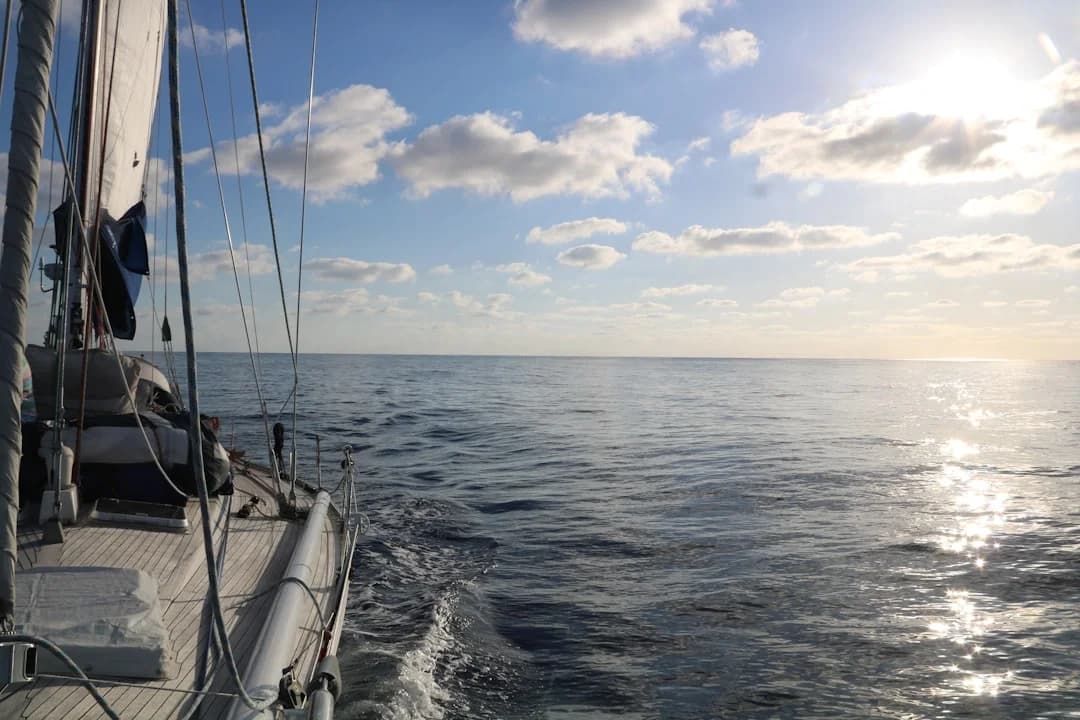
The passage from Bermuda to the Azores is the second leg of the classic North Atlantic circuit, covering roughly 1,820 nautical miles of open ocean from St. George's to Horta on Faial. For most cruising boats it takes 14 to 18 days, riding the prevailing southwesterlies that wrap around the Bermuda-Azores high. It is, by some margin, one of the most rewarding offshore passages a sailor can make — and it punishes anyone who treats it casually.
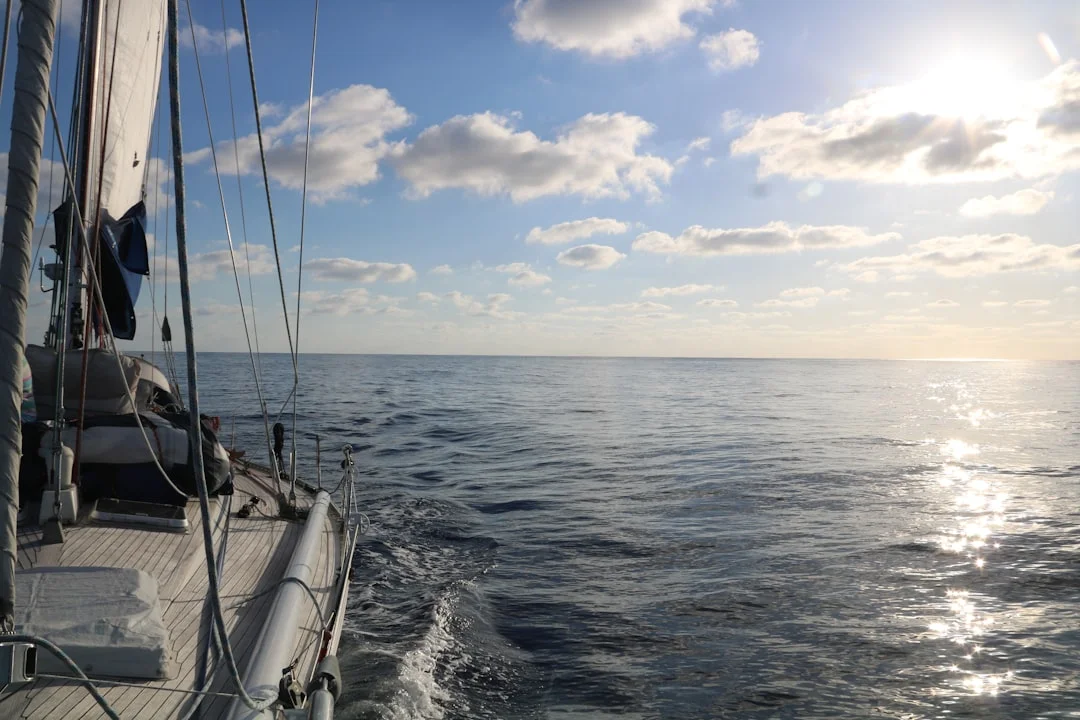
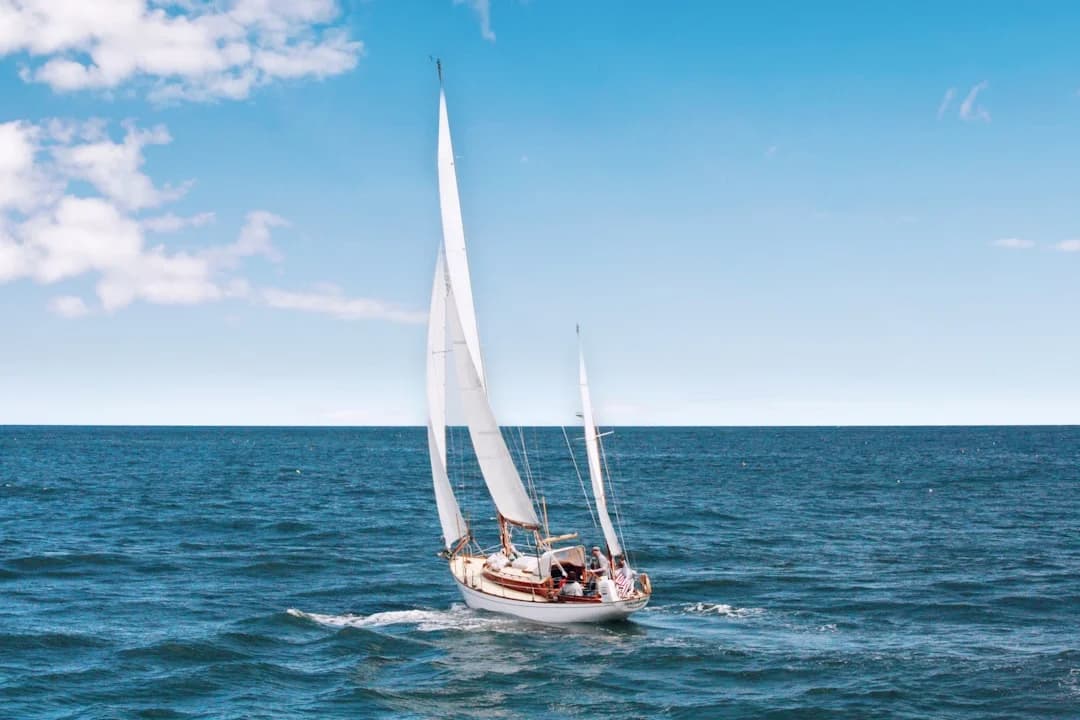
Photo by Niklas Roth on Unsplash
The Route at a Glance
The mid-Atlantic leg from Bermuda to the Azores is a true downwind-to-reaching passage. You are sailing along the southern edge of the Bermuda-Azores high (also called the Azores High), with the goal of staying on the equator-side of the high so the wind keeps blowing from astern or just abaft the beam. Get pushed north into the high and you will sit in glassy calm for days, watching diesel disappear. Drop too far south and you risk meeting weather systems coming up from the tropics later in the season.
The standard rhumb line from St. George's, Bermuda to Horta, Faial is approximately 1,820 nautical miles on a great-circle bearing roughly east-northeast. Most boats sail a curving track south of rhumb at first, then arc back up toward Horta as the high shifts. You can verify distances between waypoints with a sea distance calculator while planning your routing — the rhumb-line number is a starting point, but real passages add 10–20% in distance once you account for the curve and weather diversions.
| Metric | Typical value |
|---|---|
| Rhumb-line distance | 1,820 nm |
| Real distance sailed | 2,000–2,200 nm |
| Average passage time | 14–18 days |
| Average daily run | 110–140 nm |
| Best window | Mid-May to late June |
| Prevailing wind | SW to W, 15–25 knots |
| Departure port | St. George's, Bermuda |
| Arrival port | Horta, Faial, Azores |
A 40-foot cruising boat hitting 6 knots average covers 144 nm a day; you can calculate the distance between Bermuda and Horta for your specific waypoints and divide by your honest hull speed to get a realistic ETA. Don't use brochure speeds — use the speed you actually average over a week.
Why This Route Exists
This passage is the second leg of the so-called "milk run" or "Atlantic circuit" — the seasonal migration of cruising boats from the Caribbean back to Europe each spring. The pattern goes: leave the Caribbean in April, head north to Bermuda (a 5–7 day passage from the BVI or St. Maarten), provision and rest there, then push east to the Azores when the high stabilizes in May. From Horta most boats then make the much shorter hop to Portugal, Gibraltar, or directly into the Mediterranean.
The reason boats stop in Bermuda rather than going direct from the Caribbean to the Azores is mostly weather. Departing the tropics in April puts you out of hurricane risk, but the Atlantic high hasn't fully formed yet — you can hit a stalled low or get pushed too far north into Gulf Stream weather. Bermuda lets you wait out a system, top up water and fuel, and time your departure to a stable forecast.
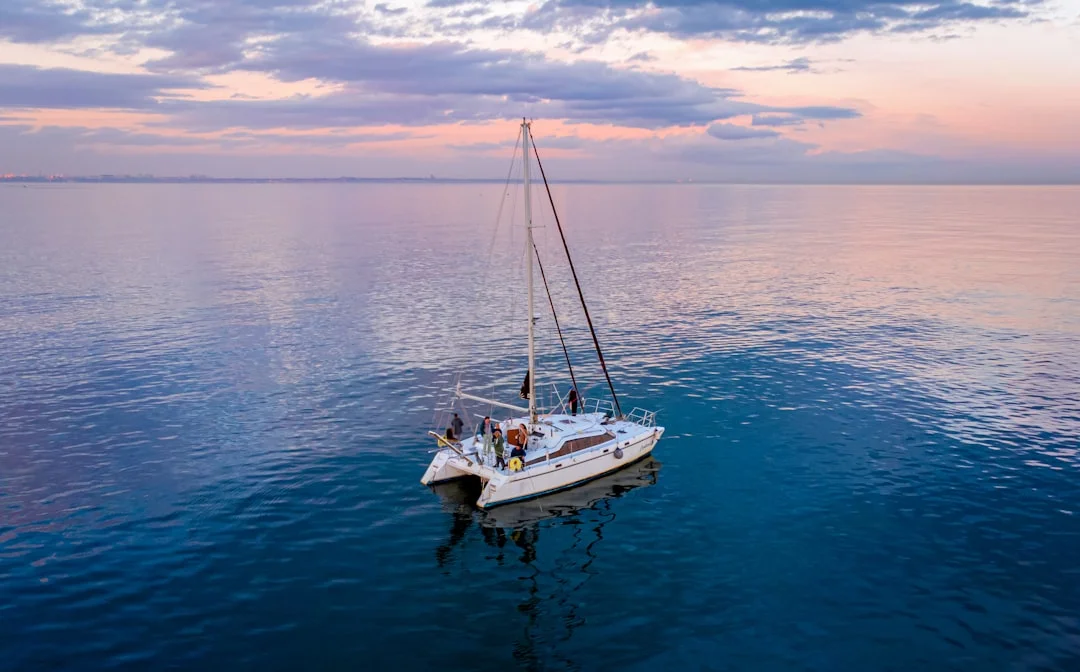
Photo by Alexander on Unsplash
When to Go
Timing is everything on this leg. The window most experienced ocean cruisers aim for runs from mid-May through the third week of June.
Earlier than mid-May, the Atlantic high is unstable. You'll get fast-moving lows tracking east at high latitudes that bend down and clip your route — gale-force winds, big confused seas, and miserable progress. Later than late June, two things happen: the high builds and pushes south, often parking on top of your route and creating windless calms, and the early hurricane season starts to threaten the southern approaches.
The classic departure is around 20 May. By then the high is generally settled, the trades on its southern edge are reliable, and you have a comfortable buffer before tropical activity becomes a concern. Many rallies — the most famous being the ARC Europe — leave Bermuda on a date in this window, and that timing isn't accidental.
Watch the 500 mb chart in the days before departure. You want to see the high centered roughly between 30°N and 35°N, with stable isobars and no deep troughs lining up to push it around. If you see a strong low forming over the eastern US, wait — it'll be in your face within four days. A good weather router earns their fee on this leg.
The Boat
The Bermuda-Azores passage is forgiving compared to a North Atlantic crossing in the wrong direction, but it's still a long way from anywhere. Boats that finish without drama tend to share these traits: a well-found hull at least 35 feet long, a working autopilot AND a wind vane (one as backup), enough fuel for at least 600 miles of motoring, robust standing rigging that has been inspected within the last year, and a ground tackle setup ready for an exposed Horta arrival.
Specific pre-passage items worth attention:
- Rigging: chainplates checked, terminals dye-tested, spare halyard run as backup main and genoa halyards
- Sails: a working trysail rigged on its own track, third reef in the main proven, asymmetric or downwind sail aboard for the lighter days mid-passage; if you are still weighing the headsail setup for a passage like this, our roller furling vs hank-on sails comparison walks through the offshore tradeoffs
- Steering: emergency tiller fitted and tested, autopilot has its own circuit and a backup motor or unit
- Electronics: AIS transponder (not just receiver), Iridium GO! or similar satellite communication, redundant GPS
- Plumbing: all seacocks closed and seized ones replaced, watermaker working before departure (not "should work")
- Engine: oil and filter fresh, secondary fuel filter spare, impeller spare, raw-water strainer cleaned
A long offshore passage is no place to find out which jubilee clip is corroded. If you're new to long passages, our provisioning a sailboat for a voyage guide covers food, water, and stowage planning for trips of this length — which becomes critical when there is no port to duck into for nineteen days.
The Crew
Two-up is doable on this leg. Three is the sweet spot for a 40-foot boat. Four starts to feel crowded but gives you proper watches.
The classic three-person watch system on this passage is a rotating 3-on, 6-off during the night and informal cover during the day. With four crew you can run 3-on, 9-off, which means actual sleep. Sleep is the single biggest performance variable on a 16-day passage. Boats that arrive in Horta exhausted made bad routing decisions in week two — fatigue compounds.
At least one person on board should have done a passage of similar length before. The middle of the Atlantic is not where you want to find out that one of your watch keepers freezes up when conditions get rough.
What the Passage Actually Feels Like
The first 48 hours are usually the worst. Everyone is adjusting to the motion, half the crew is mildly seasick, and there's invariably some gear that wasn't quite stowed properly and now needs to be relashed at 03:00. By day three a routine settles in: watches, meals, sleep, sail trim adjustments, weather download, log entry, repeat. The boat feels normal. You stop noticing the noise of water on the hull.
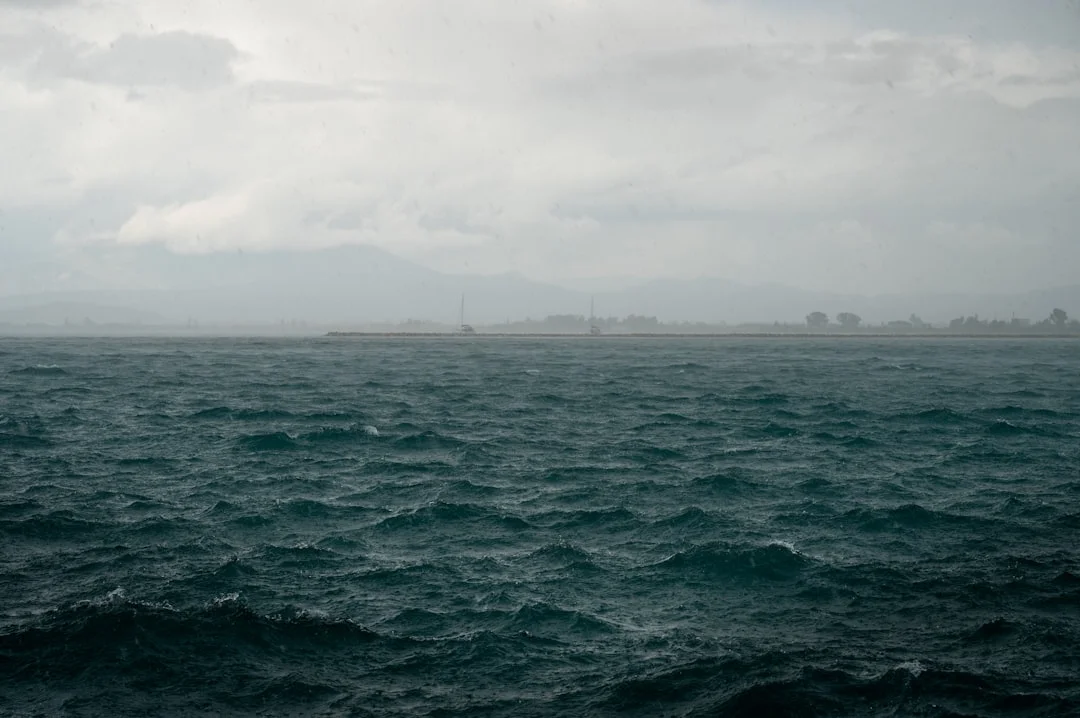
Photo by Ruben Aster on Unsplash
Days four through ten are typically the best sailing of any passage you'll ever do. You're well clear of land influences, the high is stable, and you sit with the apparent wind on the quarter at 15–22 knots, surfing down the slow Atlantic swell at hull speed. This is the passage people remember. Phosphorescence trails off the rudder at night. The Pleiades rises before the moon does. Someone will catch a mahi-mahi.
Then somewhere around day eleven the high either weakens or shifts, and you start dealing with a genuine weather system — sometimes a benign trough, sometimes a proper gale that requires a third reef and a couple of uncomfortable nights. At least one boat in any given fleet will hit something nasty. Routing decisions in the prior days determine whether you're on the easy side of it or the hard side. This is where weather routing earns its money.
The final approach to the Azores is often the most awkward part. As you close the islands, the wind tends to back, sometimes go light, and sometimes pipe up unexpectedly from the east. The lee of São Miguel and Faial creates wind shadows that can leave you bobbing within sight of the harbor. Give yourself a half day of fuel reserve specifically for the last 60 miles. More than one boat has motored the final approach for 36 hours.
Arriving in Horta
Horta on Faial is the traditional landfall and one of the most welcoming sailing harbors on earth. The marina is small, fills up fast in season, and you may have to raft up four or five deep on the wall — accept it, take the lines, walk the plank to shore, and join the line at customs. Peter Café Sport will still be open. Someone opens the rum.
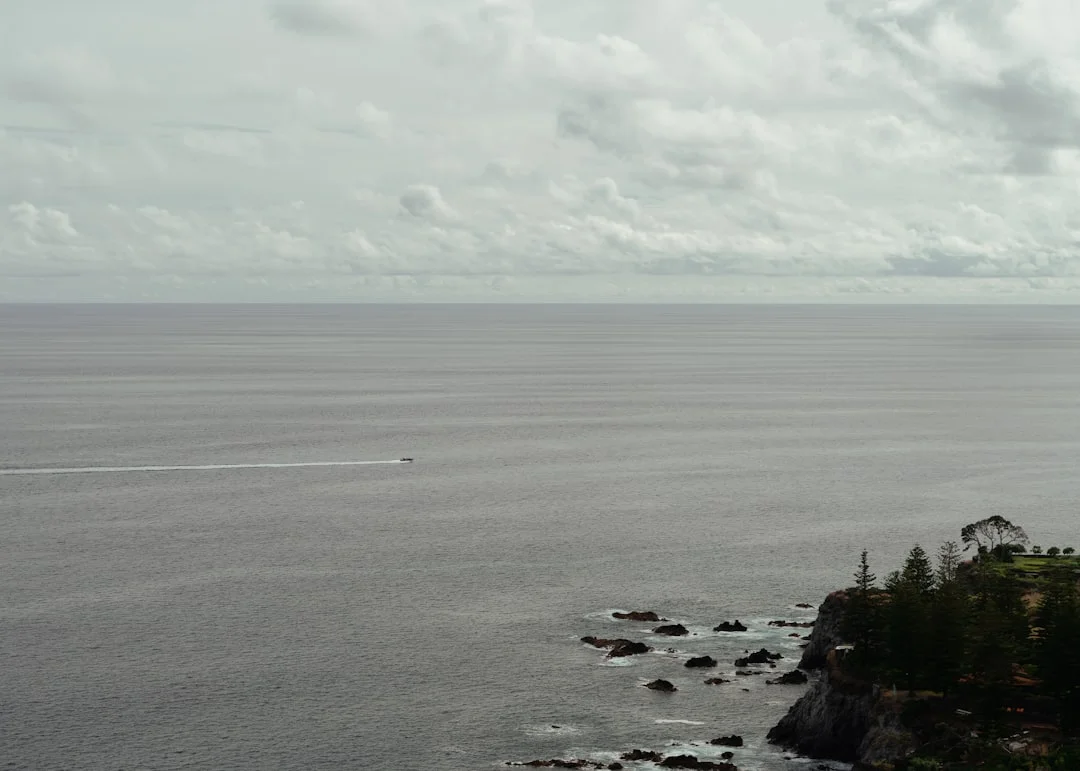
Photo by Reeich Shadow on Unsplash
The tradition in Horta is to paint your boat name on the marina wall. Sailors have been doing it for over fifty years; it's said to bring bad luck if you don't. The harbor wall is now a moving gallery of every cruising boat that has crossed the mid-Atlantic in living memory. Take the afternoon, find a spot, and add yours.
Customs and immigration in Horta are straightforward — the marina office handles most of it. Schengen rules apply, so check your visa situation before you arrive. Fuel is at the marina dock; water is on the pontoons. The supermarket is a fifteen-minute walk and well stocked.
Costs
A passage like this is cheap once you own the boat — most of the cost is in the preparation. Rough budget for a 40-foot crewed passage:
| Item | Cost (USD) |
|---|---|
| Bermuda transit fees & marina | $300–600 |
| Provisions (4 crew, 21 days) | $900–1,400 |
| Fuel (Bermuda + reserve) | $400–800 |
| Insurance offshore endorsement | $300–800 |
| Iridium airtime (1 month) | $150 |
| Horta marina (week) | $150–250 |
| Pre-passage rigging check | $300–800 |
| Spares kit | $300–500 |
Total: roughly $2,800–5,300 for a four-person passage, before haul-out or major refit costs.
Communication and Safety
You will be at least 800 nm from any meaningful rescue assistance for several days mid-passage. That is not a reason not to go — it is a reason to be prepared.
The minimum modern setup includes an Iridium GO! or comparable satellite link for daily weather GRIBs and emails, a registered EPIRB, a personal AIS beacon for every crew member who goes on deck at night, two independent VHF radios (one fixed, one handheld with its own battery), and a properly serviced liferaft. A SSB radio is a nice-to-have rather than essential now that satellite has become affordable, but many ocean cruisers still carry one for the daily SSB nets — Herb Hilgenberg's old "Southbound II" net is gone, but the cruisers' net culture lives on with Patrick Childress nets and others.
If you're new to longer offshore passages and want to compare what other multi-day routes look like, our writeup of sailing from Panama to Colombia via the San Blas Islands covers a very different but equally instructive passage profile.
Common Mistakes
A few patterns repeat year after year with first-time mid-Atlantic skippers.
Departing too early. May 1 is too soon in most years. Patience pays. Bermuda is a fine place to wait.
Not committing to a routing strategy. People who try to optimize day-by-day end up zigzagging. Pick a strategy at departure (typically: stay south of the high until day 8, then arc up), commit to it, only deviate for safety.
Underestimating fatigue. Two-handed crews try to push without enough sleep. By day six judgment degrades. Errors in sail handling and routing accumulate.
Photo by Annie Spratt on Unsplash
Skimping on the boat. A 30-foot boat can do this passage, and people have done it in smaller, but the margin for error is tiny. If you're borderline on rigging, sails, or rudder, fix it before you leave.
Not having a true Plan B. What's your fallback if the rig goes? If the engine fails? If a crew member gets hurt? Have those answers before you cast off, not at 02:00 in 30 knots.
Frequently Asked Questions
How far is it from Bermuda to the Azores?
The rhumb-line distance from St. George's, Bermuda to Horta in the Azores is approximately 1,820 nautical miles (about 3,370 km). Most boats actually sail 2,000 to 2,200 nm because the route curves south of the great-circle line to stay below the Bermuda-Azores high. Plan your provisions and fuel reserves on the longer figure, not the rhumb line.
How long does it take to sail from Bermuda to the Azores?
A typical cruising boat takes 14 to 18 days for the passage. Fast catamarans and racing boats can do it in 9 to 12 days; heavily loaded cruisers on a slow boat have taken over 22 days when the high parked on top of the route. A reasonable planning average is around 16 days for a well-found 40-footer.
What is the best time of year to sail Bermuda to the Azores?
The best window runs from mid-May to late June. Earlier and you risk North Atlantic depressions; later and you risk windless calms or early hurricane activity. The third week of May is the most popular departure window, and rallies like ARC Europe time their leave dates to fall in this window.
Is the Bermuda to Azores passage dangerous?
It is a serious offshore passage that requires preparation, but it is not considered one of the harder Atlantic crossings. The biggest risks are weather systems early or late in the season, fatigue-related errors, and gear failure far from rescue. Boats that prepare properly and sail in the standard window have an excellent safety record. The main hazards are rig failure and crew injury, both manageable with good preparation.
What size boat do I need to sail Bermuda to the Azores?
Most cruisers do this passage in boats between 38 and 50 feet, though it is regularly sailed by well-found boats from 30 to 70 feet. Below 35 feet the motion gets tiring on a 16-day passage and stowage for fuel and water becomes tight. Boat preparation matters far more than length — a well-prepped 36-footer beats a sloppy 50-footer every time.
Can a beginner sail from Bermuda to the Azores?
Not as a solo skipper. As crew under an experienced captain, yes — many people make their first ocean passage on this route, especially through rallies like ARC Europe that provide oversight, weather routing, and a fleet for moral support. If you want ocean experience without doing it alone, signing on as crew on this leg is one of the best ways to get it.
Do I need a visa for the Azores?
The Azores are part of Portugal and the Schengen Area. Most non-EU sailors can stay up to 90 days in any 180-day period without a visa, but rules differ by nationality. If you plan to keep the boat in Europe for the whole summer, check the Schengen calendar carefully — overstays are taken seriously and can affect future entry.
What charts and pilot books should I carry?
Carry the relevant Imray and Admiralty charts for both Bermuda and the Azores approaches, plus electronic charts on at least two independent devices. The standard reference book for this leg is Atlantic Crossing Guide by RCC Pilotage Foundation. World Cruising Routes by Jimmy Cornell is the planning bible. Don't rely on a single chart plotter — paper or PDF backups have saved more than one boat.
About the Author
Related Articles

DSC Distress Call Guide: GMDSS, AIS, EPIRB & PLB
Learn the correct DSC distress call sequence, MMSI setup, and when to use AIS, EPIRB or PLB. Get it right—read the guide and drill it.
By Breezada Team
Sailing in Strong Currents: Tides, Tools & Examples
Learn sailing in strong currents with tide tools, rules of thumb, and real examples. Plan safer passages—read the guide and use the checklists.
By Breezada Team
NAVTEX for Sailing: SafetyNET Offshore Weather Guide
Learn NAVTEX & SafetyNET (Inmarsat-C) setup, filters, and what MSI to trust offshore. Get clearer forecasts—read the guide now.
By Breezada Team
Sailboat Hull Speed: Calculate It and Exceed It
Learn sailboat hull speed, the 1.34×√LWL formula, and when boats can exceed it. Get examples and tips—read now and calculate yours.
By Breezada Team