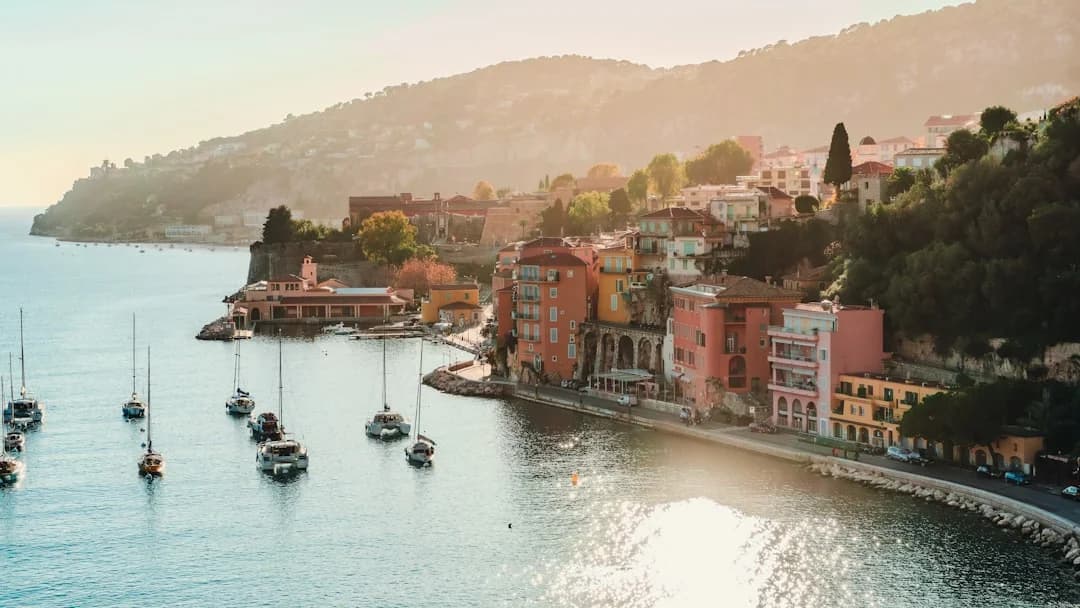
Sailing the French Riviera means working with one of the busiest, most photographed coastlines in the Mediterranean — and one of the most rewarding once you know where to point the bow. Cannes, Saint-Tropez, and the Lerins lie within a short day's sail of each other, and the leap south to Corsica adds a wilder, less-crowded second half to any week-long itinerary.
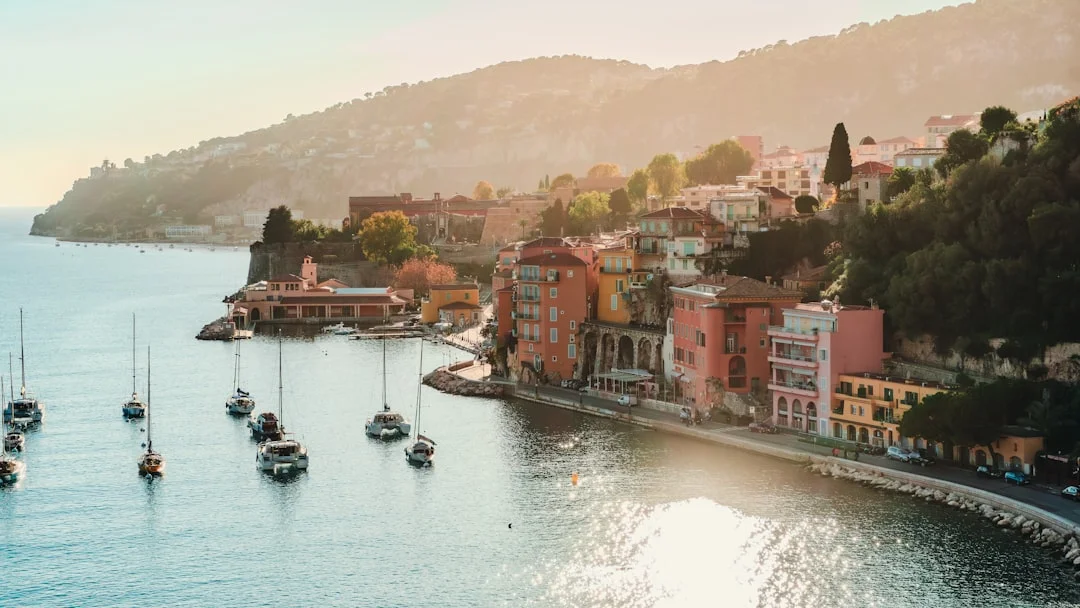
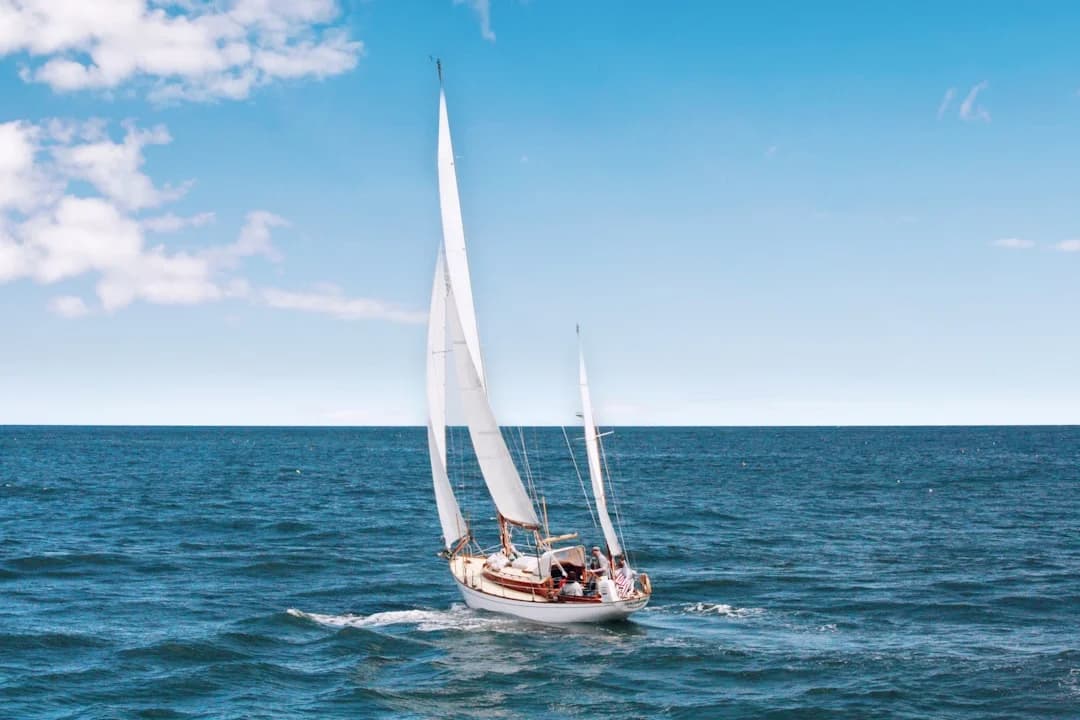
Photo by Antoine Contenseau on Unsplash
This guide covers what an experienced cruising sailor actually needs: the seasonal weather patterns, the marinas worth their fees, the anchorages worth waking up early for, the Bonifacio Strait crossing, and the budget reality of sailing one of Europe's most expensive coasts.
The Geography You're Working With
The French Riviera — the Côte d'Azur — runs roughly from Saint-Tropez in the west to Menton at the Italian border in the east, about 75 nautical miles of coastline. The marquee stops in order: Saint-Tropez, Sainte-Maxime, Saint-Raphaël, Cannes, Antibes, Nice, Villefranche, Saint-Jean-Cap-Ferrat, Monaco, Menton.
Corsica sits about 90 nm south of the mainland — closer than most people realize. From Nice to Calvi (Corsica's northwest port) is roughly 100 nm; from Saint-Tropez to Calvi about 115 nm. The shortest mainland-to-Corsica passage is from the southeastern tip near Cap Camarat down to Cap Corse, which can be done in 12–18 hours depending on wind.
Corsica itself is 115 nm long north-to-south. The classic sailor's route is west coast — Calvi, Galéria, Girolata, Porto, the Calanques de Piana, Ajaccio, Propriano, then south to Bonifacio. The east coast is flatter, less scenic, and mostly skipped except as a return route.
You can verify distances between any waypoints before locking in your itinerary — important when fuel and time both matter.
When to Sail (And When Not To)
Three rules govern the season here: the Mistral, the crowds, and the price curve.
| Period | Weather | Crowds | Cost |
|---|---|---|---|
| April–May | Cool, variable, occasional Mistral | Light | Low |
| June | Warming, mostly settled | Moderate | Moderate |
| July | Hot, settled, some Mistral | Heavy | High |
| August | Hot, settled, peak crowds | Brutal | Peak |
| September | Warm, often the best month | Moderate | High |
| October | Cooling, more weather systems | Light | Moderate |
The Mistral is the dominant weather feature — a cold, dry, NW wind that funnels down the Rhône valley and out into the Gulf of Lion and the Ligurian Sea. It can blow Force 7–9 for days. It's more frequent in spring and autumn but can hit any month. Forecasts are reliable 48–72 hours out; do not start a Corsica passage with a Mistral on the way unless you specifically want a fast downwind ride and have the boat for it.
Crowds are the other variable. In July and August, popular anchorages — the Lerins off Cannes, the bay west of Saint-Tropez, the Calanques near Porto in Corsica — fill by 10:00. By 18:00 they look like parking lots. Late May, early June, and September are the sweet spots: warm enough to swim, settled weather, anchorages with breathing room.
If your dates are flexible, target the second week of June or the second week of September. Charter rates drop 20–30% versus mid-summer, the Med is at its kindest, and you can still hold a stern anchor in Saint-Tropez without losing your mind.
The Côte d'Azur: Marinas and Anchorages
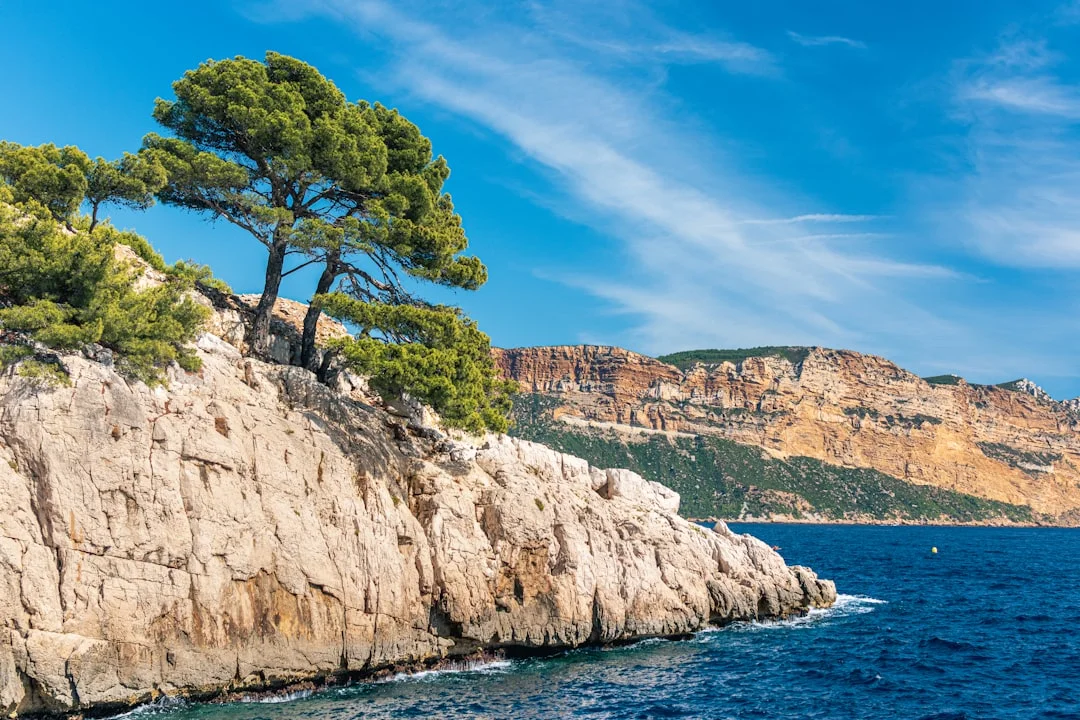
Photo by Antoine Rakotozafy on Unsplash
The Riviera has more marinas per nautical mile than almost anywhere on Earth. The catch is they're expensive and most of the famous ones are reservation-only in summer. A 12 m yacht in Port de Saint-Tropez in August will run €180–€280 per night. In Monaco's Port Hercule, €250–€500. Prices drop significantly in shoulder season — sometimes by half.
Saint-Tropez is the obvious magnet, and worth a stop even if just for one night. Stern-to mooring on chains, no anchor, capitaine on VHF 9. Reserve weeks ahead in summer. The town is unapologetically expensive, but a coffee on the quay watching the parade of yachts is part of the experience. Anchor outside in the Baie de Pampelonne to the south or the Baie de Cavalaire to the southwest if you want quiet — both have good holding in sand at 4–8 m.
Cannes is functional rather than charming, but the Lerins Islands (Île Sainte-Marguerite and Île Saint-Honorat) just offshore are the highlight. The strait between them offers protected anchoring in clear water with the Massif de l'Estérel as a backdrop. Holding is patchy — sand and weed mixed — so set carefully and watch your swing if neighbors are close.
Antibes has Port Vauban, the largest marina on the Mediterranean coast and home to the millionaire's quay where the megayachts cluster. Smaller berths exist; rates are still high. The Cap d'Antibes anchorages on the west side (Anse de l'Olivette) and east side (Plage de la Garoupe) are excellent in light winds.
Nice has Port Lympia in the city center — practical for crew changes (airport 7 km away) but tight, noisy, and not particularly scenic. Villefranche-sur-Mer, just east, is the better choice: a deep, sheltered bay with good anchoring at 8–15 m on sand, walking distance to a real working town, and ferry connections to Nice if you need them.
Monaco is theatre — go once, anchor outside in Cap-d'Ail (€20–€40 mooring fee in summer) and tender in. Port Hercule berthing is spectacular and stupidly priced.
Menton at the Italian border is quieter, cheaper, and a sensible last stop before Italy. Our Italy sailing guide covering Sardinia, Amalfi, and the Aeolians picks up where the Riviera leaves off if you're sailing east.
The Crossing to Corsica
This is the passage that turns a Côte d'Azur day-trip itinerary into a real cruising holiday. Distances:
| From | To | Distance |
|---|---|---|
| Saint-Tropez | Calvi | ~115 nm |
| Nice | Calvi | ~100 nm |
| Cap Camarat | Cap Corse (Macinaggio) | ~95 nm |
| Bonifacio | La Maddalena (Sardinia) | ~12 nm |
At cruising-yacht speeds of 5–6 knots, that's 16–20 hours of passage time — typically an overnight. You can calculate the exact nautical miles between Nice and Calvi along with intermediate waypoints.
Weather window planning: the Ligurian Sea between Provence and Corsica is exposed to both Mistral (NW) and Libeccio (SW). A clean window means winds under 15 knots with no Mistral forecast for at least 36 hours after departure. Check Météo France and GRIB files for at least 72 hours ahead. The passage is straightforward in settled conditions and miserable in 25-knot Mistral seas — the Gulf of Genoa builds short, steep waves that punish small boats.
Departure timing: leave at 18:00–20:00 to make landfall after sunrise. Approaching Corsica's mountainous coast in the dark is unpleasant; you want the granite peaks of the Cap Corse or the cliffs of Calvi visible by 06:00.
Crew planning: a 16-hour passage means watches. Two-handed crews need a workable system; three or four people make it easy. AIS, radar, and a working autopilot are essentially mandatory. The same overnight discipline applies on the southern Med equivalents — see our Sicily to Malta crossing guide for the comparable hop in the southern Tyrrhenian.
Corsica's West Coast: The Reward
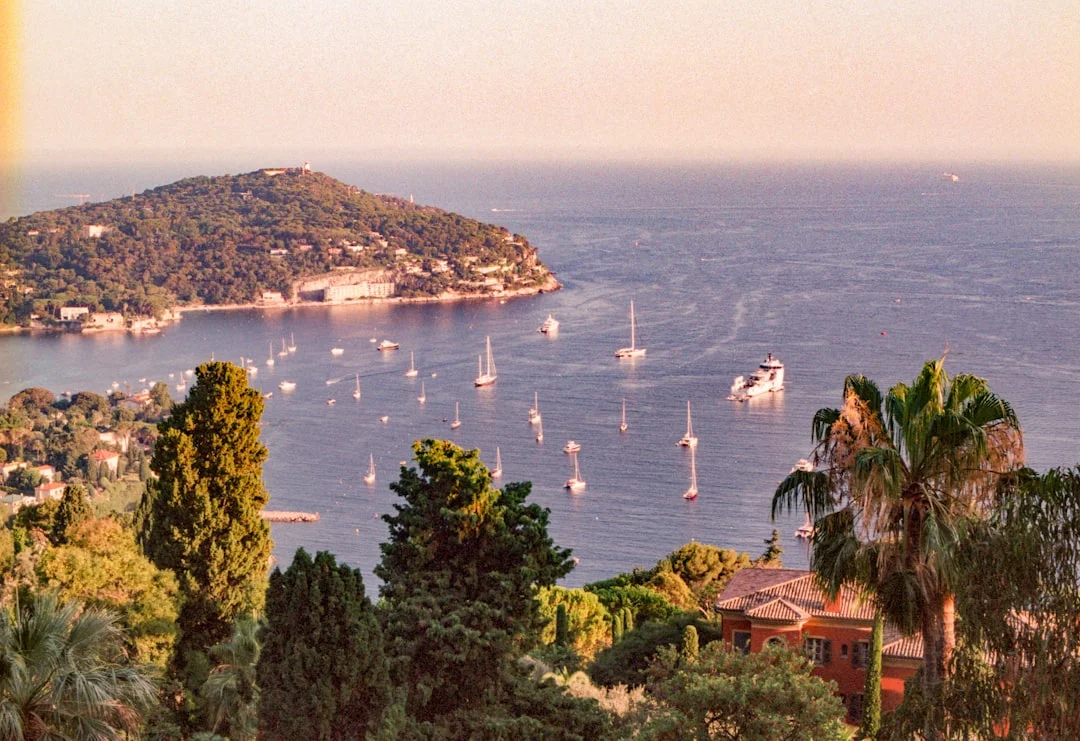
Photo by Chris Weiher on Unsplash
Corsica is what the Riviera was 60 years ago. Granite mountains drop straight into clear water, the villages are working towns rather than yacht-club tourist traps, and you can still find an anchorage to yourself in mid-July if you choose carefully.
Calvi is most boats' first stop — a wide bay backed by snow-capped mountains in early summer, a Genoese citadel on the headland, and a town that hasn't entirely sold its soul. Anchor in the bay (5–10 m, sand) or take a marina berth (cheaper than the mainland — around €60–€90 per night for a 12 m yacht). Provisioning is easy, restaurants are honest, and the ferry brings the occasional tourist surge but the place absorbs them.
Galéria and Girolata further south are the highlights for many sailors. Girolata is accessible only by boat or a 2-hour walk — no road. Anchor in the cove or pick up a mooring (paid, around €25–€40). The fishing village has three restaurants and one of them, with no name, serves langoustes that you watch them pull from the trap. The Scandola Nature Reserve between Galéria and Girolata is UNESCO-listed; sailing through it feels like cruising a national park.
Porto and the Calanques de Piana are the next jewel — red granite cliffs glowing at sunset, deep water close to shore, and a small marina at Porto for restocking. The anchorages south of Porto (Anse de Ficaghjola, Capo Rosso) are spectacular in settled weather but offer no shelter from the west.
Ajaccio, Napoleon's birthplace and Corsica's capital, is a real city — a useful crew-change point, full provisioning, multiple supermarkets, a working fishing fleet. Marina rates are reasonable; anchorage in the gulf is good in easterlies.
Propriano further south is quieter and a sensible jump-off for the run to Bonifacio.
Bonifacio: The Bucket-List Stop
Photo by Nick Page on Unsplash
If you only see one place in Corsica, see Bonifacio. The harbour is a fjord-like channel cut into 70 m white limestone cliffs, with the medieval old town perched on top. Approaching from the sea you see only cliffs until the very last moment, when the entrance opens up.
The marina is small, busy, and books out months ahead in July and August. Reserve via the capitainerie (VHF 9) ideally before leaving Calvi or earlier. If you can't get in, anchor in the Anse de la Catena (just outside, west of the entrance) or push 5 nm west to Cala di Paragano.
The Bonifacio Strait between Corsica and Sardinia is only 7 nm wide at its narrowest but accelerates wind significantly — Mistral or Libeccio at 20 knots offshore can be 30+ in the strait. The current also runs predictably (W-flowing in westerlies, E-flowing in easterlies) at up to 2 knots. Check the forecast before crossing; the La Maddalena archipelago on the Sardinian side is one of the great sailing grounds in the Med, but you have to get there first.
A Realistic 7-Day Itinerary
| Day | Route | Distance |
|---|---|---|
| 1 | Saint-Tropez → Cannes (via Lerins) | ~28 nm |
| 2 | Cannes → Antibes / Cap d'Antibes | ~10 nm |
| 3 | Antibes → Saint-Tropez (full sail day) | ~38 nm |
| 4 | Saint-Tropez → Calvi (overnight passage) | ~115 nm |
| 5 | Calvi → Galéria / Girolata | ~25 nm |
| 6 | Girolata → Porto / Calanques de Piana | ~15 nm |
| 7 | Return overnight to Saint-Tropez | ~115 nm |
This is ambitious — most charters take 10–14 days to do this comfortably and add Bonifacio and Ajaccio. A 7-day Côte d'Azur–only itinerary skipping Corsica works fine for crews who want shorter days and more time ashore.
What It Costs
Sailing the Riviera and Corsica is not cheap. A bareboat charter (40-foot monohull) in mid-summer runs €4,500–€7,500 per week, with skippered charter adding €1,200–€1,800 for the captain. Catamarans are 50–80% more.
On top of charter:
- Marina fees: €1,500–€2,500 per week if you stay mostly in marinas; €300–€600 if you anchor most nights
- Fuel: €200–€500 per week depending on motoring
- Provisioning: €200–€400 per person per week
- Restaurants and shore expenses: highly variable — €300 to €3,000
A frugal crew of four can do a week here for around €7,500 all-in. A crew that wants Saint-Tropez restaurants and Bonifacio marina nights will spend €15,000+. Our country-by-country guide to Europe's best sailing destinations compares costs across regions if budget is a key factor.
Practical Tips From the Cockpit
Provisioning: Saint-Tropez, Cannes, Nice, Calvi, and Ajaccio all have full supermarkets within walking distance of the harbour. Smaller stops (Girolata, Porto) have minimal options — stock up before you leave.
Berthing technique: Med-mooring stern-to with lazy lines is standard. If you've never done it, practice somewhere quiet before Saint-Tropez harbour at 17:00 in August. Have fenders ready on both sides; your neighbours' fenders rarely match the height of yours.
Language: French is the default on the mainland, with English widely spoken in marinas. In Corsica, French works everywhere; a few words of Corsican are appreciated but never required.
Documents: a charter pack from a reputable company will include all required papers. If sailing your own boat, carry registration, insurance, VHF licence, and crew passports. France enforces these.
Holding tank discipline: pumping out at sea is not legal close to shore. Use marina pump-outs.
Mooring buoys: in Corsica's marine reserves (Scandola, Lavezzi), anchoring is restricted and mooring buoys are mandatory in some zones. Read the regulations or ask at the capitainerie.
Frequently Asked Questions
Is the French Riviera good for beginner sailors?
The Côte d'Azur itself is reasonable for beginners in settled weather — short hops between marinas, plenty of shelter, predictable conditions outside Mistral events. The crossing to Corsica is not beginner territory: it's an overnight offshore passage exposed to weather, and getting it wrong means a long, wet, unpleasant night. Beginners should hire a skipper for the Corsica leg or stay on the mainland.
How many days do I need to sail Côte d'Azur and Corsica?
Ten to fourteen days is the realistic minimum to do both meaningfully. Seven days lets you sample the Riviera plus a quick Corsica visit (Calvi only). Two weeks lets you cover Riviera highlights, Calvi, the west coast down to Bonifacio, and a return via Cap Corse. A month would let you add Sardinia and the La Maddalena archipelago.
What's the best month for sailing the French Riviera?
Mid-September is widely considered the best — water still warm enough for swimming (around 22 °C), weather mostly settled, anchorages quieter than July and August, charter rates 20–30% lower than peak. Late May and early June are similarly good but with cooler water. July and August offer the most reliable weather but at peak prices and crowds.
Do I need a sailing licence to charter in France?
Yes. France requires either an ICC (International Certificate of Competence) or a recognised national licence such as the RYA Day Skipper (with ICC endorsement) for bareboat charter. A VHF radio operator's certificate is also required. Skippered charters have no licence requirement for guests. Bring originals — copies are sometimes refused.
Is Corsica part of France or Italy?
Corsica is French — politically, administratively, and linguistically — though it sits closer to Italy geographically and has a distinct Corsican identity and language. You sail there on a French charter contract with no border formalities. The same EU rules apply as on the mainland.
Can you anchor for free on the Côte d'Azur?
Yes, but with restrictions. Anchoring is free in most open bays — Pampelonne, Cavalaire, Villefranche, the Lerins. However, Posidonia seagrass protection rules prohibit anchoring on seagrass beds in many zones, particularly between Saint-Tropez and Cannes. Look for sandy patches (lighter colour through the water) and avoid the dark patches. Some bays now require paid mooring buoys in summer; signs and charts mark the protected areas.
How rough is the Bonifacio Strait?
In settled weather it's straightforward — flat water, light breezes, easy navigation between Corsica and Sardinia. In Mistral or Libeccio conditions it accelerates significantly: a 20-knot offshore breeze can become 30+ knots in the strait, with steep wind-against-current seas if the timing is wrong. Always check forecasts before crossing and don't be afraid to wait a day. The strait is only 7 nm wide; you'll have plenty of opportunities to cross it on the right day.
What kind of boat works best for this region?
A 40–45 ft monohull is the sweet spot — big enough to handle the offshore passage to Corsica comfortably, small enough to fit Med-mooring stern-to in busy marinas, and sized appropriately for crews of 4–6. Catamarans give more space and shallower draft (useful in Corsican coves) but cost 50–80% more and are harder to find berths for in peak season. Anything under 35 ft will feel small on the Corsica crossing in any sea state.
About the Author
Related Articles
Amalfi Coast vs French Riviera Sailing Guide (Costs & Routes)
Compare Amalfi Coast vs French Riviera sailing—costs, crowds, mooring rules, best months, and 7-day routes. Choose your coast and plan now.
By Breezada Team
Puget Sound Cruising Guide to Gulf Islands Routes
Plan routes, anchorages, and weather windows with this Puget Sound cruising guide for the Gulf Islands & San Juans. Read now and start plotting.
By Breezada Team
Sailing Amalfi Coast Guide: Ports, Anchorages & Rules
Sailing Amalfi Coast guide to Capri, Positano & Amalfi: best ports, anchorages, fees, VHF and rules. Plan your route—read now.
By Breezada Team
Dry Tortugas Sailing: Routes, Anchoring & Permits
Plan Dry Tortugas sailing from Key West with routes, weather windows, anchoring/moorings, and permits. Read the guide and plan your trip.
By Breezada Team