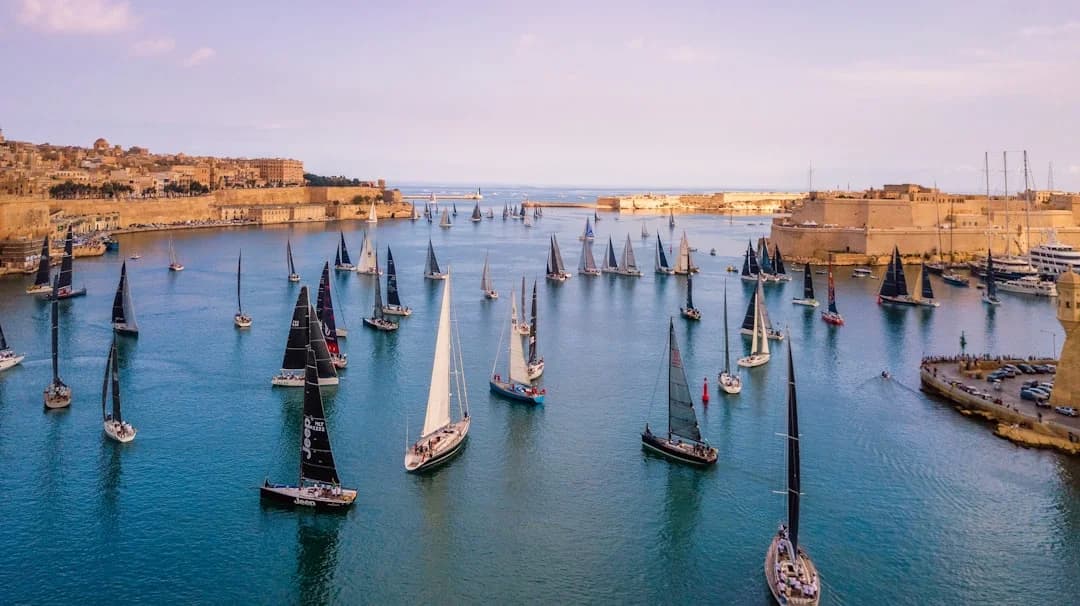
The shortest hop from Sicily to Malta — Pozzallo to Valletta — is roughly 55 nautical miles, an overnight or long daysail in settled weather. Most cruisers leaving from Syracuse cover closer to 90 nm, and the longer western departures from Marsala or Licata stretch the passage to 85–120 nm. Short by ocean-crossing standards, but the Sicily Channel still demands respect: it carries some of the densest east–west commercial traffic in the Mediterranean.
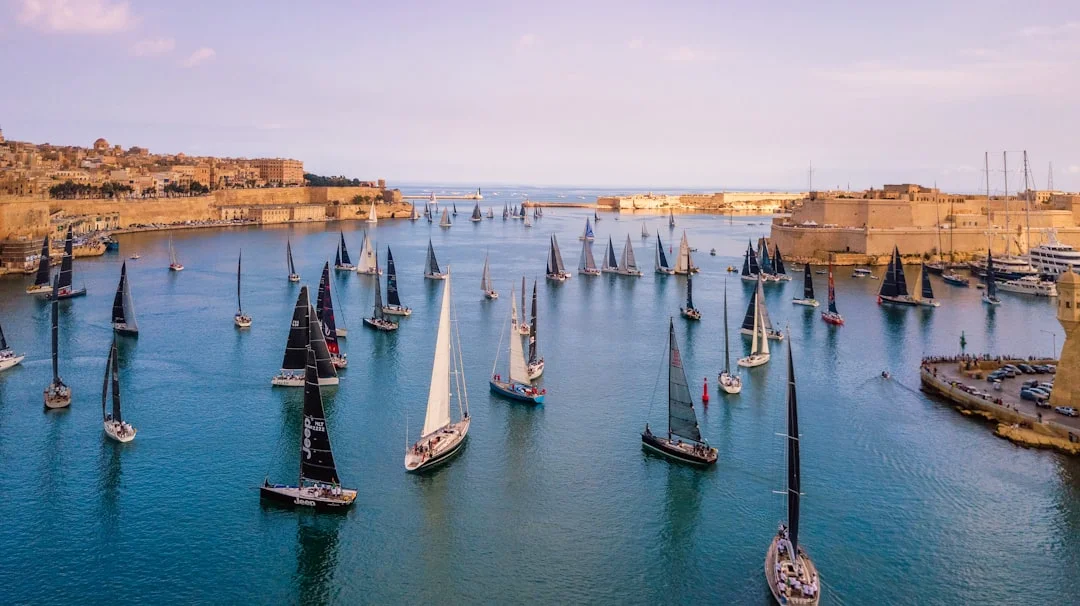
Photo by Mike Nahlii on Unsplash
This guide covers the practical side of the crossing: where to leave from, when to go, what the wind and shipping look like, and what to expect when you raise Malta off the bow at first light. It assumes a sailor with bareboat-charter or owner-skipper experience and a yacht in the 35–50 ft range. If you're newer to passage planning, our Mediterranean Sailing Itinerary guide puts the Sicily–Malta hop in the wider context of regional cruising routes.
Choosing Your Departure Port in Sicily
Sicily's southeast and south coasts give you four realistic jumping-off points. The choice usually comes down to where your boat is based, where you're heading after Malta, and how comfortable you are with night passages.
| Departure Port | Distance to Valletta | Typical Crossing Time | Best For |
|---|---|---|---|
| Pozzallo | ~55 nm | 10–14 hours | Shortest hop, daysail in summer |
| Marina di Ragusa | ~62 nm | 11–15 hours | Modern marina, easy provisioning |
| Licata | ~85 nm | 14–18 hours | Western Sicily departures |
| Syracuse (Siracusa) | ~92 nm | 16–20 hours | Beautiful pre-departure base |
| Marsala | ~120 nm | 20–26 hours | Long passage, wider weather window needed |
Pozzallo is the practical favourite. It's a small commercial port with a yacht-friendly inner basin, and the latitude (about 36°43′N) puts you on almost the same line as Malta — meaning you steer roughly south the whole way and the shipping lanes are crossed perpendicular, not at a long oblique angle. Marina di Ragusa, twenty minutes west by car and seven nm by sea, is the better stopover if you want a full-service marina, fuel dock, and decent restaurants the night before you cast off.
Syracuse wins on charm. Leaving Ortigia at dusk to arrive at the Maltese cliffs at sunrise is one of the genuinely cinematic departures in Med sailing. The downside: 90+ nm means you commit to a full overnight, and the eastern bias means you're crossing the shipping lanes at a shallower angle, with more time exposed to ship traffic. You can verify the exact distance from Syracuse to Valletta with a great-circle calculator before you finalise your route.
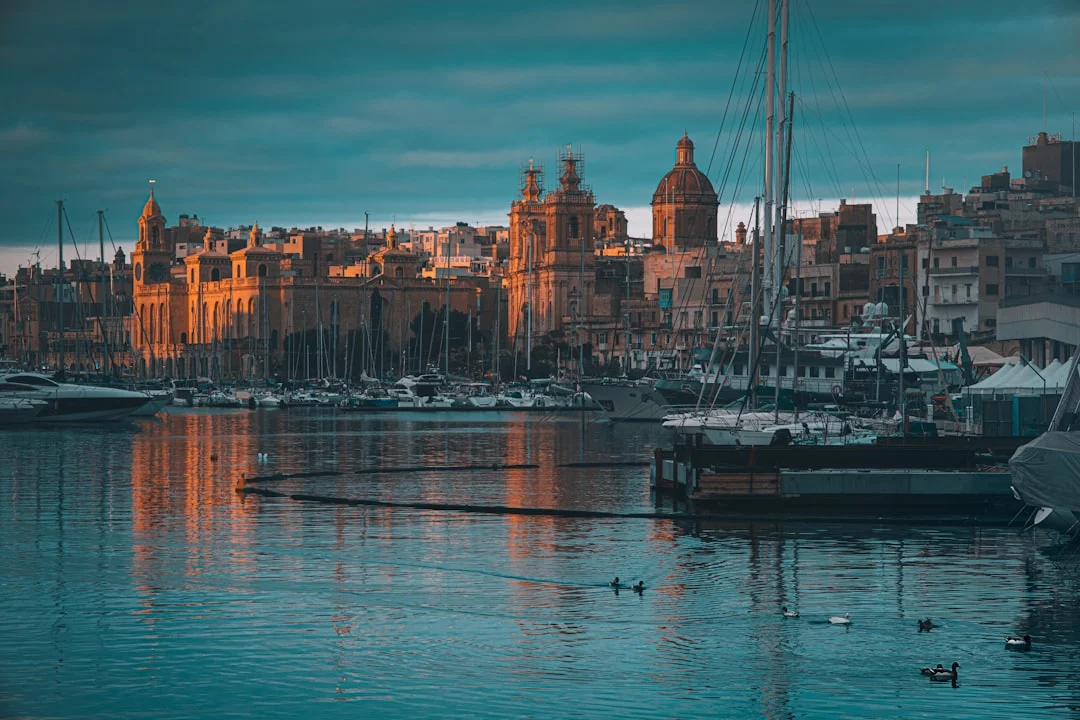
Photo by Neil Farrugia on Unsplash
If you're cruising Sicily before the crossing — Aeolian Islands, Etna, the Egadi group — our Sailing Italy guide covers the Sardinia-to-Sicily side of the trip in detail and is worth reading before you commit to a one-way itinerary.
When to Go: Season and Weather Windows
The standard window is late May through early October. Outside that, the Sicily Channel becomes a different proposition. Winter brings genuine Med gales — Mistral, Levante, Scirocco — and the channel funnels them. Mid-October to mid-April is the domain of delivery skippers, not holiday sailors.
Within the season, the calendar matters more than people expect:
- Late May to mid-June: thinning shoulder weather, fewer boats, water still cool. Reliable enough but watch for late-spring lows that can still throw a Force 7 into the channel.
- Mid-June to mid-September: peak settled weather. Long stretches of NW Maestrale at Force 3–5. Marinas in Malta book up — reserve months ahead if you want Msida or Grand Harbour.
- Mid-September to early October: arguably the sweet spot. Water still warm, winds settling, far less marina pressure. The Scirocco risk increases in late September.
The dominant summer wind on the crossing is the Maestrale (NW), giving you a beam to broad reach southbound — which is exactly what you want. Speeds of 5–7 knots on a 40-footer are normal. The wind to fear is the Scirocco (SE): hot, humid, often dust-laden, and on the Sicily–Malta course it puts you hard on the wind for the entire passage. A Force 6 Scirocco produces an unpleasant short, steep sea against you, and most cruisers will simply wait it out. Two days at the dock is cheaper than a beating that breaks crew morale.
Reading the Forecast
Three free tools cover the route well. Get into the habit of cross-referencing all three:
- Météo France marine forecast for the Tyrrhenian and Sicily Channel
- PredictWind or Windy with ECMWF and GFS models toggled
- Maltese Met Office (maltaweather.com) for arrival conditions
Look 72 hours ahead. The crossing is short enough that a single decent window is enough — you don't need a settled five-day stretch. What you need is consistent direction (NW/W is best), winds 10–22 knots, and no fronts forecast within your passage window. Our sailing weather apps roundup covers the full toolkit for Med passage planning.
A quirk worth knowing: the Sicily Channel is bordered by two large landmasses, and thermal effects can produce localised winds that don't show up cleanly on synoptic forecasts. Late afternoon onshore breezes off the Maltese coast (5–10 kt SE) are common in summer and can knock 30 minutes off your arrival.
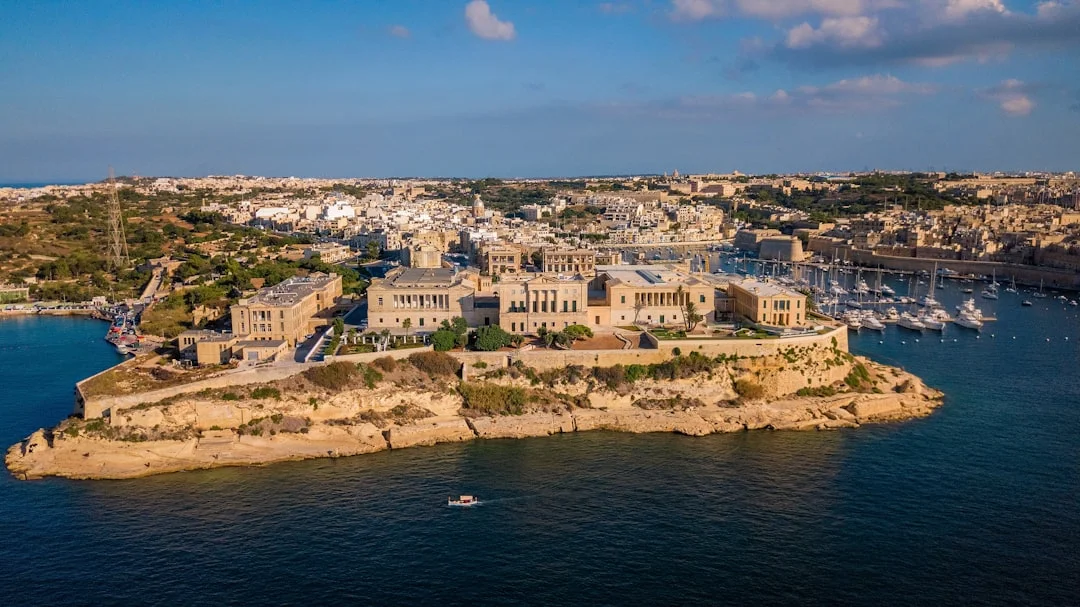
Photo by Mike Nahlii on Unsplash
The Sicily Channel: Shipping and Navigation
This is the section that separates a casual hop from a passage that needs proper watchkeeping. The Sicily Channel (Stretto di Sicilia / Sicily Strait) carries the entire east–west commercial flow between Gibraltar and the Suez Canal — somewhere in the order of 100–150 ships transiting per day in peak periods. You will cross multiple shipping lanes.
The crossing geometry matters. A Pozzallo–Valletta course (almost due south, around 175°–185° true) takes you across the lanes more or less perpendicular. That's good — you spend the minimum amount of time inside the lanes and CPA (closest point of approach) calculations are simpler. From Syracuse, you angle SW and spend longer in the busy water.
Practical rules:
- AIS is non-negotiable. Both transmit and receive. A Class B AIS transponder is a few hundred euros and changes the conversation entirely. Without AIS you are a hard-to-detect target on a busy motorway.
- Watch system. Two-up watches at night, or a single watch with a 15-minute timer if you're shorthanded — never a sleeping sole watchkeeper in this water.
- Radar and proper running lights. Many fishing vessels in the southern Sicily Channel run dim or non-standard lights. Don't trust visual identification alone.
- VHF Channel 16, with the squelch open. Big ships will sometimes call leisure craft on collision courses. Listen.
The COLREGS rules of the road don't change because you're on a yacht crossing a shipping lane, but pragmatism does: alter early and obviously. A 30° course change five miles out is far better than a 90° emergency turn at one mile. Container ships travel at 18–22 knots — you have less time than you think.
Approaches to Malta
Malta is the main island; Gozo lies to the north-west, with the small island of Comino between them. There are three sensible approaches:
1. Direct to Valletta (Grand Harbour and Msida). The southeast coast of Malta is steep-to with deep water close in, but you must give the headlands a healthy berth — there are unmarked rocks off Delimara Point. Round St. Elmo Breakwater into Grand Harbour for the marina at Birgu (Vittoriosa) or continue west to Msida Creek for Msida Marina. Grand Harbour is one of the great natural ports of Europe; entering at sunrise after an overnight is, frankly, hard to beat.
2. Comino Channel approach. If you're going to Mġarr Marina on Gozo or to anchor in the famous Blue Lagoon, route west of Malta and through the Comino Channel between Malta and Comino. The channel is well-marked, around 2 nm wide at the narrows, and a fast option in fair weather. In strong NW winds it becomes a wind tunnel.
3. Malta North Channel. Between Malta and Gozo proper, this is wider than Comino but shallower in places. Use updated charts.
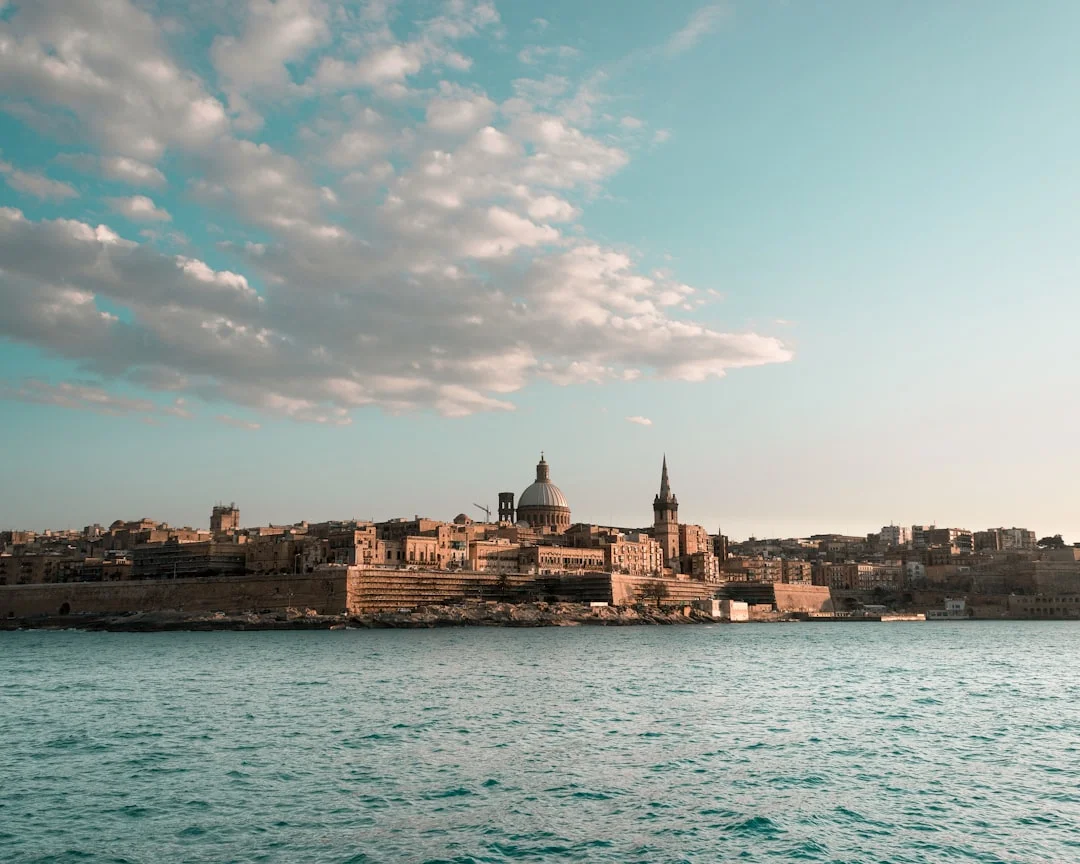
Photo by Thomas Ellmenreich on Unsplash
Marina Bookings and Berthing
Malta's high season runs June–September and the popular marinas fill up. The picture in 2026:
| Marina | Location | Typical Daily Rate (40 ft, summer) | Notes |
|---|---|---|---|
| Msida Marina | Mainland, near Valletta | €70–95 | Largest, central, hard to get last-minute |
| Grand Harbour Marina | Birgu/Vittoriosa | €90–140 | Historic setting, premium pricing |
| Mġarr Marina | Gozo | €55–75 | Quieter, easier walk-up berthing |
| Portomaso Marina | St. Julian's | €85–120 | Resort-style, no walk-up berths |
Reserve at least 2–4 weeks ahead in July and August. Mġarr on Gozo is your fallback if everything else is full — a 25 nm hop from there gets you into Sicily's south coast easily on the return.
Customs, Cruising Tax, and Paperwork
Both Sicily and Malta are in the EU and the Schengen Area, so for EU-flagged vessels with EU crew, formalities are minimal. You should still:
- Notify the Maltese Transport Malta authority on arrival (radio Valletta Port Control on Channel 12 when within 5 nm).
- Have boat papers, insurance, and crew documents ready. The Maltese authorities are professional but spot-check.
- Budget for Malta cruising tax: around €25–55 per night depending on yacht length, payable at the marina.
- Non-EU vessels need to clear in formally and pay VAT considerations apply for stays longer than 18 months.
If you're chartering, the charter company handles most paperwork — you just show up with passports and the cruising tax receipt at check-out. For owners crossing on a foreign-flagged boat, allow an hour for arrival formalities at Msida.
What to Expect Onboard
A well-prepared yacht handles this passage easily; the discomfort comes from poor planning. Common mistakes:
- Underestimating the watch load. Even on a 12-hour passage, the Sicily Channel concentration of shipping is exhausting if one person tries to take it all. Two-person watches change everything.
- Not refuelling in Sicily. Diesel in Malta is broadly EU-priced but availability at small marinas can be patchy. Top up in Pozzallo or Marina di Ragusa.
- Provisioning at the last minute. Sunday closures, especially in Sicily, can stop you topping up fresh stores. Provision Saturday for a Sunday departure.
- No anchor plan. If you arrive at Malta and the marinas are full, you'll need to anchor. The most reliable anchorages in moderate NW are Mellieħa Bay and the southern lee of Comino. Read up on proper anchoring technique and scope if you're new to overnight anchoring on chain.
A typical departure ritual: dinner ashore at 19:00, slip lines at 21:00, motor for an hour through the harbour and into the wind line, hoist sail at sunset, set the watch system, and aim to make landfall around 06:00–08:00 the next morning. Crews who arrive at first light, drop the hook in Mellieħa, and sleep a few hours before checking into Msida tend to enjoy the trip the most.
Suggested Routes Beyond the Crossing
If Malta is a turnaround point, you typically have 3–7 days. Useful patterns:
- 3-day round trip: Pozzallo → Valletta (overnight) → 1 day in Valletta → return via Comino and Mellieħa anchorage → back to Sicily. Practical but tight.
- 7-day Sicily–Malta–Sicily loop: Syracuse → Pozzallo → Valletta (2 nights) → Mġarr Gozo (1 night) → Comino anchorage → cross back to Marina di Ragusa → Syracuse. The classic circuit.
- One-way passage continuing east: Malta → Crete (~430 nm) is a serious open-water passage. Malta → Gargano (Italian heel, 250 nm) is the more common eastern continuation.
You can plot any of these and calculate the distances waypoint-by-waypoint before you finalise your itinerary — useful for fuel range, charter days, and weather budgeting.
Frequently Asked Questions
How long does it take to sail from Sicily to Malta?
The crossing time depends entirely on your departure port. From Pozzallo (the closest at 55 nm), a 40-foot yacht averaging 5.5 knots will arrive in about 10–11 hours. From Syracuse (90+ nm) plan on 16–20 hours, and from Marsala you're looking at 20–26 hours. Most cruisers leave in the late afternoon or early evening for an overnight passage, arriving at first light when the harbour pilot can see you and you're freshest for docking.
Is sailing from Sicily to Malta dangerous?
Not in the usual sense — the distance is short, the weather is well-forecast, and Med summer sailing conditions are generally benign. The real risk is commercial shipping traffic in the Sicily Channel. With a working AIS transponder, two-up watches at night, and proper passage planning, the crossing is no more dangerous than any other moderate Med passage. The key word is "prepared" — boats that get into trouble are usually those that ignored the forecast or had a single watchkeeper falling asleep on a 12-hour overnight.
What's the best time of year to sail from Sicily to Malta?
Late May through early October is the practical season. Mid-June to mid-September gives you the most reliable Maestrale (NW) winds and settled weather, but marina availability is tightest. Many experienced sailors prefer mid-September: water still warm, marinas easier, fewer boats, and the dominant winds are still cooperative. Avoid winter (October to April) unless you're an experienced delivery skipper — the channel produces real Force 8+ blows in that period.
Do I need to clear customs between Sicily and Malta?
Both countries are in the EU and the Schengen Area, so EU-flagged vessels with EU crew face minimal formalities — essentially you radio Valletta Port Control on VHF 12 when approaching Malta and present documents at the marina. Malta does charge a cruising tax (around €25–55 per night depending on length) collected through the marina. Non-EU vessels and crew face fuller clearance procedures and should contact Transport Malta in advance.
Can a charter yacht be sailed from Sicily to Malta?
Most charter companies require explicit permission for international one-way charters, and many bareboat charters limit you to the country of pickup. Some Sicily-based operators (notably out of Marina di Ragusa and Catania) offer sanctioned Sicily–Malta itineraries with the Malta cruising tax pre-paid and additional insurance. Confirm in writing before booking — turning up at Valletta on a yacht the contract didn't authorise can cost you the deposit or worse.
What's the shortest distance from Sicily to Malta?
The shortest practical great-circle distance from a working harbour is Pozzallo to Valletta at approximately 55 nautical miles (102 km). Marina di Ragusa, just west of Pozzallo, is 62 nm. Geographically, the southernmost tip of Sicily (Capo delle Correnti, near Pachino) sits about 50 nm from the northern Maltese coast, but there's no harbour there — you have to start from a port with proper facilities.
What VHF channel does Valletta Port Control use?
Valletta Port Control monitors VHF Channel 12 as the primary working channel, with Channel 16 for distress and initial calling. Switch to 12 when within 5 nm of the harbour, give your vessel name, length, last port, and intended berth, and they'll route you appropriately. Maltese port control is generally English-speaking and professional.
Are there fuel and provisioning options on Malta?
Yes — Malta is well-supplied. Msida Marina, Grand Harbour Marina, and Mġarr (Gozo) all have fuel docks, though hours can be limited on Sundays. Provisioning is excellent: large supermarkets near Msida (Lidl, Welbee's) and full chandlery service in the Valletta/Birgu area. Diesel is at standard EU pricing. Bottled water is recommended over tap water for crew comfort, even though the tap supply is potable.
About the Author
Related Articles
Sailing in Strong Currents: Tides, Tools & Examples
Learn sailing in strong currents with tide tools, rules of thumb, and real examples. Plan safer passages—read the guide and use the checklists.
By Breezada Team
NAVTEX for Sailing: SafetyNET Offshore Weather Guide
Learn NAVTEX & SafetyNET (Inmarsat-C) setup, filters, and what MSI to trust offshore. Get clearer forecasts—read the guide now.
By Breezada Team
Sailboat Hull Speed: Calculate It and Exceed It
Learn sailboat hull speed, the 1.34×√LWL formula, and when boats can exceed it. Get examples and tips—read now and calculate yours.
By Breezada Team

Sailing Right of Way Rules: COLREGs Made Simple
Learn sailing right of way rules with simple COLREGs scenarios—tack, overtaking, crossing, lights, and priority exceptions. Read & use the cheat sheet.
By Breezada Team