Sailing BVI Itinerary: 7-Day Plan, Anchorages & Tips
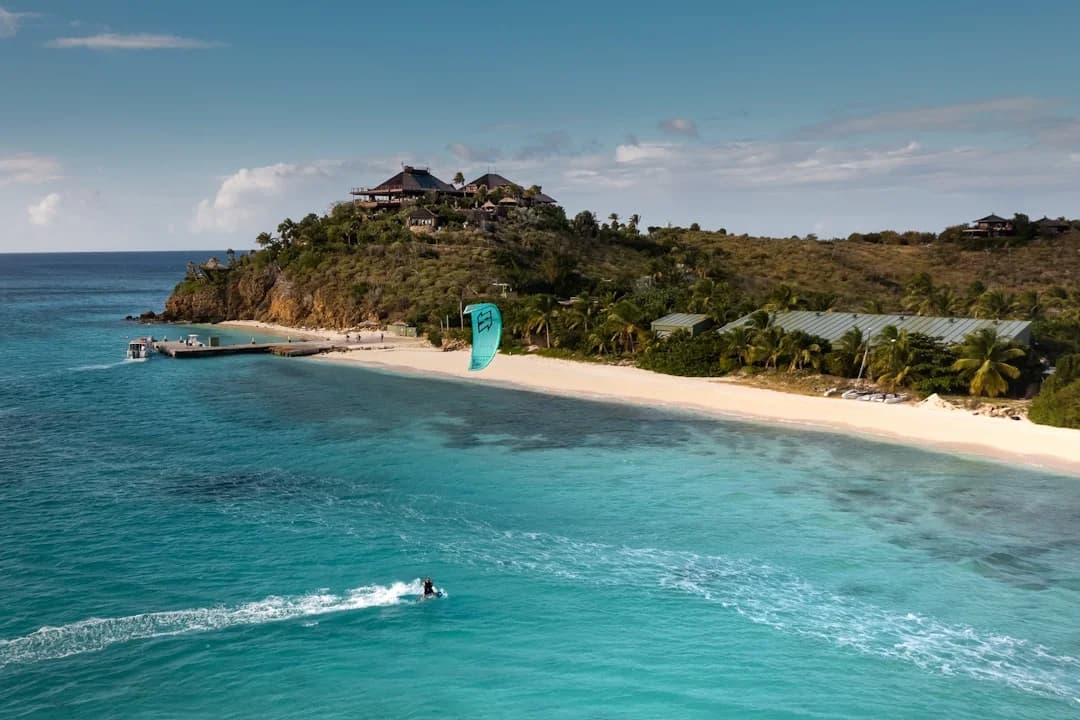
Sailing BVI Itinerary: 7 Days, Anchorages & Tips
The classic sailing BVI itinerary works because the islands are close, the water is generally protected, and you can keep most hops in the 6–15 nm range. The part people underestimate isn’t the sailing time; it’s the human time: reefing, briefing, clearing the mooring field, and hunting for a ball while 40 other boats do the same thing.
This plan assumes a Tortola start, a mixed-skill vacation crew, and a bias toward being secured by ~3–4 pm. Build your leg distances and ETAs with a tool to calculate the distance between ports before you arrive, then sanity-check the numbers during your base briefing.
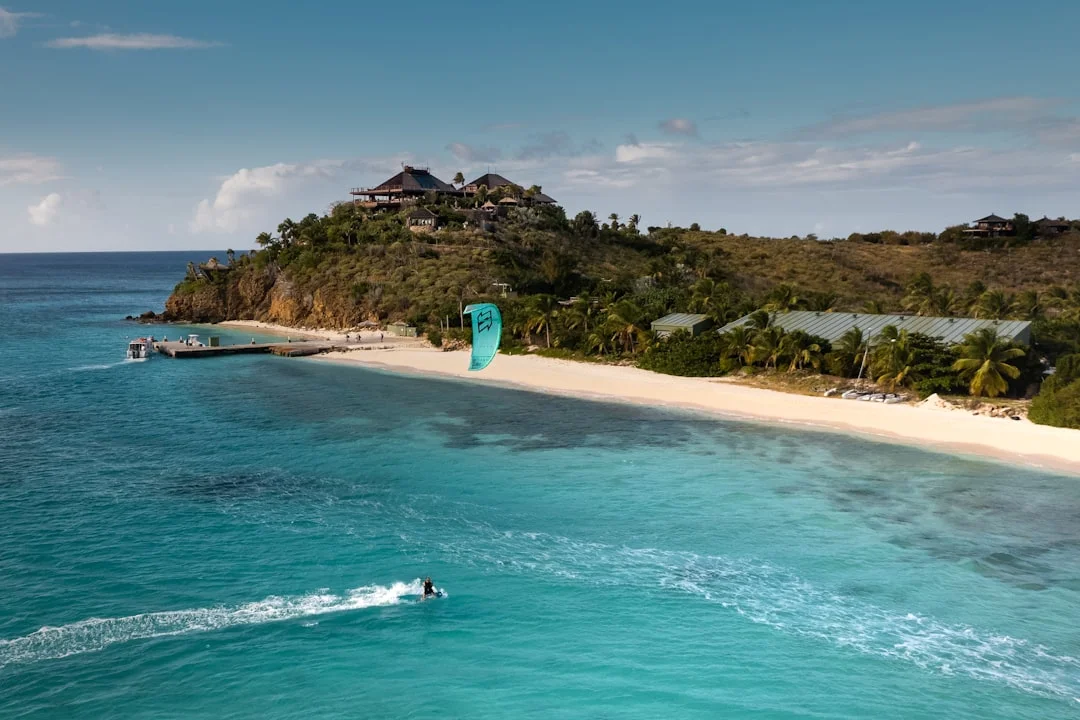
Photo by Nick Rickert on Unsplash
Before You Go: Weather, Charts, Permits, and Timing
Trade winds, funnels, and the “comfort reef” plan
In winter and peak season, expect NE to E trades around 15–25 kn most days, with higher apparent wind where islands create funneling. The acceleration zones you’ll actually feel are the gaps and corners—think “between islands” and “around headlands,” where a steady 18 kn becomes 25+ in a hurry. If your crew’s on vacation (and they are), plan the first reef around 18–20 kn true and you’ll sail more, not less.
A conservative sail plan also reduces the most common BVI injury: someone getting launched by a surprise slam or a wild jibe while “just reaching for a snack.” Cats in particular can build speed fast in 15–20 kn and turn a short chop into a spine audit. Reef early, and you’ll arrive earlier—usually with less drama and fewer apologies.
Charts, pilots, and chartplotter basics for line-of-sight hops
The BVI are mostly line-of-sight cruising, but don’t let that lull you into blind-following the plotter. Keep a paper-chart mindset even if you never unfold one: note the shallow areas, reef edges, and the “don’t cut this corner” zones before you leave the anchorage. Your chartplotter will happily route you across a shoal if you ask it politely enough.
Waypoint sanity checks matter here because many legs are only 6–15 nm, so one bad waypoint can put you on the wrong side of an island in minutes. Use this sea route planner to verify your leg mileage to confirm realistic leg distances—then cross-check against your chart, your eyeballs, and the compass. The goal is boring navigation, not heroic correction.
Permits/fees, check-in flow, and base briefings
Confirm your charter base process down to the unglamorous details: VHF working channels, briefing areas, exclusion zones, fuel-and-water policy, and after-hours contact procedures. Many bases will specify where you can’t go (or where you shouldn’t go without local knowledge), and they’ll tell you which mooring fields are running tight. Ask how mooring fees are handled—some areas are pay-on-site and some are collected by staff who make the rounds.
Best practice is anchored in basics: COLREGS requires proper lookout and safe speed, and that applies inside crowded mooring fields as much as it does offshore. For hardware and technique, ABYC H-40 guidance is the right mindset: use proper strong points, manage chafe, and don’t improvise attachment on lifelines or stanchions unless you enjoy expensive surprises.
The BVI time-of-day strategy (why 3–4 pm matters)
Here’s the daily rhythm that works for real crews: breakfast and a 10-minute briefing, lines off by 09:00–10:00, sails up once you’re clear, and aim to be secured by ~14:30–15:30 in peak season. Popular mooring fields often fill ~2–4 pm, and once they’re full you’re either anchoring outside in deeper water or motoring to Plan B while everyone gets cranky.
Bake in time buffers. A typical 14 nm leg at ~7 kn is about 2 hours underway, but add 30–60 minutes for sail handling, mooring pickup, and a quick crew reset after you’re secured. If it’s crowded or windy, add another 15–30 minutes for retries, because the second attempt is never faster—it’s just louder.
Tip box (captain’s reality check): If you want a mooring in The Bight, Cooper, North Sound, or White Bay, plan your day so you’re already secured by ~3 pm. “Arriving at 3” is how you end up anchoring in 35–40 ft with 150–200 ft of chain and a crew learning new vocabulary.
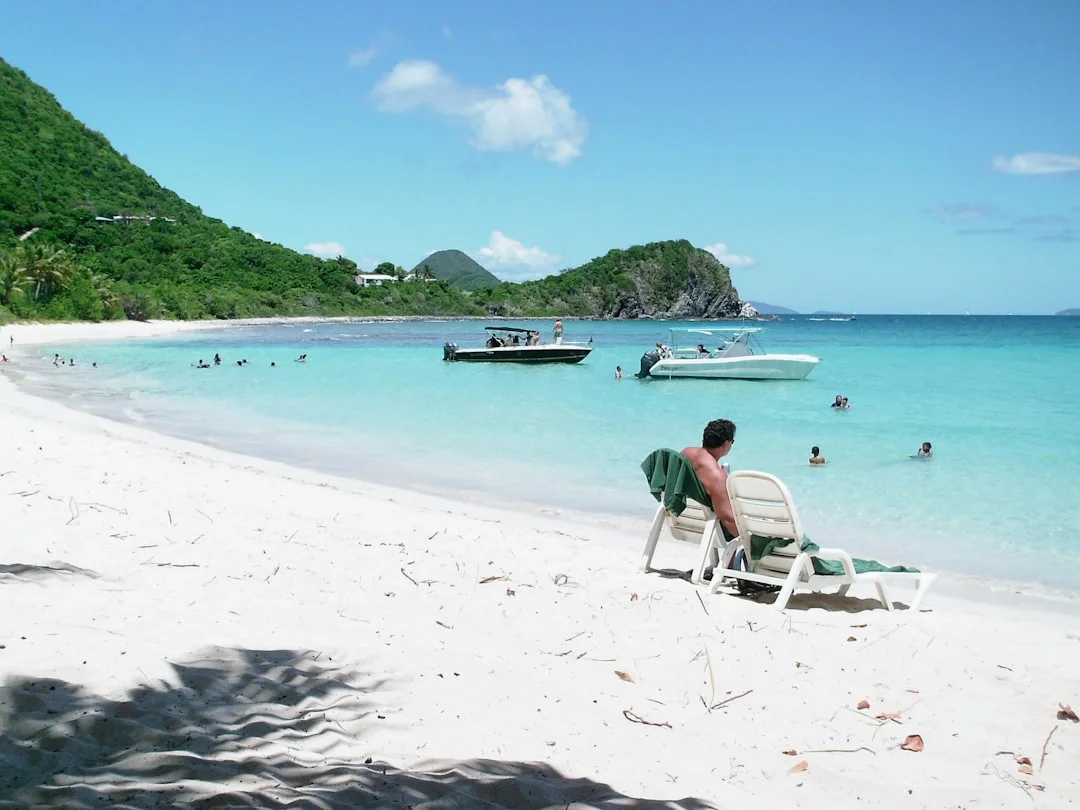
Photo by Dietmar Lichota on Unsplash
7-Day BVI Sailing Itinerary (Tortola Start): Distances, Times, Plan B
Day-by-day overview with leg math
This 7 day BVI sailing itinerary keeps early legs short, includes one “real” passage (Anegada), and builds a return-day buffer so you’re not doing checkout with a fuel dock line behind you. Use 6–7 kn average for a 40–45 ft monohull and 7–9 kn for a 40–50 ft cat in 15–20 kn true wind, but don’t pretend you’ll maintain that through mooring fields and sail changes.
The table below gives planning distances and conservative time blocks that include the non-sailing time you’ll actually spend. If you want to fine-tune your own route variations, run each leg through Breezada’s sea distance calculator and plug in your crew’s real-world speed (not the brochure speed).
| Day | Primary leg | Distance (nm) | Underway time @ 7 kn | Realistic block (incl. sails + mooring) | Primary overnight | Plan B if full/exposed |
|---|---|---|---|---|---|---|
| 1 | Tortola (Road Town) → Norman Island | 6–8 | 1.0–1.2 hr | 2–3 hr | The Bight | Nearby secondary bay on Norman or onward toward Peter area if conditions allow |
| 2 | Norman → Cooper Island | 7–10 | 1.0–1.5 hr | 2.5–3.5 hr | Manchioneel Bay | Continue toward Virgin Gorda area bays if Cooper is packed |
| 3 | Cooper → Virgin Gorda (Spanish Town/Baths) or reposition North Sound | 8–12 | 1.1–1.7 hr | 3–4 hr | VG stop of choice | If busy, keep moving and reposition to North Sound earlier |
| 4 | Virgin Gorda/North Sound → Anegada | 13–15 | ~2.0 hr | 3–4 hr | Anegada (Setting Point area) | Stay North Sound and go next day, or skip without guilt |
| 5 | Anegada → North Sound | 13–15 | ~2.0 hr | 3–4 hr | North Sound | Outer anchorages only if draft/conditions allow |
| 6 | North Sound → Jost Van Dyke | 18–25 | 2.5–3.5 hr | 4–6 hr | Great Harbour/White Bay | If full, aim for Tortola north-side alternatives |
| 7 | Jost → Sopers/West End → Road Town | 8–12 + 12–18 | 1–1.7 + 1.7–2.6 hr | ≥5–8 hr incl. fuel dock | Base night or checkout | If weather builds, return earlier and use marina night |
Timing tactics that actually work
Day 1 (Tortola → Norman / The Bight): Keep it simple and arrive early. The Bight is a magnet, and in high season it can feel like every charter guest in the Caribbean agreed to meet there between 2–4 pm. Secure by ~3 pm, then brief the dinghy rules before someone tries a solo night run with no light and a phone at 4% battery.
Day 2 (Norman → Cooper / Manchioneel Bay): This is an easy hop on paper and a competitive sport in reality. Depart by 09:00–10:00, because Cooper is another field that tightens up mid-afternoon. Plan B is to continue toward Virgin Gorda if you strike out—better to accept a longer afternoon than to force a sketchy anchor drop in 35 ft with coral nearby.
Day 3 (Cooper → Virgin Gorda or reposition North Sound): Decide based on crowds and your Anegada plan. If you want Anegada tomorrow, a North Sound reposition sets you up well and reduces morning chaos. If you’re Bath-bound, keep your expectations realistic: it’s popular for a reason, and popularity doesn’t care about your schedule.
Days 4–5 (Anegada out-and-back): Treat this as the week’s “consequential” navigation day, even though it’s only 13–15 nm. The sailing time can be ~2 hours, but the approach and shallow-water decision-making are what demand daylight and patience. If it doesn’t feel right, postpone—your vacation will survive.
Days 6–7 (North Sound → Jost → return): The North Sound to Jost leg can be 18–25 nm depending on your routing, and it’s the kind of day where leaving late guarantees a late arrival. Build a minimum 3–5 hour return-day buffer for refuel, pump-out if required, and checkout, because fuel docks can stack up fast when half the fleet returns on the same afternoon.
Anchorages Guide by Area: Protection, Holding, and Swing Room
Choosing a BVI anchorage when mooring fields are full
When the balls are gone, don’t panic-anchor; evaluate fast and methodically. Start with wind direction and land shadow, then look at fetch and wave wrap—20–25 kn trades can sneak into anchorages that look calm at noon. In the BVI, a lot of bays deepen quickly, so if you’re already reading 30–40 ft you may have burned half your rode before the anchor even hits bottom.
Your quick anchorage scan should include three numbers: your depth, your swing circle, and your available chain. If you’ve got 150–200 ft of chain and you’re anchoring in 35 ft, you’re already pushing scope limits once you add bow height and snubbers. That’s not “adventure”; that’s “wake up at 02:00 and wonder where the shoreline went.”
Depth, scope, and chain-length reality on charter boats
Scope is simple until it isn’t. In settled conditions, 5:1 is a common guideline; overnight or breezy conditions, plan 7:1. Example: in 20 ft depth, 5:1 ≈ 100 ft of rode, and 7:1 ≈ 140 ft, then add a few feet for bow height and the angle at the roller.
Now the charter-boat reality: many boats carry 5/16 in (8 mm) to 3/8 in (10 mm) chain, often ~150–200 ft total. That’s fine for 15–25 ft anchorages, but it limits your options in bays that drop off fast. Before you rely on “we can always anchor,” confirm your actual chain length on day one, not after you’ve already drifted toward someone’s catamaran trampoline.
Bottom types, coral avoidance, and anchoring etiquette
Holding in the BVI is often good in sand, variable in grass, and untrustworthy in rubble. Look for sand patches and avoid anchoring on coral—beyond the ethics, it’s also a great way to foul your gear and ruin your evening. When you set the anchor, use controlled reverse and confirm with visual transits; if your shoreline reference slides, fix it early.
Anchoring near mooring fields requires spatial awareness. Stay clear of mooring swing circles and the invisible spaghetti of mooring tackle, and don’t block dinghy lanes or swimming areas. If you anchor too close to the field, you’re betting your sleep on other people’s knots—and I don’t make that bet unless I’ve met the other people.
Draft constraints: where 3.5–7.0 ft really matters
Draft changes your margin for error. Typical charter monohulls run ~5.5–7.0 ft draft in the 40–45 ft range, while many charter cats run ~3.5–4.5 ft in the 40–50 ft range. Cats can access shallower water, but shallow also means coral heads, and coral heads don’t care that you “only drew four feet.”
For monohulls, the risk is often the steep shoal edge: one minute you’re in 18 ft, the next you’re in 9 ft with a keel that wants 6+ ft. For cats, the risk is complacency—crews cut corners because the depth looks generous, then discover a coral lump that rises from 12 ft to 5 ft in a boat that still needs clearance. Keep a bow watch in good light, and don’t be shy about slowing down.
Mooring Fields 101: Pickup Technique, Fees, and Chafe Control
How BVI moorings work (first-come, fees, and layouts)
Most BVI moorings you’ll use are first-come, first-served, and many popular fields fill by ~2–4 pm in high season. Fees commonly run ~US$30–$60/night, and collection varies: sometimes via a paid service or staff boat, sometimes via instructions ashore, sometimes via your base’s guidance. Confirm the local practice at check-in, because “I didn’t know” is not a recognized currency.
Field layouts usually include tight rows, a couple of “lanes,” and a lot of boats circling at dead slow. Treat it like a parking lot with fiberglass fenders: your goal is to be predictable, not fast. COLREGS safe speed and proper lookout absolutely apply here, especially when someone inevitably reverses without looking.
Approach under control: helmsman, bow crew, and communication
Brief the crew outside the field, not while you’re already committed. Assign one helmsman and one bow lead; give the bow lead the boat hook and heavy gloves, and keep everyone else seated and out of the way. The fastest way to turn a calm pickup into chaos is to have three people shouting three different plans while the boat accelerates in a gust.
Approach at “dead slow / steerageway only,” ideally into wind/current so you can stop. Aim to come alongside the ball with the bow close enough for the hook, then let the boat settle rather than charging. If the setup isn’t right, abort early—adding 15–30 minutes for two extra tries is normal in crowded conditions, and far cheaper than a bent pulpit.
Rigging the pennant(s): redundancy, cleats, and chafe protection (ABYC H-40)
ABYC H-40 principles are straightforward: attach to proper strong points, distribute load, and manage chafe where lines bear. Run the pennant to a real bow cleat—not lifelines, not stanchions, and not “that stainless thing that looks strong.” If two pennants are provided, use both, because redundancy is the cheapest insurance you’ll buy all week.
Chafe is the silent killer in trade-wind conditions. Protect the pennant where it crosses a bow roller, chocks, or cleat horns, especially if you’ll see 15–25 kn overnight. Even a well-sized line can saw itself thin by morning if it’s working against a sharp edge while the boat yaws.
Etiquette and COLREGS: safe speed, lookout, and dinghy lanes
Keep your engine in neutral when you can, and don’t blast prop wash through swimmers or snorkelers. Maintain a lookout—people in the water are harder to see late in the day, exactly when you’re tired and in a hurry. Once secured, keep dinghy traffic organized: use the dinghy dock areas, avoid cutting between moored boats at speed, and carry a light after dark.
And yes, quiet hours are unofficial in many anchorages, but they’re also the difference between “nice night” and “fleet-wide grudge.” If you need to run engines for batteries, do it earlier, keep it short, and don’t pretend your neighbors can’t hear your generator from 80 feet away.
Anegada Passage: Route Planning, Shallows, and Daylight Approach
Passage plan math: distance, speed, and arrival window
Anegada is only ~13–15 nm from Virgin Gorda/North Sound, but it deserves a passage-plan mindset because the approach and surrounding shallows have higher consequence than the rest of your week. At 7 kn average, 14 nm ≈ ~2 hours underway, but that’s the easy part. Add sail handling, navigation decision time, and mooring/anchor setup, and you’re realistically looking at a 3–4 hour block.
Make “daylight only” your default for a first-timer arrival. I like a firm target to be secured by early afternoon, not because it’s glamorous, but because shallow-water navigation improves dramatically when the sun angle is right and your crew isn’t fried. Leave early enough that you’re not tempted to press on as the light gets flat.
Risk factors: shallow banks, visibility, and draft constraints
Draft drives your conservatism. Many charter cats draw ~3.5–4.5 ft, while many monohulls draw ~5.5–7.0 ft, and that extra couple of feet changes how close you can comfortably work around shoals. Clear water helps, but don’t confuse “clear” with “deep,” because Anegada will happily show you a pretty bottom right before it rearranges your keel.
Visibility is a tool you can lose. A cloud line at the wrong moment can erase the visual cues that make shallow approaches manageable, and late-day glare can make coral heads disappear. Plan your arrival so you’re reading water color and bottom texture with good light, not guessing based on optimism.
Go/no-go criteria: wind, sea state, and crew experience
If the trades are at the high end—20–25 kn with gusts higher in acceleration zones—reef early and decide if your crew is actually enjoying themselves. Anegada isn’t “hard sailing,” but it’s less forgiving if you arrive rushed, tired, and behind schedule. The best go/no-go question is simple: can you keep the boat controlled, reefed, and on time without anyone feeling pressured?
Also consider crew fatigue. If you had a late night and a slow morning, don’t pretend you’re suddenly a professional delivery crew. Vacation crews make their worst decisions at 4:30 pm while trying to salvage a plan they should have adjusted at 10:00 am.
If conditions build: alternates and turnaround points
Your best alternate is often the most boring one: stay in North Sound and go the next morning. If conditions are trending up or visibility looks poor, postponing costs you one day and often saves the rest of the week. If you decide to bail mid-leg, do it early, not after you’ve mentally committed and started cutting corners.
Skipping Anegada doesn’t “ruin” a BVI week. The Sir Francis Drake Channel offers plenty of sheltered miles, and a relaxed crew on a conservative route will remember the trip fondly. A stressed crew on a forced plan will remember it as the week they learned what ibuprofen can’t fix.
Costs & Logistics: Provisioning, Marinas, Fuel/Water, and Budgeting
Provisioning strategy: Tortola vs remote islands
Do the big shop-up on Tortola unless you enjoy paying convenience premiums in smaller, remote spots. A reasonable mid-range provisioning benchmark for 4–6 people / 7 days is ~US$250–$600+, and that number swings wildly based on alcohol, dietary needs, and how many meals you eat ashore. If you use a delivery service, plan a ~$50–$150 service fee plus the groceries, and verify what’s actually stocked when you arrive.
Remote islands and high-demand areas tend to be higher priced, so treat them as top-up locations: ice, a few fresh items, and the thing someone forgot to pack. It reduces friction and it keeps your itinerary flexible, because you won’t be forced into a specific stop just to restock tortillas.
Fuel, water, and ice: planning realistic consumption
Fuel surprises people because they motor more than they admit. Many 40–50 foot charter boats burn roughly ~0.8–1.5 US gal/hr, and if you average ~2 hr/day motoring (maneuvering, calms, tight schedules), you can land around ~11–21 gallons/week. Return fuel bills often fall in the ~$150–$500 range depending on hours, tank size, and local price.
Water and ice are the quiet budget items. Water can price out around ~$0.20–$0.60/gal equivalent at marinas, and ice often runs ~$3–$7/bag, with prices creeping up away from Tortola. Simple habits—dish bins, short rinses, and not running the shower like you’re at home—buy you extra days without a marina stop.
Marina nights and shorepower habits (ABYC E-11 considerations)
A marina night can be worth it for a reset: laundry, water, and a guaranteed secure berth when the wind is up. Dockage for 40–50 ft commonly benchmarks around ~$2.00–$5.00/ft/night, so ~$80–$250/night depending on services and season. Just don’t let marina comfort erase your schedule buffer; checkout-day dock lines are the opposite of relaxing.
On shorepower, act like ABYC E-11 is watching. Inspect the cord ends, avoid DIY adapters, verify polarity if your boat has a tester, and don’t “fix” electrical issues with creative wiring. Many charter boats have inverters and battery chargers that behave fine—right up until a bad cord end heats up at 02:00, which is a lousy time to learn where your main breaker lives.
| Line item (7 days) | Typical mid-range benchmark (USD) | Notes for planning |
|---|---|---|
| Charter base rate (40–45 ft cat, high season) | $7,500–$14,000+ | Boat only; holiday weeks can spike |
| Charter base rate (38–45 ft mono) | $4,500–$9,500 | Often lower fuel burn, deeper draft |
| Skipper add-on | $250–$400/day | + gratuity; may reduce stress dramatically |
| Cook/host add-on | $200–$350/day | Useful with families or larger crews |
| Mooring fees | $30–$60/night | Popular bays often at upper end |
| Marina dockage (optional 1–2 nights) | $80–$250/night | Based on $2–$5/ft for 40–50 ft |
| Fuel at return | $150–$500 | Driven by motoring hours and price |
| Provisioning (4–6 people) | $250–$600+ | Alcohol and shore meals change everything |
| Ice | $3–$7/bag | You’ll buy more than you think |
| Water top-ups | $0.20–$0.60/gal equiv. | Metered at many marinas |
Bareboat Safety & Seamanship: Reefing, Dinghy Ops, Snorkeling, and Systems
Reef early, arrive early: the BVI safety formula
The BVI reward conservative timing. If trades are 15–25 kn, reefing at ~18–20 kn true keeps the boat balanced, reduces crew fatigue, and makes mooring approaches calmer. It also buys you schedule margin, because you’re not slowing down later to recover from a broach-y, overpowered reach that rattled everyone’s confidence.
COLREGS fundamentals matter most when people forget they matter: proper lookout, safe speed, and predictable maneuvering in crowded areas. The “it’s only a mile” legs between bays can be the highest-risk part of the day because crews relax, traffic increases, and you’re closer to hazards. Keep a watch system even if it’s informal, and keep transits daylight-based when possible.
Dinghy operations: night lighting, comms, and fuel
Most charter dinghies carry 9.9–15 hp outboards, and at higher throttle they can burn ~0.8–1.5 gal/hr depending on load and sea state. Plan dedicated dinghy fuel for dinner shuttles in places like North Sound and Jost, because “we’ll be fine” becomes “we’re rowing” faster than you’d think. Don’t overload the dinghy; the boat doesn’t care that it’s your anniversary.
For night runs, use a white all-around light, carry a handheld VHF or phone in a dry bag, and wear USCG-approved PFDs as your charter operator expects. Most dinghy incidents I’ve seen start with the same three lines: “It’s just across the bay,” “We’ll be quick,” and “Where’s the light again?” Be boring; boring is safe.
Snorkeling in busy bays: flags/floats and traffic avoidance
Snorkeling is excellent in the BVI, and crowded mooring fields are exactly where you need the most discipline. Use a surface float/flag, snorkel with a buddy, and stay out of dinghy lanes and approach corridors. Late day is a risk multiplier: visibility drops, small craft traffic increases, and people get casual right when they should get cautious.
Brief the crew like you mean it: no free-swimming across the field, no “I’ll just check that boat,” and no relying on other skippers to see a head in the water. I’ve watched too many close calls caused by tired helmsmen creeping through at idle while someone snorkels where boats need room to maneuver.
Heads, holding tanks, and no-discharge habits (ABYC H-41)
Most charter head problems are operator problems, not plumbing problems. Follow the boat’s posted procedure, use modest paper, and brief guests on day one so you’re not rebuilding a joker valve at midnight. ABYC H-41 aligns with the common-sense rules: use systems as designed, manage venting and holding tanks properly, and treat no-discharge habits as standard courtesy in crowded bays.
No one wants to swim behind the boat after you’ve been “creative” with sanitation. In popular snorkel areas, assume the social standard is strict even if enforcement varies. If you’re unsure, err on the side of holding tanks and pump-out procedures per your base instructions.
Battery/inverter/generator management at anchor (ABYC E-11)
A typical quiet overnight draw on many charter boats is ~60–150 Ah: fridge, lights, instruments, and a few fans. That number tells you whether you can stay silent or need a short engine/generator run. Run time planning is part seamanship and part neighbor relations; nobody loves the boat that starts charging at 22:30.
ABYC E-11 is the mental model: monitor battery state, don’t overload inverters, and don’t improvise wiring. If you need to charge, do it earlier in the evening and keep it efficient—higher RPM for a shorter period often beats low RPM for hours. Your crew sleeps better, your neighbors glare less, and your alternator thanks you quietly.
Frequently Asked Questions
For a 40–50 ft charter catamaran, what’s a realistic ETA calculation for North Sound → Anegada (13–15 nm) including sail handling and mooring pickup time buffers?
Plan the sailing time at 7–9 kn, so 14 nm is roughly 1.5–2.0 hours underway depending on angle and sea state. Then add a realistic 30–60 minutes for sail handling, approach speed reductions, and getting organized on arrival, plus 15–30 minutes extra if the mooring/anchoring area is crowded. In practice, I block 3–4 hours total from “lines off” to “secured and briefed.”
When picking up a single-pennant BVI mooring, how should you rig chafe protection and a backup line to the mooring ring in line with ABYC H-40 principles?
Run the pennant to a proper bow cleat (not lifelines or stanchions) and add chafe protection anywhere the line bears on a bow roller, chock, or cleat horns. If field rules and conditions allow, rig a backup line from a second strong point (often the other bow cleat) to the mooring ring using a controlled, safe method—no dangerous foredeck gymnastics in swell. The ABYC H-40 mindset is load on strong points, redundancy where practical, and chafe management as a primary failure mode.
If a mooring field is full, how do you choose an anchoring spot that avoids mooring swing circles and keeps adequate scope given only 150–200 ft of chain?
First, move outside the mooring grid so your swing circle won’t intersect moored boats or their tackle. Then pick a depth that matches your rode: with 150–200 ft of chain, anchoring in 15–25 ft is far more workable than 35–40 ft, especially if you want 7:1 overnight scope. Look for sand, avoid coral, set the anchor with controlled reverse, and confirm you have room to swing without drifting into the mooring field or dinghy lanes.
In 20–25 kn NE trades, which headings/legs in the Sir Francis Drake Channel tend to create the worst apparent-wind acceleration, and how should that change reefing and departure timing?
The worst apparent-wind moments often show up when you’re exposed in the gaps between islands and around headlands where the wind funnels, turning a steady 20 kn into sharp gusts that feel higher. Reaching legs can build apparent wind quickly—especially on cats—so reef earlier than you think you “need,” typically at ~18–20 kn true for comfort and control. Depart earlier so you’re not rushing into a crowded mooring field late day with full sail and a tired crew.
For a 5.5–7.0 ft draft monohull versus a 3.5–4.5 ft draft cat, what specific shallow-water approach cautions should you apply when planning the Anegada arrival window?
For a 5.5–7.0 ft monohull, plan a more conservative approach line, keep more margin from shoal areas, and treat good visibility as mandatory—because your under-keel clearance disappears fast if depths jump from 12 ft to 8 ft. For a 3.5–4.5 ft cat, don’t let the shallower draft tempt you into cutting corners; coral heads can rise abruptly, and a cat’s speed makes impacts harsher. In both cases, prioritize a daylight arrival (ideally early afternoon), slow down in shallow zones, and use a dedicated bow watch when the water color starts changing.
If you take one repeatable method from this British Virgin Islands sailing route, make it this: do the distance-and-time math for every leg, reef before you’re overpowered, and arrive before the 2–4 pm mooring crush with a Plan B bay ready. Use voyage distance to estimate fuel needs and timing to pre-build legs for fuel and timing estimates, then confirm current fees, park rules, and local notices during your charter base briefing before you cast off.
About the Author
Related Articles

Canal du Midi Boat Trip: Practical Guide to the Med
Plan a canal du midi boat trip to the Med with routes, locks, timing & tips. Read the practical guide and start planning your cruise today!
By Breezada Team
Sailing Through a Lock: Lines, Fenders & Crew Guide
Learn sailing through a lock with the right lines, fenders, fees, and crew roles. Get prepared and transit smoothly—read the guide now.
By Breezada Team
Sailboat Rigging Inspection Checklist & Replace Guide
Use this sailboat rigging inspection checklist to spot wear fast. Follow our replace guide—read now and keep your rig safe before you sail.
By Breezada Team
Sailing Cyclades Itinerary: 7–10 Days + Meltemi Tips
Plan your sailing Cyclades itinerary for 7–10 days with Meltemi tips, routes and stops—use this guide to map your trip and set sail today.
By Breezada Team