Every year, thousands of people finish a sailing course and walk away with a certificate they don't fully understand. Some hold an ASA 101 and think they can charter a 45-foot catamaran in Greece. Others spend £3,000 on an RYA Yachtmaster and realize it means nothing at a charter base in Croatia without the right paperwork. The certification landscape is fragmented, inconsistent, and — if you pick the wrong path — expensive.
This guide breaks down the three major certification systems, explains what each level actually qualifies you for, and tells you exactly which piece of paper you need for the kind of sailing you want to do.
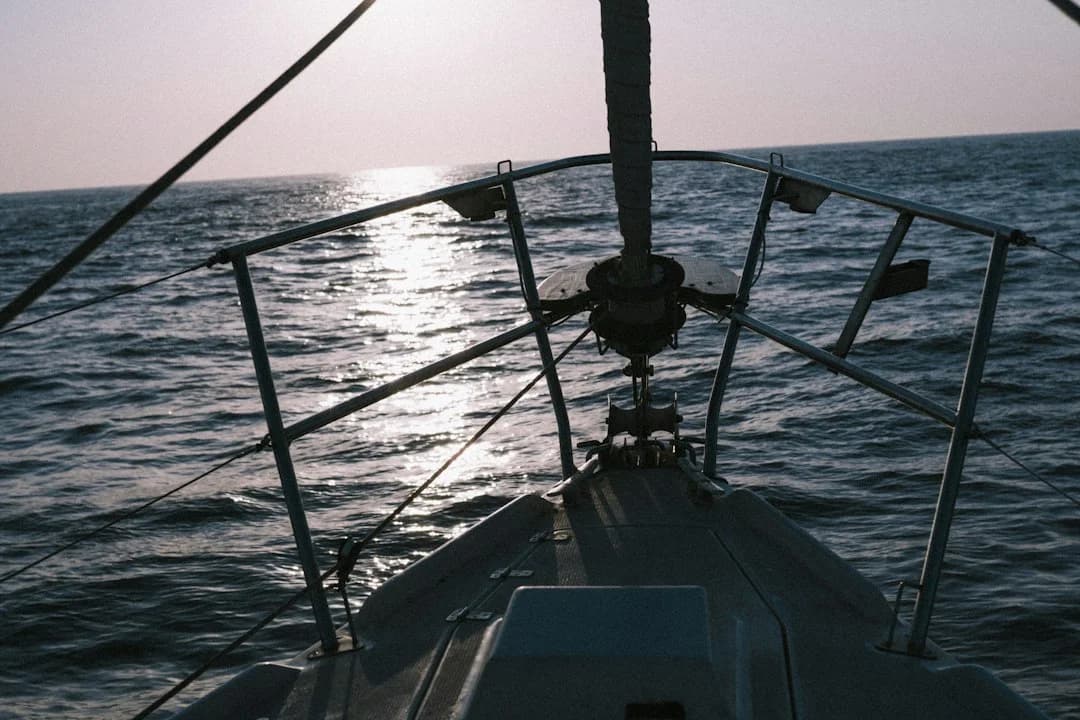
Photo by Tatiana Zhukova on Unsplash
The Three Major Certification Systems
There is no single international sailing license. Instead, three organizations dominate the certification world, each with its own progression, terminology, and regional recognition.
ASA (American Sailing Association) — the most common system in the United States, with over 300 affiliated schools. ASA certifications are numbered (101 through 114) and are widely recognized at charter companies in the Caribbean, the US, and increasingly in the Mediterranean.
RYA (Royal Yachting Association) — the British system, considered the gold standard in Europe and much of the Commonwealth. RYA qualifications range from Competent Crew to Yachtmaster Ocean, and they carry significant weight at charter bases worldwide.
ICC (International Certificate of Competence) — not a training program but a government-issued certificate that proves you can operate a vessel in foreign waters. The ICC was created under a United Nations resolution and is recognized across Europe and beyond. You can obtain one through the RYA, national sailing federations, or direct examination.
The key thing to understand: these systems overlap but don't directly translate. An ASA 104 is roughly equivalent to an RYA Day Skipper, but charter companies make their own judgments. Having both an ASA certification and an ICC is the most flexible combination if you plan to sail internationally.
ASA Certifications: The American Pathway
The ASA uses a numbered system from 101 to 114. Here's what each level actually means in practice — not the marketing copy from the school brochure, but what you'll realistically be able to do.
ASA 101: Basic Keelboat Sailing
Duration: 2-3 days | Cost: $400-$800 | Boat size: up to 25 feet
This is where most people start. You'll learn points of sail, basic tacking and gybing, how to rig a small keelboat, and simple docking maneuvers. After ASA 101, you can confidently rent a daysailer at most yacht clubs and sailing centers.
What it doesn't qualify you for: chartering anything, sailing at night, or heading offshore.
ASA 103 + 104: Basic Coastal Cruising + Bareboat Chartering
Duration: 5-7 days combined | Cost: $1,200-$2,500 | Boat size: 30-45 feet
These two are often taught together as a week-long intensive. ASA 103 covers coastal cruising fundamentals — navigation, anchoring, sail trim, weather interpretation, and living aboard. ASA 104 adds charter-specific skills: provisioning, passage planning, crew management, and handling unfamiliar vessels.
This is the certification most sailors are after. An ASA 104 is the minimum most charter companies require for a bareboat charter. Companies like Sunsail and The Moorings accept ASA 104 for boats up to about 45 feet. If you're planning a yacht charter holiday, this is your target.
ASA 105 + 106: Coastal Navigation + Advanced Coastal Cruising
Duration: 3-5 days each | Cost: $800-$1,500 each | Boat size: 30-50 feet
ASA 105 is a classroom-heavy course focused on chart work, tides, currents, electronic navigation, and passage planning. ASA 106 takes you offshore in challenging conditions — heavy weather sailing, night passages, and advanced crew management.
Together, these qualify you for multi-day coastal passages. You'll need them if you want to calculate a route from Florida to the Bahamas and actually make the crossing yourself rather than on a skippered charter.
ASA 108: Offshore Passagemaking
Duration: 7-10 days | Cost: $2,500-$5,000 | Typically includes: an actual offshore passage
This is the big one. ASA 108 involves a genuine multi-day offshore passage — often from the US mainland to Bermuda, or through the Caribbean island chain. You'll stand watches, navigate by stars (yes, still), manage sleep deprivation, and handle whatever weather shows up.
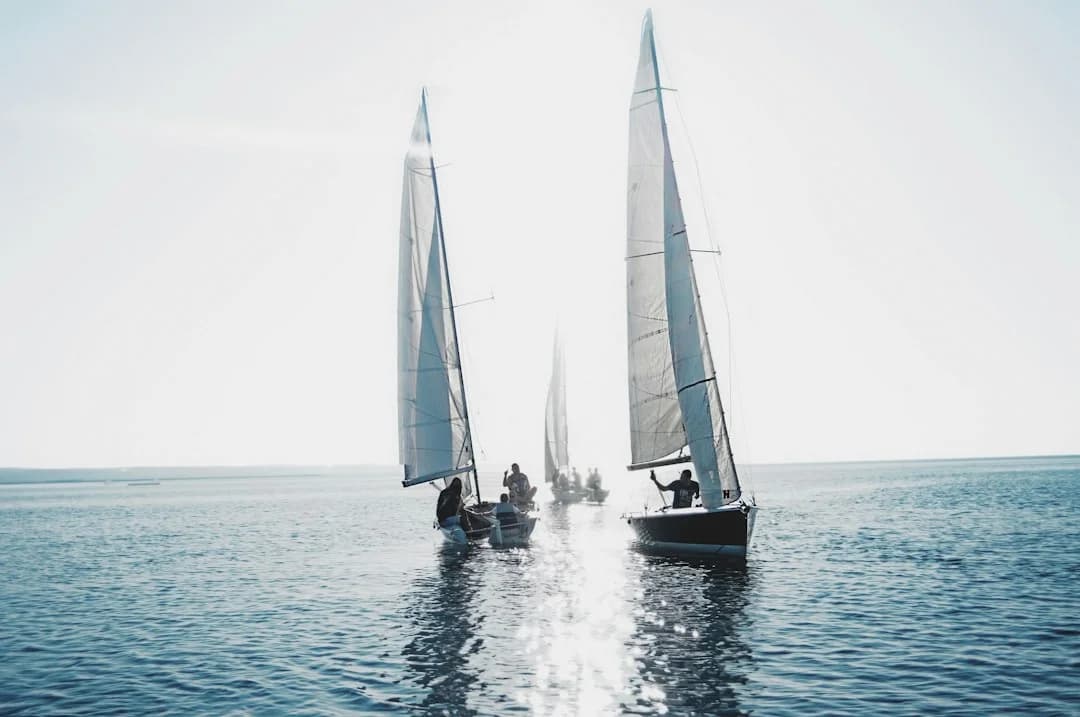
Photo by Alan Rostovtev on Unsplash
RYA Certifications: The British Standard
The RYA system is structured differently — fewer levels, more depth at each stage, and a clear split between practical and theory courses.
RYA Competent Crew
Duration: 5 days | Cost: £500-£900 | Prerequisites: none
The entry-level RYA qualification. You'll learn to be a useful crew member — sail handling, helming, ropework, safety procedures, and basic seamanship. It's roughly comparable to ASA 101, though the RYA course includes more time actually living aboard and sailing in tidal waters (a reality of British sailing that Americans rarely encounter early on).
RYA Day Skipper (Theory + Practical)
Duration: 5 days theory + 5 days practical | Cost: £1,000-£2,000 total | Prerequisites: some sailing experience
The Day Skipper is the RYA's equivalent of ASA 103/104 combined. The theory portion covers navigation, meteorology, tides, collision regulations, and passage planning. The practical portion puts you in charge of a yacht for day passages in coastal waters.
A Day Skipper certificate is widely accepted for bareboat charter worldwide. Many Mediterranean charter companies consider it superior to an ASA 104, particularly because it includes tidal navigation — critical in areas like the English Channel, the Adriatic, and parts of the Caribbean.
RYA Coastal Skipper / Yachtmaster Coastal
Duration: 5-7 days practical | Cost: £1,200-£2,500 | Prerequisites: Day Skipper + significant logged miles
This is where the RYA system diverges from ASA. The Coastal Skipper is a practical course, but the Yachtmaster Coastal is an independent examination — you show up, an examiner puts you through your paces for 8-12 hours, and you either pass or fail. No course can guarantee you a Yachtmaster certificate.
The Yachtmaster Coastal qualifies you for commercial operations (with additional endorsements) and is recognized by many countries for professional vessel operation.
RYA Yachtmaster Offshore + Ocean
Duration: Exam-based | Cost: £200-£400 for the exam, thousands more in prep | Prerequisites: 2,500+ logged nautical miles (offshore), plus celestial navigation theory (ocean)
The Yachtmaster Offshore is the professional benchmark. It requires extensive logged sea time, including night hours and miles as skipper. The examination is notoriously thorough — a 10-12 hour practical assessment covering pilotage, passage planning, crew management, and emergency procedures, often conducted partly at night and in poor weather.
The Yachtmaster Ocean adds celestial navigation and qualifies you for unlimited ocean passages. If you're planning something like an Atlantic crossing, this is the qualification that says you've done the work. For reference, you can verify the distances involved — we're talking 2,700+ nautical miles on the trade wind route.

The ICC: Your International Passport
The International Certificate of Competence isn't a training program — it's a document. Think of it as a driver's license for boats, issued by a national authority and recognized in other countries under UN Economic Commission for Europe Resolution 40.
Who Needs an ICC?
If you plan to charter or sail your own boat in Europe, you almost certainly need one. Countries that require an ICC (or equivalent national license) for foreign sailors include:
| Country | ICC Required? | Notes |
|---|---|---|
| Greece | Yes | Strictly enforced at charter bases |
| Croatia | Yes | Police checks in marinas are common |
| Italy | Yes | Required for vessels over 24m or in some ports |
| Spain | Yes | Required for engine power over 11 kW |
| France | Yes | Not legally required but strongly recommended |
| Turkey | Yes | Charter companies always ask for it |
| Netherlands | Yes | Required on inland waterways |
| UK | No | But useful for returning to EU waters |
| Caribbean | No | ASA/RYA accepted directly |
| USA | No | No federal license requirement for recreational sailing |
How to Get an ICC
If you hold an RYA Day Skipper or above: Apply through the RYA. They'll issue an ICC based on your existing qualification. Cost: about £50, takes 2-3 weeks.
If you hold ASA certifications: The ASA itself cannot issue an ICC (it's not a government body). You have two options — take a direct ICC examination through a national sailing authority, or obtain an RYA qualification first.
Direct ICC examination: Some countries offer standalone ICC tests. The practical exam typically takes half a day and covers boat handling, navigation, collision regulations, and safety. Cost: £150-£300.
Pro tip: If you're an American sailor planning to charter in Europe, the most efficient path is to get your ASA 104, then take a one-day ICC assessment through the RYA or a European sailing federation. It adds a day and a couple hundred dollars, but it eliminates any ambiguity at the charter base.
ASA vs. RYA: Which System Should You Choose?
The honest answer depends on three things: where you live, where you plan to sail, and whether you want professional qualifications.
| Factor | ASA | RYA |
|---|---|---|
| Best for | US-based recreational sailors | European sailing or professional ambitions |
| School availability | 300+ schools, mostly US/Caribbean | Worldwide, strong in UK/Med/Asia |
| Charter recognition | Caribbean, US, increasingly Med | Worldwide, strongest in Europe |
| Path to professional | Limited | Clear (Yachtmaster + commercial endorsements) |
| Cost to charter level | $1,500-$3,000 | £1,500-£3,000 |
| Time to charter level | 7-10 days | 10-15 days |
| Tidal navigation | Minimal until advanced levels | Built in from Day Skipper |
If you're based in the US and primarily want to charter in the Caribbean, go ASA. If you're based anywhere else, or if you have any interest in professional sailing, go RYA. If you might do both, start with whichever is more accessible and add the ICC.
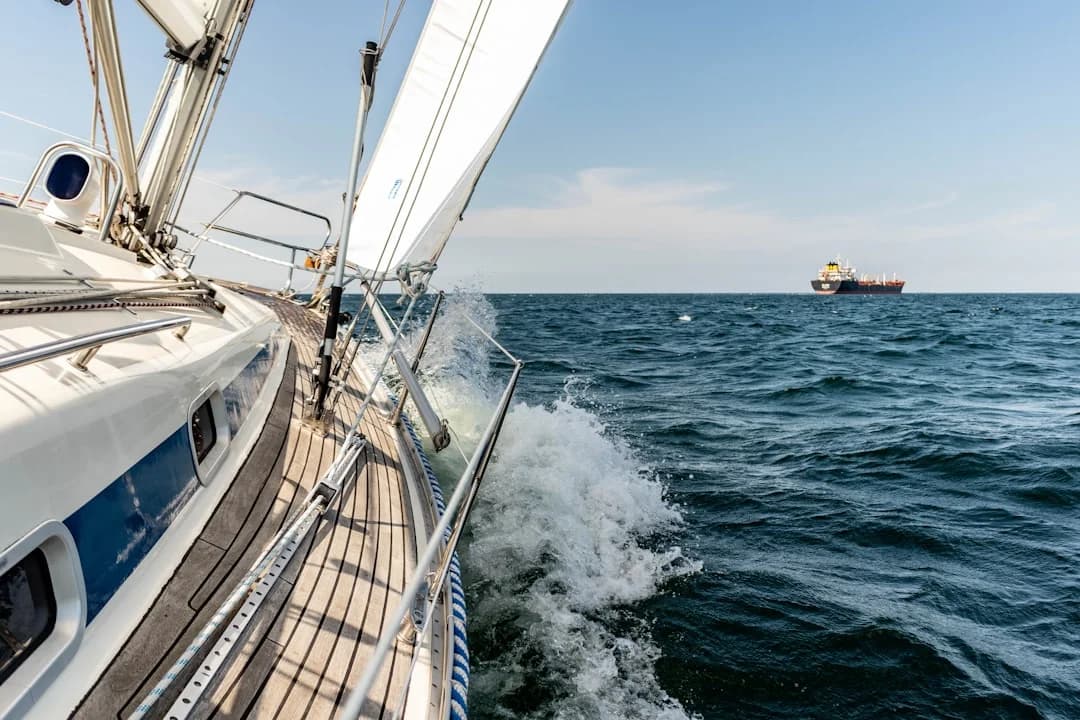
Photo by Hendrik Morkel on Unsplash
Building Your Sailing Resume Beyond Certificates
A certificate proves you passed a course. A sailing resume proves you can actually sail. Charter companies — particularly for larger or more expensive vessels — look at both.
Here's what matters beyond the card in your wallet:
Logged sea miles. Keep a proper logbook from your first course onward. Record dates, vessel details, weather conditions, distances, and your role on board. Charter companies for vessels over 50 feet may ask for 1,000+ logged miles. If you're curious about distances between ports for logging purposes, Breezada's sea distance calculator gives you exact nautical mile figures.
Varied conditions. A hundred days of fair-weather daysailing is worth less than ten days of real coastal passage-making with weather, tides, and night sailing. Seek out courses and delivery trips that include challenging conditions.
Specific experience. If you plan to charter a catamaran, get catamaran experience. If you're heading to the Mediterranean, sail in tidal European waters first. Charter companies notice when your logged experience matches their operating area.
References. Sailing with qualified skippers who can vouch for your competence is invaluable. RYA Yachtmaster examiners, charter company skippers, and sailing school instructors all carry weight. If you've been reading up on how to sail as a complete beginner, the natural next step after your first course is to crew on as many boats as possible.
The Realistic Cost Breakdown
Let's add up what it actually costs to go from zero to chartering a yacht:
| Path | Courses | Total Cost | Total Time |
|---|---|---|---|
| ASA to bareboat | ASA 101 + 103/104 | $1,600-$3,300 | 7-10 days |
| ASA to bareboat + ICC | ASA 101 + 103/104 + ICC exam | $1,800-$3,600 | 8-11 days |
| RYA to bareboat | Competent Crew + Day Skipper | £1,500-£2,900 | 10 days |
| RYA to professional | Through Yachtmaster Offshore | £5,000-£10,000+ | Months + 2,500 nm |
These figures don't include travel, accommodation during courses, or the cost of additional practice sailing between certifications. Budget an extra 30-50% for the real total.
Common Mistakes to Avoid
Rushing through certifications. Getting ASA 101 through 104 in a single week is possible but not ideal. You'll retain more — and be a better sailor — if you spend time sailing between courses.
Ignoring the theory. Navigation, weather, and collision regulations are tedious to study but critical at sea. The sailors who skip the theory are the ones who run aground or get caught out by a weather system they should have seen coming.
Not checking charter company requirements before booking. Each company sets its own standards. Some accept ASA 104 alone; others want an ICC, specific logged miles, or a sailing resume. Check before you commit to a charter — or a certification path.
Assuming your certification works everywhere. An ASA 104 will get you a charter in the BVI. It won't satisfy the Greek coast guard. Always research the specific requirements of your destination.
Frequently Asked Questions
Do I need a sailing license to sail my own boat?
In the United States, there is no federal requirement for a recreational sailing license. However, some states require boating safety courses for powerboat operation. Internationally, most European countries require proof of competence (ICC or national equivalent) for foreign-flagged vessels, and some require it for domestic sailors too. Even where not legally required, carrying a recognized certification is strongly recommended for insurance purposes.
Can I charter a yacht with just an ASA 101?
No. ASA 101 certifies basic keelboat sailing on boats up to 25 feet. The minimum certification for bareboat chartering is ASA 104 (Bareboat Chartering), which most companies require along with a sailing resume showing relevant experience. Some smaller charter operations in the US may accept ASA 103 for boats under 35 feet, but this is the exception rather than the rule.
How long does it take to go from complete beginner to chartering?
With focused effort, you can go from zero experience to holding an ASA 104 or RYA Day Skipper in 10-14 days of courses. However, most experienced sailors recommend spacing your training over several months, with practice sailing between courses. A more realistic timeline from first lesson to confidently chartering a 40-foot yacht is 6-12 months, including at least 500 nautical miles of logged experience.
Is an RYA Yachtmaster worth the investment?
If you want to work professionally in the sailing industry — as a charter skipper, delivery captain, or sailing instructor — a Yachtmaster Offshore is essentially required. For recreational sailors, it's a matter of personal ambition. The qualification process (accumulating 2,500+ miles, studying for theory exams, and passing a rigorous practical assessment) will undeniably make you a better sailor. But for simple bareboat chartering, a Day Skipper with good logged experience is sufficient.
Do sailing certifications expire?
ASA certifications do not expire. RYA certificates of competence (Day Skipper, Coastal Skipper, Yachtmaster) also do not expire, though the associated first aid and radio certificates do need renewal every 3-5 years. The ICC is typically valid for 5 years before renewal is required, though this varies by issuing country. Even if your certificate doesn't expire on paper, charter companies may question certifications with no recent sailing activity — which is another reason to keep your logbook current.
About the Author
Related Articles

Bahamian Moor Guide: Tandem Anchors & Snubbers
Learn bahamian moor setup, tandem anchoring, and proper snubbers for crowded anchorages. Get step-by-step tips—read and rig it right.
By Breezada Team
Best Radar Reflector for Sailboat: Active vs Passive
Compare active vs passive radar reflectors for sailboats, mounting tips, and real-world results. Choose the best radar reflector—read now.
By Breezada Team
Sail Trim for Beginners: Main + Jib Cruising Guide
Learn sail trim for beginners with simple main + jib settings, telltales, twist, traveler & vang. Get quick wind-based trims—read now.
By Breezada Team
Sailboat Bimini Guide: Dodger & Enclosure Choices
Learn how to choose a sailboat bimini, dodger & cockpit enclosure—materials, fit, costs, and DIY vs pro. Get the right setup today.
By Breezada Team