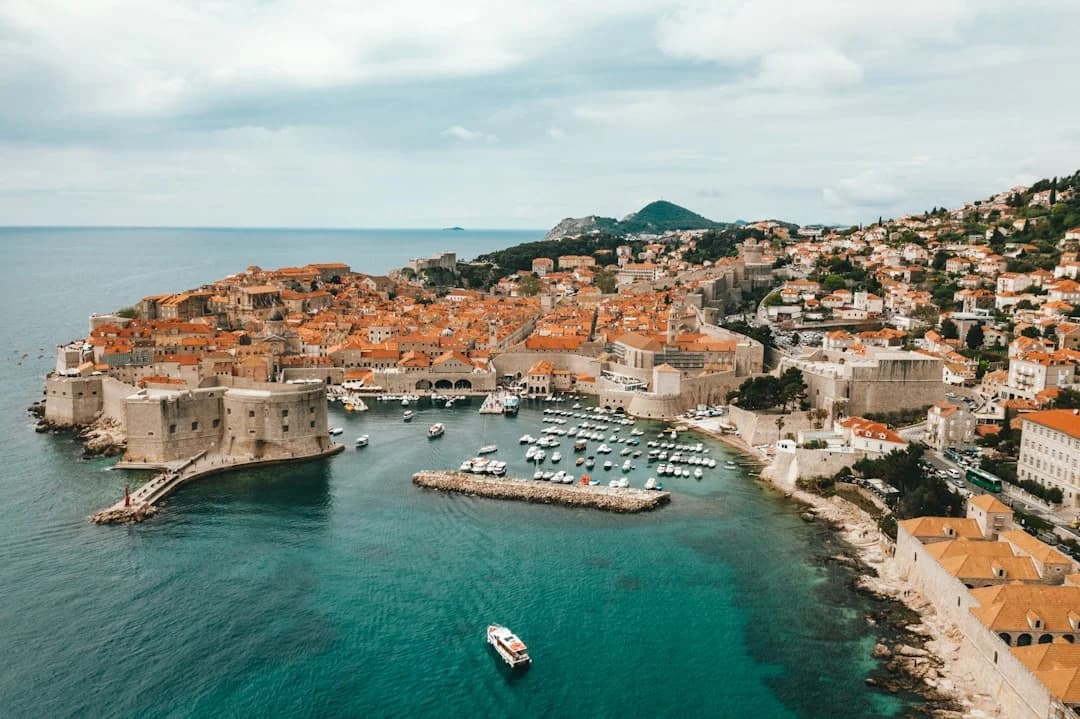
Sailing Croatia Itineraries: 7 & 10 Days from Split or Dubrovnik (with nm, costs, and weather pivots)
Planning a Croatia sailing itinerary is easy to romanticize and surprisingly hard to execute on a Saturday 17:00 check-in with 14 bags of “essential” clothing. The Adriatic rewards skippers who do the unglamorous math: nautical miles, arrival times, and where you’ll hide if the forecast turns grumpy.
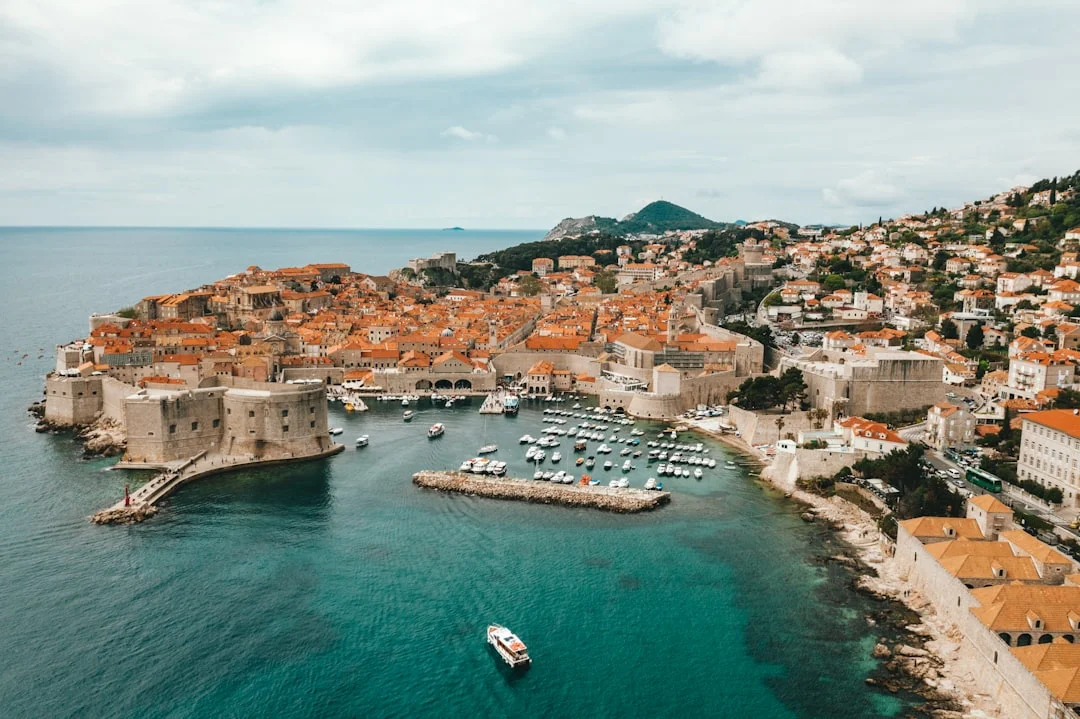
Photo by Spencer Davis on Unsplash
Below are practical 7 day sailing itinerary Croatia and 10 day sailing itinerary Croatia routes from Split and Dubrovnik, each with marina-heavy vs anchorage-heavy overnight options. I’ll also show how Bora/Jugo change the plan, where the real costs land, and how to avoid the classic Friday-night sprint back to base.
Quick Planning Snapshot: bases, winds, and leg targets
Split vs Dubrovnik: what each base does best
Split (ACI Split) is central Dalmatia on a platter: Šolta, Brač, Hvar, Vis all sit in that sweet 15–35 nm/day band. You step off the dock into a real city with provisioning, spare parts, and restaurants that don’t shut down at 21:00. It’s also busy, loud, and the fuel dock can feel like a small social experiment.
Dubrovnik (ACI Dubrovnik/Komolac) is a different animal: the marina is upriver in Komolac, roughly 6 km from Old Town, so budget 20–35 minutes each way for taxis and errands. The upside is immediate access to the Elafiti, then Mljet and Korčula with sensible legs. The downside is you’re not “in Dubrovnik” when you’re in the marina—great for sleep, less great for sightseeing logistics.
Seasonality: Maestral vs Bora/Jugo implications
In summer, your default is the Maestral: a thermal NW/ W breeze that often builds late morning, peaks mid-afternoon, then fades toward evening. That pattern encourages early departures, long lunches, and arrivals before 16:00—basically the opposite of how many charter crews start their day.
The two disruptors are Bora and Jugo. Bora comes down from the NE in bursts and can hit 25–40+ knots in the gusts, especially near gaps and headlands. Jugo arrives from the SE with lower pressure and longer-fetch swell, which turns “nice anchorage” into “why is the galley floor moving?” fast.
Realistic day-leg math: nm, knots, and arrival times
For a 38–45 ft monohull, plan 4–6 knots average (sail + motor), not the brochure’s “8 knots all day.” At 5 knots, 30 nm ≈ 6 hours dock-to-dock, and that’s before tacking, swim stops, and the last 1–2 nm of slow marina approach. A relaxed rhythm is 15–35 nm/day, arriving by 14:00–16:00 when berths and buoy fields start filling.
Charter reality sets the outer frame: typical Croatia handover is Saturday 17:00 check-in and Saturday 09:00 check-out, with a mandatory Friday return to base for the last-night marina sleep. That means your “7-day” cruise is really 6 usable cruising days unless you enjoy docking in the dark with an audience.
Tip box (captain’s rule): Build your plan around arrival time, not distance. If you can’t be tied up by 16:00, assume you’ll be improvising—especially July and August.
7-Day Split sailing itinerary (Šolta–Vis–Hvar–Brač loop)
Day-by-day route with realistic nm and ETA strategy
This Split sailing itinerary works because it matches turnover weeks and keeps you out of the longest backtracks. Total distance usually lands around 120–170 nm depending on swim-bay detours and whether Biševo behaves. Use a tool to calculate the distance between ports to measure your exact legs once you choose bays, since “as the crow flies” is not how sailboats go upwind.
Day 1 (Sat): Split → Šolta (Maslinica or Stomorska), 10–14 nm. After check-in at ~17:00, do a systems check, then make a short hop. Depart by 18:30–19:00 if you want daylight for the first Med-moor. Alternate in a northerly: tuck into Rogač; in a southerly: pick a sheltered cove on Šolta’s north side.
Day 2: Šolta → Vis Town, 22–28 nm. Get moving by 09:00 to arrive before the afternoon rush. Vis has decent shelter and services, and it’s a smart staging point for Komiža and Biševo. If Maestral is strong and you’re beating, add 20–30% to the leg for tacks.
Day 3: Vis Town → Komiža (via south coast), ~10 nm. Easy day, which you’ll appreciate. Komiža fills quickly; aim to be in by 14:00–15:00 or plan to pick up a buoy. Alternate in NE winds (Bora hints): consider staying in Vis Town or a north-coast bay with better lee.
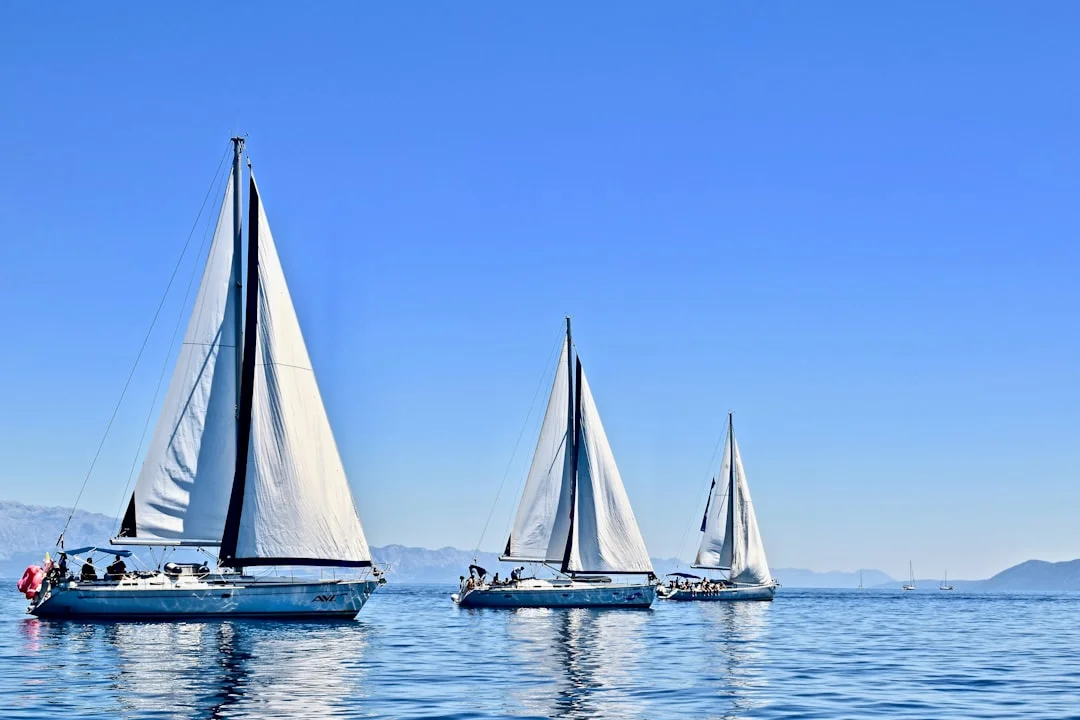
Photo by Karla Car on Unsplash
Day 4: Biševo (Blue Cave) + Pakleni or Hvar area, 15–25 nm plus dinghy. If you’re going for the Blue Cave, depart by 08:00–08:30 to beat both wind and tour boats. If it’s canceled, you’ve saved yourself a hassle and can enjoy Vis properly. Continue toward Pakleni islands or Hvar’s approaches for a calmer evening.
Day 5: Hvar area → Brač (Milna or Bol), 10–20 nm. Short legs let you choose based on wind. In Jugo, avoid exposed south-facing anchorages and favor Milna or sheltered bays. In Maestral, Bol is lovely—until it’s rolly.
Day 6: Brač → Split (via swim stop), 12–18 nm. Fuel up with enough margin; Friday fuel docks can be chaos, and the queue does not care about your flight time. Return to base Friday afternoon for the required last-night berth.
Marina-heavy vs anchorage-heavy overnights (same route)
A “comfort” version uses marinas and town quays for showers, shore power (typically 230V/50Hz, often 16A), and easy trash/water. A “nature” version swaps some nights to buoys or anchorages, saving money and sometimes sleep—until the wind shifts at 03:00.
Typical peak-season nightly costs for 12–14 m are: ACI marina €80–€180, town quay €40–€120, buoys €30–€80. Anchor is often €0 outside concessions, but many popular bays are effectively pay-to-play via buoy operators or park fees.
Blue Cave (Biševo) planning and plan-B stops
The Blue Cave is worth it on a calm morning, but it’s not a promise. If there’s swell, operators can cancel, and your carefully crafted schedule becomes interpretive dance. Plan it as an optional early-morning strike, not the keystone of the week.
Good Plan B on Vis includes Stiniva-style swim coves (arrive early), lunch in a leeward bay, or an inland scooter day if your crew needs a break from saltwater. If the forecast smells like Bora (25–40 knots potential), keep your night in a harbor with true NE protection rather than an Instagram bay.
10-Day Split itinerary: add slack days + Šibenik/Kornati option
Core 10-day Split route (Vis/Hvar with rest days)
With 10 days, you get something rare on charter: slack. You can actually wait for the Maestral rather than motor into it, and you can afford a day where the crew swims twice and nobody asks “what’s the next stop?” This version typically totals 160–220 nm, still inside relaxed daily legs.
A sensible core loop is Split → Šolta → Vis (2 nights) → Komiža/Biševo window → Pakleni/Hvar (2 nights) → Brač south shore → Milna → Split. Keeping two nights on Vis or Hvar reduces marina roulette and lets you explore inland without feeling you’re stealing time from the boat.
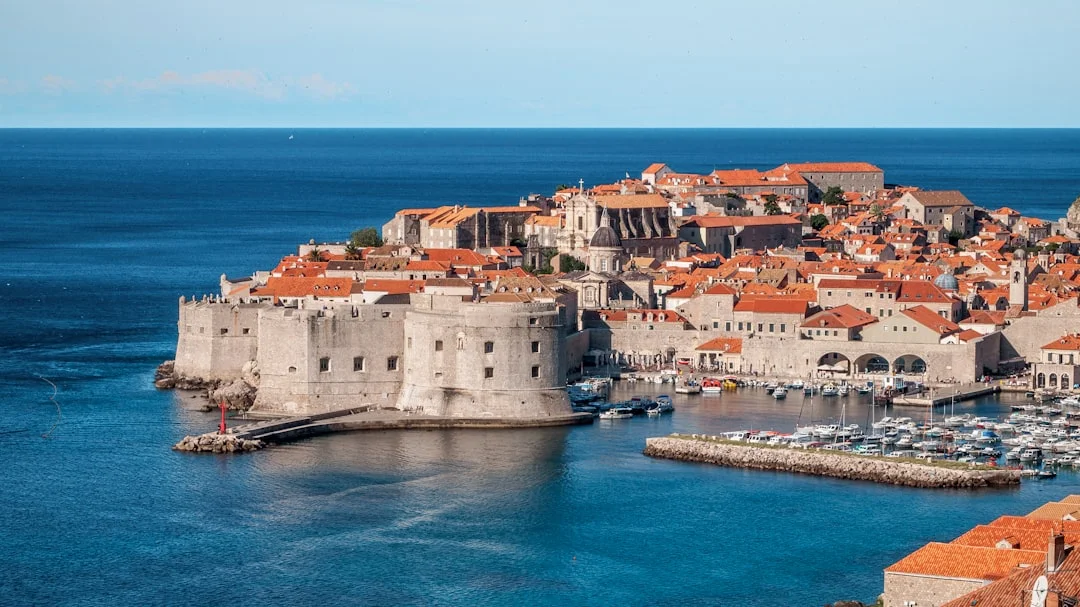
Photo by Ivan Ivankovic on Unsplash
Optional north extension: Šibenik + Kornati feasibility
If your crew wants the Kornati’s lunar scenery, it’s feasible—but it’s a higher-mileage profile. A Split–Šibenik–Kornati–Vis–Hvar–Split shape often lands 220–320 nm depending on how deep you go into the islands. That means at least 2 reposition days of 35–50 nm, which is fine in stable weather and miserable when everyone expected a floating beach club.
A practical “decision gate” is mid-week: if the forecast shows settled Maestral and no Bora pulse, head north. If pressure gradients tighten and Bora is brewing, stay in the more sheltered central channels where you can shorten legs fast.
Weather pivots: how to shorten legs when Bora/Jugo hits
When Bora threatens, avoid committing to exposed south-coast anchorages and long open reaches. Shift to leeward routing—think channels and harbors with NE protection—and keep legs closer to 15–25 nm so you can arrive early and choose your spot. When Jugo arrives, prioritize swell protection and don’t anchor where the fetch stacks up overnight.
This is where planning your route using a sea-distance tool helps you sanity-check alternate hops quickly. If your “Plan B” adds 12 nm and pushes arrival past 17:00, it’s not a plan—it’s a future argument in the cockpit.
Dubrovnik itineraries: 7-day Elafiti–Mljet–Korčula loop + 10-day reach
7-day Dubrovnik loop: keep open-water legs reasonable
A Dubrovnik sailing itinerary shines when you keep the legs modest and the scenery high. Start with logistics: ACI Dubrovnik in Komolac is well-equipped, but you’ll want provisioning handled before you cast off. Old Town sightseeing is easier as a separate day trip than as a “quick stop” between docking maneuvers.
A clean 7-day loop is Dubrovnik → Šipan/Lopud (Elafiti) → Mljet (Pomena or Polače) → Korčula Town → Elafiti → Dubrovnik. Distances cooperate: Komolac to Šipan ~16–18 nm, Komolac to Pomena ~25–30 nm, and Korčula to Mljet ~18–22 nm depending on the route you choose around islets.
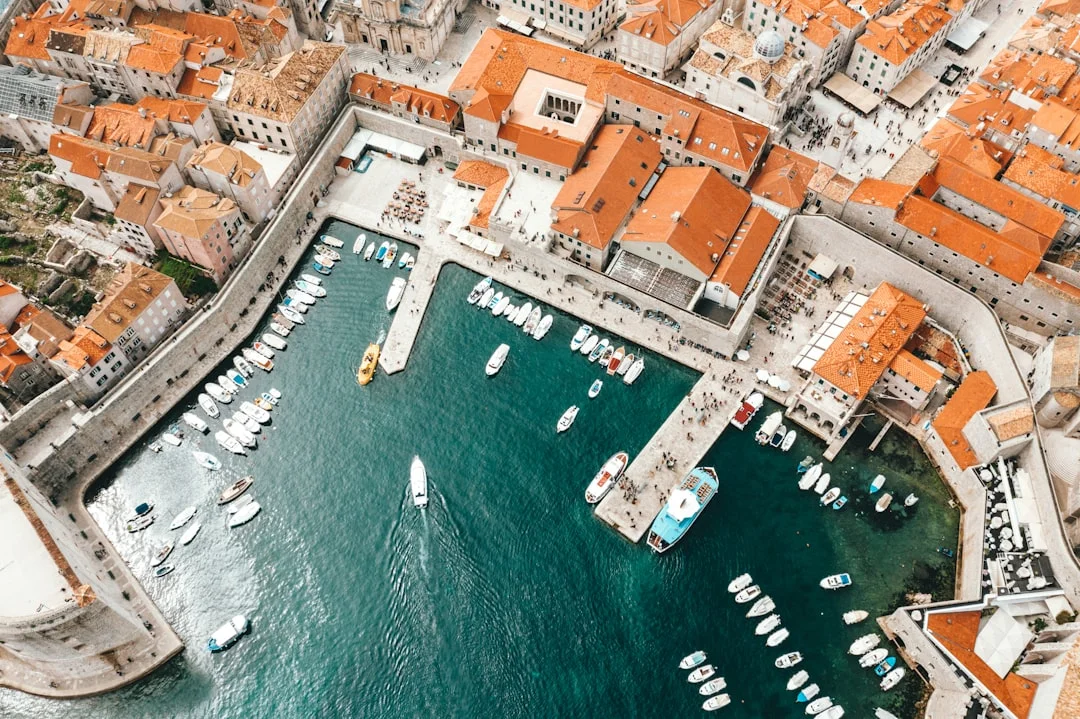
Photo by Spencer Davis on Unsplash
Mljet National Park: timing, fees, and mooring choices
Mljet is gorgeous, and in July it’s also a magnet for every charter boat within 30 nm. The best tactic is boring and effective: arrive early, ideally before 14:00, especially if you want a specific bay or buoy. If you show up at 18:00, you’re negotiating with fatigue—and fatigue is expensive.
Budget for park costs. A common skipper briefing range is €30–€80/day per vessel for a 12–15 m boat, plus per-person tickets for lakes/park access (confirm current tariffs at the park office). Rules and enforcement vary by zone; don’t assume anchoring is permitted just because your anchor fits.
10-day extension ideas: Lastovo or extra Korčula/Hvar time
With 10 days, you can extend to Lastovo for a more remote feel, or simply slow down and enjoy Korčula properly. If you’re doing a one-way or longer routing, note that Hvar to Korčula is ~32–36 nm, a useful “bridge” leg when conditions are fair and you start early.
A conservative 10-day Dubrovnik plan adds 1–2 lay days and keeps daily legs in the 15–35 nm comfort band. If you’re tempted to stack long days, remember you still owe the charter company that Friday-afternoon return. The boat doesn’t care that your crew wanted “one more island.”
Marinas, town quays, buoys, anchoring: choosing the right night
What you actually get: showers, power, water, waste
Croatia gives you four real overnight modes: marinas (often ACI), municipal/town quays, mooring buoy fields, and anchoring. The right choice depends on comfort needs, weather protection, and how much you enjoy hauling trash in a dinghy. For a 40-footer, peak season ACI berths typically run €80–€180/night, town quays €40–€120, buoys €30–€80, and anchor €0 outside concessions.
Amenities matter more than people admit. Water refills (often 300–600 L tanks on 38–45 ft monohulls) and shore power are not luxuries if you’ve got kids, a fridge full of food, and an autopilot that wants electricity. Waste disposal is also easier in marinas—your holding tank is not a magical disappearing bucket (ABYC A-1 is blunt about that for good reasons).
Reservations and arrival tactics in peak season
I rarely book every night. I book the pinch points: a Friday return-to-base berth, maybe Hvar Town in peak weeks, maybe Mljet if the crew insists. Otherwise I carry 2–3 alternates per day and arrive early, because flexibility beats frantic VHF calls.
Marina geometry and Med-mooring layouts also matter. A typical width allocation for a 12–13 m monohull might be 4.0–4.5 m, but it varies, and catamarans eat space fast. If you’re on a cat (draft ~1.2–1.5 m but high windage), plan earlier arrivals and more conservative docking choices.
Med-mooring fundamentals and common failure points
Most Croatian marinas use stern-to Med-mooring with lazy lines. Set up 6–10 fenders on the docking side, rig stern lines early, and brief the crew before you enter—once you’re backing in, it’s not a great time for a committee meeting. Common failure points are rushing the lazy line pickup, crossing stern lines, and letting the bow drift onto your neighbor’s anchor chain.
Here’s the comparison that actually helps at 16:30 when you’re tired:
| Overnight option | Typical peak cost (12–14 m) | What you usually get | Reservation method | Best for |
|---|---|---|---|---|
| ACI marina | €80–€180/night | Showers, toilets, power (often 16A), water, trash | ACI online/phone, agent, or walk-in | Weather nights, Friday return, crews needing comfort |
| Municipal/town quay | €40–€120/night | Sometimes power/water; often close to town | Harbormaster/port office; sometimes first-come | Town dinners, provisioning, cheaper than ACI |
| Mooring buoys | €30–€80/night | Secure mooring, no shore power; sometimes restaurant pickup | Usually first-come; pay operator/konoba | Quick swims, avoiding anchoring stress, light weather |
| Anchoring | €0 (outside concessions) | Privacy, flexibility, no services | No reservation; obey local restrictions | Quiet nights, budget control, crews who anchor well |
Budget model: charter, skipper, fuel, parks, and nightly fees
Fixed vs variable costs (what surprises crews)
Fixed costs are easy: boat price, charter pack €200–€450, deposits (€1,500–€3,500) or deposit insurance (€150–€450/week). Variable costs are where crews get surprised: marinas every night, lots of motoring, and national park fees. Add a skipper (€180–€250/day + food) or hostess (€150–€220/day + food) and the totals move quickly.
If you’re considering one way charter Split Dubrovnik, treat the relocation fee as real money: €600–€1,200 when offered. One-way routes can be fantastic, but they reduce your ability to “loop back” if weather pins you down.
Fuel and motoring-hour budgeting for 7 vs 10 days
Fuel is not about nm alone; it’s about engine hours, sea state, and how patient your crew is with light air. A reasonable rule-of-thumb for a 38–45 ft monohull is 2–4 L/hr at 5–6 knots. Over a 7-day week you might log 20–30 engine hours, so call it 40–120 L, then price it at roughly €1.40–€1.90/L (verify locally). To estimate your fuel needs based on the voyage distance, total up your planned nm for the week and sanity-check whether your expected engine hours match the route you’re actually sailing.
10-day trips often add a few hours because you roam farther, but they also let you wait for wind and motor less. That’s skipper-dependent, and “skipper-dependent” is another way of saying “make a plan and still expect variance.”
Sample totals for a 40 ft monohull (6 people)
Below is a practical budget model for a 40 ft monohull with 6 people, using low/medium/high scenarios. It assumes a typical mix of 2–5 paid nights (marina/quay/buoy) depending on comfort level, plus park fees where relevant.
| Trip scenario (40 ft mono / 6 people) | Charter (bareboat) | Moorings & marinas | Fuel (diesel) | Parks/permits | Provisions & meals | Estimated total |
|---|---|---|---|---|---|---|
| 7 days – Low (older boat, more anchoring) | €3,500 | €250 | €120 (70 L @ €1.70) | €60 | €600 | €4,530 |
| 7 days – Medium (mixed marinas/buoys) | €5,500 | €600 | €180 (105 L @ €1.70) | €120 | €900 | €7,300 |
| 7 days – High (newer boat, marinas most nights) | €7,500 | €1,100 | €250 (145 L @ €1.70) | €200 | €1,200 | €10,250 |
| 10 days – Low (more time, fewer paid nights) | €5,000 | €400 | €170 (100 L @ €1.70) | €100 | €900 | €6,570 |
| 10 days – Medium (more distance, comfort mix) | €7,500 | €900 | €260 (150 L @ €1.70) | €180 | €1,300 | €10,140 |
| 10 days – High (premium boat, paid nights often) | €10,500 | €1,600 | €340 (200 L @ €1.70) | €300 | €1,800 | €14,540 |
Notes: add skipper/hostess on top if needed, and add €600–€1,200 if you’re paying a one-way relocation fee.
Technical & safety notes for the Adriatic charter skipper
Route planning and sea-distance calculation workflow
Here’s the workflow I use and teach, because it survives contact with reality. First, pick the primary stop, then measure sea distance in nm (Breezada’s sea distance calculator is a quick way to validate the leg you think you’re doing). Second, compute ETA at 4–6 knots, then add 20–30% for tacks, detours, and approaches.
Finally, set a “depart-by” time that gets you tied up by 16:00 in peak season. If that means leaving at 08:30, leave at 08:30 and let the crew complain over coffee like professionals. This single habit prevents most bad decisions later in the day.
Anchoring depths, chain length, and holding in Croatian coves
Many Croatian coves are 10–20 m deep where you’ll actually end up anchoring, not the 5 m shown in your dreams. Charter ground tackle is commonly a 16–25 kg main anchor with 50–80 m of 8–10 mm chain, but verify at check-out. If you’ve got 60 m chain and you’re anchoring in 18 m with a crowded swing circle, your options narrow fast.
Scope is non-negotiable. In settled weather you might get away with 3:1–4:1, but when Bora or Jugo is in the conversation, I want 5:1–7:1 where space allows, plus a proper set with reverse thrust. If the bay is tight, deep, and full, a paid buoy is often safer than pretending physics is optional.
Photo by Daria Andraczko on Unsplash
Systems checks aligned with ABYC/ISO and marina electrical safety
Do your check-out like you mean it: bilge pumps (ABYC H-22) actually pump water, not just make noise; fuel system passes the sniff test (ABYC H-33 diesel); batteries charge and the alternator isn’t throwing alarms. Electrical gremlins ruin more charters than bad weather.
Croatia shore power is typically 230V/50Hz with IEC 60309 blue 16A connectors, sometimes 32A at larger pedestals—confirm your inlet rating before someone “helps.” ABYC E-11 and ISO 10133/13297 aren’t bedtime reading, but the basic habits matter: use a good shore cord, keep connections dry, don’t overload with water heater + A/C + galley appliances, and make sure your RCD/RCB protection is functional.
COLREGS-wise, the coast gets busy in July. Expect fast ferries, tour boats that don’t understand “stand-on,” and swimmers everywhere near anchorages. Keep a proper lookout, use VHF sanely (Ch 16 for calling/distress; marinas have local working channels), and make sure your DSC MMSI is correctly programmed before you need it.
Photo by Sergii Gulenok on Unsplash
Conclusion
Split and Dubrovnik both deliver a first-rate Croatia yacht charter itinerary, but they excel at different things. Split gives maximum variety inside short legs—ideal for the classic Šolta–Vis–Hvar–Brač circuit and easy weather pivots. Dubrovnik is efficient for Elafiti–Mljet–Korčula, with sensible distances and less pressure to cross big open water.
Your skipper-grade planning loop is simple: set daily targets of 15–35 nm, choose overnight mode (marina/quay/buoy/anchor) based on weather and crowding, and keep Bora/Jugo alternates ready. Confirm live marina availability, fuel price, and park tariffs during the charter briefing, then reserve only the pinch-point nights. The Adriatic doesn’t demand perfection, but it does punish optimism.
Frequently Asked Questions
For a 38–45 ft monohull averaging 5 kn, how do you compute an accurate Split→Hvar ETA when adding 20–30% for tacking, swim stops, and marina approach time?
Start with the direct distance: Split (ACI Split) to Hvar Town is ~23 nm. At 5 knots, that’s 4.6 hours underway, then add 20–30% for real sailing angles and detours (+0.9–1.4 hours). Add 30–45 minutes for a swim stop and 15–30 minutes for the final slow approach and docking, and you’re realistically at 6.0–7.0 hours. That’s why “depart by 09:00” is not overkill in July.
What minimum anchor scope and chain-out is realistic in 15–20 m Adriatic coves with a typical 50–80 m all-chain rode, and when should you switch to a buoy instead?
In 15–20 m depth, even 4:1 scope means 60–80 m of chain, and that’s before you account for bow height and swing. With a typical charter rode of 50–80 m, you often can’t safely achieve 5:1–7:1 in the deeper parts of crowded bays. Switch to a buoy when the bay is tight, deep, and gusty, or when Bora/Jugo risk means you’ll need more scope than you can deploy without endangering neighbors.
How do Bora (NE) gust patterns vs Jugo (SE) swell change safe anchorage selection around Vis, Pakleni (Hvar), and Mljet (Pomena/Polace) by wind quadrant?
With Bora (NE), prioritize harbors and coves with solid NE landmass upwind and minimal williwaws; gusts can exceed 25–40 knots near gaps. Around Vis and Hvar, that often means avoiding anchorages open to NE funnels and favoring protected ports or leeward north/south choices depending on local topography. With Jugo (SE), the bigger issue is swell and long fetch: avoid anchorages open to the SE, even if wind speed seems modest. On Mljet, Polače is generally more sheltered than exposed outer bays when the SE swell is running.
What are the practical steps to execute a clean stern-to Med-moor with lazy line pickup in crosswind, including fender placement and line handling order?
Rig 6–10 fenders before you enter the fairway and set stern lines outside lifelines, ready to run. Brief roles: one person on each stern line, one on the boat hook for the lazy line, one on helm only. Back in slowly with enough prop wash for steerage, get the windward stern line ashore first to stop lateral drift, then pick up the lazy line and walk it forward to the bow cleat. Only after the bow is secured do you fine-tune stern-line length and spring tension.
For one-way Split→Dubrovnik charters, what nm/day profile and reservation strategy avoids late arrivals, and how should you budget the €600–€1,200 relocation fee into total trip cost?
A comfortable one-way profile is still 15–35 nm/day, but plan at least one 35–50 nm reposition day to keep the schedule honest, especially if you want time in Hvar or Korčula. Reserve the pinch-point nights (often Korčula Town and/or Mljet in peak season) and keep alternates within 8–12 nm so a late-afternoon bailout is realistic. Budget the €600–€1,200 relocation fee as a fixed line item like the charter pack—don’t smear it into “miscellaneous”—and re-check the route distances with Breezada’s sea distance calculator before committing to dinner reservations you can’t reach.
About the Author
Related Articles
Amalfi Coast vs French Riviera Sailing Guide (Costs & Routes)
Compare Amalfi Coast vs French Riviera sailing—costs, crowds, mooring rules, best months, and 7-day routes. Choose your coast and plan now.
By Breezada Team
Puget Sound Cruising Guide to Gulf Islands Routes
Plan routes, anchorages, and weather windows with this Puget Sound cruising guide for the Gulf Islands & San Juans. Read now and start plotting.
By Breezada Team
Sailing Amalfi Coast Guide: Ports, Anchorages & Rules
Sailing Amalfi Coast guide to Capri, Positano & Amalfi: best ports, anchorages, fees, VHF and rules. Plan your route—read now.
By Breezada Team
Dry Tortugas Sailing: Routes, Anchoring & Permits
Plan Dry Tortugas sailing from Key West with routes, weather windows, anchoring/moorings, and permits. Read the guide and plan your trip.
By Breezada Team