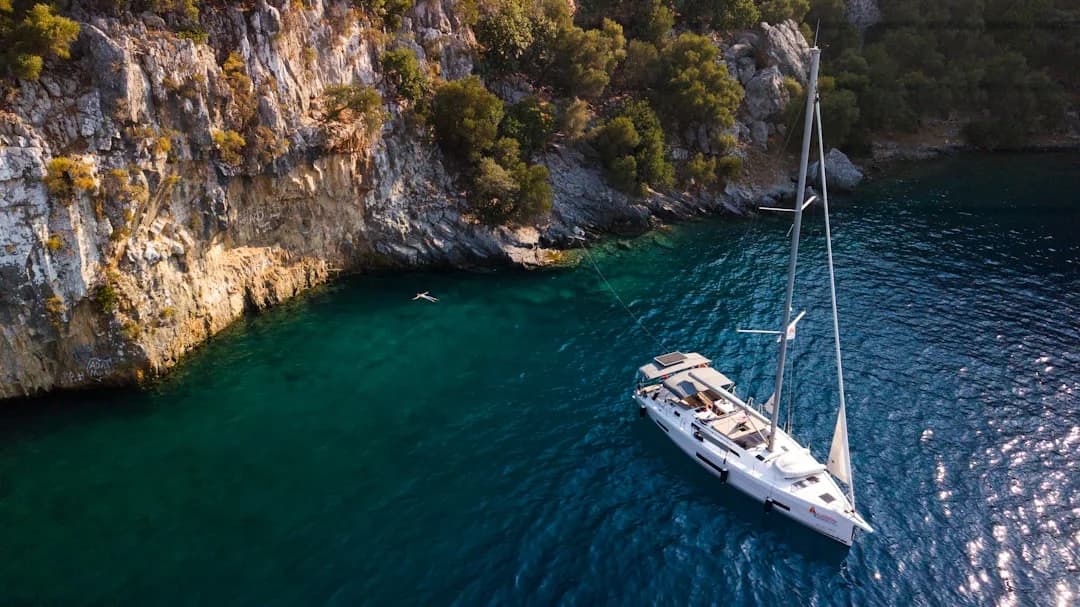
Turkey's southwestern coast — roughly 1,000 nm from Cesme in the north to Antalya in the east — packs more per nautical mile than almost any other Mediterranean sailing ground. Crystal-clear water that earned the "Turquoise Coast" label without marketing help, ancient ruins you reach by dinghy, and marinas where a month's berth costs what a week does in the south of France. If you've been looking at the eastern Med and wondering where to point the bow, this guide covers the practical reality of sailing Turkey from both the Aegean and Lycian coasts.
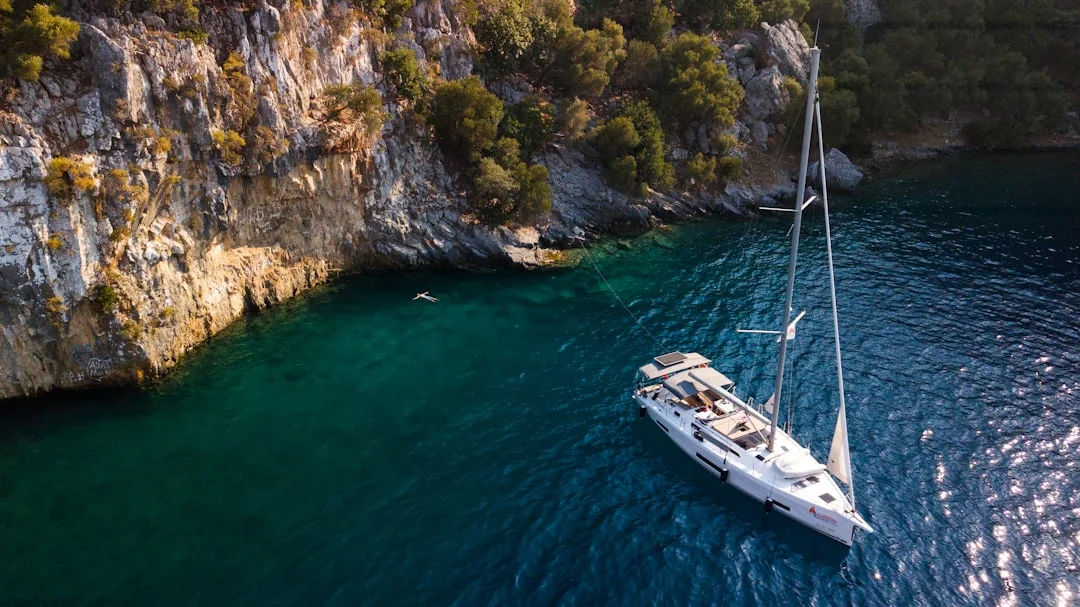
Photo by Dylan Shaw on Unsplash
Why Turkey Stands Out for Sailors
The sailing season here runs a solid six months — May through October — with reliable thermal winds along the Aegean coast and predominantly calm conditions along the Lycian shore. Unlike the Meltemi that hammers the Greek Cyclades in July and August, the Turkish Aegean offers a more sheltered experience thanks to its deeply indented coastline, with countless bays and coves that serve as natural harbours.
Turkey also occupies a unique position as a crossover point between European and Asian sailing cultures. The infrastructure is modern — high-quality boatyards in Marmaris and Bodrum service hundreds of charter boats annually — yet the anchorages remain remarkably uncrowded compared to Croatia or the Greek Ionians. Provisioning costs are significantly lower than in Western Europe, and the food is genuinely excellent, not "good for a marina restaurant" but genuinely outstanding.
Then there's the gulet. Turkey's traditional wooden sailing vessel is unlike anything else in the Mediterranean. Chartering a gulet — whether crewed or under your own command — is an experience that defines sailing in this region.
The Turquoise Coast: Fethiye to Antalya
The Turquoise Coast, also called the Lycian Coast, stretches roughly 200 nm from Fethiye east to Antalya. This is the headline act. The water here is absurdly clear — 30-metre visibility on a good day — and the coastline alternates between forested mountains dropping straight into the sea, tiny sand beaches accessible only by boat, and the ruins of Lycian cities that date back 2,500 years.
Fethiye and Gocek
Gocek is where most Turquoise Coast charters begin. It sits in a protected bay studded with small islands and has six modern marinas. The town itself is compact and walkable, with enough chandleries and provisioning stores to stock a boat without drama. From Gocek, the Twelve Islands cruise is a classic day sail — short hops between pine-covered islets with lunch stops in sheltered coves.
Fethiye, 15 nm to the east, is larger and more commercial but offers excellent access to Oludeniz (the famous Blue Lagoon) and the ghost village of Kayakoy. The entrance to Fethiye's inner harbour threads through a narrow channel — attention to the charts is warranted here, though depths are well-marked.
You can calculate the distance from Fethiye to Antalya to plan your passage timing along this stretch of coast.
Kas and Kekova
Kas is the jewel of the Lycian Coast. The town climbs a hillside above a small harbour, and the atmosphere is more Aegean-island than mainstream Turkish resort. The anchorage at Kas is open to the south — fine in settled summer weather, uncomfortable if an unusual southerly fills in. Most boats anchor stern-to along the town quay or pick up a mooring.
The run from Kas east to Kekova — about 18 nm — is the stretch that makes the Turquoise Coast famous. Kekova Roads, the sheltered waterway between Kekova Island and the mainland, contains the partially submerged ruins of the ancient city of Simena. You sail directly over sunken walls and staircases visible through the water. Swimming over the ruins was banned in 2023 to protect the site, but viewing from a dinghy or kayak is permitted, and the visual impact remains staggering.
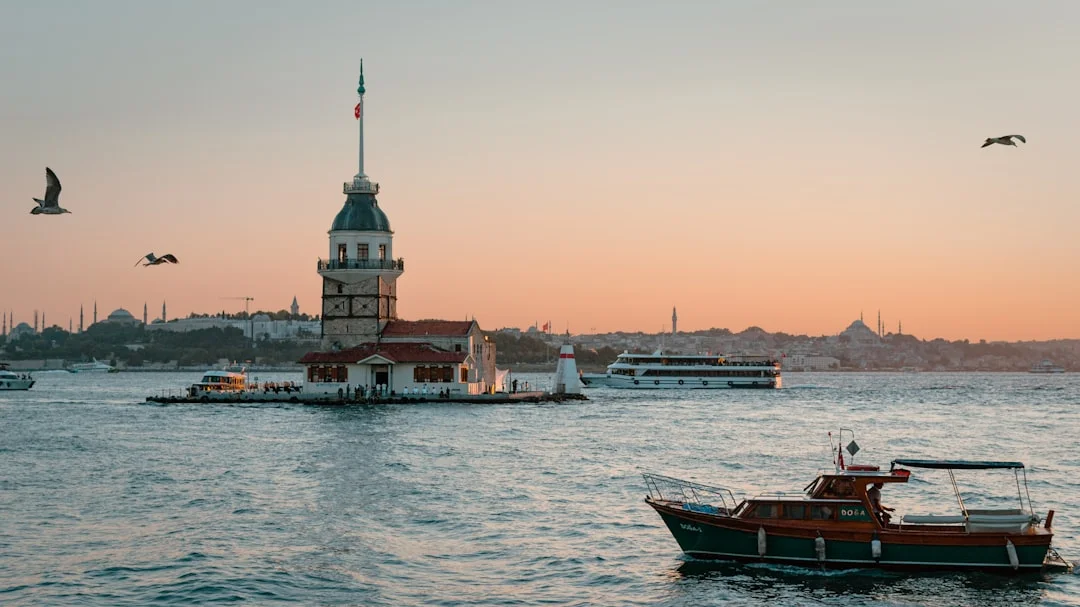
Photo by Imad Alassiry on Unsplash
Demre to Antalya
East of Kekova, the coast becomes wilder and less visited. Finike has a large, well-maintained marina and makes a good provisioning stop before the final push to Antalya. The passage from Finike to Antalya rounds Cape Gelidonya — historically one of the most important (and treacherous) maritime landmarks in the ancient world. A Bronze Age shipwreck unearthed here in 1960 is among the oldest ever found.
Antalya itself has a spectacular old harbour (Kaleici) nestled below Roman walls, though the outer marina is where you'll actually berth. The city is large enough to serve as a crew-change point, with an international airport and good transport links.
The Aegean Coast: Bodrum, Marmaris, and Beyond
Turkey's Aegean coast runs north from Marmaris through Bodrum, up to Cesme and Izmir. The character here shifts — more wind, more islands, more nightlife, and a different feel from the sheltered Lycian shore.
Bodrum Peninsula
Bodrum is the epicenter of Turkish sailing culture. The harbour sits below the 15th-century Castle of St. Peter, and the town pulses with energy in summer — restaurants, bars, galleries, and a thriving bazaar. The Bodrum peninsula has half a dozen anchorages within a few hours' sail: Turkbuku (upmarket, good holding in sand), Gumusluk (former ancient city of Myndos, fish restaurants on the water), and Bitez (protected bay, windsurfers in the afternoon breeze).
The Bodrum–Kos crossing to Greece is just 12 nm, making it trivial to hop between countries if your charter permits international waters. Many sailors combine Turkish and Greek waters in a single trip — if you're considering that, our guide to yacht charter options in Greece covers the Greek side in detail.
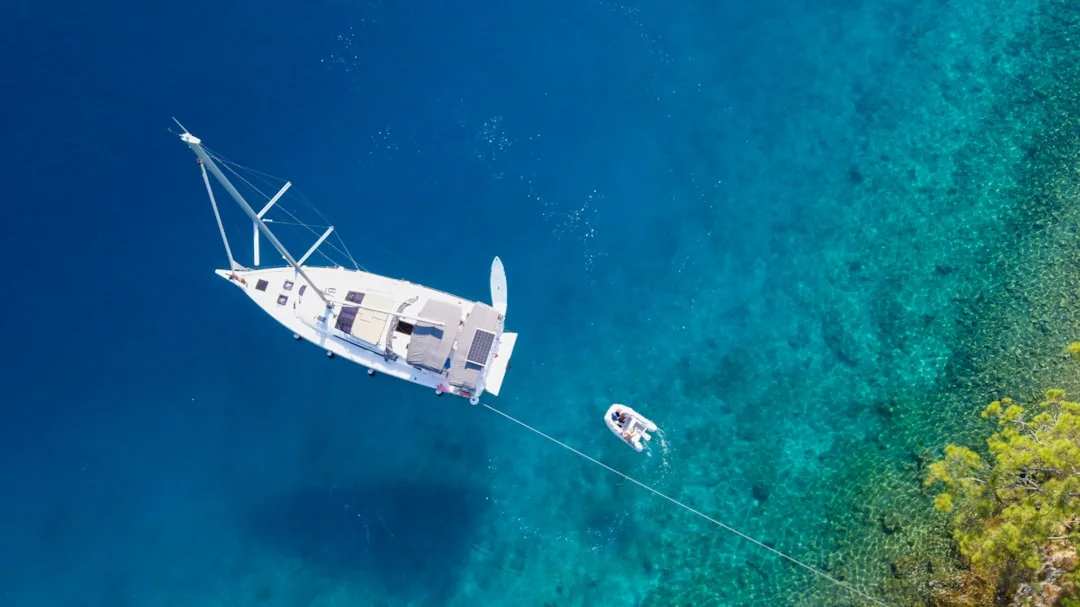
Photo by Dylan Shaw on Unsplash
Marmaris and Datca
Marmaris sits at the head of a deep fjord-like inlet, surrounded by pine-forested mountains. The setting is dramatic. The marina is one of Turkey's largest and best-equipped, and the town's boatyard district handles everything from antifouling to full refits. If you're picking up a bareboat charter in Turkey, there's a good chance it starts here.
The Datca Peninsula extends west from Marmaris like a finger pointing at the Greek islands. The north shore faces the Gokova Gulf — wide, windy, spectacular — while the south side looks across to Rhodes. Datca town is laid-back and charming, with a small harbour and excellent local wine. The ancient city of Knidos, at the peninsula's tip, is reachable only by sea or a rough dirt road, which means you'll share it with relatively few visitors.
The passage from Marmaris to Fethiye — roughly 50 nm — can be done as a comfortable day sail or split with an overnight stop in Ekincik, the gateway to the Dalyan river delta and its famous Iztuzu turtle beach.
The Gokova Gulf
The Gokova Gulf between Bodrum and Datca is one of Turkey's finest sailing areas. It combines reliable afternoon thermals (typically 15–20 knots from the northwest) with a series of protected anchorages along its north shore. English Harbour, Longoz, and Sedir Island (home to Cleopatra Beach, where the sand is supposedly made of unique fossilized shells) are the highlights.
This is where you want a boat that can sail — the wind here actually cooperates, unlike the often calm Lycian coast where you'll motor more than you'd like to admit. If you're debating between a monohull and catamaran for these waters, the narrower hull handles the Gokova thermals with more finesse, though catamarans offer more space for the calm Turquoise Coast section. Our comparison of monohulls and catamarans breaks down the trade-offs.
Best Time to Sail Turkey
| Month | Conditions | Crowds | Notes |
|---|---|---|---|
| May | Air 22–26°C, water 19–21°C, light winds | Low | Shoulder season pricing, some charter bases not yet open |
| June | Air 27–31°C, water 22–24°C, moderate thermals | Moderate | Ideal month — warm, uncrowded, reliable weather |
| July | Air 32–36°C, water 25–27°C, strong thermals | High | Peak season, Aegean can get breezy, book 6+ months ahead |
| August | Air 33–37°C, water 27–28°C, strongest thermals | Peak | Hottest month, crowded anchorages, premium charter rates |
| September | Air 28–32°C, water 26–27°C, easing winds | Moderate | Warm water, thinning crowds — many sailors' favourite month |
| October | Air 22–26°C, water 23–24°C, variable | Low | Chance of early autumn storms, but often excellent sailing |
June and September are the consensus sweet spots. In June, the water is warm enough for swimming, the thermal winds have established their summer pattern, and charter prices run 20–30% below July–August peaks. September offers the warmest sea temperatures of the year — the water has had all summer to heat up — with noticeably fewer boats in the anchorages.
Charter Options and Costs
Gulets
The gulet is Turkey's signature charter vessel — a wide-beamed wooden motorsailer, typically 18–30 metres, with a crew of 3–6. A crewed gulet charter for 8–10 guests runs €1,200–€3,500 per day depending on the boat's age, size, and level of luxury. This includes the crew, often a cook, and typically all meals. Fuel and port fees are usually extra.
Gulet charters are ideal for groups who want to sail Turkey without needing sailing experience. The captain handles navigation and the cook handles provisions — you just decide which bay to visit next.
Bareboat Charter
For qualified sailors, bareboat charter rates in Turkey are among the most competitive in the Mediterranean:
| Boat Type | Weekly Rate (Peak) | Weekly Rate (Shoulder) |
|---|---|---|
| 35–38 ft monohull | €2,000–€3,500 | €1,200–€2,200 |
| 40–45 ft monohull | €3,000–€5,000 | €2,000–€3,500 |
| 38–42 ft catamaran | €4,500–€7,500 | €3,000–€5,000 |
You'll need an ICC (International Certificate of Competence) or equivalent recognized certification to charter bareboat in Turkey. The charter company will also want to see a VHF radio licence. Turkish authorities occasionally check papers in marinas — it's not just paperwork theatre.
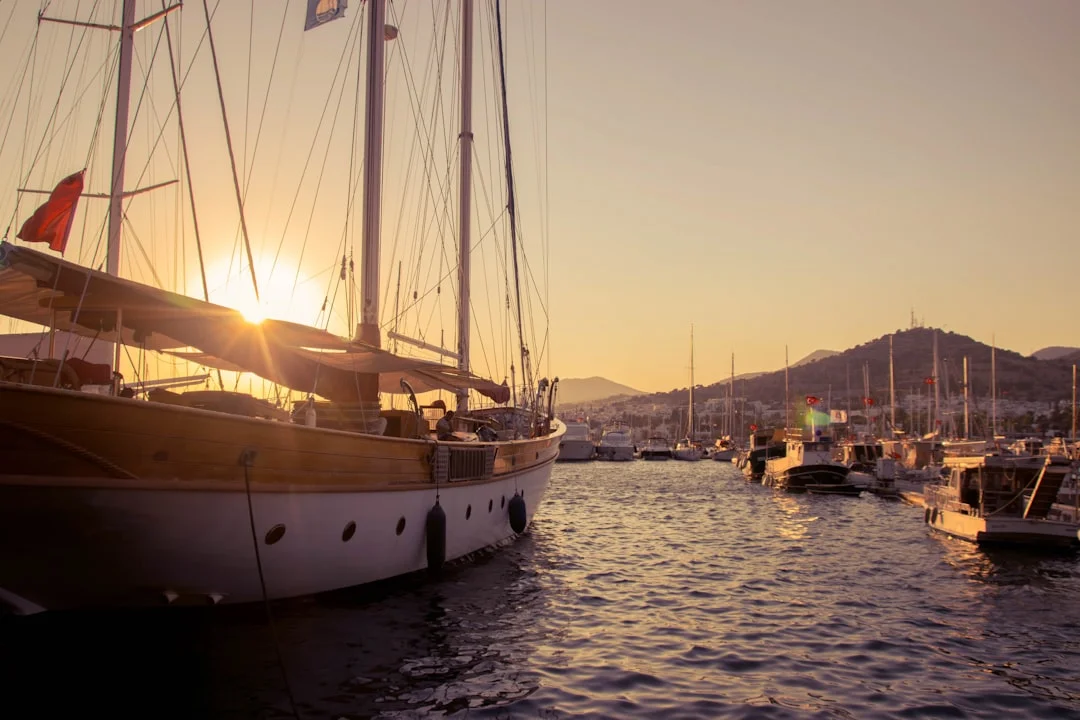
Photo by Georgii Eletskikh on Unsplash
Flotilla Sailing
Several operators run flotilla holidays along the Turquoise Coast, typically Fethiye–Gocek circuits. These suit less experienced sailors who want the independence of their own boat with the safety net of a lead crew. Expect to pay €1,500–€3,000 per week for a 35–40 ft monohull in a flotilla, with briefings each morning on the day's route and anchorage.
Practical Tips
Paperwork and Port Formalities
Sailing in Turkish waters requires a transit log (transit log in Turkish: "transit log karnesi"), issued by the harbour master at your port of entry. Your charter company handles this for charter boats, but if you're on your own vessel, budget half a day for the initial check-in process at customs. You'll need the boat's registration documents, insurance, passports, and crew list.
If you plan to cross between Turkey and Greece, each border crossing requires formal check-out and check-in procedures. It's straightforward but adds 1–2 hours on each side.
Marina and Anchorage Costs
Turkish marinas are well-maintained and significantly cheaper than Western Mediterranean equivalents. A 40 ft berth in high season runs €40–€80 per night in most marinas — roughly half what you'd pay in Italy or the French Riviera. Many anchorages are free, though "restaurant bays" where you tie stern-to at a waterfront restaurant and dine in exchange for the mooring are a beloved Turkish institution.
Provisioning
Town markets and local supermarkets (Migros, BIM, A101) make provisioning easy and affordable. Fresh produce is excellent and cheap. Alcohol is heavily taxed in Turkey — beer and wine are 2–3 times the price you'd find in Greece or Spain. Many experienced cruisers stock up on duty-free before arriving.
Navigation Considerations
Turkish charts are generally accurate, though some small anchorages benefit from local pilot guides. The Turkish Waters & Cyprus Pilot by Rod Heikell is the definitive cruising guide and worth every penny. You can use Breezada's sea distance calculator to plan passage distances between Turkish ports and verify waypoint-to-waypoint nautical miles before setting out.
Currents are generally weak along the Turkish coast. The main hazard is unlit fishing boats at night, particularly in the narrower channels.
Sample Itineraries
One-Week Turquoise Coast (Gocek Base)
| Day | Route | Distance | Highlight |
|---|---|---|---|
| 1 | Gocek → Tomb Bay | 8 nm | Lycian rock tombs at the anchorage |
| 2 | Tomb Bay → Gemiler Island | 12 nm | Byzantine ruins, stunning sunset |
| 3 | Gemiler → Kas | 22 nm | Longest passage, lunch stop at Kalkan |
| 4 | Kas → Kekova Roads | 18 nm | Sunken city, Simena castle |
| 5 | Kekova → Ucagiz → Finike | 20 nm | Provisioning, marina night |
| 6 | Finike → Gocek (via Wall Bay) | 30 nm | Swim stops, relaxed return |
| 7 | Gocek islands circuit | 10 nm | Final swim, return to base |
One-Week Aegean (Bodrum Base)
| Day | Route | Distance | Highlight |
|---|---|---|---|
| 1 | Bodrum → Orak Island | 15 nm | Crystal-clear swimming, lunch on board |
| 2 | Orak → English Harbour | 10 nm | Protected cove, restaurant ashore |
| 3 | English Harbour → Sedir Island | 8 nm | Cleopatra Beach, turquoise bay |
| 4 | Sedir → Longoz | 6 nm | Mangrove creek, peaceful anchorage |
| 5 | Longoz → Datca | 18 nm | Wine tasting, town dinner |
| 6 | Datca → Knidos | 20 nm | Ancient harbour, lighthouse sunset |
| 7 | Knidos → Bodrum | 28 nm | Downwind run home if the thermal cooperates |
What Sets Turkey Apart from Other Med Destinations
Having sailed both the Croatian Dalmatian coast and the Turkish Aegean, I'd summarize the difference this way: Croatia gives you medieval towns and organized marinas; Turkey gives you wilder coastline and a more adventurous feel. If you've already sailed the Croatian Dalmatian Coast, Turkey is the natural next step — more remote anchorages, equally beautiful water, and a fraction of the cost.
The food alone justifies the trip. A waterfront dinner for two — grilled sea bass, meze, salad, and a bottle of Kavaklidere wine — runs about €30–€40. In Hvar or Dubrovnik, you'd pay three times that for a similar meal.
Frequently Asked Questions
Do I need a sailing licence to charter a yacht in Turkey?
Yes. For bareboat charter, you'll need an ICC (International Certificate of Competence) or an equivalent national certification recognized by the charter company — RYA Day Skipper or ASA 104 are commonly accepted. A VHF radio operator certificate is also required. Crewed gulet charters don't require any sailing qualification since the captain handles the boat.
Is sailing in Turkey safe?
Turkey is very safe for sailing. The coastline is well-charted, marine infrastructure is modern, and search-and-rescue services are responsive. The main practical risks are the same as anywhere in the Mediterranean — afternoon thermals that can gust to 25+ knots in the Aegean, unlit fishing boats at night, and the occasional poorly marked reef near anchorages. Political tensions occasionally make headlines, but they have virtually no impact on coastal tourism areas.
How much does a one-week sailing holiday in Turkey cost?
For a bareboat charter, budget €2,000–€5,000 for the boat depending on size and season, plus €500–€1,000 for fuel, marina fees, and provisioning for a crew of 4. A crewed gulet charter for 8 guests runs €8,000–€25,000 per week all-inclusive. Turkey is consistently 30–50% cheaper than equivalent trips in Greece, Croatia, or Italy.
Can I sail between Turkey and the Greek islands?
Yes, and many itineraries combine both countries. The Bodrum–Kos crossing is just 12 nm, and Marmaris–Rhodes is about 25 nm. You'll need to clear customs and immigration on both sides each time you cross — budget 1–2 hours per crossing for paperwork. Your charter agreement must explicitly permit international sailing, and you'll need valid passports (not just ID cards) for the Turkish side.
What is a gulet and how is it different from a regular charter yacht?
A gulet is a traditional Turkish wooden motorsailer, typically 20–30 metres long, with a wide beam and shallow draft. Unlike modern fibreglass charter yachts, gulets are handcrafted from pine or mahogany and feature open stern decks ideal for lounging. They carry auxiliary sails but primarily motor between anchorages. Most gulet charters come with a professional crew including a captain and cook, making them a popular choice for groups of 8–12 who want a relaxed, fully catered sailing holiday without needing to handle the boat themselves.
About the Author
Related Articles
Sailing Amalfi Coast Guide: Ports, Anchorages & Rules
Sailing Amalfi Coast guide to Capri, Positano & Amalfi: best ports, anchorages, fees, VHF and rules. Plan your route—read now.
By Breezada Team
Dry Tortugas Sailing: Routes, Anchoring & Permits
Plan Dry Tortugas sailing from Key West with routes, weather windows, anchoring/moorings, and permits. Read the guide and plan your trip.
By Breezada Team
Sailing Galapagos Islands: Permits, Costs & Rules
Understand sailing Galapagos Islands permits, costs, and rules—plus clear-in steps, routes, and biosecurity. Plan your yacht trip now.
By Breezada Team
La Maddalena Sailing Itinerary: Quiet 7-Day Sardinia
Plan a La Maddalena sailing itinerary for a quiet 7-day Sardinia escape—routes, anchorages, rules and costs. Get the full day-by-day plan.
By Breezada Team