Greece Sailing Itinerary: 7 & 14 Days by Region
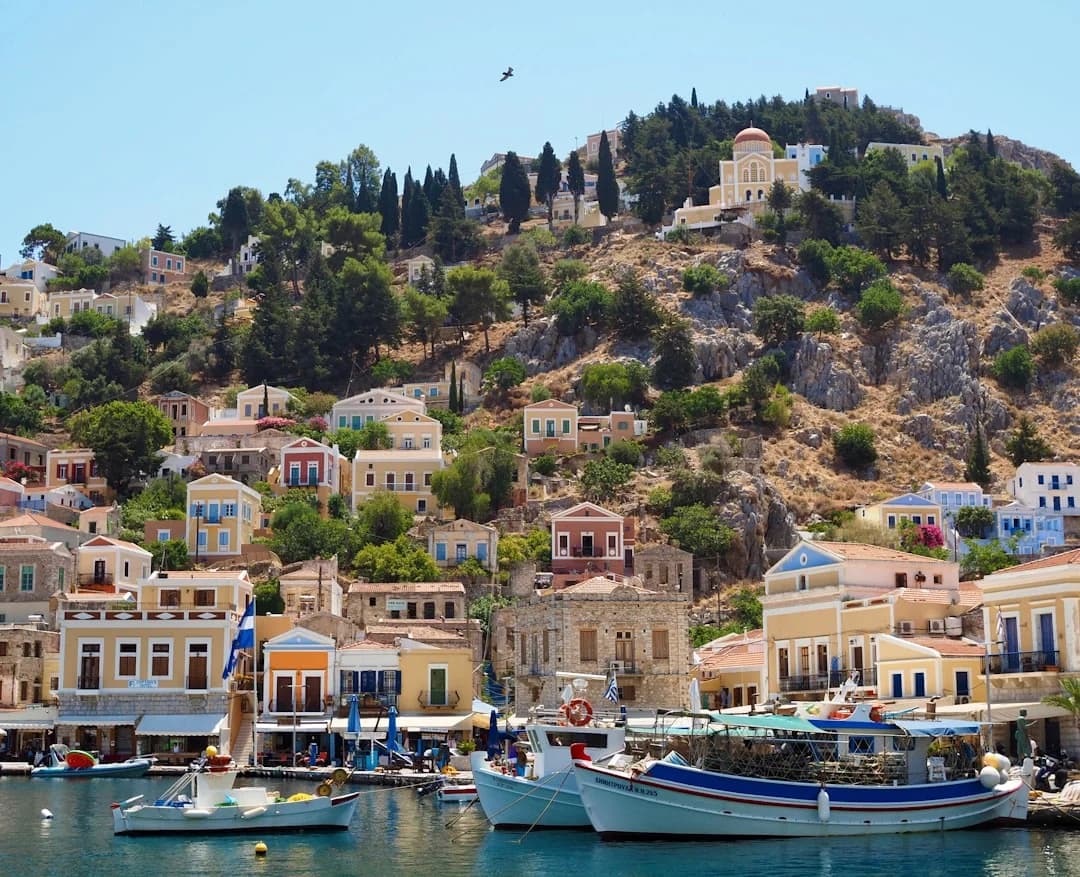
Greece rewards skippers who plan with numbers, not wishful thinking. The Aegean gives you postcard islands and very real wind acceleration zones, while the Saronic gives you short hops and plenty of “bailouts” when the crew’s mood turns sour. Below are practical 7-day and 14-day Greece sailing itinerary concepts by region, with realistic nautical miles (NM), hours, fuel, and cost expectations based on typical 40–46 ft charter boats.
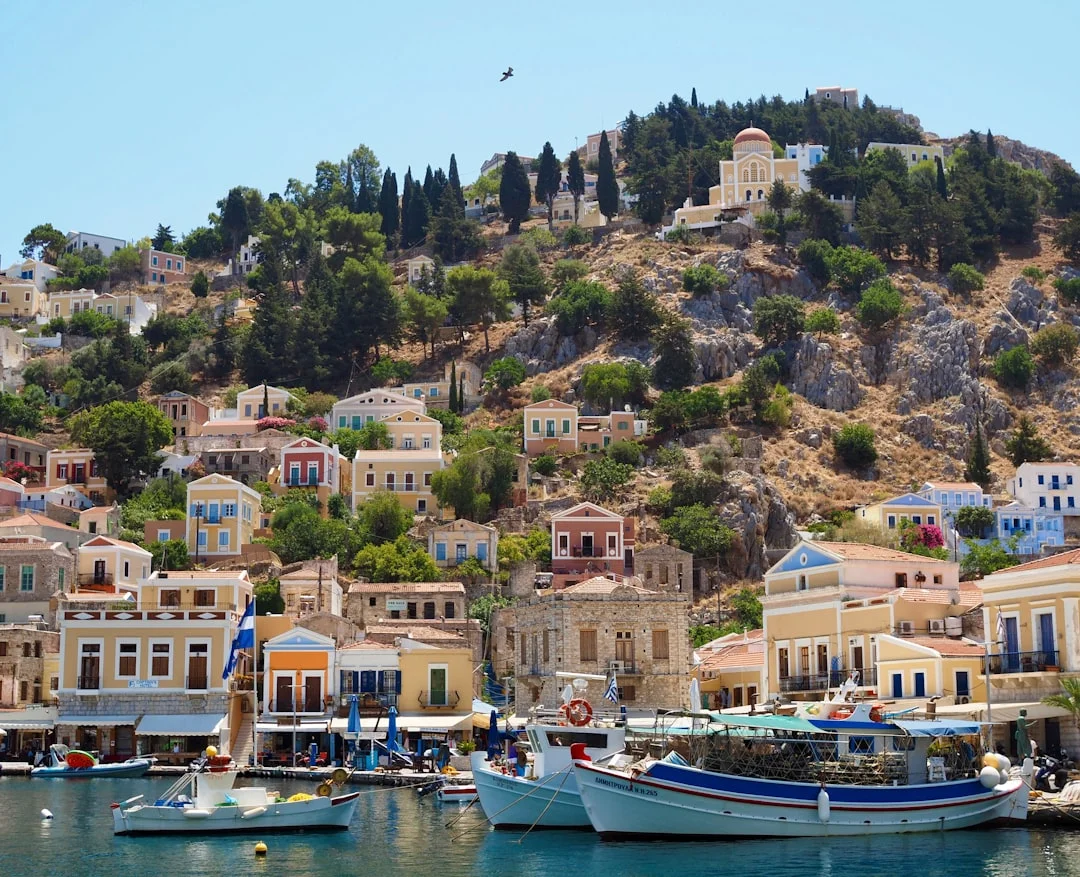
Photo by Dimitris Kiriakakis on Unsplash
Cyclades vs Saronic vs Dodecanese: choose the right basin
Decision signals: wind exposure, sea state, and passage length
Geography is destiny in Greek waters. The Saronic Gulf sits in the lee of the Peloponnese and Attica, so your fetch is shorter and the seas usually stay friendlier for a 40–45 ft monohull. A relaxed holiday pace is still 20–35 NM/day, but in the Saronic those miles are often inside a “reset button” network of nearby harbors.
The Cyclades are more exposed, and in July–August the Meltemi routinely parks at Beaufort 6–7 (≈22–33 kn) with sharper bursts in the channels. Those channels are the famous “acceleration zones” where the wind funnels between islands, the chop stands up, and your average speed drops even if the knotmeter looks optimistic. A Cyclades loop that tries to bag Mykonos or Santorini commonly lands at ~180–260 NM/week, which is a very different week than ~120–170 NM in the Saronic.
Experience-fit: first-time bareboat vs offshore-comfortable crews
Most charter platforms are 36–52 ft, with the bread-and-butter boats at 40–46 ft (3–4 cabins) for 8–10 guests including a skipper. First-time bareboat crews generally do best where the legs are short, the harbors are plentiful, and “tomorrow is another day” doesn’t mean a punishing upwind bash. That’s the Saronic, and it’s not a consolation prize.
Cyclades isn’t “hard” sailing, but it is less forgiving: longer open-water legs, rougher sea state, and crowded quays where a stern-to landing in 25–30 kn becomes a team sport. The Dodecanese tends to offer steadier planning and a longer shoulder season, but you still need to be comfortable with legs that can sit in the 20–40 NM range depending on your loop.
Base access: Athens (Alimos) vs Rhodes/Kos logistics
Charter-week mechanics shape everything. The standard Greece rhythm is 7 nights/8 days, with check-in Sat 17:00–18:00 and check-out Sat 09:00, which means your first “day” is often a grocery-and-systems shakedown. Athens/Alimos Marina is the main gateway for the Saronic and Cyclades, while Rhodes or Kos are common Dodecanese bases, often with easier “start sailing faster” logistics if your crew arrives by air.
No matter the basin, treat every leg as a Plan A / Plan B exercise. When the Meltemi builds, the difference between a smart skipper and a stubborn one is usually a single decision made at breakfast—before you’ve committed to a nasty channel with no good bailout within 10–15 NM. If you want a quick reality check on leg lengths, you can calculate the distance between ports to build that Plan B list before you step on the dock.
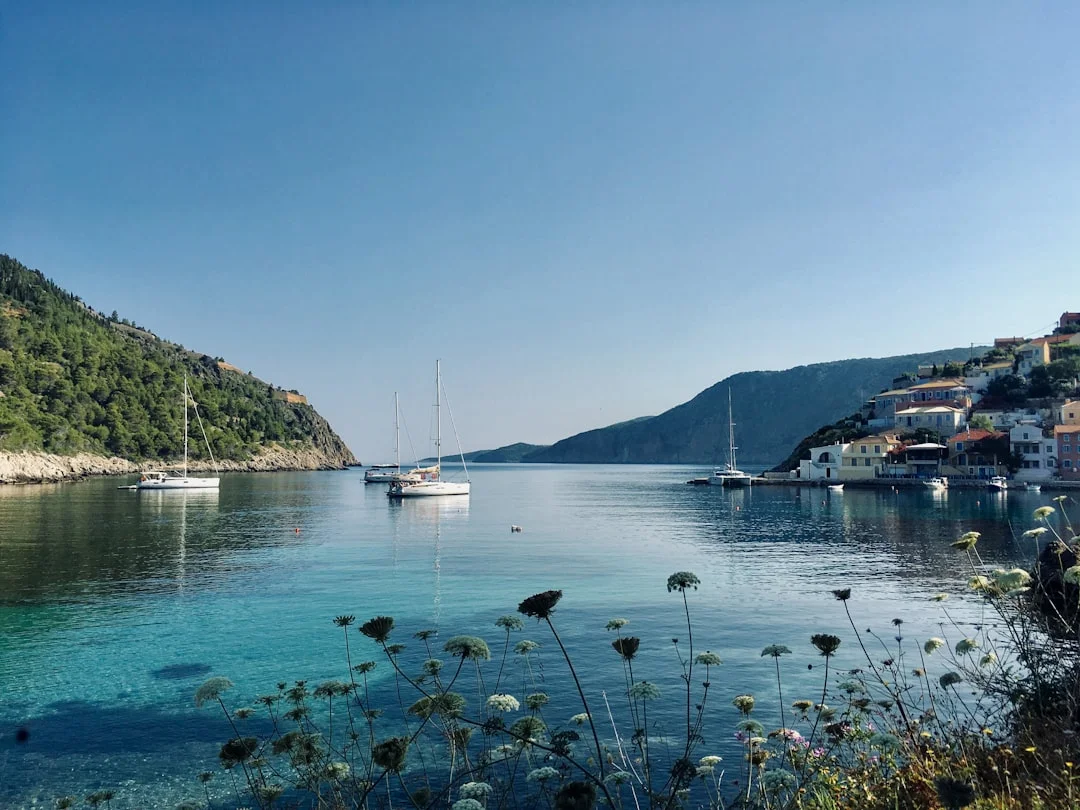
Photo by Mac McDade on Unsplash
Route planning with real numbers: NM, hours, fuel, water
Distance-to-time math (knots → hours) for daylight-only arrivals
Here’s the planning method I use for charter crews who want both sailing and sunsets ashore. Pick a daily target—usually 20–35 NM/day—then convert each leg to hours at a realistic average speed, not your best-case reach in flat water. Most charter monohulls average 6.0–7.5 kn under sail and 5.5–6.5 kn under power, but head seas in the Aegean can knock that down enough to wreck your arrival window.
Worked example: a 28 NM leg at 6.5 kn is 28 ÷ 6.5 ≈ 4.3 hours underway. Add 0.5–1.0 hour for raising anchor, traffic, sail handling, and the comedy of errors that happens when three people “help” with fenders. That’s how a “four-hour sail” becomes a “six-hour day” and why daylight-only arrivals are a habit, not a suggestion.
If you want to speed this up, plan your route using a sea distance calculator, then do the simple hours math and write it in the margin. The point isn’t perfect accuracy; it’s preventing the classic charter mistake: stacking two medium legs and discovering too late that you’ve planned an eight-hour day in a place with ferries, gusts, and one narrow harbor entrance.
Fuel and tankage constraints that change your island choices
Tankage quietly drives Greek itineraries, especially in the Cyclades. A typical 40–45 ft monohull carries roughly 200–300 L freshwater and 200–300 L diesel. Your engine is often 40–55 hp, burning about 3–5 L/hour at cruising RPM, while a catamaran (often 2×40–57 hp) can burn ~6–10 L/hour total when motoring.
The trap is assuming you’ll “just sail.” In Meltemi chop you may motor-sail for comfort and control, and your VMG to windward can be ugly. Budget fuel based on likely motoring hours, not pride, and remember you still want reserve for diversions, battery charging, and a last-day return that doesn’t end with you queuing for diesel at sunset. A quick way to tighten the estimate is to estimate your fuel needs based on the voyage distance before you commit to longer, more exposed legs.
Water is similar: with 8–10 people aboard, 200–300 L disappears fast if everyone showers like they’re in a hotel. Cyclades dock water can be pricey or limited, so you plan your “refill opportunities” the same way you plan your harbors. A crew that manages water well gets better anchorage choices and fewer forced marina nights.
Weather gates: when to shorten legs or change direction
The Aegean’s big lesson is that sea state matters as much as wind speed. 25–33 kn with short, steep chop can feel worse than 35 kn in longer-period seas, because the boat stops, slams, and the crew stops smiling. Your decision gates should be written down: if the forecast holds Bft 6–7 over an exposed channel, shorten the leg, depart at first light, or reverse the loop to stay leeward.
Build “bailout ports” into every day, ideally within 10–15 NM when forecasts are rising. Also keep the last 48–72 hours conservative so you’re bending back toward base, not gambling on a hero leg the day before checkout. That last-day fuel stop and dinghy-in-the-dark story is only funny after you’re home.
Photo by Lisa Boonaerts on Unsplash
7-day Greece sailing itinerary: Saronic ‘easy week’ (Athens)
The Saronic Gulf sailing itinerary is what I hand to crews who want a holiday, not an endurance event. You get short hops, lots of protected water, and frequent harbor choices when a crew vote goes against your brilliant plan. Keep the week within ~120–170 NM total, and most days become 2–4 hours underway at 6–7 kn.
Charter reality: check-in is typically Sat 17:00–18:00, and you won’t be casting off for a proper sail until Sunday. That leaves you 6 real sailing days, plus one “pack-up and return” day, because check-out is Sat 09:00 and the boat usually wants to be back the evening before. Plan your last night within easy reach of Alimos so you can fuel, tidy, and sleep without stress.
Below is a practical 7 nights / 8 days rhythm. Distances are approximate; confirm legs with Breezada’s sea distance calculator and adjust for where you actually find space on the quay.
| Day | Route (Plan A) | NM (approx.) | Est. hours @ 6.5 kn | Plan B if crowded/windy |
|---|---|---|---|---|
| Sat | Alimos check-in, provisioning, systems | 0 | 0 | Sleep aboard at base |
| Sun | Alimos → Aegina | 15–18 | 2.3–2.8 | Perdika (Aegina) or anchor nearby |
| Mon | Aegina → Poros | 20–22 | 3.1–3.4 | Epidavros anchorage |
| Tue | Poros → Hydra | 17–20 | 2.6–3.1 | Ermioni (main quay) |
| Wed | Hydra → Spetses | 15–18 | 2.3–2.8 | Porto Heli |
| Thu | Spetses → Epidavros | 18–22 | 2.8–3.4 | Methana |
| Fri | Epidavros → Alimos (return early) | 35–45 | 5.4–6.9 | Stop at Poros, return Sat very early only if calm |
| Sat | Check-out 09:00 | 0 | 0 | — |
Timing is the whole game in busy Greek ports. Depart after breakfast, arrive early afternoon, and you’ll usually get a stern-to spot before the flotillas show up and before the wind peaks. Most popular harbors use stern-to with lazy lines, so practice in calm water early in the week and save your heroics for later in life.
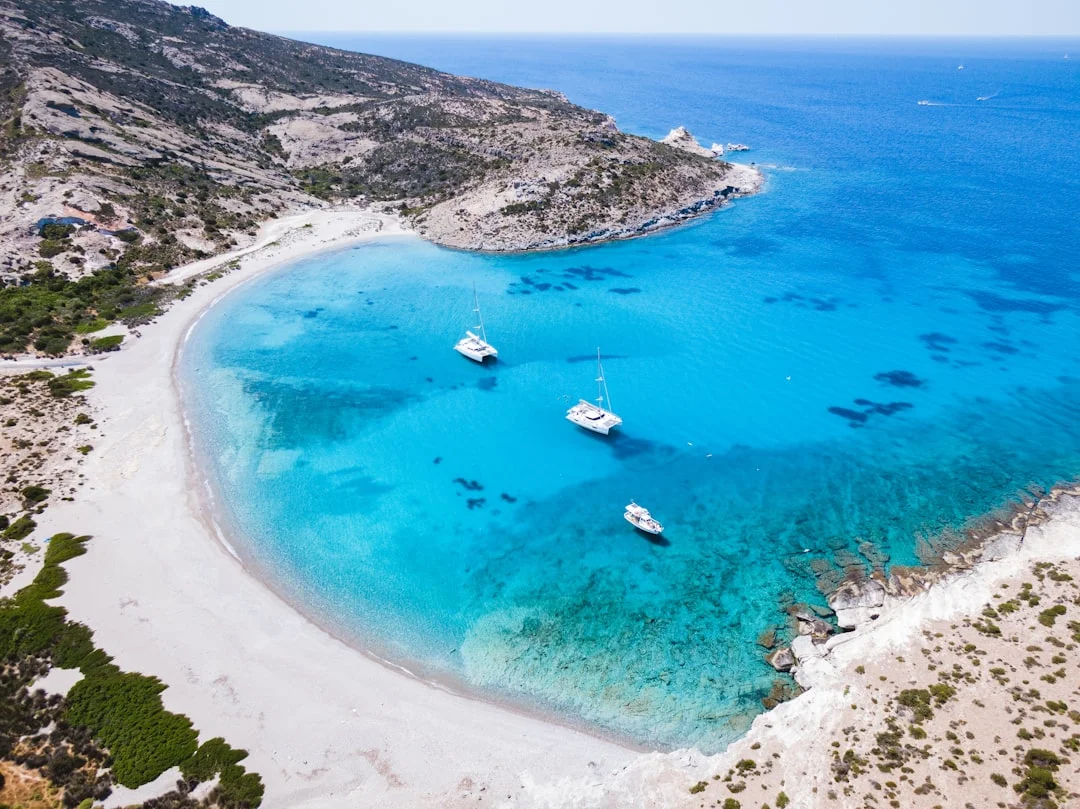
Photo by Derek Sutton on Unsplash
7-day Greece sailing itinerary: Cyclades highlights (Athens)
When a Cyclades week is realistic (and when it’s not)
A 7 day Greece sailing itinerary into the Cyclades is realistic when you accept two truths. First, you will not “do it all” in one week unless you enjoy collecting islands the way some people collect parking tickets. Second, in July–August the Meltemi can sit at 22–33 kn (Bft 6–7) for days, and the channels can add extra bite with gusts that make docking tense.
If your crew is new to stern-to, easily seasick, or allergic to reefing early, don’t build a plan that requires multiple exposed crossings and late arrivals. Even at 6.0–7.5 kn under sail, short steep seas can cut your effective average, and motoring at 5.5–6.5 kn may burn more fuel than you expected. With 200–300 L diesel aboard, you have room for flexibility, but not for denial.
Iconic loop vs one-way: reducing exposure and backtracking
A true Athens-to-Cyclades loop that includes Mykonos or Santorini commonly lands at ~180–260 NM for the week, depending on stops and how much you backtrack to return. That’s doable, but it tightens your schedule and increases the chance you’ll sail when you should be drinking coffee and waiting.
If your operator allows it, a one-way fee (€500–€1,500+) can turn a punishing “return crossing” into a more reasonable itinerary. Athens → Mykonos, or Athens → Paros/Naxos, can be a smart play when you want highlights without gambling on a hard beat home. Not every fleet supports it; base logistics decide.
Plan B ports for Meltemi days
Cyclades planning is really about leeward options and “no-regrets” legs. You want ports with holding, room to maneuver, and the ability to stay put without feeling trapped. Also remember tankage: 200–300 L water is not infinite, and resupply points matter more here than in the Saronic.
Here are two 7-day patterns—one conservative loop and one highlights-focused with less backtracking. Distances are approximate; verify with Breezada’s sea distance calculator and then sanity-check the hours against daylight.
| Pattern | Day-by-day concept (from Athens) | Weekly NM (approx.) | Exposure level | Best for |
|---|---|---|---|---|
| Conservative near-Cyclades loop | Kea → Kythnos → Syros → Serifos → Sounion/return | 150–210 | Medium | Crews wanting Cyclades flavor with bailouts |
| Highlights push (loop) | Kea → Syros → Mykonos (optional) → Paros/Naxos → Serifos → return | 190–260 | High | Offshore-comfortable crews, early starts |
| Highlights with one-way | Athens → Syros → Mykonos/Paros → Naxos (or Santorini if ambitious) | 180–240 | Medium–High | Crews paying to avoid backtracking |
If the forecast shows 25–33 kn and rising, treat the exposed channel legs as optional. Go shorter, go earlier, or don’t go at all—your charter contract doesn’t include a prize for stubbornness. The Cyclades will still be there next year, and your crew will remember the good decisions more than the heroic ones.
Photo by Derek Nielsen on Unsplash
14-day Greece sailing itinerary: bigger loops and layday logic
Two-week advantage: weather windows, rest days, and safer returns
A 14 day Greece sailing itinerary changes the whole risk profile because you can wait. You still keep the comfortable target of 20–35 NM/day, but now you can keep most legs in the 15–30 NM range and use weather windows for the longer crossings. Two weeks also means you can plan maintenance like adults: water top-up every 2–3 days, a fuel top-up mid-trip, and a proper provisioning reset instead of living on pasta and regret.
Build laydays on purpose. I like one “no-sail day” in the middle, plus one weather-contingency day that can become a short hop if conditions are kind. That spare day is what prevents the last 2–3 days from becoming a forced march back to base.
Cyclades 14-day concepts from Athens (with buffers)
From Athens, a two-week Cyclades sailing route can be shaped to minimize upwind suffering. You can cross early, then island-hop on shorter legs while staying leeward as much as possible. Use planning speeds of 6–7 kn, schedule longer exposed legs for first light, and pick harbors where you can sit tight if the Meltemi pins you for 24–48 hours.
A practical concept is an “outer then inner” loop: Kea/Kythnos as your staging, then Paros/Naxos as a hub, with optional reaches to smaller islands if the forecast behaves. Because you’re not trying to win a regatta, you can wait for a better sea state rather than pushing through short steep chop that turns the cabin into a percussion instrument.
Dodecanese 14-day concepts from Rhodes or Kos
The Dodecanese sailing itinerary is a strong two-week choice because the chain lays out like a menu of reasonable legs, and the season often feels longer. Start from Rhodes or Kos, then build a loop that keeps daily distances sane and gives you multiple safe harbors if the wind surprises you. One-way options may exist depending on the operator, but don’t assume it until it’s in writing.
Catamarans deserve a note here. They often carry 600–800 L water and 400–800 L diesel total, which buys comfort and fewer resupply stops, but their fuel burn is higher at ~6–10 L/hour when motoring. They also have more windage in tight quays, so pick your stern-to battles carefully.
Photo by Johnny Africa on Unsplash
Costs & logistics: what a Greece yacht week really costs
Greece yacht charter cost is predictable if you stop pretending it’s just the brochure price. Your real budget is charter fee plus cleaning, fuel, port fees, provisioning, optional crew (skipper/hostess), and either a refundable deposit or a damage waiver. Route choice affects costs: more motoring hours in the Cyclades can push fuel from €120 toward €450/week on a monohull, and more marina nights can add €10–€60/night (or €60–€120+ in premium marinas for a 12–15 m boat).
Here are realistic weekly ranges, with the big levers that move your total. Peak is generally Jul–Aug, shoulder is Apr–May and Oct, with June/September sitting in between depending on demand.
| Item | Monohull 38–45 ft (shoulder) | Monohull 38–45 ft (peak) | Catamaran 42–47 ft (shoulder) | Catamaran 42–47 ft (peak) |
|---|---|---|---|---|
| Base charter (bareboat) | €2,200–€4,500 | €4,500–€8,500 | €4,500–€8,500 | €8,500–€16,000+ |
| End cleaning | €150–€300 | €150–€300 | €250–€450 | €250–€450 |
| Skipper (optional) | €190–€250/day + food | €190–€250/day + food | €190–€250/day + food | €190–€250/day + food |
| Hostess (optional) | €160–€220/day + food | €160–€220/day + food | €160–€220/day + food | €160–€220/day + food |
| Fuel (typical week) | €120–€450 | €150–€450 | €250–€700 | €300–€700 |
| Port fees | €10–€60/night | €10–€60/night | €10–€60/night | €10–€60/night |
| Deposit (refundable) | €2,000–€5,000 | €2,000–€5,000 | €3,000–€6,000 | €3,000–€6,000 |
| Damage waiver (non-refundable) | €250–€600/week | €250–€600/week | €300–€700/week | €300–€700/week |
Two-week trips aren’t simply “double the price,” but they often feel like it after you add more provisioning (€150–€300/day for 6–8 people, depending on tavernas) and a few more marina nights for laundry and water. The deposit vs waiver decision is mostly about crew skill and sleep quality; if you’ve got mixed experience aboard, a waiver can be cheap insurance against a small docking scrape becoming a holiday headline.
Paperwork-wise, Greece is generally straightforward through the charter operator, but you’ll hear terms like DEKPA and port police in the wider cruising world. The practical move is to keep printed copies of passports, skipper certs, VHF license (if applicable), and the crew list, because the one time you don’t is the one time someone asks.
Mooring, anchoring & onboard systems: Greece-specific seamanship
Stern-to with lazy lines: crew choreography and risk controls
In many Greek ports, stern-to on a town quay with a laid line (“lazy line”) is the standard, not the exception. You’ll often be backing into a slot with 30–50 m of maneuvering room, crosswind on the beam, and a helpful audience offering advice in four languages. The solution is boring discipline: assign roles, keep hands off the windlass remote unless told, and brief the line sequence before you enter.
My sequence in 20–30 kn crosswind is simple. Approach slowly, abort early if the angle is wrong, and don’t be shy about resetting; the only real mistake is committing too fast. Put big fenders low and forward for quay corners, and have one crewmember dedicated to lazy line pickup with a boat hook, not three people improvising at the stern.
Anchoring ground tackle and holding in summer winds
Charter ground tackle is usually adequate but not magical. A common setup on 40–45 ft boats is a 16–25 kg anchor with 50–80 m of 8–10 mm chain and a 12V windlass. In summer gusts, scope and set matter more than brand names: in 5–10 m depth, don’t be stingy, and do a proper reverse set while you still have room.
Remember swing room in crowded bays, especially with cats that sit differently to the wind and can sail around their anchor. Monohulls with 1.9–2.4 m draft need more care near shelving bottoms, while cats at 1.1–1.4 m draft can sneak into shallower sand patches—then complain about windage later. If katabatic gusts roll off high islands at night, you’ll be glad you set the hook like you meant it.
Shore power (230V/50Hz) and safety standards to reference
Greek marina power is typically 230V/50Hz, usually 16A or 32A single-phase. Boats vary: you may need adapters depending on the pedestal and your inlet, and you should assume some pedestals are tired from hard seasonal use. Keep your cable ends dry, support the connection so it’s not hanging by the pins, and switch loads on gradually rather than slamming the system with water heater, chargers, and air-con at once.
During handover, use standards as a common-sense lens, not a legal debate. COLREGs covers traffic discipline (and why night entries near ferry routes are a poor idea), while ISO 12217 helps you respect design category in open Aegean conditions. For electrical safety, the concepts behind ISO 13297 / ISO 10133 and ABYC E-11 point you toward checking for a functioning RCD/GFCI, clean shore-power connections, and no “mystery heat” at plugs; ISO 9094 (fire) and ISO 15083 (bilge) are good reminders to actually locate extinguishers and test bilge pumps before you need them.
Practical tip: In a crowded quay with building wind, the best time to abort a stern-to attempt is about 20 seconds before you convince yourself it will “probably be fine.”
Seasonality & weather strategy: Meltemi rules for routing
Best months by basin: comfort vs crowds vs wind risk
Seasonality is the hidden hand behind every Greek islands sailing itinerary. Jul–Aug brings heat, crowds, and the highest probability of sustained Meltemi in the Cyclades at Bft 6–7 (≈22–33 kn). Shoulder season often gives cooler nights, lower charter prices, and fewer raft-ups, but you trade for shorter daylight and occasional unsettled systems.
The Saronic tends to stay more forgiving across the season, which is why it’s such a reliable base for shorter charters. The Cyclades are the most sensitive to Meltemi timing because of exposed legs and acceleration zones. The Dodecanese often feels “steadier” for planning and can be a strong choice when the Cyclades look like a wind machine.
| Timing | Wind risk (Meltemi) | Crowding | Typical cost trend | Basin recommendation |
|---|---|---|---|---|
| Apr–May | Low–Medium | Low | Lower | Saronic, Dodecanese |
| Jun | Medium | Medium–High | Rising | Saronic, Cyclades (with buffers) |
| Jul–Aug | High (Cyclades Bft 6–7 common) | Very High | Peak | Saronic or Dodecanese; Cyclades only with conservative plans |
| Sep | Medium | High | Slightly lower than peak | Cyclades (better), Saronic, Dodecanese |
| Oct | Low–Medium | Low | Lower | Saronic, Dodecanese (watch daylight/weather) |
When to pivot: decision rules for 25–33 kn days
When forecasts call 25–33 kn, don’t argue with the Aegean. Shorten legs, avoid exposed channels, and plan a leeward harbor where docking is manageable in crosswind. If you must cross, depart at first light to beat the afternoon peak and leave yourself a 2–3 hour cushion for delays.
Use a “Plan B within 10–15 NM” rule when the forecast is rising. That Plan B can be an anchorage with good holding, a harbor with room to maneuver, or simply staying put and letting the crew enjoy a non-sailing day. Your itinerary should survive a missed island without turning into a late-return sprint.
Protected harbors and “no-regrets” short legs
Sea state is often the real comfort limiter, especially on longer open-water legs where steep chop slows the boat and drains the crew. Keep the daily range at 20–35 NM, but be willing to cut to 10–20 NM when the sea is up, because a short leg in control is better than a long leg where everyone is bracing. Also stick to daylight arrivals and avoid night entries near ferry lanes—COLREGs exists for a reason, and ferries do not slow down for your romantic arrival.
For routing sanity, I like to start bending back toward base 2–3 days before check-out. That way, if the wind pins you, you’re stuck on the correct side of the map. It’s not glamorous, but neither is missing your 09:00 checkout because you were chasing one more sunset photo.
Frequently Asked Questions
For Cyclades route planning, what average speed should I use in the itinerary math if the forecast is Meltemi 25–30 kn (Bft 6–7) and I expect short steep seas—do I plan on 6.5 kn or closer to 5.5 kn?
Plan closer to 5.5 kn average for exposed legs when you expect short steep seas, especially if you’ll be reefed and punching chop. Your boat may hit 7+ kn in bursts, but your average drops when you slow for comfort, traffic, and sail handling. For leeward island-hopping in flatter water, 6.0–6.5 kn is often reasonable.
On a 40–45 ft monohull burning ~3–5 L/h, how many motoring hours can I budget from a 200–300 L diesel tank while still keeping a conservative reserve for bad-weather diversions?
If you keep a conservative reserve of roughly 25% (so 50–75 L held back from a 200–300 L tank), you have 150–225 L usable. At 3–5 L/h, that’s about 30–75 motoring hours depending on RPM and sea state. In practice, I plan on the lower end when Meltemi forces motor-sailing and higher RPM to keep control.
How does Greek stern-to with a lazy line change my approach angle and line sequence in a 20–30 kn crosswind, and what crew roles should I brief before entering a crowded quay?
In crosswind, you want a slower, more deliberate approach with a clear abort plan, because once you’re committed stern-to you have limited time to correct. Brief roles: one helm, one crew handling windward stern line, one handling leeward stern line, and one dedicated to lazy line pickup with a boat hook. The typical sequence is stern lines to the quay first to stop the boat, then lazy line to the bow, then final stern line tension and spring checks.
What shore-power adapter and load planning do I need for Greek marinas (230V/50Hz, 16A vs 32A), and what checks align with ISO 13297 / ABYC E-11 best practices on a charter boat?
Bring or request the correct adapter for your boat’s inlet and expect 16A to be more common than 32A in smaller ports. Load-plan realistically: avoid running water heater, battery charger, and air-con simultaneously on a 16A supply. Checks aligned with ISO 13297 / ABYC E-11 concepts include verifying an RCD/GFCI is present and testable, inspecting the shore-power cable for heat or damage, keeping connectors dry and strain-relieved, and switching loads on gradually.
If my 7-night/8-day charter checks in Saturday 17:00–18:00 and checks out Saturday 09:00, how many true sailing days do I realistically have, and how should that change an Athens-to-Cyclades loop distance target?
Realistically you have 6 full sailing days, because Saturday check-in is late and the last night is usually spent back near base to fuel, clean, and avoid return stress. For an Athens-to-Cyclades loop, that should push you toward a conservative weekly target unless you accept longer days: think “Cyclades flavor” rather than a distant highlights grab, or consider a one-way charter if available. Use Breezada’s sea distance calculator to total the loop, then sanity-check the hours at 5.5–6.5 kn before you commit.
If you want a simple framework: choose the Saronic for short, sheltered legs and easy logistics; choose the Cyclades for iconic Aegean scenery with Meltemi-aware routing and buffer days; choose the Dodecanese for a two-week-friendly chain from Rhodes/Kos. Do the math (NM → hours at realistic speeds), respect tankage limits, and assign a Plan B harbor for every leg before the wind makes the decision for you.
About the Author
Related Articles
Amalfi Coast vs French Riviera Sailing Guide (Costs & Routes)
Compare Amalfi Coast vs French Riviera sailing—costs, crowds, mooring rules, best months, and 7-day routes. Choose your coast and plan now.
By Breezada Team
Puget Sound Cruising Guide to Gulf Islands Routes
Plan routes, anchorages, and weather windows with this Puget Sound cruising guide for the Gulf Islands & San Juans. Read now and start plotting.
By Breezada Team
Sailing Amalfi Coast Guide: Ports, Anchorages & Rules
Sailing Amalfi Coast guide to Capri, Positano & Amalfi: best ports, anchorages, fees, VHF and rules. Plan your route—read now.
By Breezada Team
Dry Tortugas Sailing: Routes, Anchoring & Permits
Plan Dry Tortugas sailing from Key West with routes, weather windows, anchoring/moorings, and permits. Read the guide and plan your trip.
By Breezada Team