
Sailboat Rigging Inspection: Standing vs Running (What to Check, What Fails First, and When to Re-Rig)
Meta description: Use this expert sailboat rigging inspection checklist to spot failures early, set replacement intervals, and prep for offshore—download and plan now.

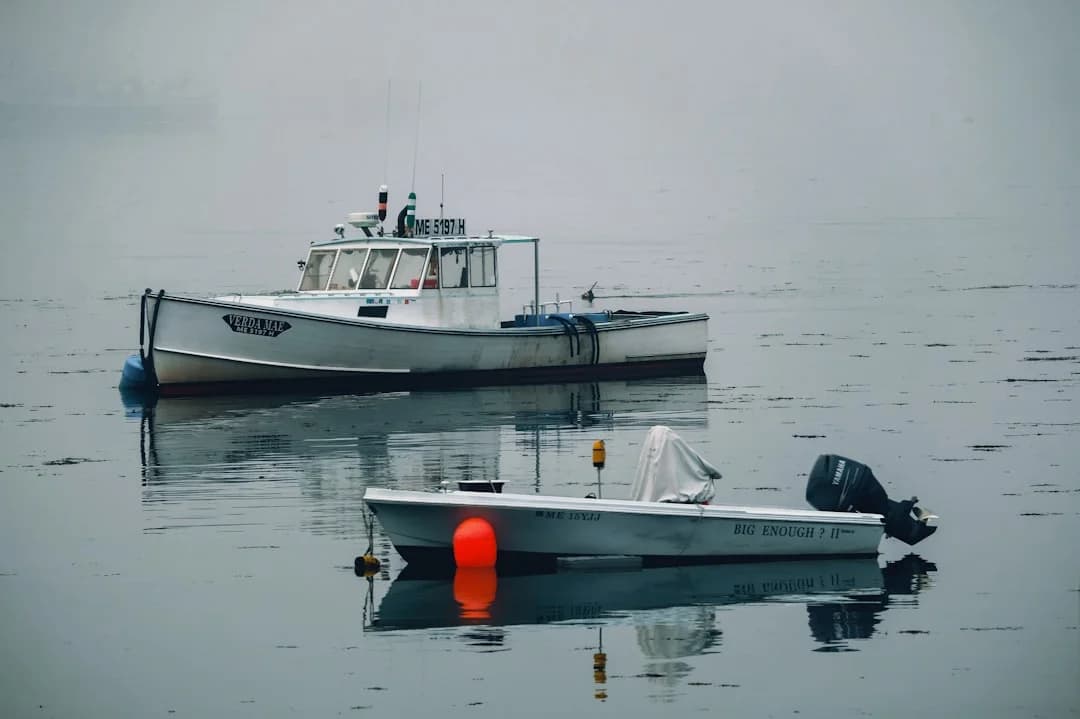
Photo by Marc Wieland on Unsplash
Rigging failures rarely start with a dramatic bang. They start as a hairline crack at an upper swage, a brown stain at a chainplate deck line, or a cotter pin that slowly “walks” out until it’s gone. The good news is you can catch most of the early warning signs with a disciplined sailboat rigging inspection routine, a notebook, and enough skepticism to distrust shiny stainless.
This article separates standing rigging from running rigging, then lays out practical inspection checklists, replacement thinking, and offshore prep steps that hold up when you’re 200 miles from the nearest rigger. If you’re passage-planning, run your route distance through a tool to calculate the distance between ports so your inspection depth matches the exposure, not your optimism.
Practical tip box (print this):
- Inspect upper terminals, chainplates at the deck, cotter pins, and masthead sheaves first—those are common “first failures.”
- Treat the 10-year wire rigging rule as a baseline, not a guarantee—tropics, charter use, and corrosion shorten it fast.
- Record baseline shroud tension (lb/kg) and thread engagement so you can spot drift before it becomes breakage.
Standing vs Running Rigging: What’s Included and Why It Fails
Standing rigging components on a typical sloop
Standing rigging is the stuff that holds the mast up: shrouds and stays, plus the hardware that connects them—terminals, chainplates, turnbuckles, tangs, toggles, clevis pins, and mast attachment points. On most cruising boats you’ll see 1x19 316 stainless wire in the 3.2–6.4 mm (1/8–1/4 in) range on roughly 25–45 ft sloops, with size driven by rig geometry and righting moment. The wire rarely “wears out” mid-span; it dies at ends, holes, and interfaces where loads concentrate.
Lifelines confuse people because they’re wire too, but they aren’t standing rigging in the structural sense. Lifelines are usually 7x19 for flexibility, and they’re governed by different expectations and standards, including ABYC A-23, which commonly references 24 in (610 mm) minimum lifeline height on monohulls, with many boats in the 24–30 in (610–762 mm) range. Lifelines can look fine and still be unsafe due to broken internal strands, bent stanchions, or sketchy terminals. Since lifelines are your last barrier against a man overboard situation, treating them as safety-critical rather than cosmetic is non-negotiable.
Running rigging components and load cycles
Running rigging is everything you pull on: halyards, sheets, reefing lines, control lines, plus the hardware they run through—blocks, clutches, travelers, cars, organizers, winches, sheaves, and fairleads. Cruising diameters typically sit around 8–14 mm depending on loads and handling preference, and that number matters because clutches and sheaves are picky. A 10 mm line forced through 8 mm hardware doesn’t “tough it out”; it cooks, slips, and strips covers.
Load cycles are the big difference. A cap shroud sees high static load with smaller cyclic variation, while a main sheet sees aggressive cycles, shock loads, and constant movement. That’s why running rigging is usually a wear-and-tear story, not a hidden corrosion story.
Failure-mode differences: fatigue, corrosion, chafe
Standing rigging failures are commonly a two-part problem: cyclic fatigue plus crevice corrosion. Stainless like 316 survives by forming a passive oxide layer, but it needs oxygen; put it in a low-oxygen crevice—inside a swage, under tape, or at a chainplate deck penetration—and it can corrode with almost no surface warning. Running rigging fails from abrasion, heat glazing (especially in clutches), UV exposure, and bend fatigue over small sheaves, particularly near masthead exits.
Your risk profile sets your replacement threshold. Day sailing in protected water gives you options when something looks “iffy,” but offshore you don’t get to pause the ocean while you rethink a cracked terminal. If your planned route means multiple days without bailout ports, check the nautical miles for your planned route and let the number influence how conservative you are with standing rigging, masthead checks, and redundancy.
Standing Rigging Inspection Checklist (Wire/Rod, Terminals, Hardware)
Wire and rod: what to look for along the span
Start your standing rigging inspection at the masthead attachments, then work down each stay to deck, then go inside to the chainplates and structure. Along the wire span, you’re feeling and looking for broken strands (“meat hooks”), flat spots, kinks, and any sign the wire has been bent beyond its happy place. On 1x19 wire, a single broken strand near a terminal isn’t “character”—it’s a warning flare.
Discoloration matters. “Rust weeps” at terminals, brown streaks below a chainplate, or a dull gray band at a swage shoulder can indicate corrosion where you can’t see it. Typical wire diameters on cruising boats—1/8, 5/32, 3/16, 7/32, 1/4 in—are stout, but they don’t forgive sharp bends or side-loads at fittings.
Terminals and swages: where cracks start
Swage terminals are where I spend my attention because they’re frequent first-failure points, especially at the upper terminals where cyclic loads and vibration are highest. Use strong side lighting and a magnifier; you’re hunting for hairline cracks at the swage shoulder, “ring” cracks around the circumference, or rust staining that reappears after cleaning. Pay special attention to any terminal that’s been wrapped in tape or hidden under a boot—those are excellent water traps and terrible inspection aids.
A useful DIY step is dye penetrant on suspected areas after proper cleaning and drying. A basic dye penetrant kit runs ~$35–$90, and it’s best saved for “I think I see something” moments at swages and tangs, not for random entertainment. If you find a real crack, the next step is replacement, not stronger tape.
Turnbuckles, cotter pins, toggles, and alignment
Turnbuckles fail from thread issues, misalignment, and missing security—usually in that order. Inspect threads for galling, flattening, or corrosion, and confirm you have adequate engagement: a solid baseline is ≥ 1× thread diameter per side. For a 1/2 in UNF example, keep ≥ 1/2 in of thread engaged in each end after tuning, and more is better when geometry allows.
Look hard at alignment. If the rig loads force a turnbuckle to bend because there’s no toggle, fatigue accelerates and threads suffer. Cotter pins and split rings deserve paranoia: verify correct size, fully spread legs, and no sharp ends pointing at sails or hands. I tape cotters to prevent snagging, but I avoid wrapping the whole terminal into a moisture-retaining mummy.
Chainplates, deck penetrations, and hidden structure
Chainplates are where “shiny stainless” lies to you. The deck line is a classic crevice corrosion zone, and it’s also where water enters cores and bulkheads, creating structural problems that aren’t fixed by polishing. Inspect from deck for gelcoat cracking, brown stains, or movement under load, then inspect inside—behind cabinetry, liners, and trim—because the worst corrosion often lives out of sight.
This is where standards thinking helps: ISO 12215 frames hull and structural scantlings, and chainplate attachment structure is part of that load path. If you see core compression at the deck slot, soft deck, or wet bulkhead tabbing, you’re past “monitor” and into “open it up.” If your boat uses rod rigging, treat the terminal transitions as the hotspot; many programs do annual magnified terminal inspections and often replace rod on a 5–10 year cycle depending on use.
Masthead-to-Mast Step: Sheaves, Tangs, Partners, and Compression
Masthead sheaves and halyard exits (high-motion wear)
Mastheads produce first failures because everything up there vibrates, cycles, and bakes in salt. Sheaves are the obvious wear item: check groove profile, cheek-plate rub marks, axle wear, and side-to-side wobble. If the groove has widened so the line seats too deep and rubs the cheeks, or if edges feel sharp enough to shave a fingernail, replace the sheave.
Compatibility matters. Many rigs are designed around pairings like ~10 mm rope or ~5 mm wire at certain sheaves, and mismatching line diameter accelerates wear and chafe. If your halyard is 10 mm but the sheave was meant for 8 mm, you’ll often see cover stripping at the exit plate long before the line “looks old.”
Tangs, spreader tips, and fastener holes
Inspect tangs and mast attachment points for cracks, especially at bends and around fastener holes. Elongated clevis-pin holes, fretting stains (shiny dust), or black streaking around stainless/aluminum interfaces are signs of movement where there shouldn’t be any. Check spreader tips for sharp edges and worn chafe guards; sheet chafe there is common, and the spreader doesn’t care if it ruins your day.
Clevis pins and cotters are small parts with large consequences. Confirm pins are the right diameter, seated properly, and secured with intact cotters, not “temporary” rings that have been temporary since the last owner. If you find undersized pins in a high-load area, assume other shortcuts exist and inspect wider.
Deck partners, mast step, and load paths
At deck partners and mast step, you’re looking for evidence the mast is moving in ways it shouldn’t. Cracking at the deck collar, corrosion at the mast step, or wet core around the partners points to load path problems, not cosmetic ones. If the step is aluminum-on-stainless with trapped moisture, it can become a corrosion science project you didn’t ask for.
Decide access based on the goal. From deck you can do basic checks; a bosun’s chair lets you inspect masthead sheaves and tangs; unstepping the mast allows true hardware removal and chainplate work. For offshore prep, I’m biased toward at least a mast climb and documented findings, because failures at the masthead don’t improve with distance from land—ask any rescue coordinator.
Running Rigging Inspection Checklist (Halyards, Sheets, Clutches, Blocks)
Rope condition: cover, core, UV, and bend fatigue
A proper running rigging inspection means running each line end-to-end, not just eyeballing the first three feet near the cockpit. Pull the halyard out, inspect the full length, then repeat for sheets, reefing lines, and control lines. Log the line type, diameter, approximate age, and any localized damage, because your memory is not a maintenance system.
Look for glazed or hardened cover where the rope clutch bites—heat damage is common after repeated high-load slips. Check for flattened sections, cover slip (bunching), core exposure, and stiffness from salt contamination. On cruising boats with 8–14 mm line, the wrong clutch size can destroy a cover in a season, while the rest of the line looks deceptively healthy.
Chafe mapping: where lines fail first
I’m a fan of the “chafe map”: mark the line where it passes masthead sheaves, exit plates, clutches, organizers, and high-load blocks. Those points do the damage, not the lazy middle section in the sail bag. If you see localized fuzzing, glazing, or cover thinning at the same spot each season, rotate the line, shorten it, or re-end it to move the wear zone.
Masthead chafe is the repeat offender. Halyards fail at sheaves and exits because that’s where bend radius is smallest and movement is constant. If you’re planning a passage, assume that a halyard that’s “fine” at the dock may become “not fine” after 72 hours of motion in a seaway.
Hardware compatibility: sheaves, clutches, and winches
Hardware inspection is as important as rope inspection. Spin blocks, feel for bearing roughness, check cheek plates for cracks, verify pins are secured, and look for alignment problems that side-load sheaves. Travelers and cars should run smoothly without binding; if a car is skewing under load, it often indicates worn bearings or misalignment that will also chew up control lines.
Material choice changes the system. Polyester double braid typically elongates around ~3–5% at ~20% load, while HMPE/Dyneema cores can be <1% at similar working loads (construction dependent). Low stretch is great for sail shape, but it can shift failures into clutches, sheaves, and terminations, so a Dyneema upgrade should include a compatibility check, not just a shopping cart.
How Often to Inspect and Replace: Intervals by Use Case and Climate
Inspection cadence: owner annual vs rigger periodic
Think in two tiers: frequent owner checks plus periodic pro-level inspections. Owners should do a quick pre-sail scan (pins, cotters, obvious chafe) and a thorough annual rig walkaround with notes and photos. A professional inspection—often including a mast climb and written report—fills in what you can’t see from deck and provides documentation that insurers actually respect.
A reasonable pro cadence for many cruisers is a full rig survey every 2–3 years, with extra attention before major passages. If the mast hasn’t been down in a decade, you’re relying heavily on hope and flashlight angles. Hope is not a recognized marine standard, although it remains popular.
Replacement intervals: wire, rod, and running rigging
The common rule-of-thumb for 1x19 stainless standing rigging on cruising boats is about 10 years, often sooner in the tropics or high-use programs. The “why” is fatigue accumulation plus the crevice corrosion problem in low-oxygen zones like swages and chainplates, where damage can progress without obvious surface clues. Some insurers want proof of inspection or replacement at roughly 10 years before they’ll offer offshore coverage.
Rod rigging often runs shorter cycles in high-load use, with annual terminal inspections and replacement often in the 5–10 year window depending on sailing hours and shock loading. Running rigging is more condition-based: a polyester halyard might live 3–8 years in typical cruising use, while a hard-driven clutch/glaze situation can kill it in 1–2 seasons even if the mid-span still looks new.
What changes for offshore passages and insurers
Offshore changes the consequence curve, not the physics. Standards frameworks like ISO 12217 (stability categories) and ISO 12215 (structure) help explain why a Design Category A boat is engineered for harsher conditions than B/C/D, but your individual boat’s rig condition still determines your real safety margin. Insurers increasingly care about documentation: dated photos of terminals, a rig log, and receipts that prove replacement dates and specs.
Route length matters because it sets your exposure time and bailout options. Use a tool to plan your route and timing in nautical miles, then scale your inspection depth accordingly. For demanding cold-water routes like Alaska's Inside Passage, where williwaw gusts and glacial debris stress rigs beyond the norm, a thorough pre-departure survey is non-negotiable. For a coastal hop with ports every 30 miles, you can accept more “monitoring”; for a 600-mile leg, you want fewer question marks and more spare parts.
What Fails First (and Why): A Failure-Mode Map You Can Inspect
Crevice corrosion hotspots (low oxygen zones)
If I had to bet on where a cruising boat’s standing rigging will betray them, I’d start at crevices: chainplates at the deck line, inside swage terminals, and any fitting hidden under tape. 316 stainless can corrode aggressively when oxygen is limited, and it can do it while the exposed surface still looks respectable. Brown stains at the deck, persistent rust weeps at a swage, or pitting near a deck slot should be treated as “investigate now,” not “add to the winter list.”
Chainplate crevice corrosion is particularly nasty because it also attacks the structure around it. If water has been working into a cored deck, you can end up with compression and movement under load, which turns the rig into a slow-motion pry bar. That’s why chainplate inspection on a sailboat must include the hidden interior portion, not just the shiny top.
Fatigue hotspots (high cyclic stress zones)
Fatigue loves stress concentrators: upper terminals, tangs, and holes with movement. Cracks often start microscopic, which is why magnification and careful lighting matter, and why dye penetrant can be useful on suspicious areas. Discontinuous rod terminals are classic fatigue hotspots, and wire terminals that see bending due to misalignment will crack sooner than properly toggled fittings.
Evidence is often subtle. Look for fretting dust at tangs, elongated clevis holes, or “smoking” stains that suggest movement. A cracked swage at a top terminal is one of the most common first-failure components riggers report, and it’s also one of the easiest to miss if you don’t climb.
Chafe and heat hotspots (high motion/abrasion zones)
For running rigging, the first failure is usually chafe at masthead sheaves and exit plates, or heat glazing at clutches. If a rope clutch has been slipping, the cover will turn shiny, stiff, and flattened, and you may see localized melt. Sheets often chafe at spreader tips, lifeline stanchions, and leech paths; chafe gear helps, but the better fix is usually fair leads and proper alignment.
Heat is a real failure driver. A clutch that’s wrong-sized for 10–12 mm line, or a crew that “eases” by letting the line creep under load, can cook a cover quickly. That damage doesn’t reverse; once fibers are heat-set and glazed, strength and grip are compromised.
Installation and tuning errors that accelerate failures
Bad tuning and poor installation shorten lifespans brutally. Over-tensioning, uneven port/starboard shroud tension, missing toggles, and misaligned turnbuckles create bending loads and fretting. Cotter pins backing out is the other classic: it’s not dramatic until the day it is.
Photograph your evidence list for tracking and for pros: brown stains at deck, rust weeps at swage shoulders, shiny fretting dust at tangs, and elongated clevis-pin holes. Those photos also help when you’re trying to explain to a yard why this isn’t just “a little cosmetic corrosion.”
Tools, Measurements, and Route-Based Offshore Prep Checks
Rig tune checks: % of breaking strength and symmetry
“Looks okay” is not a tuning metric. A tension gauge, turn count notes, and port/starboard comparisons let you quantify drift over time, which is often the first sign something has moved, stretched, or started to fail. A Loos gauge typically costs ~$120–$260, and you must match the model to your wire diameter range; the wrong gauge produces confident nonsense.
For many sloop rigs, a practical starting point is cap shrouds at roughly 15–25% of breaking strength, then adjust lowers/intermediates per spar guidance and desired mast bend. This isn’t universal, and spar makers do differ, but it’s a useful framework for documenting where you are and whether you’re consistent.
Wire size → breaking load → target tension examples
Use manufacturer tables for your exact wire, but typical 1x19 316 stainless breaking strengths are roughly: 1/8 in: ~2,100–2,200 lb; 5/32: ~3,300–3,700 lb; 3/16: ~4,700–5,200 lb; 7/32: ~6,600–7,000 lb; 1/4: ~8,200–9,000 lb. If you have 3/16 in wire at 5,000 lb break strength, then 15–25% puts cap shroud tension around **750–1,250 lb**. Record your final numbers, because repeatability is the real goal for owners.
Swept spreader rigs can tolerate different tuning strategies than in-line rigs because they rely more on shroud geometry for fore-and-aft support. That often means cap shrouds become more critical, and you need to ensure adequate tension to prevent leeward slack in typical wind ranges, without cranking the mast into a permanent apology. If you don’t know what your spar maker recommends, a short consult with a rigger is cheaper than guessing.
Pre-passage checklist tied to route length and exposure
Before an offshore leg, scale your inspection to the route, not your schedule. Start by estimating sea distance and likely days offshore, then decide whether a deck-level check is sufficient or whether a mast climb or unstep is justified. Longer routes with fewer bailout options justify more conservative go/no-go criteria, especially on standing rigging and masthead hardware.
A pre-offshore checklist should include: verify every cotter and split ring; confirm turnbuckle lock methods; inspect halyard chafe points at masthead; inspect reef line organizers and clutch bite zones; and confirm spare line strategy. I like carrying at least one spare halyard-length line (often 100–150 ft depending on boat) and the ability to rig an emergency stay or jury support. While you’re inspecting the masthead, check that your VHF antenna and connections are secure — your VHF radio is your lifeline offshore, and a corroded antenna connector will kill your range. Document everything with dated photos and a written rig log, because it helps you, your insurer, and the next owner.
Costs, Planning, and When a Full Re-Rig Makes Sense
Inspection cost tiers and what you get
Budgeting early beats paying emergency rates later. A professional in-water visual inspection plus tune check often runs ~$250–$600 per visit, depending on region and boat complexity. A full rig survey with mast climb and written report typically lands around ~$500–$1,200, and it’s money well spent if you’re chasing insurance, offshore prep, or persistent mystery noises aloft.
Mast unstepping adds yard variables. Unstep/step labor for a 30–40 ft range often runs ~$600–$2,000, with crane minimums commonly ~$300–$1,000+ depending on yard. If the mast is coming down anyway for wiring, paint, or sheave work, that’s the time to do chainplates and terminals properly.
Partial repair vs full re-rig decision rules
Partial repairs make sense when damage is isolated and the rest of the rig is known-good. If you’re finding multiple suspect terminals, corroded turnbuckles, or chainplate issues on more than one point, the economics shift fast. The labor overlap of “doing the rest” is real; repeated service calls and repeated tuning sessions can cost more than a planned refit.
Standing rigging replacement costs vary wildly by boat, access, and hardware choices. As a realistic bracket, a 30–35 ft sloop often falls around $4,000–$9,000, while a 40–45 ft cruiser can run $9,000–$20,000+. Individual parts add up: turnbuckles are often $80–$350 each, mechanical terminals (Sta-Lok/Norseman types) $60–$200, and masthead sheaves $50–$250 each before labor.
Budgeting around mast-down opportunities
Plan upgrades when the mast is down because access is everything. That’s the time to replace worn sheaves, inspect tangs without yoga, add toggles for better alignment, and fix wiring that’s been chafing since 2009. It’s also the moment to right-size running rigging to clutches and winches, because mismatched 8–14 mm line/hardware combinations quietly destroy gear.
Create a documentation pack as you go: rigging invoices, wire diameter/specs, terminal types, date codes where available, and your final tuned tension numbers. It supports resale and insurance, and it gives you a baseline when something changes. Boats don’t get safer by forgetting what you did last season.
FAQ: Detailed Rigging Inspection and Tuning Questions
For 1x19 316 stainless shrouds, how do I estimate target cap-shroud tension (lb or kg) from wire diameter and breaking strength, and how should that change with swept spreaders vs in-line rigs?
Use the manufacturer’s breaking strength for your exact wire, then apply a starting range of ~15–25% of breaking strength for cap shrouds on many sloop rigs (spar guidance overrides rules-of-thumb). Example: 3/16 in 1x19 is often around ~4,700–5,200 lb breaking strength; 15–25% gives roughly ~700–1,300 lb (about 320–590 kg) as a starting tension range. Confirm with a tension gauge matched to your wire (many owners use Loos gauges) and focus on symmetry port/starboard.
Swept spreader rigs often depend more on shroud geometry for fore-and-aft support, so maintaining adequate cap tension to prevent leeward slack can be more important than on some in-line rigs. In-line rigs with running backstays or more direct fore-and-aft stays may tolerate different static tensions, but they also punish sloppy tuning through pumping. In both cases, tune for proper mast column behavior, not maximum numbers.
What dye-penetrant inspection steps best reveal hairline cracks in swage terminals and stainless tangs, and what surface prep errors create false positives/negatives?
Basic steps: (1) clean thoroughly (degrease), (2) remove oxidation/salt and dry completely, (3) apply penetrant and let dwell per kit instructions, (4) remove excess penetrant without flushing it out of cracks, (5) apply developer and inspect under strong light. Dye penetrant kits are typically ~$35–$90, and they work best when you already have a suspicious line or mark to investigate.
False positives often come from poor cleaning, residue left in scratches, or penetrant trapped in corrosion pits that aren’t structural cracks. False negatives come from moisture in the crevice, paint or heavy oxide preventing penetrant entry, or aggressive solvent washing that pulls penetrant out of the flaw. If dye shows a meaningful indication at a high-load fitting (swage shoulder, tang bend, clevis hole area), treat it as a replacement decision, not a debate.
How do I evaluate turnbuckle thread engagement on mixed-thread rigs (UNF vs metric), and what minimum engagement should I maintain after tuning to avoid thread shear or body pull-out?
First, identify thread type on each end fitting—UNF and metric are not interchangeable, and mixed-thread rigs exist because boats collect parts like souvenirs. Count threads per inch (UNF) or measure pitch (metric), and confirm the end fittings match the turnbuckle body. After tuning, maintain at least ≥ 1× thread diameter engagement per side as a baseline; many riggers prefer more margin when geometry allows.
Example: with a 1/2 in thread, keep ≥ 1/2 in of thread engaged in each end fitting after tuning. Also check that the body isn’t bent under load and that alignment is handled with toggles where needed, because misalignment creates bending loads and thread wear. If engagement is marginal, you may need longer bodies, longer studs, or a re-think of rig geometry before you “tune around” a safety problem.
When inspecting chainplates at the deck line, what measured signs indicate structural core compression or moisture intrusion (movement under load, gelcoat cracking patterns, staining), and when is removal mandatory for hidden crevice corrosion assessment?
At deck level, look for gelcoat cracks radiating from the chainplate slot, brown staining, and any depression or “dishing” that suggests core compression. Under load (sails up, or carefully loading the shroud at dock), observe whether the chainplate moves relative to the deck—any visible movement is a serious sign. Inside, check for water trails, soft bulkhead areas, delaminated tabbing, or dark staining around the chainplate bolts.
Removal becomes mandatory when you have persistent deck-line staining, suspected crevice corrosion at the slot, or any structural signs like movement, wet core, or compression. Crevice corrosion can hide where the chainplate passes through the deck because oxygen is limited there, even when the exposed stainless looks fine. Treat chainplates as structural load-path components per the logic of ISO 12215, not as deck jewelry.
How do I confirm masthead sheave compatibility with my halyard diameter (e.g., 10 mm rope) and detect groove wear that will accelerate cover stripping or core damage at the sheave cheeks?
Confirm compatibility by checking the sheave’s intended line diameter in the spar documentation or by measuring groove width and profile relative to your rope. A common pairing might be a sheave meant for ~10 mm rope (or ~5 mm wire on certain designs), and forcing a larger line can make it ride high, rub exit plates, and strip covers. Conversely, an undersized line can seat too deep and increase cheek-plate rubbing.
Wear indicators include sharp groove edges, sidewall thinning, wobble on the axle, and a groove widened enough that the line seats deep and leaves rub marks on the cheeks. If the groove profile no longer matches the rope, or if you see cover dust and chafe at the masthead exit, replace the sheave (~$50–$250 each plus labor) before it eats a halyard at the worst possible time.
Conclusion: A Practical Rigging Inspection Hierarchy That Works Offshore
A solid sailboat rigging inspection program is simple, not easy. First, understand how standing rigging fails (fatigue and crevice corrosion) versus running rigging (chafe, heat, UV, bend fatigue). Second, inspect the known first-failure zones—upper terminals, chainplates at the deck line, cotter security, and masthead sheaves—because that’s where small problems become dismastings.
Third, quantify and document: record shroud tensions, thread engagement, and dated photos so you can track change, not just condition. The common ~10-year baseline for cruising wire standing rigging is a useful starting point, but climate, use, and route exposure can shorten that timeline without asking your permission. If your next trip is longer and more committing, use a tool to estimate your fuel needs based on the voyage distance, print the checklist, log your baseline tension numbers, and schedule a masthead/chainplate inspection before you leave the dock with crossing plans and crossed fingers.
About the Author
Related Articles
Diesel Heater Troubleshooting Boat: No-Start & Soot Fixes
Fix diesel heater no-start and sooting on your boat. Step-by-step checks for power, fuel, air/exhaust and maintenance—read the guide now.
By Breezada Team

Docking a Catamaran: Maneuvers, Springs & Crew
Master docking a catamaran with close-quarters maneuvers, spring lines, and crew roles. Learn the steps and dock with confidence—read now.
By Breezada Team

Best Stove for a Sailboat: Propane vs Diesel vs Induction
Compare propane, diesel, and induction stoves for cruising safety, cost, and power needs—use our guide to choose the best stove for your sailboat.
By Breezada Team

Single Handed Docking Sailboat: Line Methods & Drills
Learn single handed docking sailboat line-first methods, setup, and drills for crosswind/current. Practice safely—get the step-by-step plan now.
By Breezada Team